Katy Heritage on the Katy Local
UP SD70ACE 1988, the Katy Heritage commemorative locomotive, was the lead unit on the LAK71, the northbound Katy, TX – Smithville, TX local this past Wednesday, May 5, 2010.
The Katy local works 6 days/week serving clients along what had been the MKT mainline. In 1998, the UP sold the right-of-way east of Katy to TX DOT for the expansion of I-10. What had been a main line became the Sealy Industrial Lead, a 21.6 mile long spur.
I received confirmation that the 1988 was on the point, and the train had just departed Katy, at 4:45 PM, so Eric and I grabbed our cameras and headed out to try our luck.
We were able to dodge most of the rush-hour traffic, catching up with the train at Brookshire about 6 PM. The train had stopped to set out 2 gondolas.
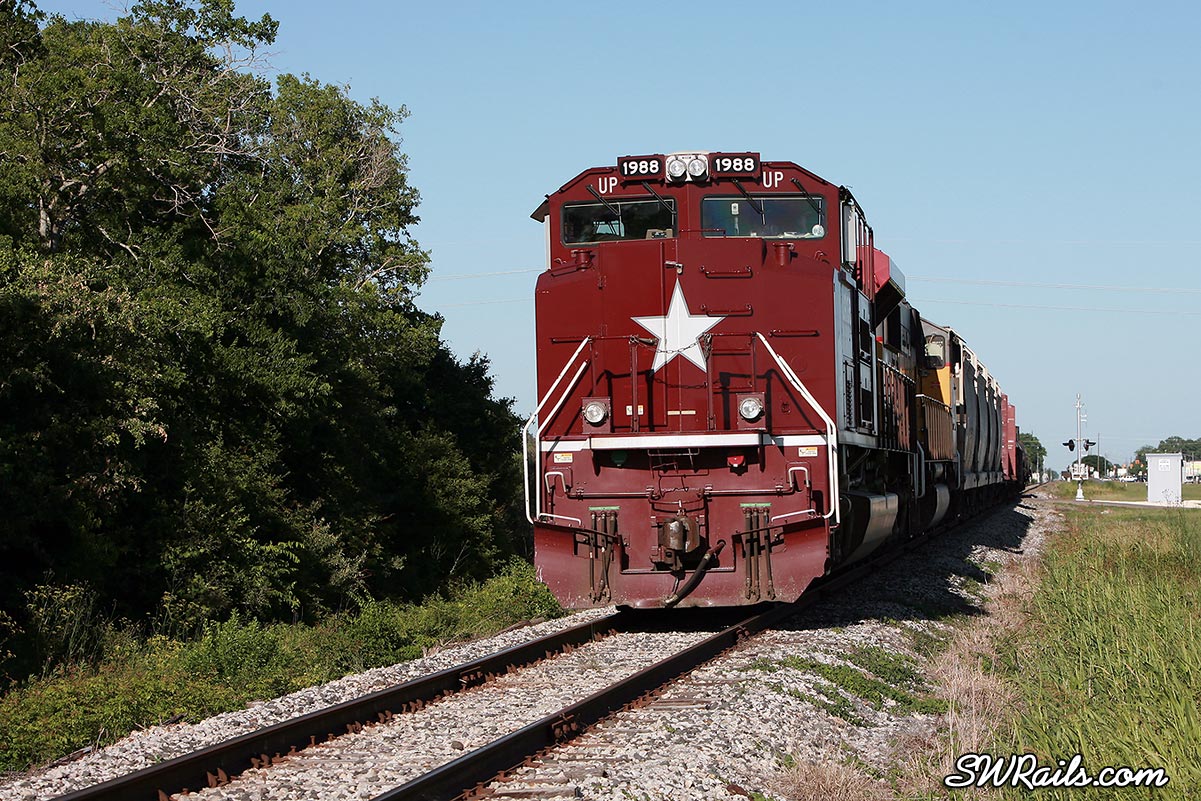
UP LAK71 departing Brookshire, TX on May 5, 2010.
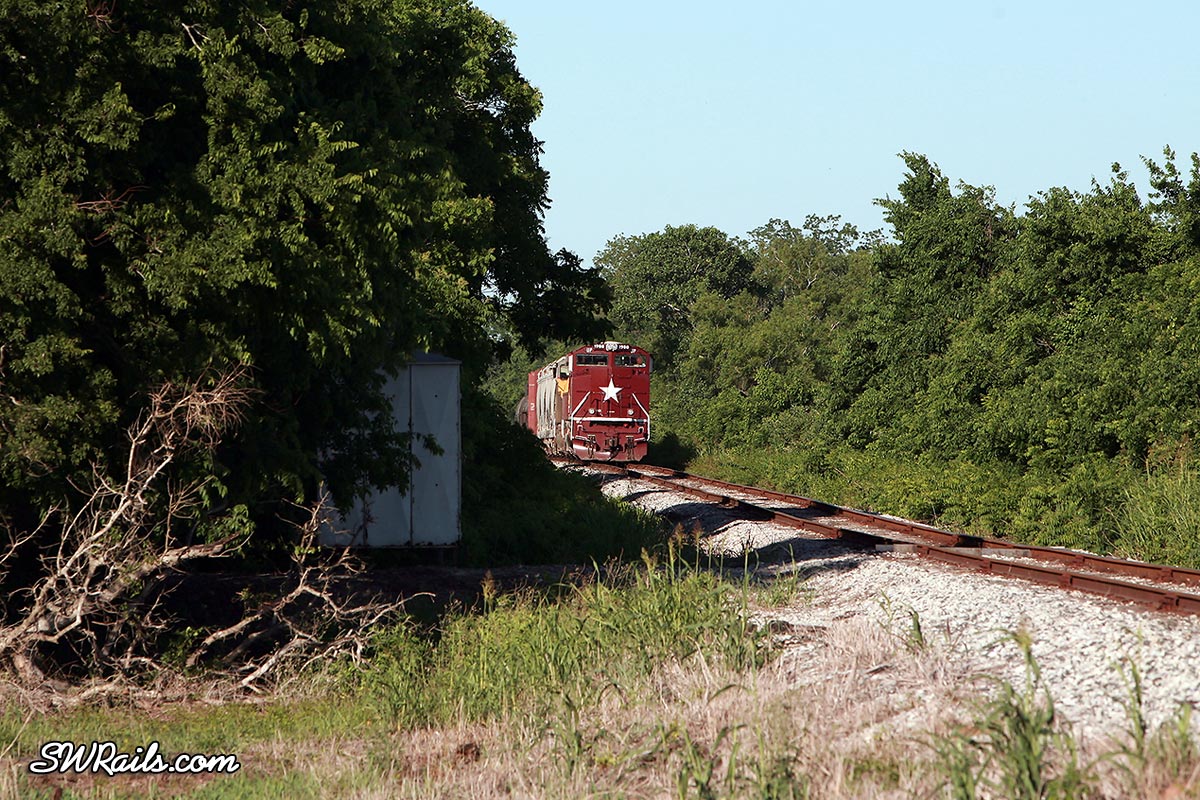
Approaching an out-of-service dragging equipment detector just east of the Brazos River bridge
As the speed limit for the entire segment from Katy to Sealy is 10 mph, getting ahead of the train is pretty easy.
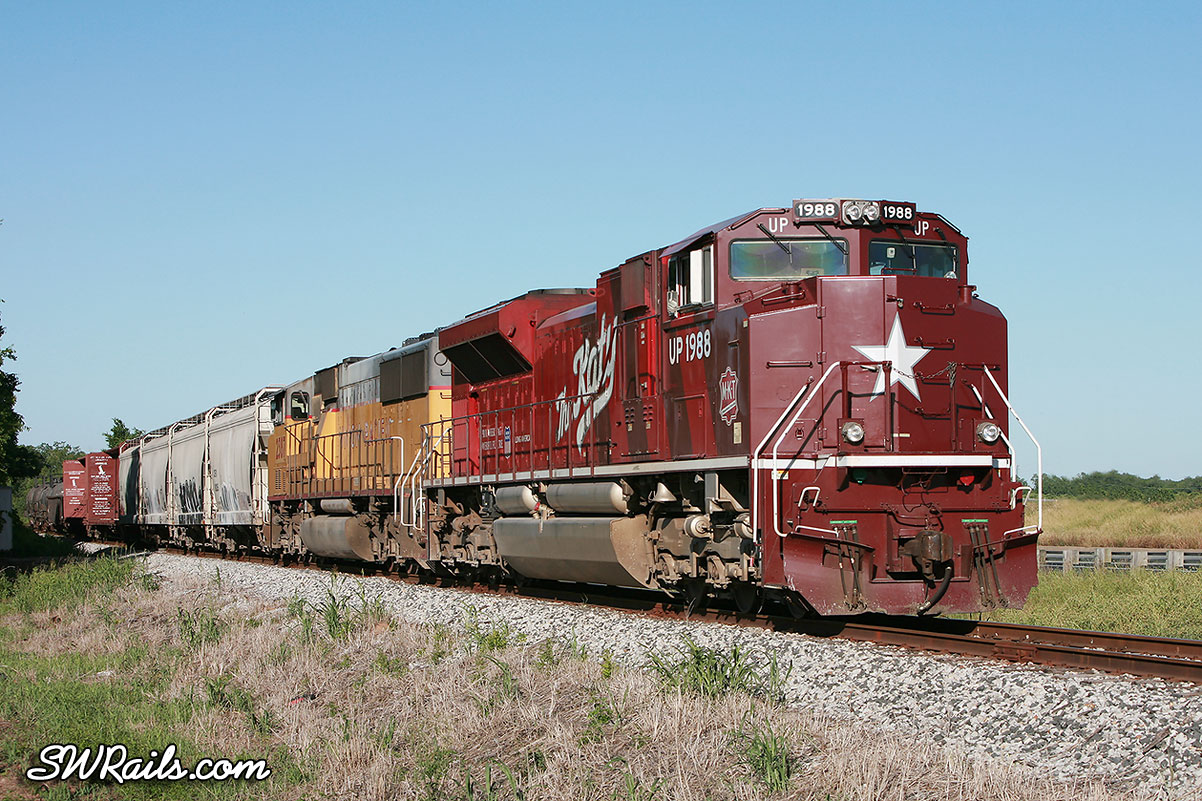
Same location as above, but with the lens at 70mm. This was the best light we encountered.
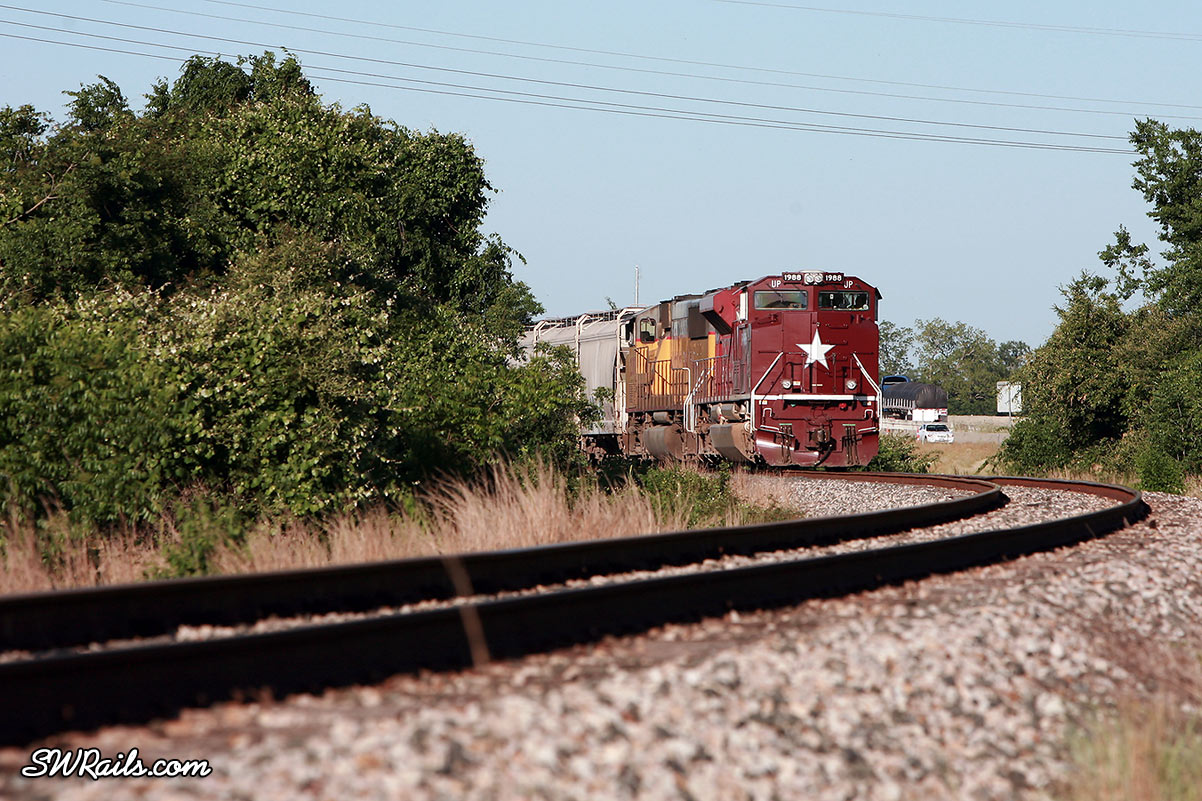
Coming up the slight grade from the Brazos River bridge. Interstate 10 is in the background.

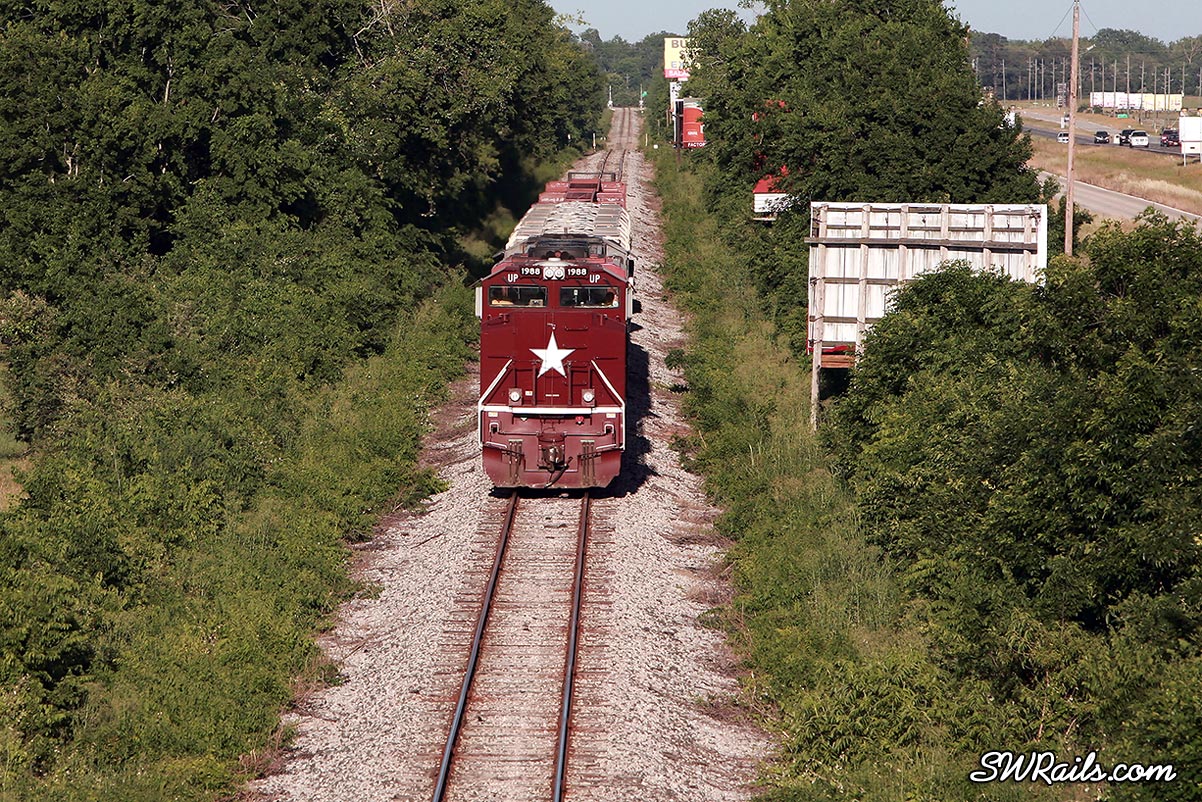
Approaching the Bartlett Road overpass in San Felipe, TX
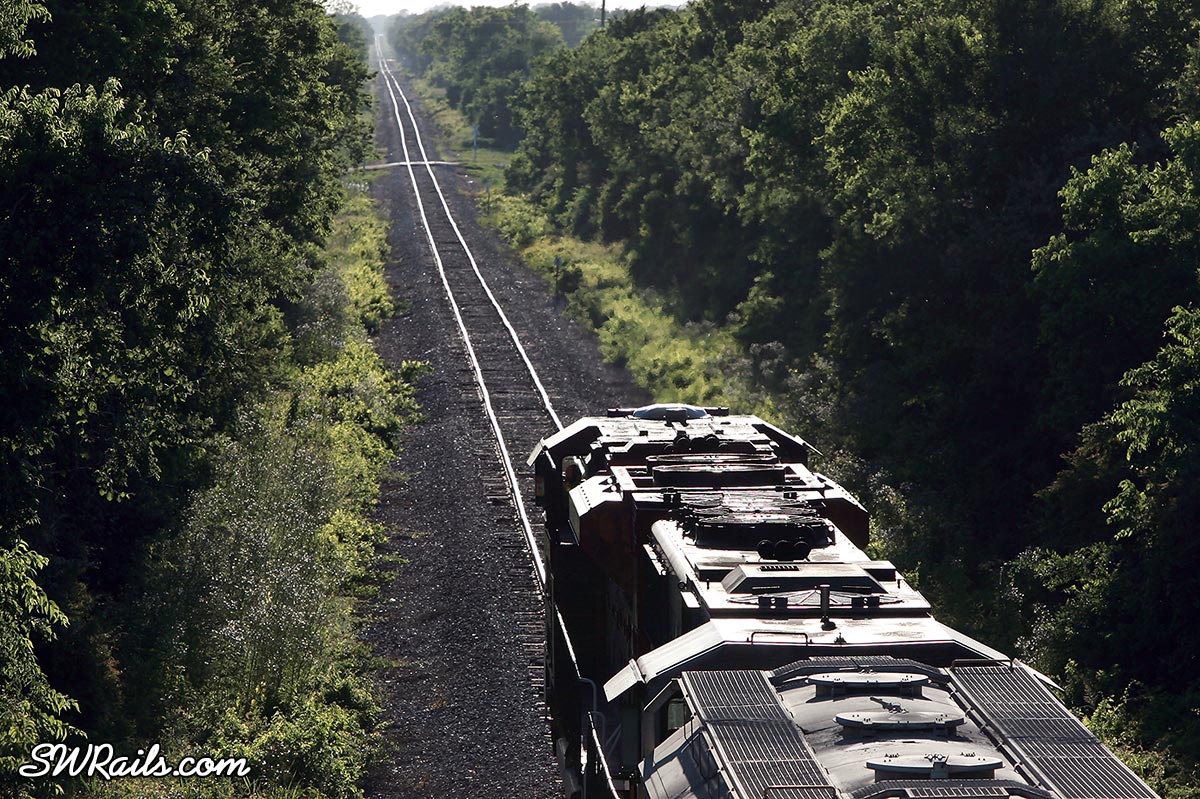
Bartlett Road overpass again, but looking west. I really like the contrast from the backlighting.

The train finds a last bit of sun among the shadows as it enters Sealy, TX
We were also able to get some video of this train during its leisurely run between Brookshire and Sealy, but that will have to wait for another post.
Colton Crossing, Early 1960’s-Pic of the Day
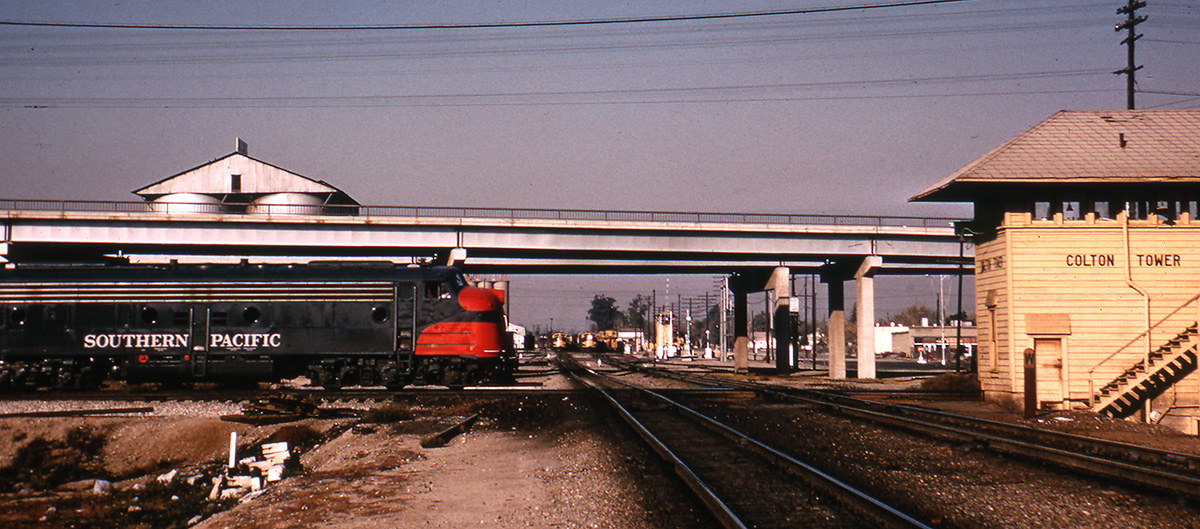
The eastbound Golden State at Colton Tower as two westbound Santa Fe freights wait their turn.
(Click on the photo to view a larger image.)
This is from an undated dupe slide in my collection. Colton Tower is in Colton, CA, about 60 miles east of Los Angeles. This is where the SP Sunset Route crosses the Santa Fe Transcon.
Based on the direction of the sunlight, it’s late afternoon. This suggests that the passenger train is the eastbound Golden State, which departed LA in the early afternoon. In 1965, the Golden State became an evening departure from LA. That places the date of this photo between 1962-1964 as this is when SP E9’s were being painted into the red & gray scheme.
Note the 2 Santa Fe trains in the background, apparently waiting for the passenger train to clear up before continuing their westbound trek toward Los Angeles. You can also see a UP caboose in a siding. It also appears that there is a crossing tower protecting the Valley Blvd. grade crossing. The overpasses in the background carry I-10 over the Santa Fe.
Right Way Rock Train – Before & After
I recently posted about a Wrong Way Rock Train. In order that I be fair and balanced here at Southwest Rails, I’d like to show you a “right way rock train”. “Right way” in that a loaded train traveling in accordance with the normal traffic pattern, i.e. away from quarries at Beckman.
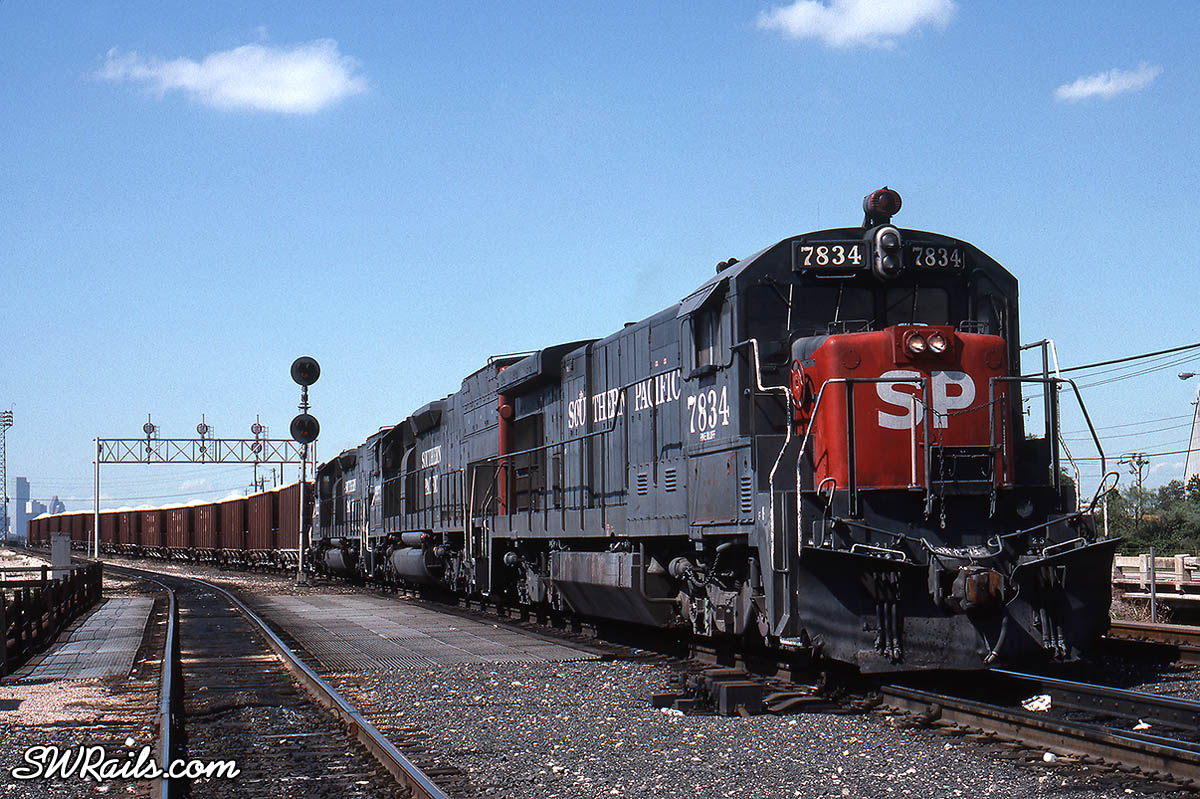
SP B30-7 7834 holds a BMDYL rock train at the east end of Englewood Yard, Sept. 29, 1981
Extra 7834 East, the BMDYL (Beckman, TX – Dayton, TX Loads) is parked in front of the Englewood Yard Office, waiting for a new crew to take it the last 30 miles to Dayton. Note the solid set of Ortner aggregate cars.
You might be wondering how can I have a Before & After post with only one picture. This picture is the before view. The after view is the picture of CSXT 7636 in the preceding post. The CSXT 7636 is one track over on Main 1, within 10-20 feet from where the SP 7834 is pictured above.
What plant changes took place between 1981 and 2010? First, the signal next to the trailing motor has been removed. The hump bypass track, at left in the above image, now converges with Main 2 near where the rear truck of the SP 7834 is. The last change I see is the crossover from Main 2 to Main 1 has been re-located about 200′ east, close to where the cab of the trailing unit is above.
Easily Overlooked…
I got out to chase the SP Heritage unit, UP 1996, as it came into Houston about 4 weeks ago. Once the pursuit was over, I came across a two other trains on my way home. I meant to post them shortly after my post on the UP 1996, but I forgot about them. The 2 trains are quite unremarkable, which is probably why I forgot about them.
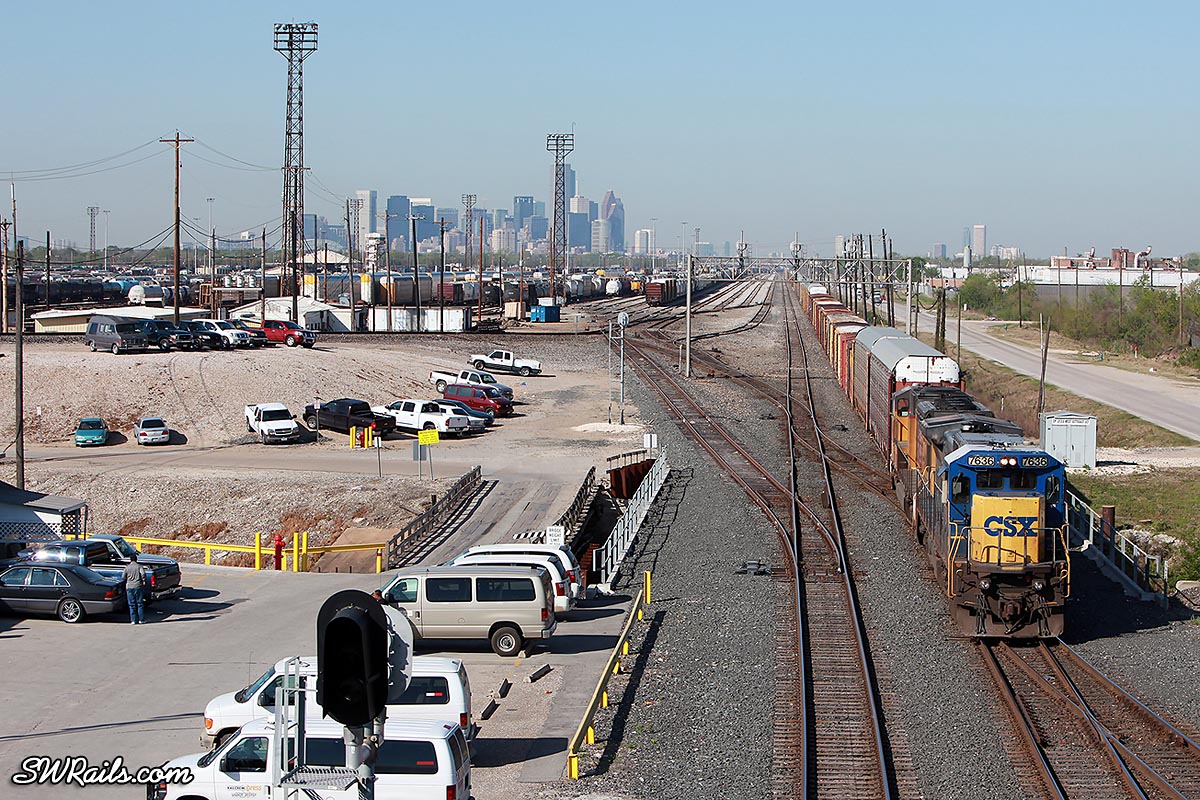
UP intermodal ILBNO waiting for its outbound crew at Englewood Yard, March 29, 2010
UP symbol ILBNO denotes Intermodal Long Beach, CA – New Orleans, LA. The Englewood bowl yard extends across the majority of the background, with the Houston skyline in the distance.
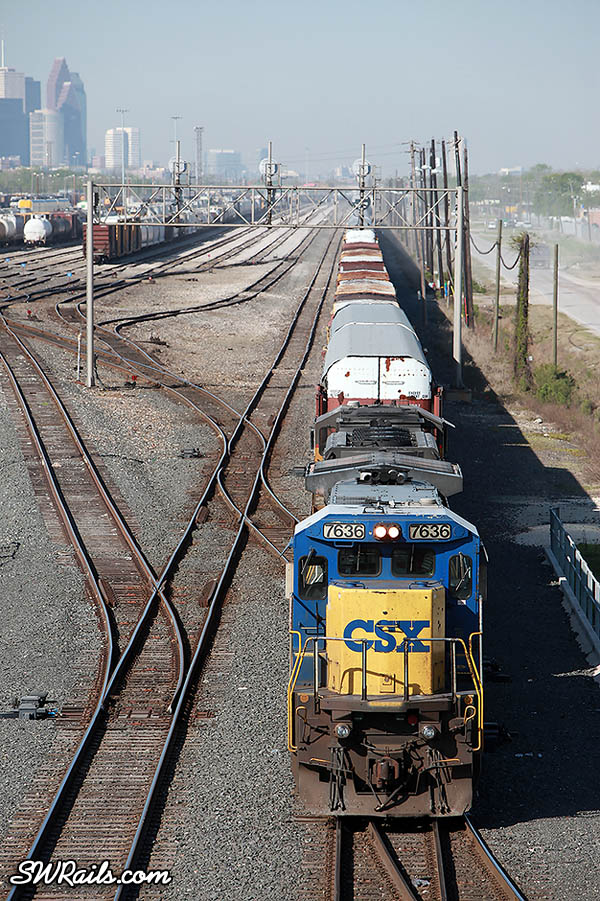
200mm lens perspective of the ILBNO from the Wayside Ave overpass
After shooting the ILBNO, I came across a manifest moving south on the West Belt sub. I set up near just north of Cullen for the shot of UP 9701 South, the MHOFP train, (Manifest Houston – Freeport, TX) which is mostly empty tanks for Dow Chemical.
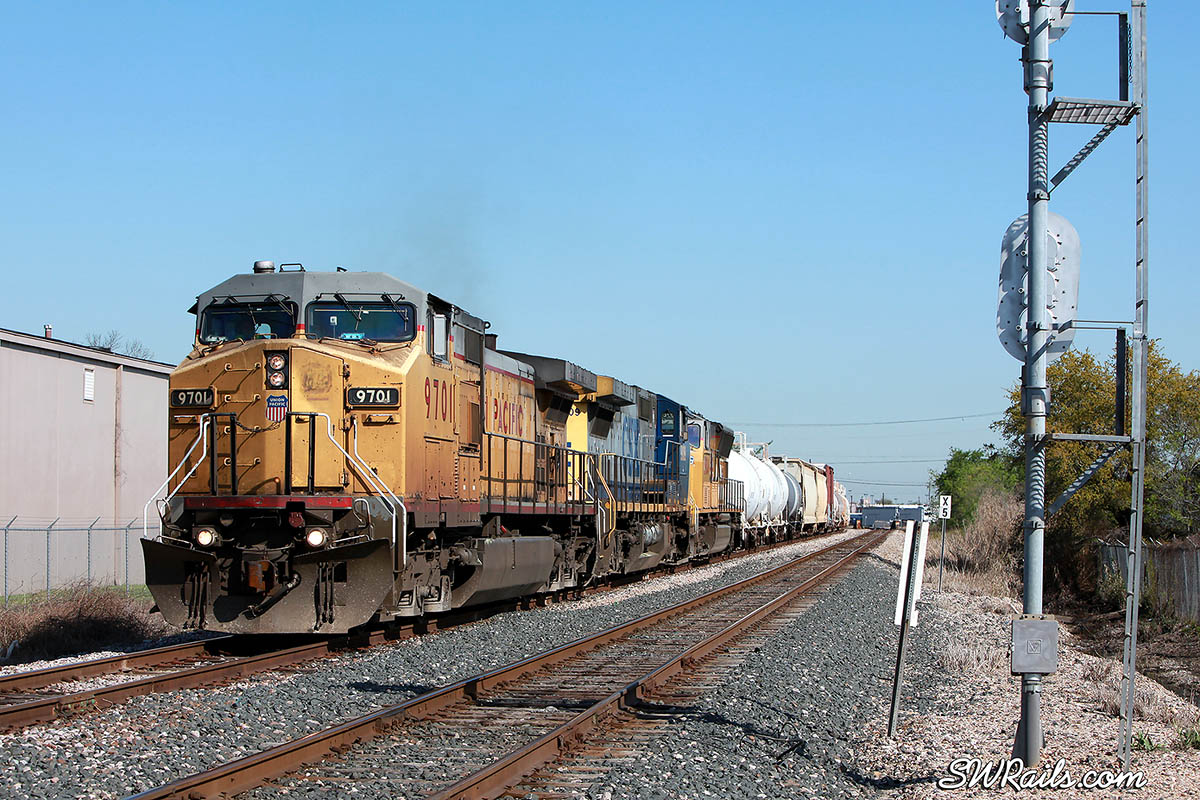
UP 9701 passing CP H237 on the West Belt sub in Houston on March, 29, 2010
Today, these trains are quite forgettable because they’re so unremarkable. Yet the unremarkable train of today is the OMG! train of tomorrow.
The moral of the story? Get them while you can….
SP C415 2405 – Before & After

SP 2405 and 2406 working a switch job at City of Industry, CA on Nov. 29, 1967
The SP, long a faithful Alco customer, acquired 10 C415 switchers in 1966. Numbered 2400-2409, they operated from SP’s yard at City of Industry in pairs throughout the LA Basin. The 10 units were prone to mechanical problems and were retired by the SP in 1977.

Ex-SP C415's en route to Mexico shown at the SP team track in Brownsville, TX on July 28, 1977
I had driven from McAllen to see if the SP had anything going on in Brownsville. Nothing was running, but as I explored I came across an amazing sight.
Four ex-SP C415’s were on the Brownsville team track. I’d never seen engines like these, so I got busy with my brand-new Minolta SRT-202. Unfortunately, I had been persuaded by a railfan magazine that B&W was the only proper way to document locomotives, so I did not take a single slide of this scene. At least I had the sense to use a red filter on some of the shots so the B&W film could capture the contrast between red and gray colors.

Note the Southern Pacific Motor Freight truck in the background-when the SP did it all!
I later learned that the 2405, 2400, 2408, and 2401 had been sold to Fundidora Monterrey, a steel mill in Monterrey, Mexico. They were in parked in Brownsville awaiting clearance from Mexican Customs.

Ex-SP C415 2400 at Brownsville, TX on July 28, 1977 awaiting clearance to travel into Mexico
Note the old-school SP light package: headlight, oscillating headlight, oscillating red emergency light, and 2 class markers. I don’t need no stinking ditch lights!

Note the vent work directing engine exhaust across the top of the hood to above the cab roof

This photo was taken without a red filter. Notice how red and gray register as one shade of gray.
Fundidora Monterrey closed down in the early 1990’s, and the site was re-developed into Fundidora Park. It includes an amusement park, water park and other attractions including a museum where one of the ex-SP C415’s has been preserved.

Fundidora 25, an ex-SP C415, has been preserved and is displayed in Monterrey, Mexico
KCSM 4759 West at Stafford, Texas
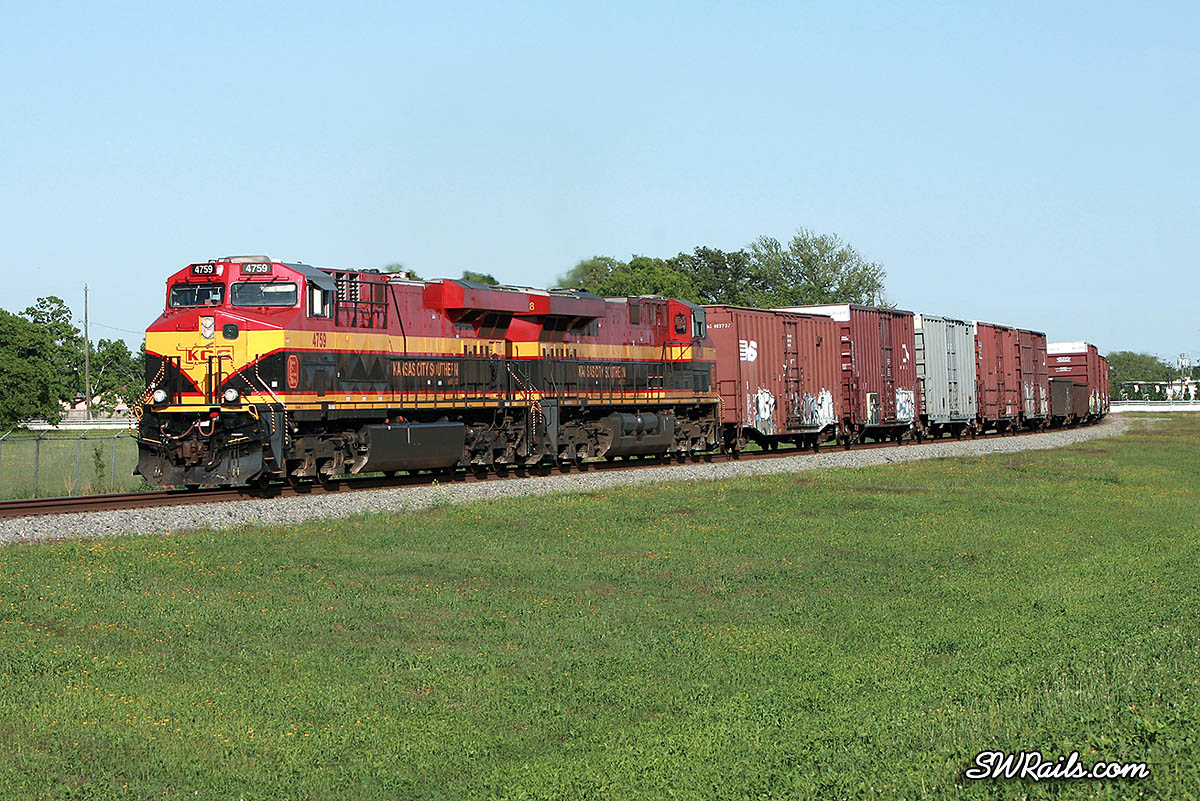
KCSM ES44AC's 4759 and 4758 power the IJALZ train through Stafford, TX on April 28, 2010
I was on my way to photograph a bridal portrait yesterday afternoon when I came across this fine-looking westbound train. A quick U-turn and some good luck with the rush hour traffic lights allowed me to get into position in Stafford with maybe 30 seconds of time. Plenty of time to get the shot, right?
The only problem was I’d already set the camera for the bridal session. No problem. All I had to do with change the focus point, adjust the ISO to 200, shutter speed to 1/800, aperture to f8, mode to manual, and last but not least, focus the camera and push the button. I don’t think I’ve ever made so many adjustments so quickly!
I was almost afraid to look at the shot because I just knew that something had to be wrong. But I was wrong!
My only quibble with the picture is the composition. I wish I’d placed the train higher in the frame to get more of the foreground.
Southern Pacific A-B-A-B-A Power Consist

SP GP40-2 7952 with SP manifest EUALM just outside of Eugene, OR on June 2, 1992
The EUALM was a daily manifest between Eugene, OR and UP’s Albina Yard in Portland, OR. The June 2, 1992 edition of the train ran with an unusual power combination: an A-B-A-B-A set.
The second and fourth units are Tractive Effort Booster Units. Known as TEBU’s for short, the SP received 14 of these road slugs in 1980. They were re-built from retired U25B’s.
Technically not B-units because they lack a diesel motor, they were used primarily in Arizona and Texas. A recent post showed a TEBU on an aggregate train in Houston.
Railroad State of the Art, 1944 and 2010
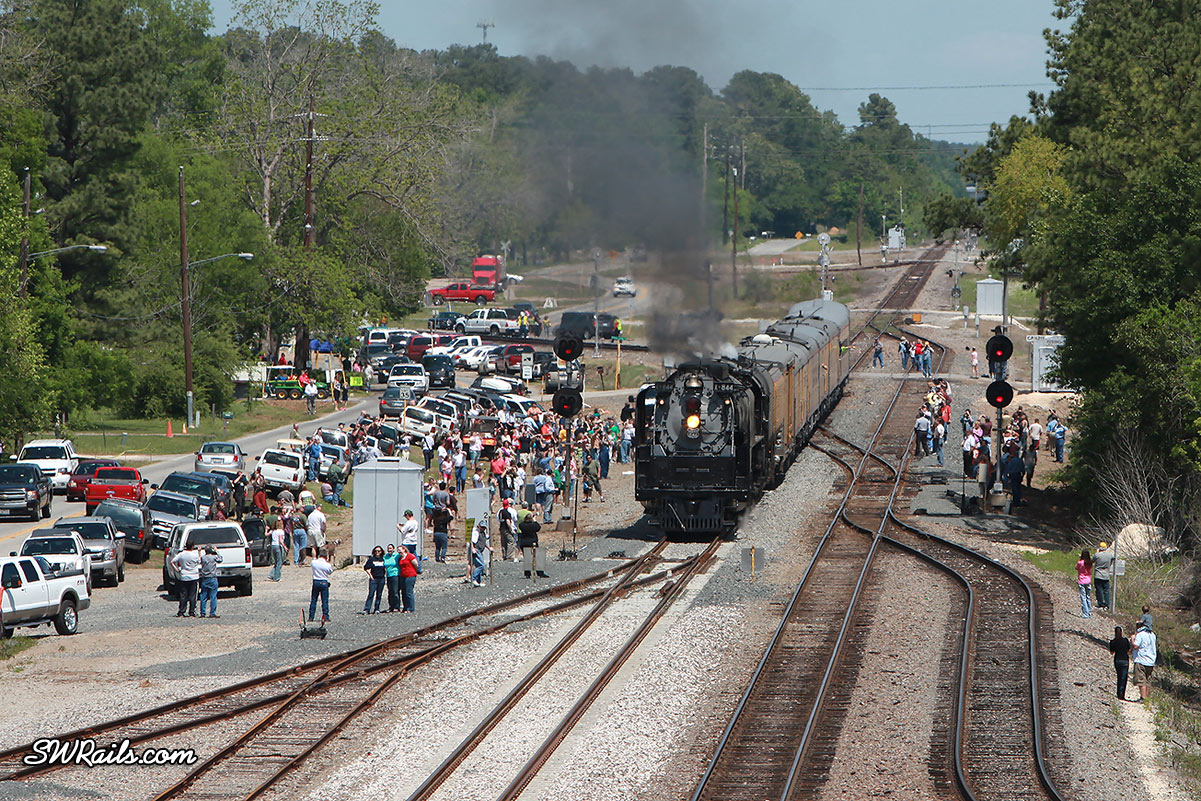
Amid it admirers, UP 844 departs Spring Junction (far north Houston) on April 11, 2010
With all of the UP 844-related hoopla the last several weeks, I had no intention of just posting a “pretty picture” of it. You’ve already seen pictures elsewhere, and there are other topics I’d like to cover.
Having said that, you might be thinking “Well, why did you just post another picture of it?”
I posted the shot because it illustrates two state-of-the-art railroad technologies, one from 1944 and one from 2010, a span of 66 years.
UP 4-8-4 844 was a cutting-edge steam locomotive when built in 1944. “The FEF-3 class locomotives represented the epitome of dual service (passenger & freight) steam locomotive development”
As to the state-of-the-art railroad technology from 2010, I’ll leave that up to you to reveal in comments. You won’t win anything , but you will have bragging rights over the other two readers of SWRails.com. :=)
Remember, you can click on any image here to see a larger version.
Plastic Pellets Passing Through Pasadena
I got out a bit this past Sunday. There were some errands to run on the east side of town. As it was sunny, I felt it prudent to grab the camera case just in case I saw something. Nothing like mixing work and play, right?
I didn’t see much of anything until I went by the UP’s Strang sub in Pasadena, a suburb on Houston’s east side. In the distance, I saw a westbound train. I knew I could get some nice light on it, so off I went to get ahead of it.
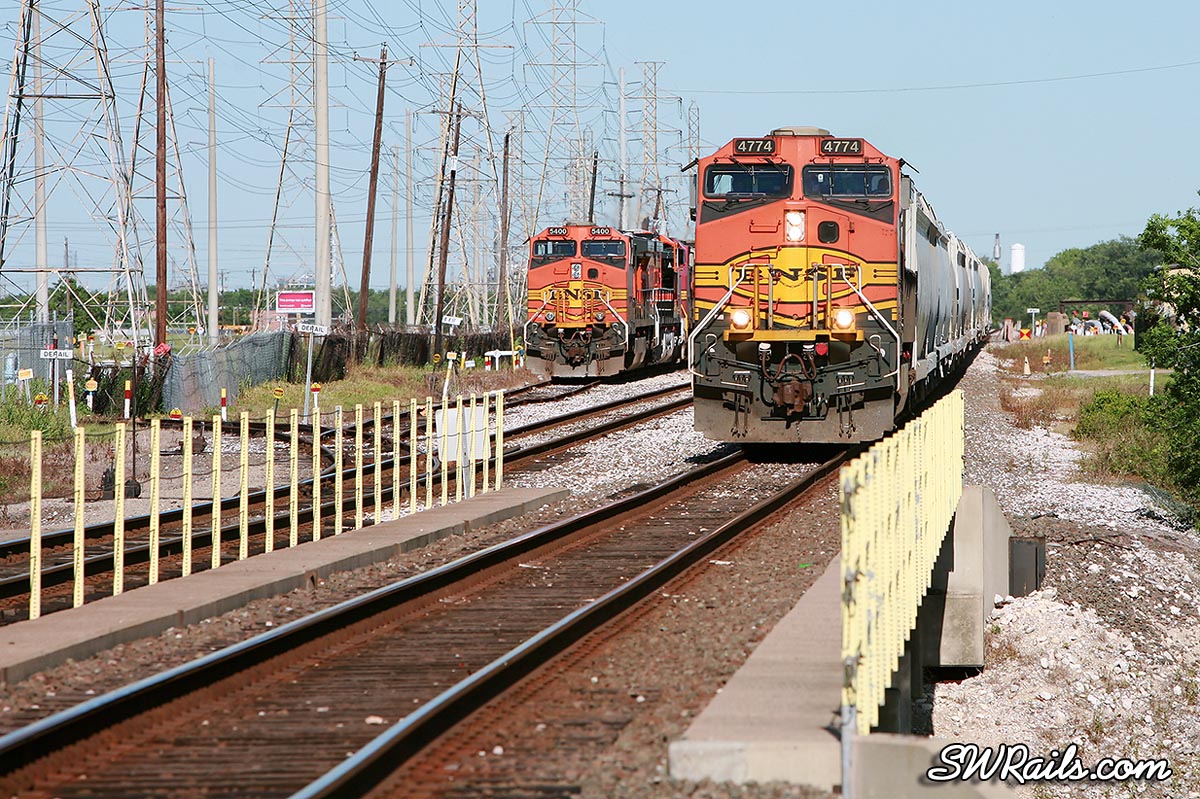
BN 4774 approaches the Vince Bayou Bridge in Pasadena, TX on April 25, 2010
We’re at MP 10.5 of the UP Strang sub, a seemingly unremarkable stretch of trackage in an industrial setting. Yet within a mile of this location is the spot where in 1836, General Santa Anna was captured after the Battle of San Jacinto, the battle that established Texan independence from Mexico.
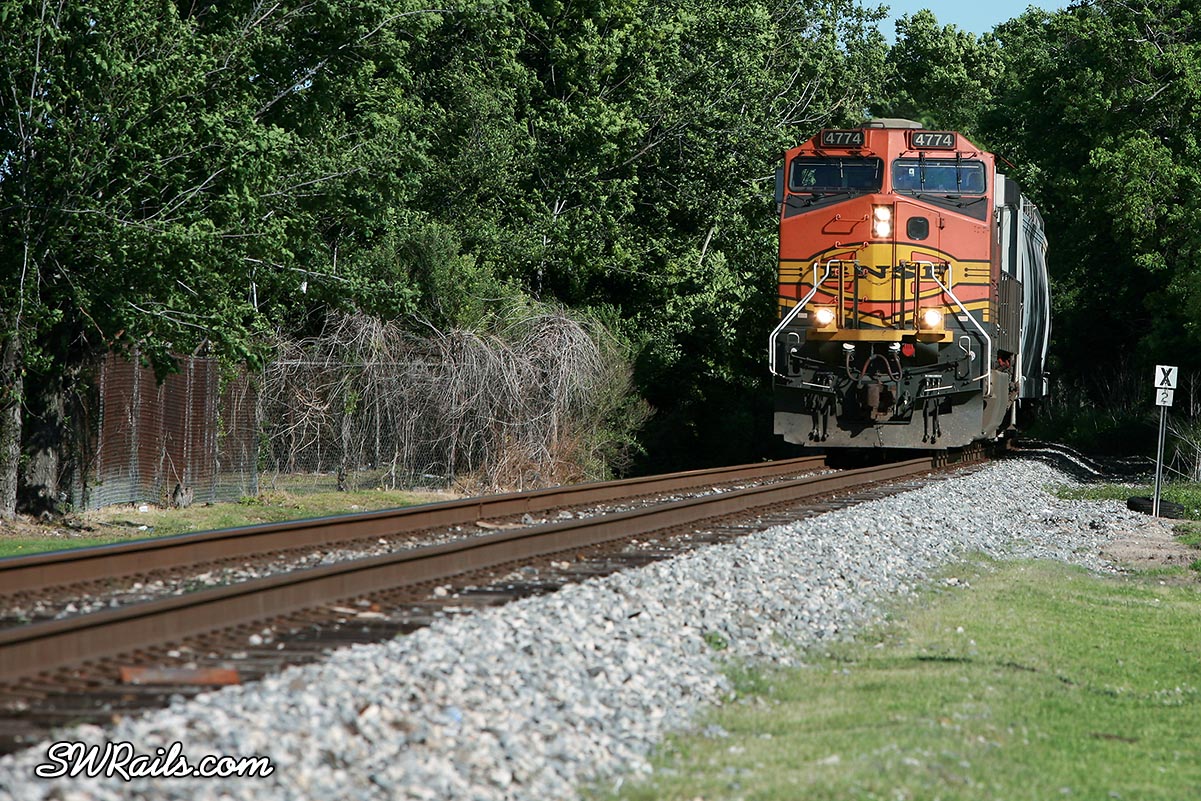
BN 4774 on the approach to Manchester Jct. in southeast Houston on April 25, 2010
I moved up to Manchester Junction, MP 5.9, where the PTRA converges with the UP. The train is coming out of a little wooded area that’s at the edge of a small park that’s adjacent to the track.
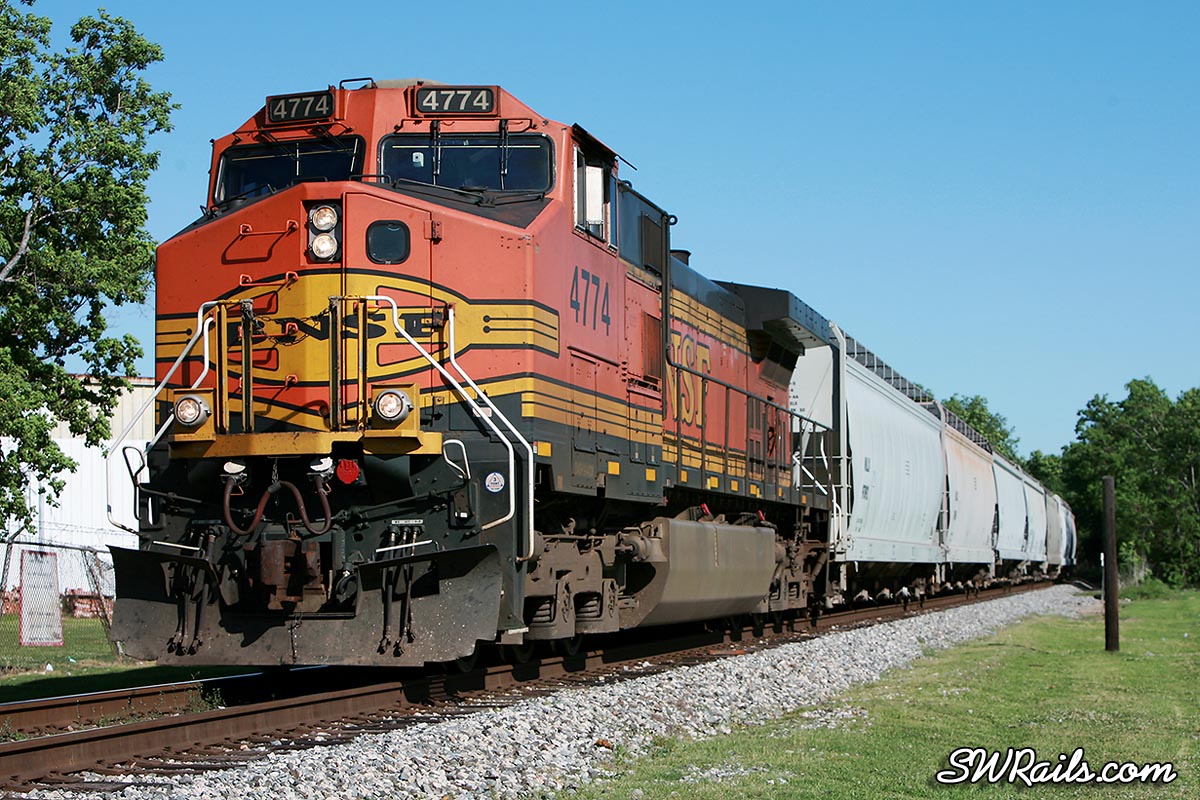
A classic wedge view of the BNSF 4774 at Manchester Junction
The train was short, only 20 cars of MLLX hoppers loaded with plastic pellets. MLLX is the reporting mark for Montell USA, a plastic manufacturer since acquired by Basell USA which then merged with Lyondell Petrochemical to form LyondellBasell. And you thought that banks changed their names a lot!
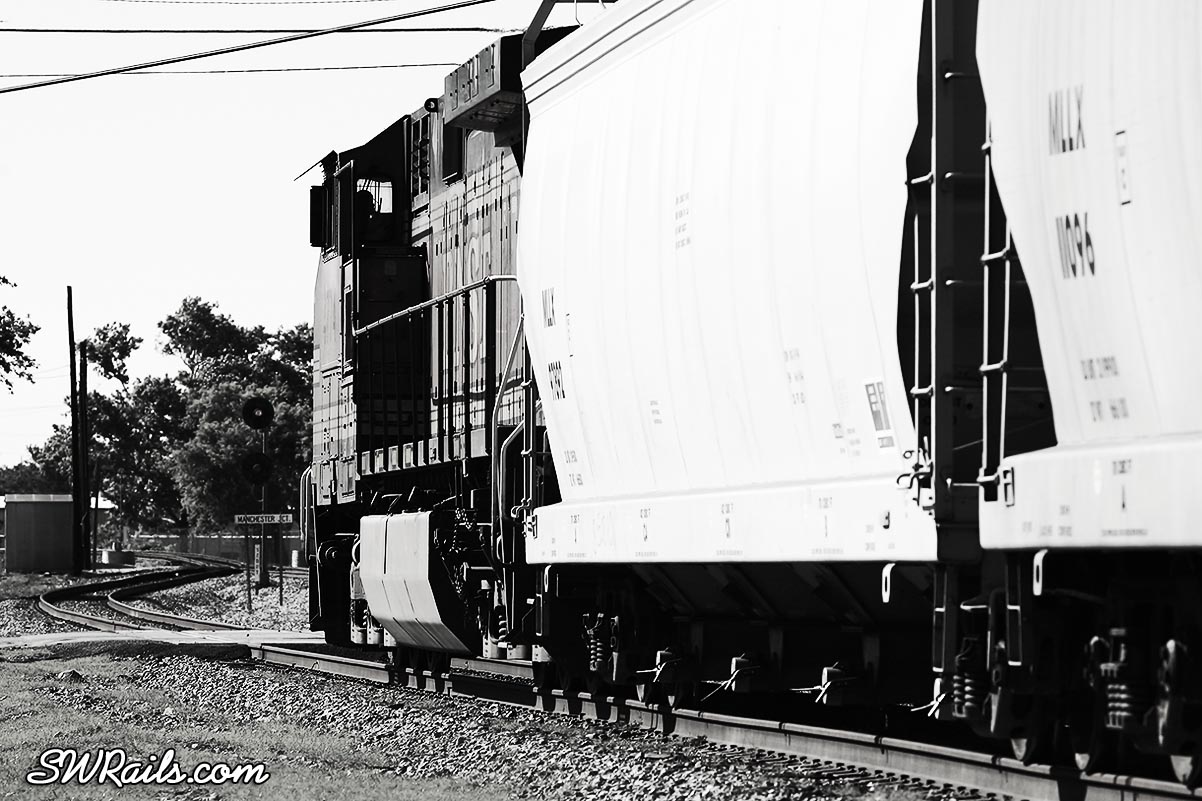
Note the PTRA trackage converging with the UP just beyond the signal
As the signal for the 4774 was a hard yellow, I went ahead to see if it would stop at the Katy Neck. It didn’t, but as luck would have it, the 4774 was moving slow enough that I was able to get ahead of it and set up at the north end of Booth siding. After a few minutes, the 4774 appeared in the distance, but seemingly on the wrong track. As it got closer, it became apparent that the 4774 was going into Booth Yard.
No problem. Plenty of time to re-position for the different route.
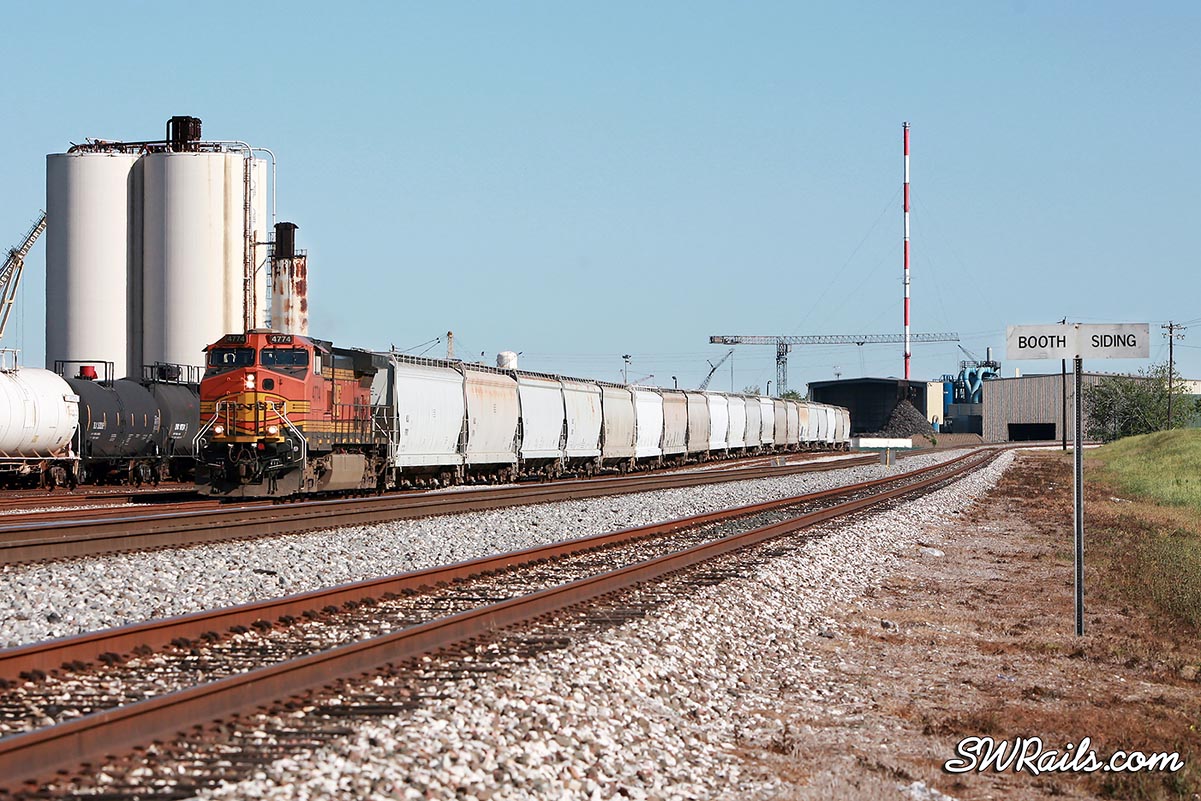
BN 4774 entering Booth Yard in southeast Houston, April 25, 2010
As the head-end slowly went by me, the conductor was already on the ground with paperwork in hand. They apparently had some work to do here at Booth, so the chase will end here.
P.S. I could not resist the allure of alliteration for the title of this post. Sorry…
UP 844 – The Valley Eagle-Houston to Bloomington
Finally! You wouldn’t think it would take me 10 days to get the next segment of Valley Eagle footage edited and posted, but then again sometimes I just have to do other stuff. Like work, file taxes, yard work, computer issues…
I shot and edited this segment a little differently than the Navasota to Houston trip. The shots were more spread out, and I tightened up the footage a bit more.
I’m happier with the pacing footage in this segment. It could be because I wasn’t driving and shooting at the same time! Thanks to my son, Eric, for the NASCAR-esque moves to get the car into position for the pacing shots.
PS-When the video starts to play, please click the button at the bottom, right side of the player marked “360p”. It will convert the playback to 480p, which will look a lot better. (Disregard this if you are on a dial-up connection)
The Drama is Timeless
Change is relentless. Steam gave way to diesels. The Santa Fe gave way to the BNSF. Conventional cabs gave way to wide cabs. And so it goes. But there is one constant.
The drama. The drama of man vs. nature. The constant parade of trains, laden with thousands of tons of goods, battling gravity, struggling to reach the summit of Cajon Pass, then its final destination.
No matter the conditions. Rain or shine, day or night, the lifeblood of our consumer society travels via railroad to its destination. Consumer demand will never end.
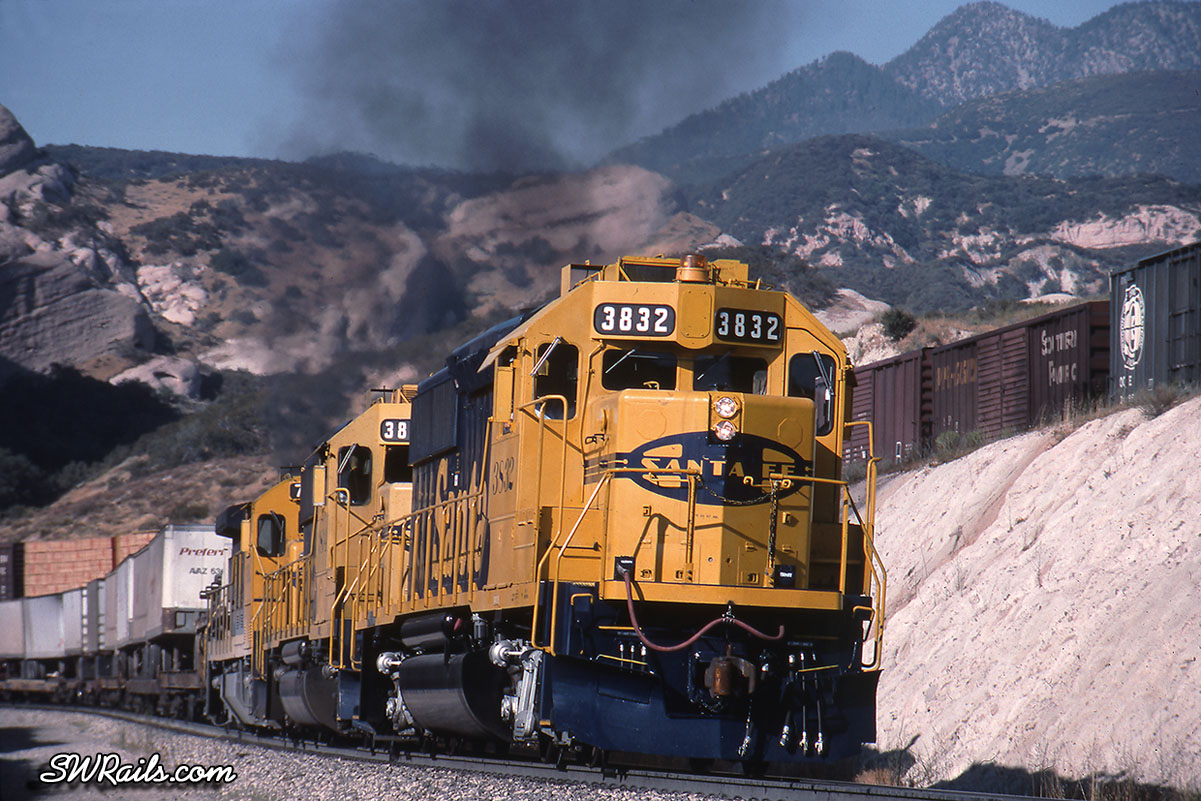
Santa Fe GP50 3832 leads the 881 train as it blasts around Sullivan's Curve on July 2, 1988
This photo illustrates that drama. The lead engine is at just the right angle to convey a sense of urgent motion while the boiling plume of exhaust illustrates the effort that the locomotives are exerting as they battle the 2.2% grade of Cajon Pass.
Bad Light, Awesome Sound
Over the years I’ve taken more “bad” shots than I care to think about. Poor composition, not in focus, over/under exposed – you name it, I’ve done it.
But the number one thing that messed up a shot was poor lighting, either back-lit or high sun. I just didn’t know any better.
A lot of photographers toss their bad shots immediately. I could never do that. The way I saw it, I had paid for the slides – why throw them away?
The passage of time has made me glad that I saved all of my bad shots. Yes, some of them are horrific, and you’ll never see them. :=) But there are others slides that may have some issues, but the subject matter makes me glad that I kept the shot vs. tossing it.
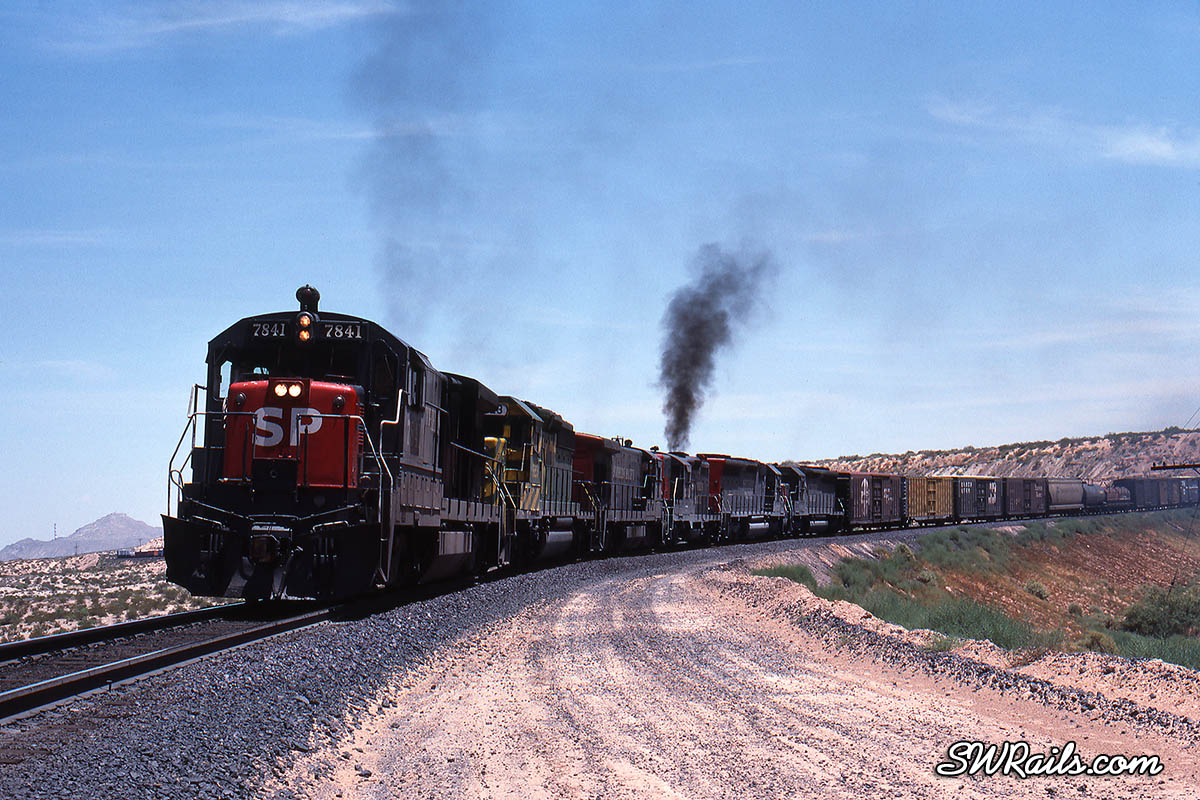
A westbound SP manifest traverses the curves at Lizard, NM on June 26, 1985
The sun is too high, putting the trucks of the motive power in deep shadows. But the shot documents the sound perfectly. Note how hard the GP9 in the consist is working.
The engineer has the throttle wide open to keep his train moving up the grade and through the curves at Lizard, NM yet the train was making no more than 10 mph as it passed me. The absence of exhaust smoke from some of the units make me suspect that some of the units had died.
Lizard is the first siding west of El Paso. Look closely just to the left of the mountain in the background. You’ll see the smokestack from the ASARCO smelter on the west side of El Paso. Lizard is about 5 miles west of Anapra, which I mentioned in a previous post.
This area is pretty much off-limits now due to its proximity to the border with Mexico. Between the Border Patrol, UP police, drug smugglers, railcar vandals / thieves, snakes, scorpions, etc. , you probably won’t have a good time out here…
 Southwest Rails