Wrong Way Rock Train?

SSW GP40 7960 leads a hopper train westward, just west of Englewood Yard, on March 30, 1986
Just another photograph of a Southern Pacific westbound loaded aggregate train, taken from the Waco Street overpass on March 30, 1986.
Westbound? Loaded? Hold on a second! The train is going the wrong way! (I can’t believe I didn’t notice this when I saw the train.)
Loaded rock trains originate in Central Texas, Beckman being the primary origin symbol (BM). The loads travel eastward to Houston. Empties return westbound to Beckman.
Yet this westbound train is clearly loaded.
I looked at the high-resolution scan of the slide for clues to answer the question. The hoppers appear to be loaded with sand, not rock.
I suspect the trainset, upon being relieved of its Central Texas rock at Galena Park, was loaded up with sand. The Galena Park cement plant is on the Houston Ship Channel, so the sand may have come in via barge from Mexico. It was transferred to the empty aggregate cars for delivery to a concrete plant, probably in the Austin / San Antonio area.
That’s the best explanation I can come up with. If you have additional information, please share it in comments.
Notice the trainset of identical hoppers. They are SP H-100-42 class hopper cars. (H-100-42 refers to a hopper, 100 ton capacity, 42′ long)

The SP received 250 of these cars, SP 481150-481399, from Ortner in 1981. The cars are very distinctive in that they have a “porch” at each end. The longer frame allows the weight of the car to be spread out over a greater area, reducing the impact on the track structure.
UP C40-8 9345 Gets Around…
It’s hard to believe most UP C40-8’s are in storage, with a better than even chance that they don’t run again.
Let’s go back about 2 decades, to a time when the C40-8 was front-line power on the UP:

UP 9345 leads an eastbound APL train approaching the summit of Cajon Pass on June 13, 1989

UP 9345 on the point of a loaded coal train in Kansas City, Kansas on Oct. 16, 1990
Evolution of a Switcher – HB&T SW9 31
The Houston Belt and Terminal Railway Company was chartered on August 31, 1905, to provide passenger and freight terminals in Houston for four railroads that eventually became the MP, ATSF, BN and Rock Island.
The company no longer exists, its assets and operations divided among the UP and the BNSF in the mid 1990’s.
HB&T diesels wore two colors over its history: black until the late 1970’s, and an attractive yellow until the end.
The only exception was SW9 31. As HB&T’s bi-centennial unit, it sported red, white and blue for a few years during the bi-centennial era, 1975-1979.
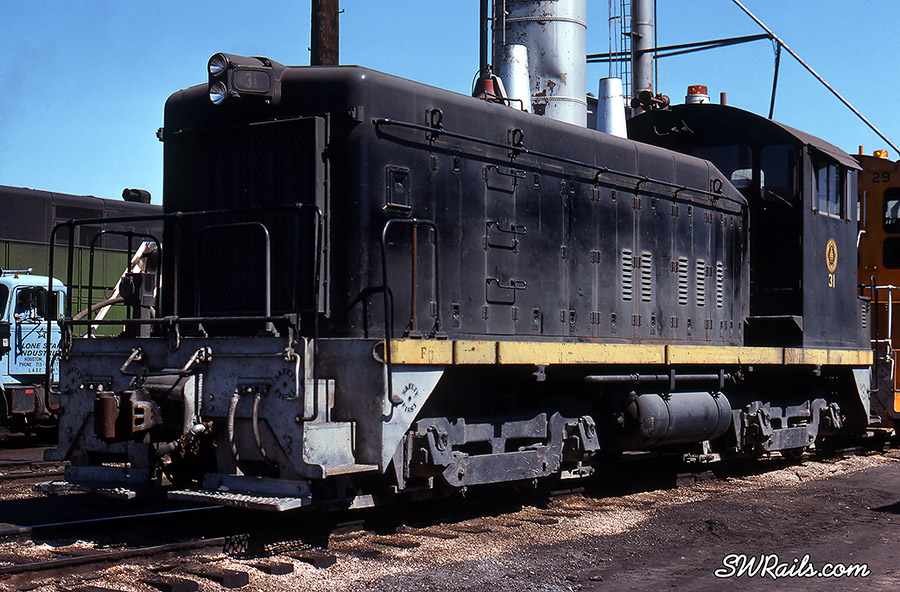
HB&T 31 in as-delivered black with yellow frame stripe at Milby St. roundhouse on August 1974
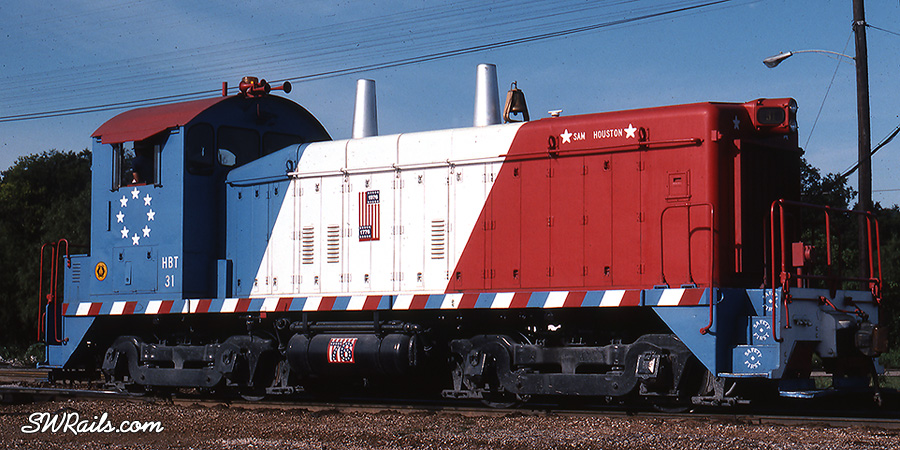
Looking slightly less austere, HB&T 31 works Old South Yard in Houston, April 25, 1976
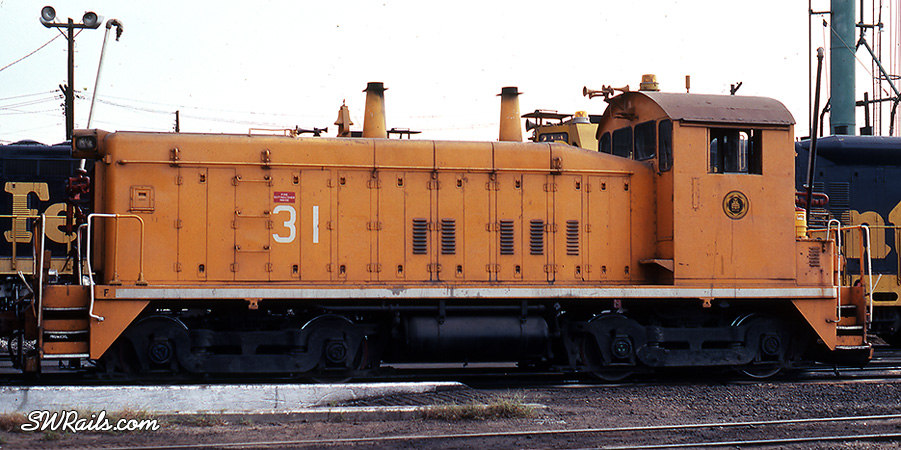
HB&T 31 in its final colors at HB&T's Milby Street Roundhouse on Oct. 2, 1982
HB&T was retired in 1986. It was acquired by then start-up railroad Wisconsin Central. It became WC 1231.

WC operated the unit in HB&T colors for several years before painting it in WC colors

WC 1231 shown here at Spooner WI in June 1994
The unit that began its career in 1951 as Houston Belt & Terminal was finally retired for good in 2002. 51 years after leaving the EMD erecting floor, it became a casualty of the Canadian National acquisition of the WC.

Retired WC SW9 1231 at Memphis, TN in 2002, being stripped of reusable components
BN Fuel Tenders
A fuel tender is a specially equipped tank car which serves as an auxiliary fuel tank for the locomotives connected to it. The fuel tender includes multiple unit (MU) connections and fuel lines so it can be spliced between two or more units.
The BN expanded its use of fuel tenders to main line freight trains in 1987. They were configured to work with BN’s GP50s, B30-7As, and LMX B39-8 lease units. The advantage of fuel tenders was fewer stops and the ability to purchase fuel where the BN could find the best regional price.
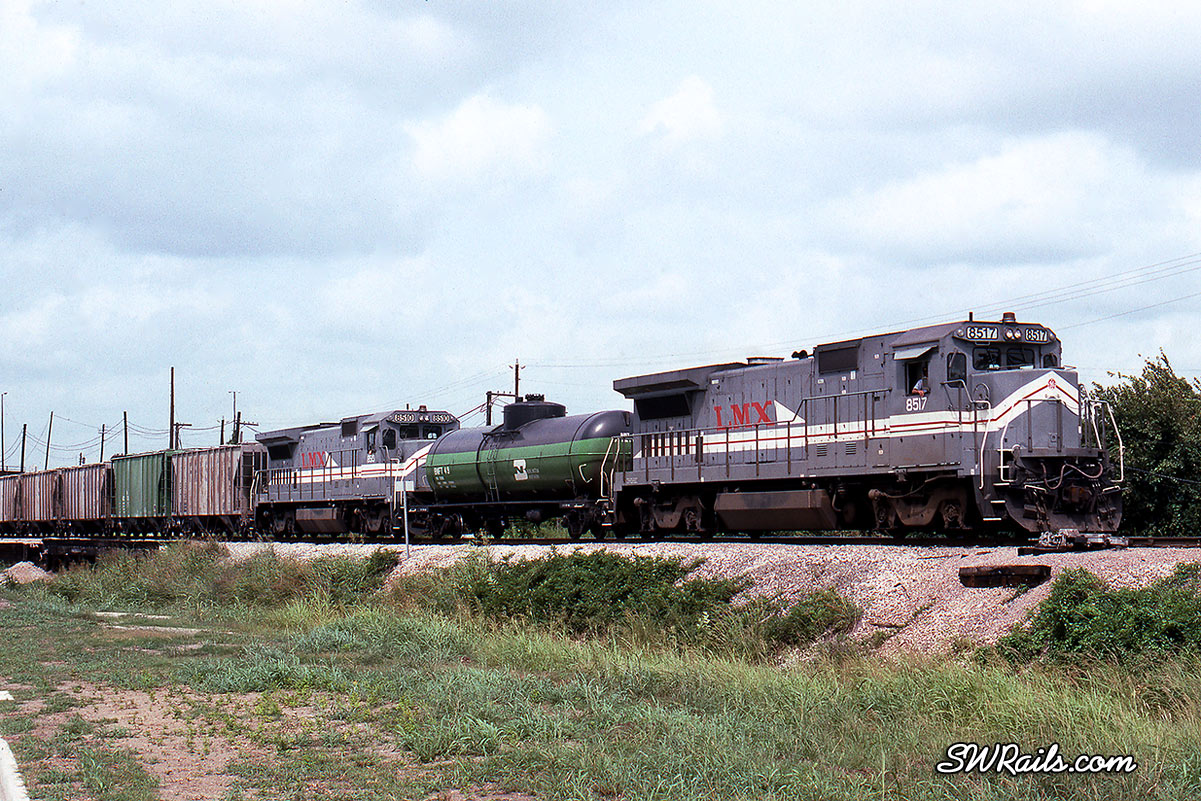
A southbound BN manifest travels just south of Tower 87 in Houston on Sept. 18, 1988

BN's locomotive paint scheme was applied to all fuel tenders. BNFT 49 at Houston, Sept. 18, 1988
The fuel tender program ended, other than for Powder River basin helper sets, by 1991. The primary reason for ending their use was the price of diesel was dropping in the early 1990’s. Unexpected wear and tear on the fuel tenders themselves was also a factor, since tank car frames are not built to take the buffeting and longitudinal forces that locomotives are designed for.
Mutt & Jeff Motive Power
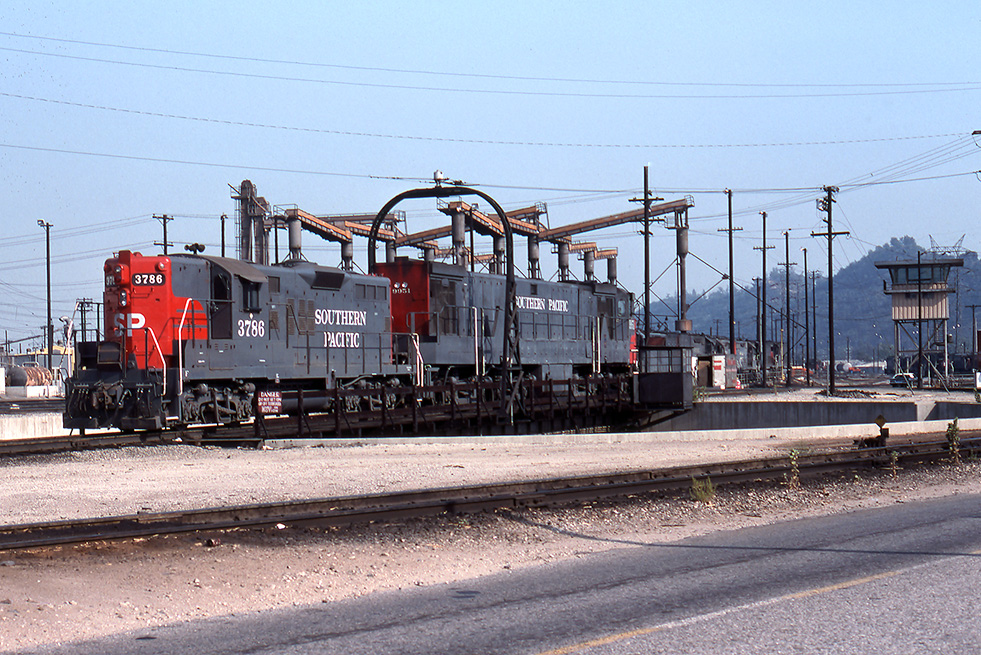
SP GP9 3786 and U50 9951 on the Taylor Yard turntable in LA, August 1977
The size differential between the two units is dramatic. SP GP9 3786 is 56′ 2″ and weighs 240,000 pounds. U50 9951 is 83″ 05″ and 557,000 pounds. Wild lash-ups like this were common on the SP in Southern California in the late 1970’s.
For those of you that might not know about Mutt & Jeff, they were the “Rob & Big” back in the day. They were the primary characters in the first successful daily comic strip. It ran from 1907 to 1980.

Today in History – 1980
During the first 6 months of 1980, I had a job that involved driving throughout the Rio Grande Valley. I would take my camera with me just in case I saw something interesting.
The Missouri Pacific’s main facility in the Valley was its yard in Harlingen. Assigned motive power was non-turbo’d Geeps, but the road trains would have anything from GP35’s to U30C’s. All of which is interesting enough, but my visit to the Harlingen roundhouse on April 2, 1980 was slightly more interesting than usual.
As I pulled in, I saw some uncharacteristic color among the engines. “What’s that red thing?” I thought to myself.

GTW SD40 5912 adds some color to the MP Harlingen, Texas roundhouse tracks on April 2, 1980
The “red thing” was GTW SD40 5912. I had no idea what it was doing here, but this is exactly why I had a camera with me.
After taking my pictures, I checked with the roundhouse foreman who advised me that the MP was leasing some engines because of a motive power shortage.
Union Pacific 2010 Introduction – Video
Video report of the event by the Houston Chronicle:
UP 2010 Unveiled
The UP unveiled its locomotive commemorating the centennial of the Boy Scouts of America today. The event took place at the Amtrak Depot in downtown Houston.
I had originally planned to arrive early to video the unveiling, but last-minute client needs delayed me. I arrived the Amtrak Depot about 11:45 AM, pleasantly surprised to find a parking spot easily.
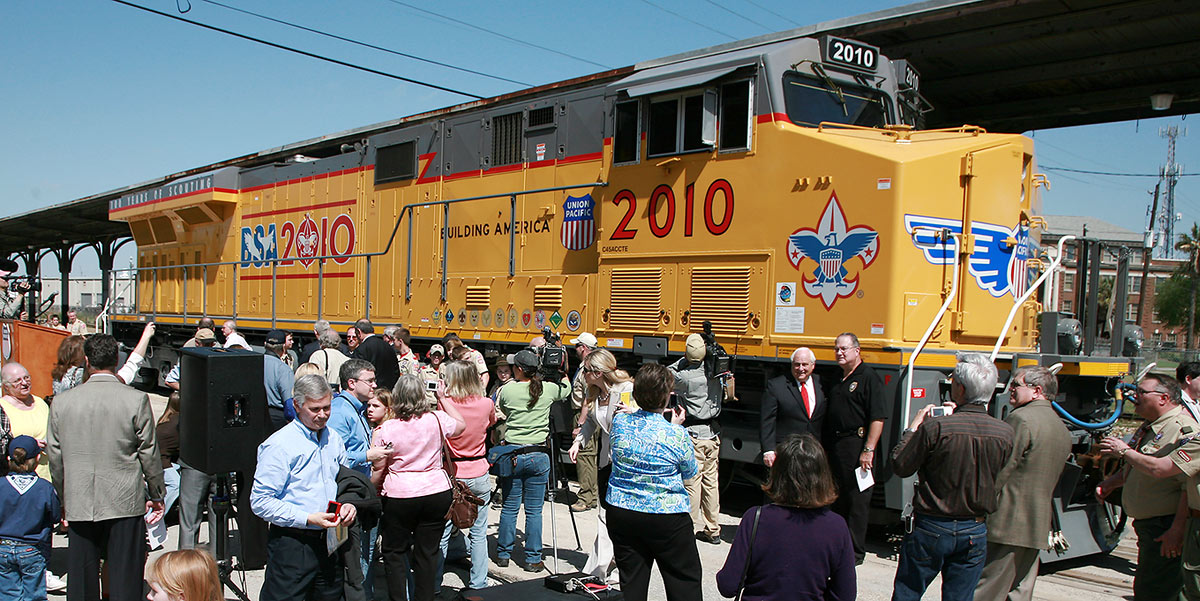
Guests and media surround the 2010 shortly after its introduction on March 31, 2010
The idea to commemorate the Boy Scouts with a locomotive began with Stuart Schroeder, a UP dispatcher. Some of you may have heard Stuart on the radio. “SLS” works the Glidden sub, first trick.
The sun was fairly high, but I was able to get a few shots once the crowds dissipated.
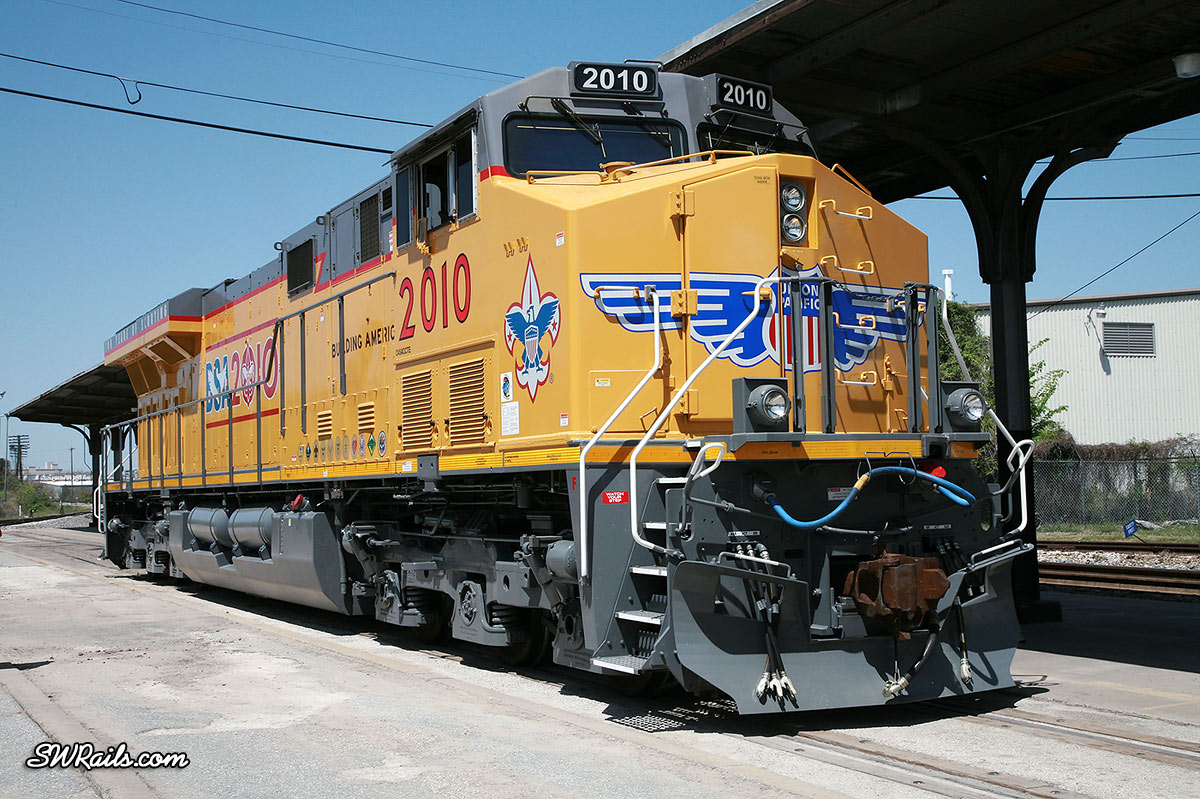
UP 2010, shortly after its official unveiling in Houston, March 31, 2010
The dais was not removed until after the locomotive had departed, so this was the only angle available for a roster view. I did get a few detail views of the unit.
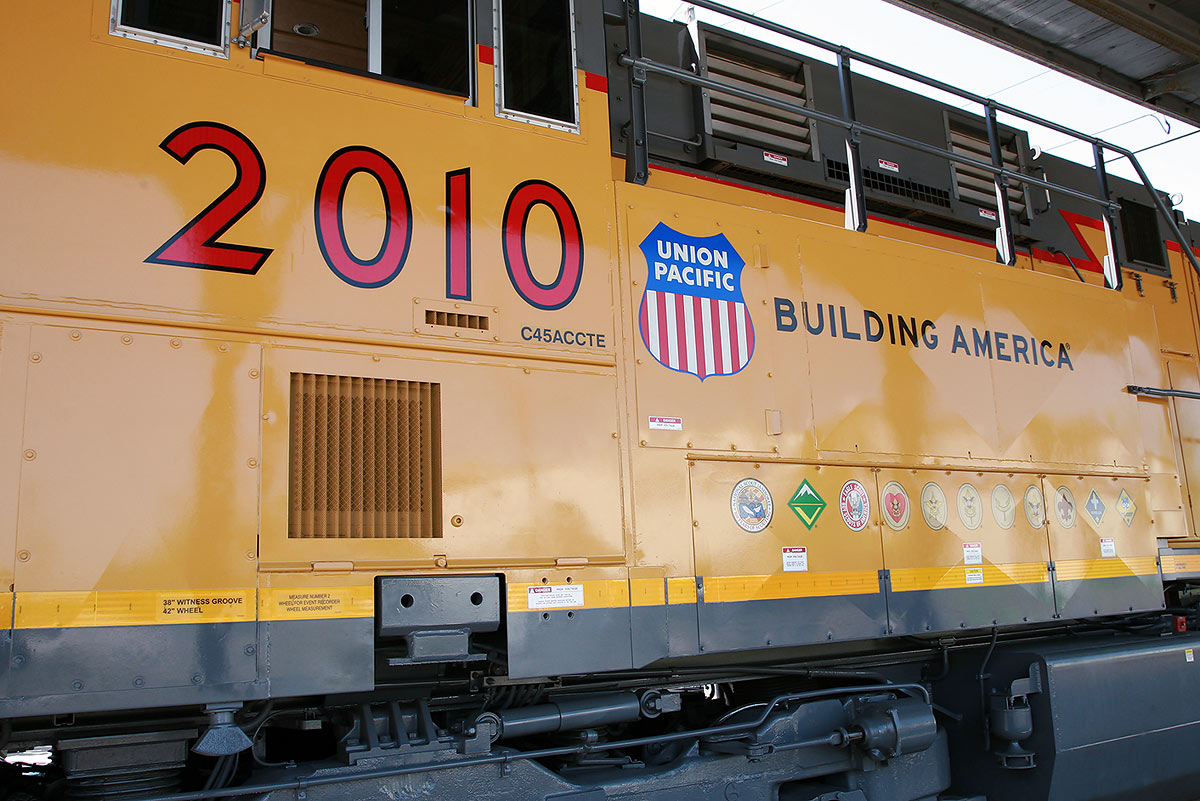
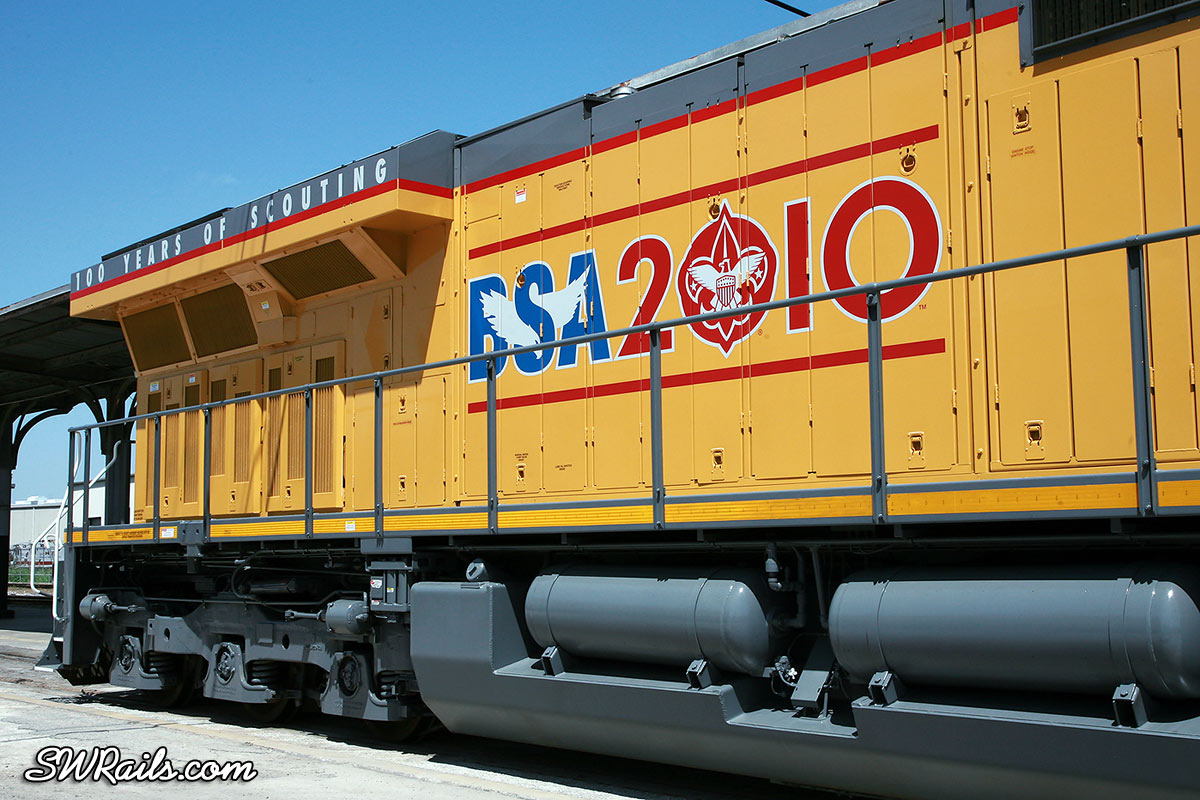
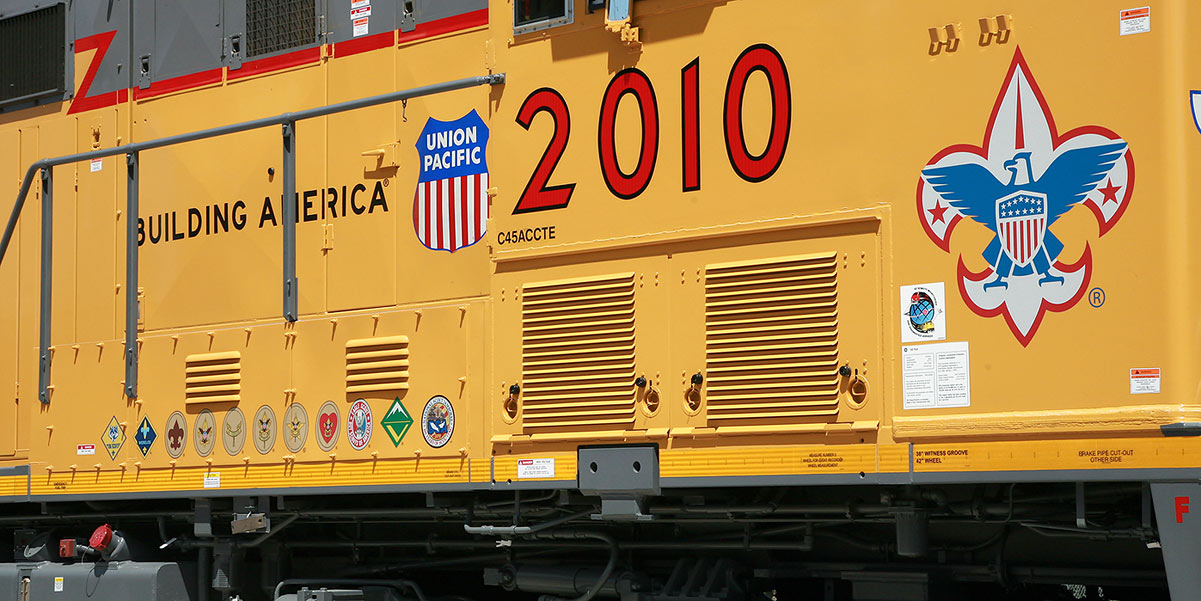
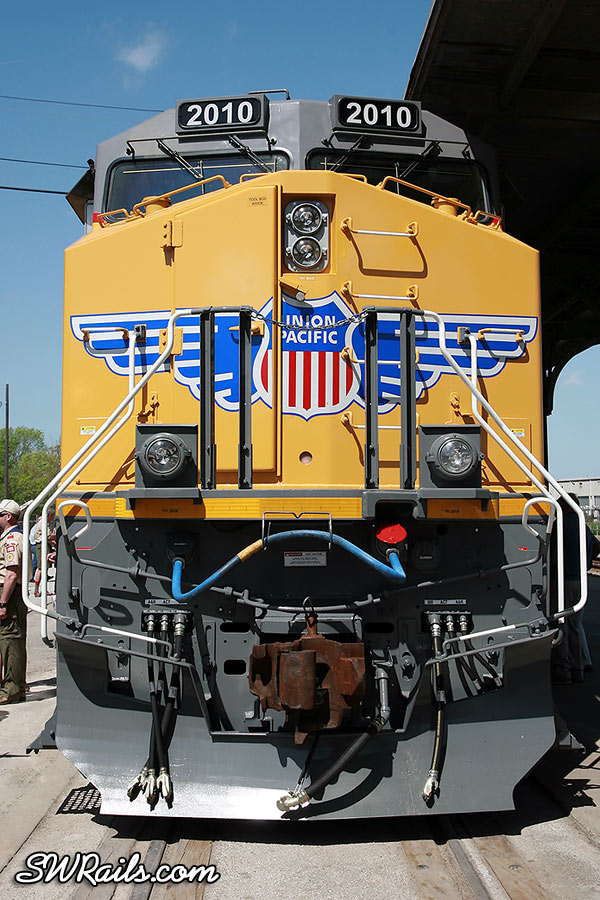
There’s been some grumbling among railfans that the unit is not all that. It’s certainly not as unique or colorful as the Heritage engines, but then what is?
My take is the UP has done more with regard to its history and heritage than all other railroads combined. Think about it- two steam engines, the Centennial, the E units, the Heritage locomotives, the Olympic engines, etc.
Thanks, Union Pacific…
SP Heritage Returns to Houston
After heading to the Valley late last week on the MEWOL train, UP’s SP Heritage SD70ACe 1996 returned to Houston this morning on the MOLEW-27 (Manifest Olmito,TX to Englewood Yard).
The rare combination of Heritage power / good weather / acceptable light and sufficient notice motivated me to get some video and a few stills of the UP 1996 as it entered Houston this morning.
Most of its route was somewhat backlit, so that’s on video, but I was able to get a few stills after it turned into the sun at Tower 26 for the last 2 miles into Englewood Yard.
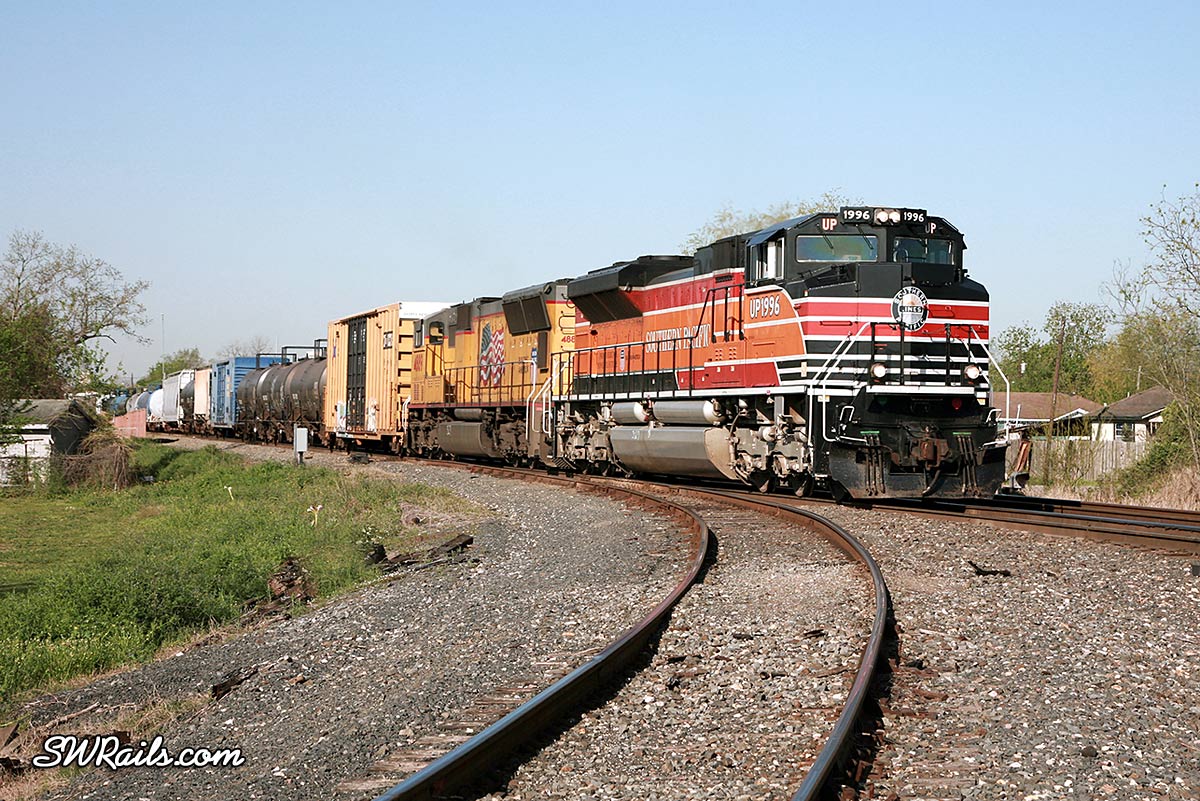
The MOLEW-27 at Bell, just west of the Englewood Ramp, on March 29, 2010
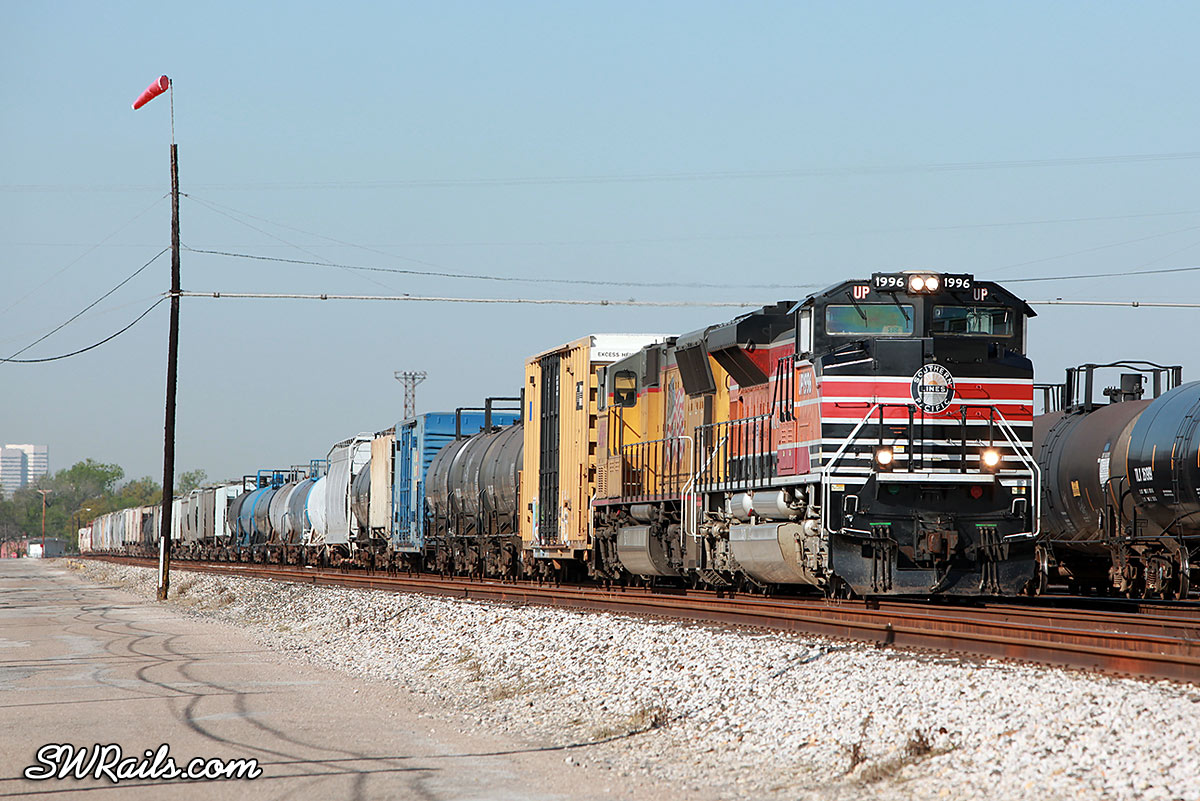
The MOLEW-27 drags into the Englewood receiving Yard on March 29, 2010
The video shows the train at South Mykawa, T&NO Junction, CP H237, Bell (between CP LF360 and CP LF359) , and at the west end of Englewood Yard.
Carpetbagging in Fort Worth – Part 2
No sooner had the UP 8098’s DPU passed under our position, a NB BNSF manifest came into view. We moved over to the west side of the overpass to get the sun, albeit backlit, on the train.
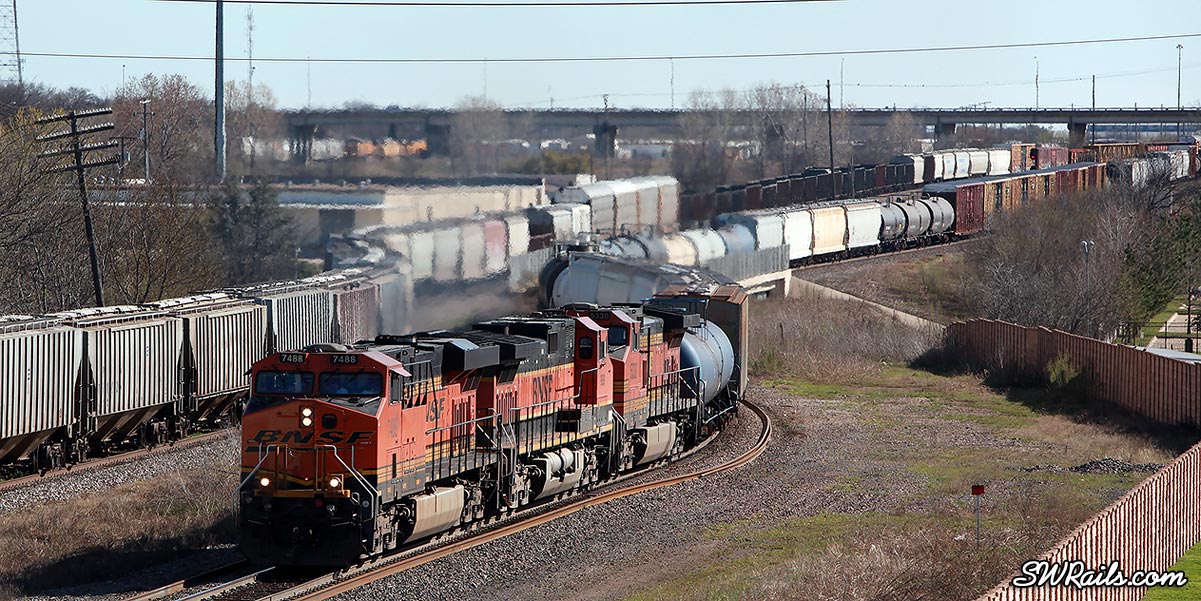
The 4 trains visible in this photo illustrate just how much rail traffic passes through Tower 55
On the next track over is a NB UP manifest that’s tied down. It was visible in the background of pic #6 of the previous post. In the distant background, you can see the cars from the UP 8098 and the power for a NB freight awaiting its turn through Tower 55.
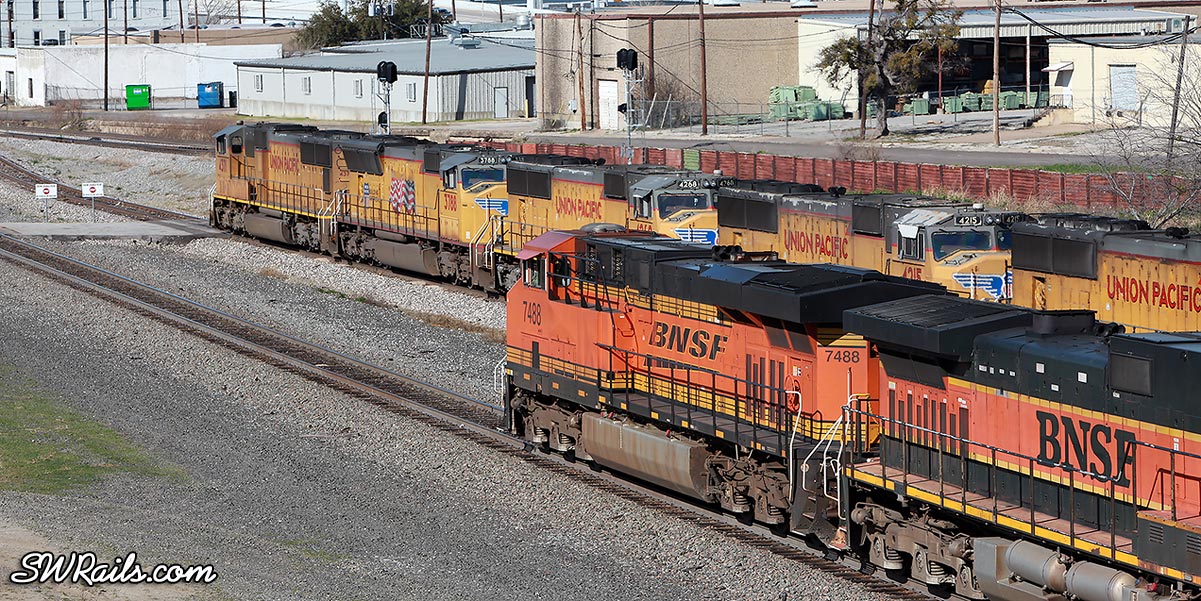
BNSF 7488 slows to a stop, adjacent to a UP manifest also awaiting its turn through Tower 55.

The 2 NB's cool their heels as 2 UP GP60's have just cleared the plant, traveling south.
Two UP GP60’s were next, passing SB through the interlocking. Once again we had to run to the other end of the overpass to get into position to photograph the next engines.

GP60's 2011 and 1978 about to pass under the Hattie Street overpass
Once the light power got by us, we packed it in. Even though there was still plenty of light and trains, we had to return to family matters, especially the prospect of a fajita dinner.
Carpetbagging in Fort Worth
The first weekend of spring break was an opportunity to get out of town for a bit. We decided to go to Fort Worth. Our oldest son would meet us there, driving from Abilene.
After hanging out at the motel, we drove to Edgecliff Village, a suburb of Fort Worth, to visit family. After the appropriate interval, Andy and I sneaked out to see what might be running, while my wife and Eric stayed behind.
Being railfan tourists, we went for the #1 railfan tourist attraction in North Texas, Tower 55.
As we arrived, we saw a westbound UP transfer pass through the interlocking with a 3 genset power consist. After making a few wrong turns, we found ourselves at the east end of Davidson Yard just moments ahead of our quarry.
What’s up with the steam engine on the sidewalk in the background?
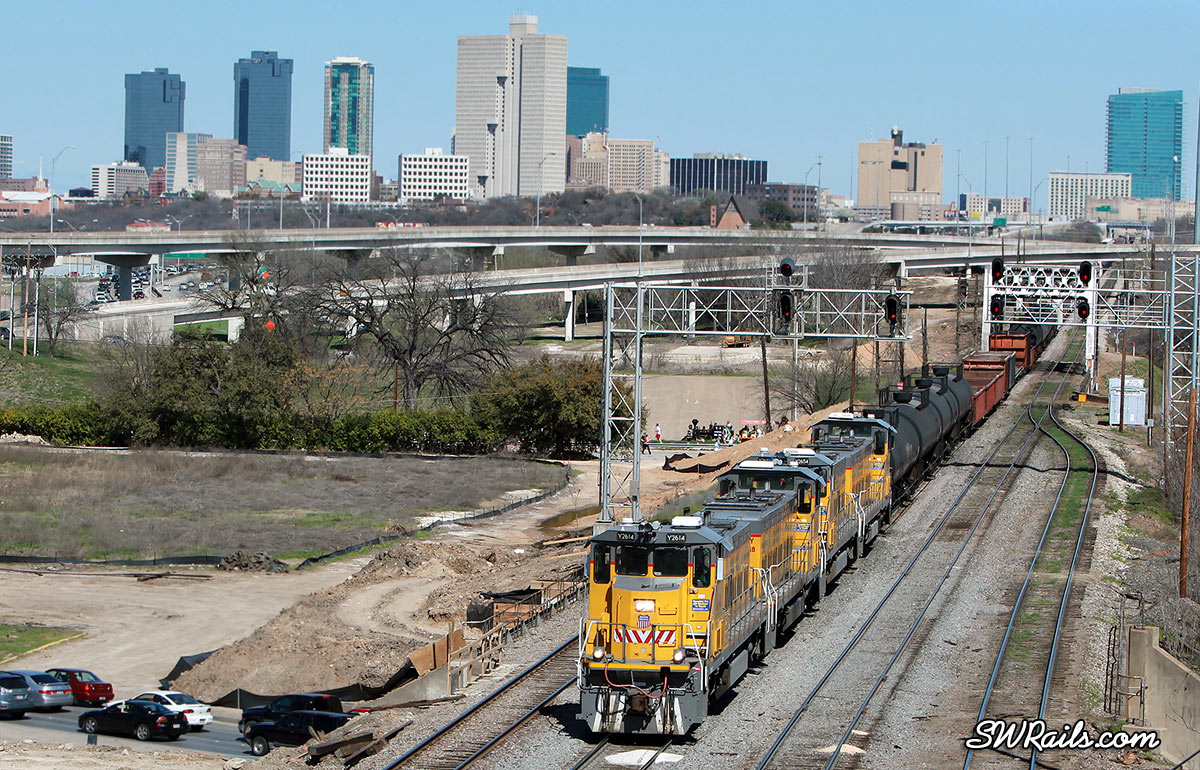
Three gensets pull a transfer into UP's Davidson Yard in Fort Worth, TX on March 13, 2010.
Not wanting to wear out our welcome on this overpass, we headed back towards the Tower 55 area. As we exited the freeway, we saw some Amtrak equipment at the Fort Worth ITC.
As Amtrak in the day is a rare commodity back in Houston, we went to investigate.
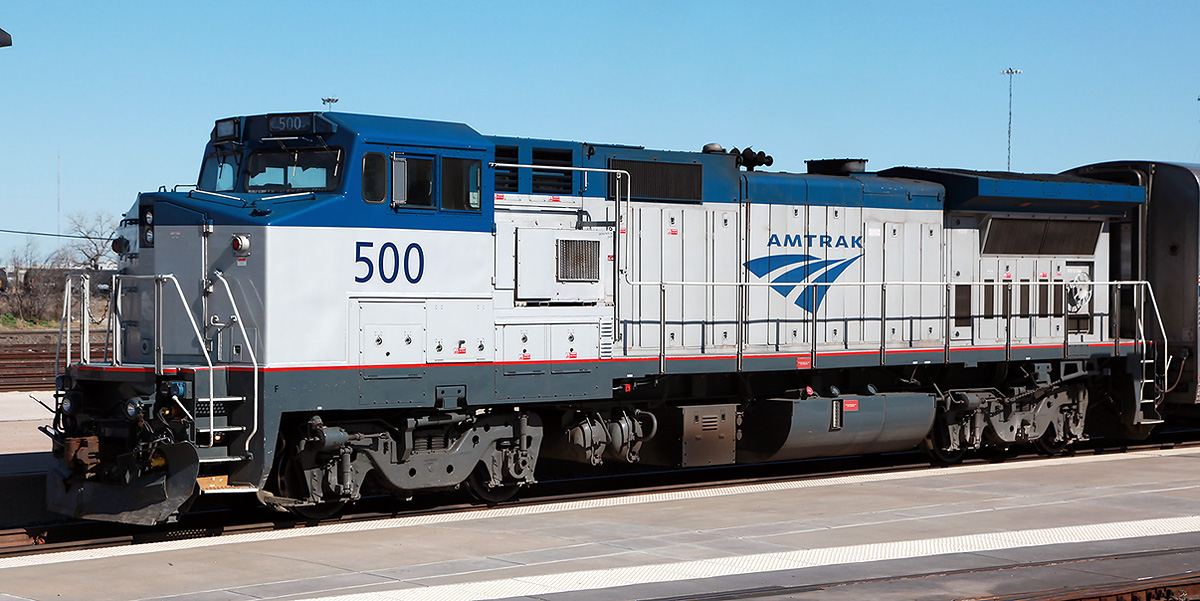
Amtrak 500 on the point of the Northbound Heartland Flyer at Fort Worth, March 13, 2010
The first order of business was Amtrak 500, the first of only 20 GE P32BWH units. Amtrak received these in 1991. They debuted a new Amtrak paint scheme, that to many, resembled the colors on a can of Pepsi soda.
The units were nicknamed, of course, “Pepsi Cans”. LocoPhotos.com has a good view of the 500 in its original colors.

Amtrak's Texas Eagle at Fort Worth, TX on March 13, 2010
One track over was the northbound Texas Eagle. A second unit, P42DC 121 , is being added to the consist. Note the Amtrak employee between the units making the air and electrical connections.
The radio advised us that the Texas Eagle was getting ready to depart, so we headed to the Tower 55 area to see if we could get some shots of it as it departed.
Run For the Border
In the summer of 1990, I made a quick trip to the Santa Fe Trans-con in search of the first GP60M’s. As the GP60M’s were just going into service, I saw a lot more blue & yellow than warbonnets. At the time, that was a disappointment.

Santa Fe B40-8 7426 is WB at West Texico, NM on June 9, 1990
Texico is at the Texas-New Mexico border. The water tower in the background is in the town of Farwell, Texas. Farwell is where the Slaton sub, from Cleburne, joins the Trans-con.
Note the 30 mph speed boards for the towns of Texico and Farwell.
 Southwest Rails