I Did This With Kodachrome 64?
Kodachrome was the benchmark for color transparency and motion-picture films for the duration of its time on the market, 1935-2009. No other film ever came close to Kodachrome’s combination of ultra-fine grain, brilliant colors and long-life. I have slides that are nearly 60 years old that still look great, whereas 20 year-old color prints already show signs of color shifting.
Yet Kodachrome posed many problems for photographers. With an ISO of 64, it was a very slow film, requiring full sun for best results. It was also very unforgiving, about 1/2 stop of latitude up or down. Bottom line: you needed good light and a near perfect exposure to get a quality image.
All of this info serves to illustrate just how lucky I was (because I sure wasn’t good!) to capture this image a mere 31 years ago:
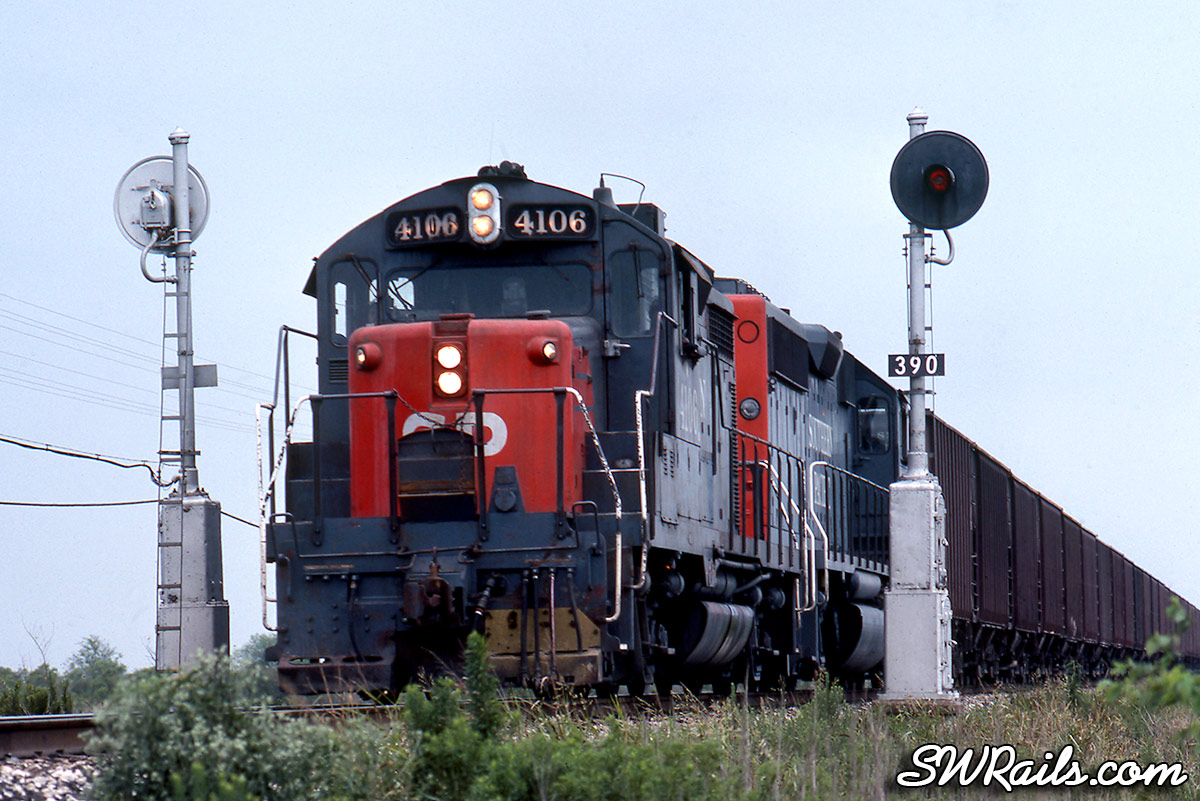
SP 4106, a GP20E, leads a westbound grain train departing Rosenberg, TX on Aug. 27, 1980
I still actually remember this shot! I was hanging around Tower 17, just to see what might come by. It was early evening, approaching dusk, and it had just rained. Less than ideal conditions, to be sure. But I didn’t know that.
I wanted to frame the train between some signals, probably because I wanted to emulate some shots in CTC Board magazine. I drove to the intermediate signals at MP 39, about 3 miles west of Rosenberg.
The first thing I noticed when I got there was that I would have to stand in a ditch to frame the shot. I almost didn’t even trip the shutter because I was unhappy with the weeds at the bottom of the frame, but I did anyway.
Of course, I’m really glad that I did. Funny, the weeds don’t seem to be a big problem now…
Fresh Pumpkins
I was on my way to a wedding this past Saturday afternoon when I came across this BNSF intermodal stopped short of Central Street (near MP 7 on UP’s Strang sub) in southeast Houston.
Three fresh units calls for a quick photo-op.
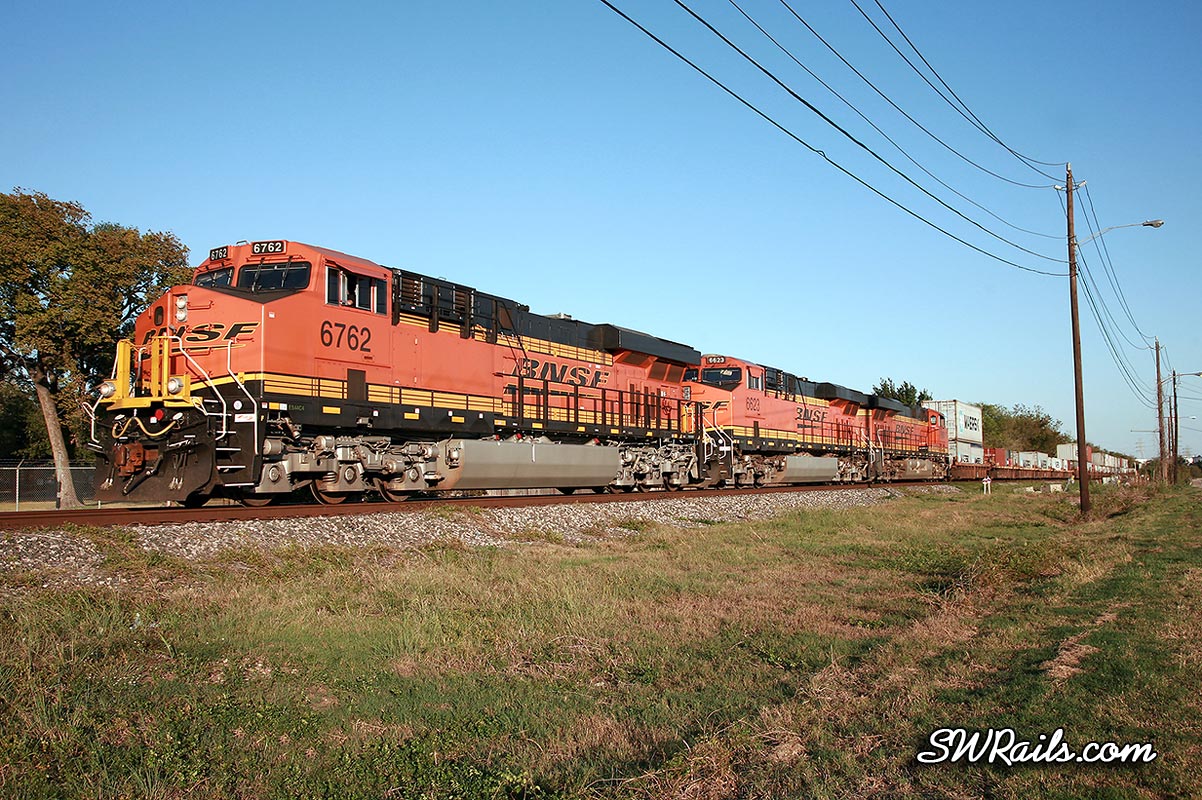
BNSF 6762 holds its train at Central Street in southeast Houston on Oct. 15, 2011
The units appear to be your garden-variety GE’s, but in fact they’re the latest and greatest from Erie. Dubbed ES44C4’s, they are 6-axle 4400 HP AC drive units, but with only 4 traction motors. The center axles are idlers, making these the first A-1-A trucked heavy-haul locomotives ever built.
As I understand it, advanced adhesion controls permit these units to generate the same amount of tractive effort as a conventional 6-motor 4400 HP DC locomotive while eliminating the capital and maintenance cost of 2 AC inverters and traction motors.
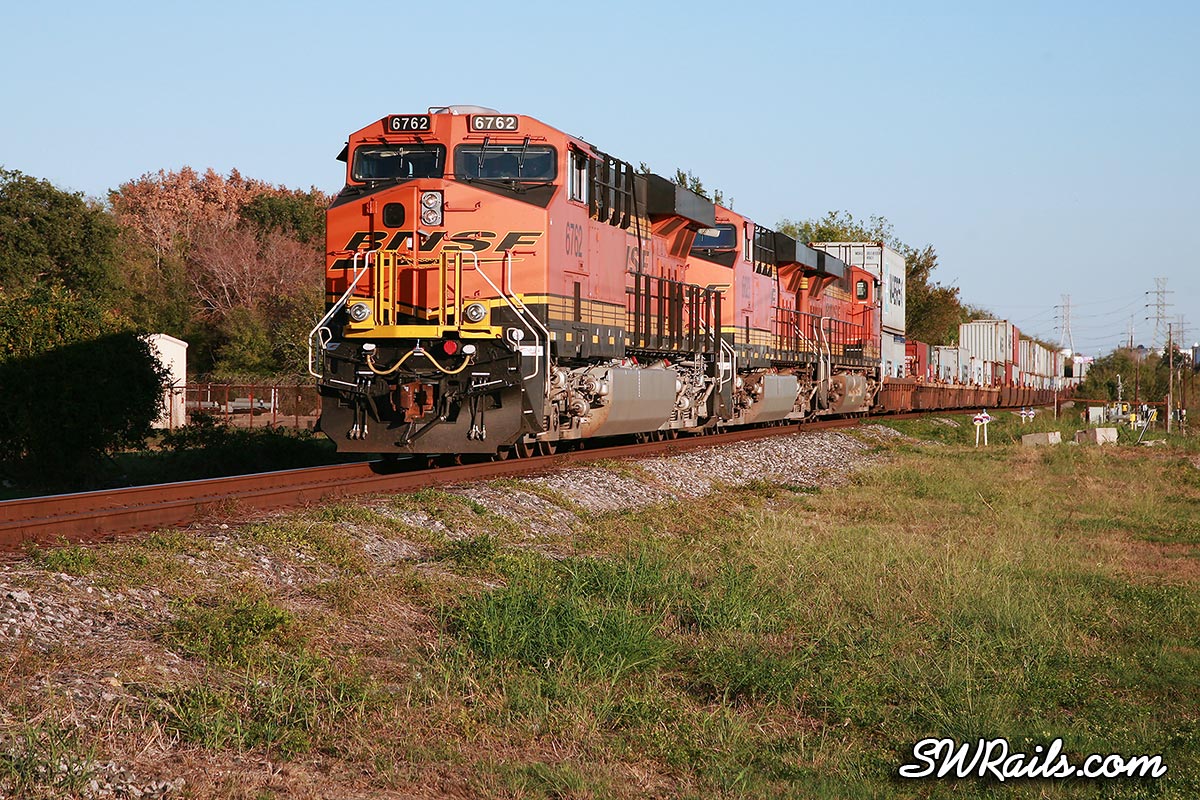
BNSF was the initial, and so far only, customer for this model. BNSF took delivery of the first 25 units numbered 6600-6624 in mid-2009. It has since ordered another 265 units, 6626-6889, which are currently being delivered.
Wait and Hurry Up
“Hurry up and wait”.
I suspect everybody has heard, or uttered, this phrase. All of us experience this paradox from time to time.
For railroaders, it’s a way of life. So much so that they deal with a variant of the expression you might not be familiar with: “wait and hurry up”.
Specifically, getting on a train and being told they can’t go anywhere.
I photographed this train yesterday, 10/14/2011, in the siding at Missouri City at 12:30 P.M. It’s a QTLSH train (Quality Toluca [near Mexico City] – Shreveport)
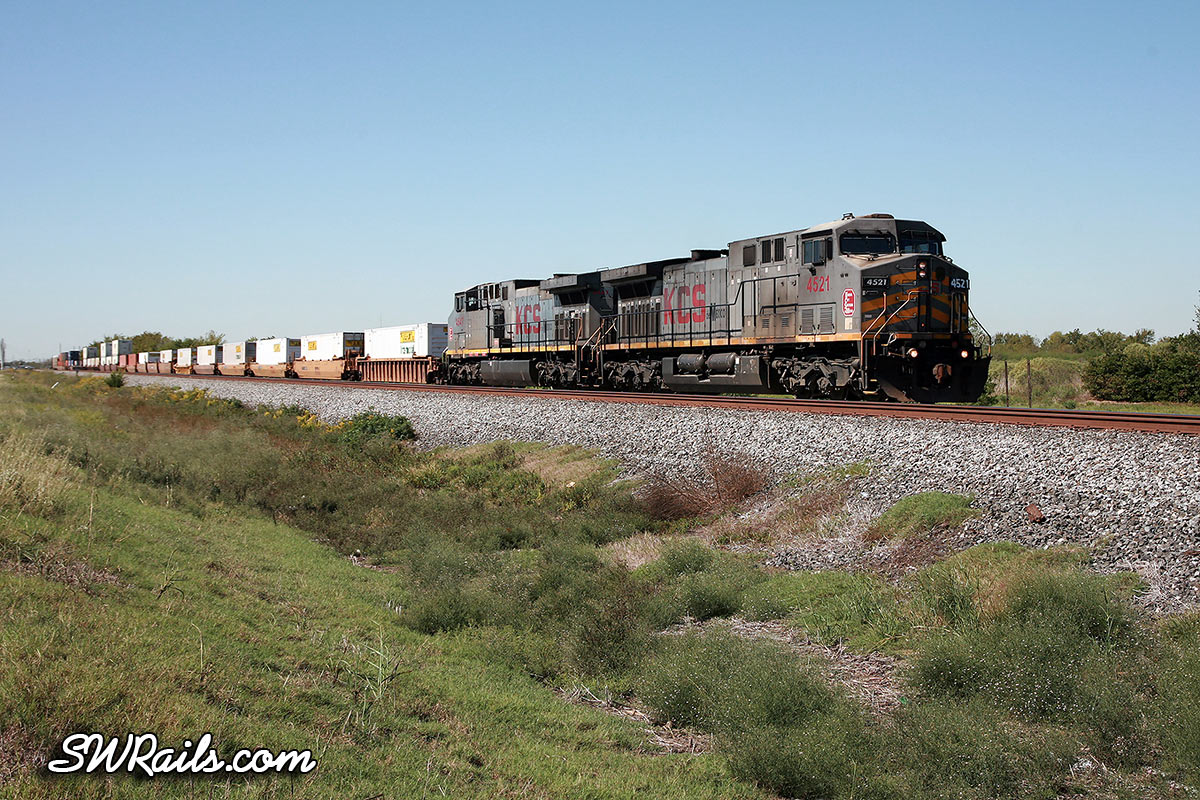
KCS 4521 holds its eastbound intermodal train at the east end of Missouri City, TX on Oct. 14, 2011
In visiting with the crew, they mentioned that they had come on duty at Kendleton at 0530, 7 hours prior. I asked why they had only been able to cover 31 miles of their trip to Beaumont since they came on duty?
Serious congestion in the Houston terminal was the answer. The dispatcher was holding them out until there was a route available to get on to the Beaumont sub, and they really didn’t know when they would get to move.
I might have been good luck for this crew because within a few minutes of my arrival, the signal at the east end of the siding turned green.
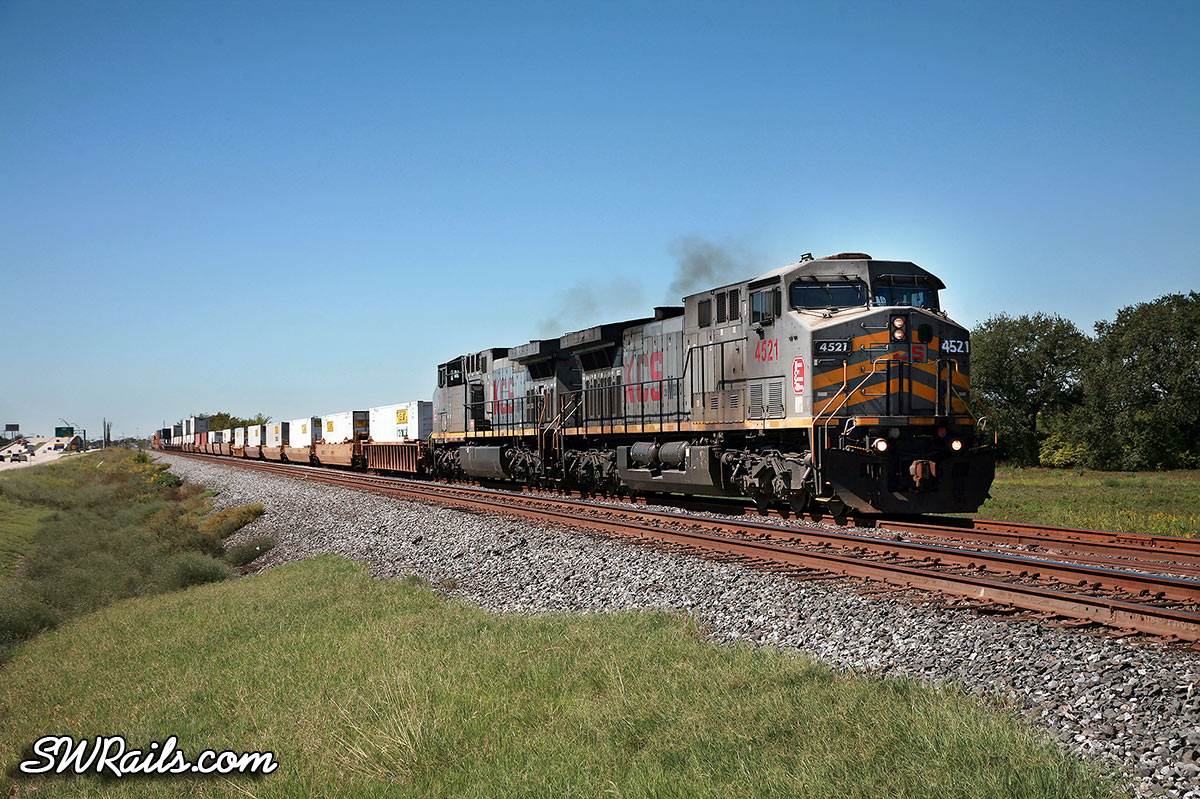
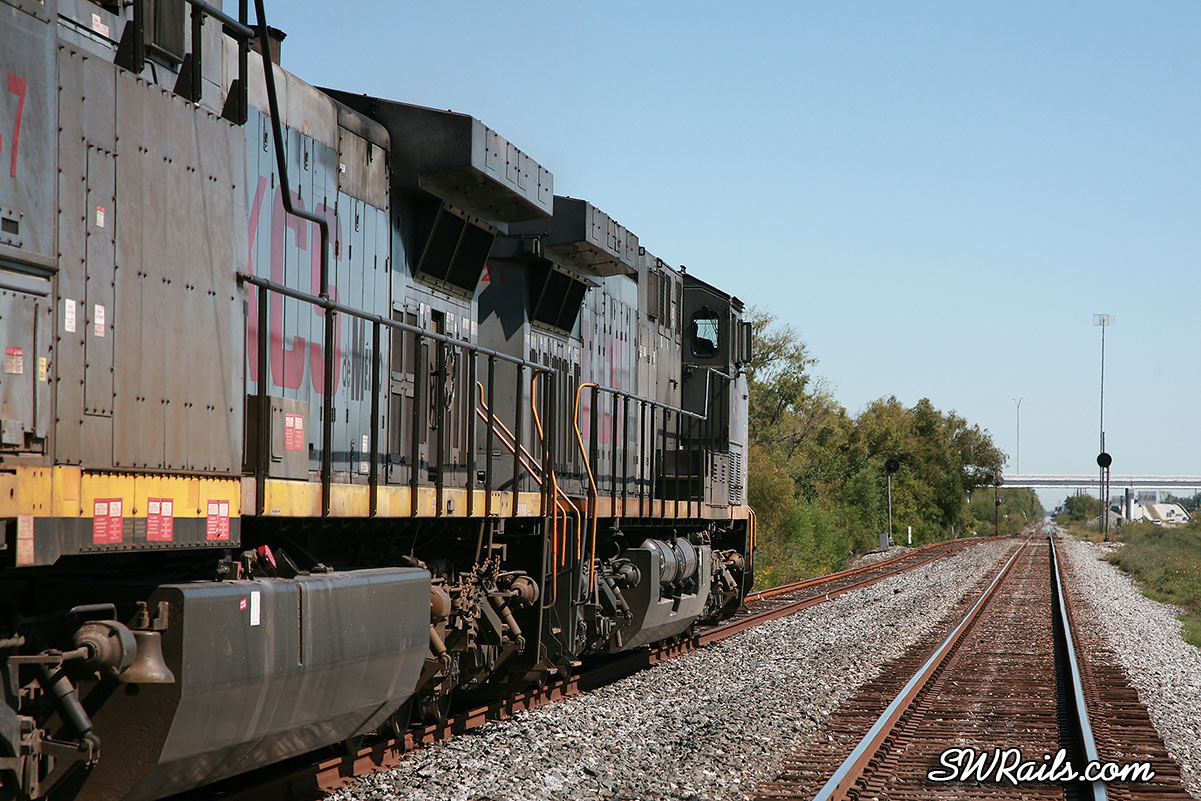
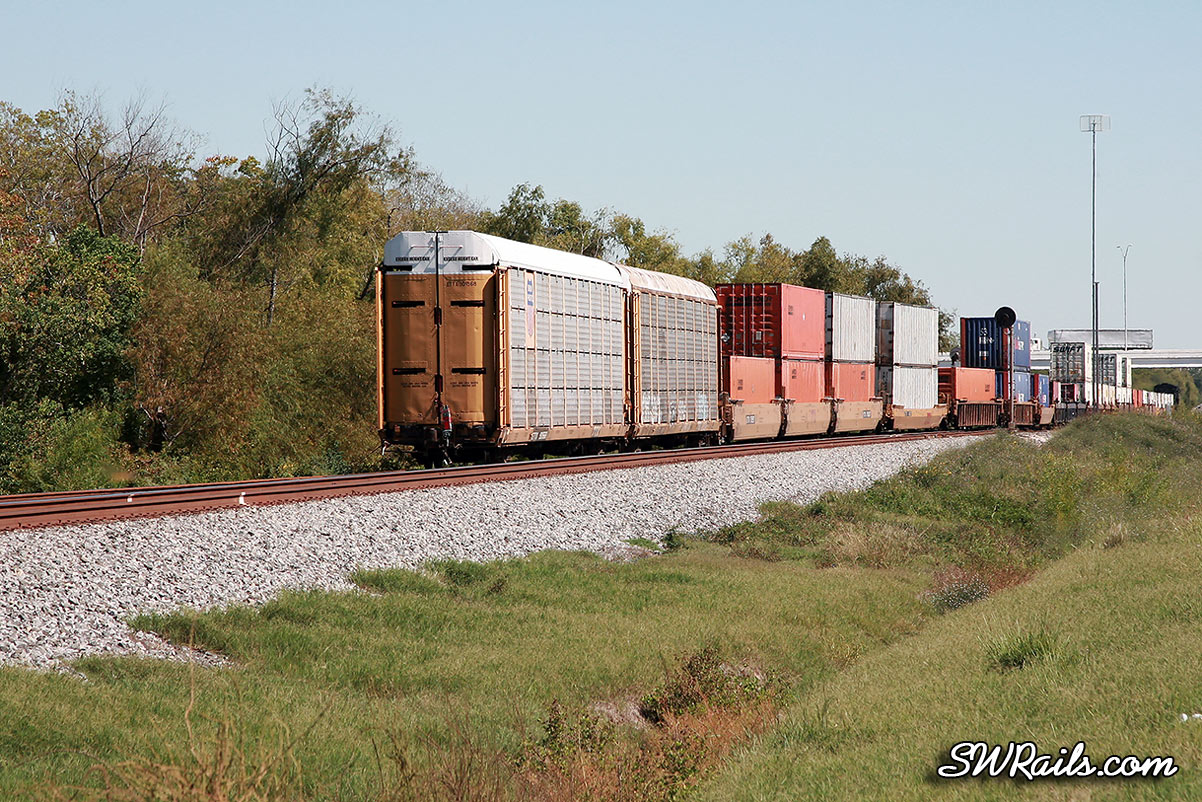
This train made it to Hull, about 40 miles east of Beaumont, before running up on their hours-of-service limit of 12 hours.
31 miles in their first 7 hours on duty, 80 miles in the last 5 hours. Yup, that’s wait and hurry up.
Sugar Land Skyline – Update
The demolition work at the old Imperial Sugar property appears to be complete. Ancillary and adjoined structures to the “Char House” building have been removed. The re-development plan for the Char House calls for retail and office space in the lower levels, and loft apartments for the upper levels.
I ran out yesterday morning when I heard the DS tell CSXT 932, who was at Harlem, that he would be following a very late Amtrak #2 into Houston. It took me less than 10 minutes to get trackside, but that was not quick enough because the first train by me was CSXT 932 with a manifest.
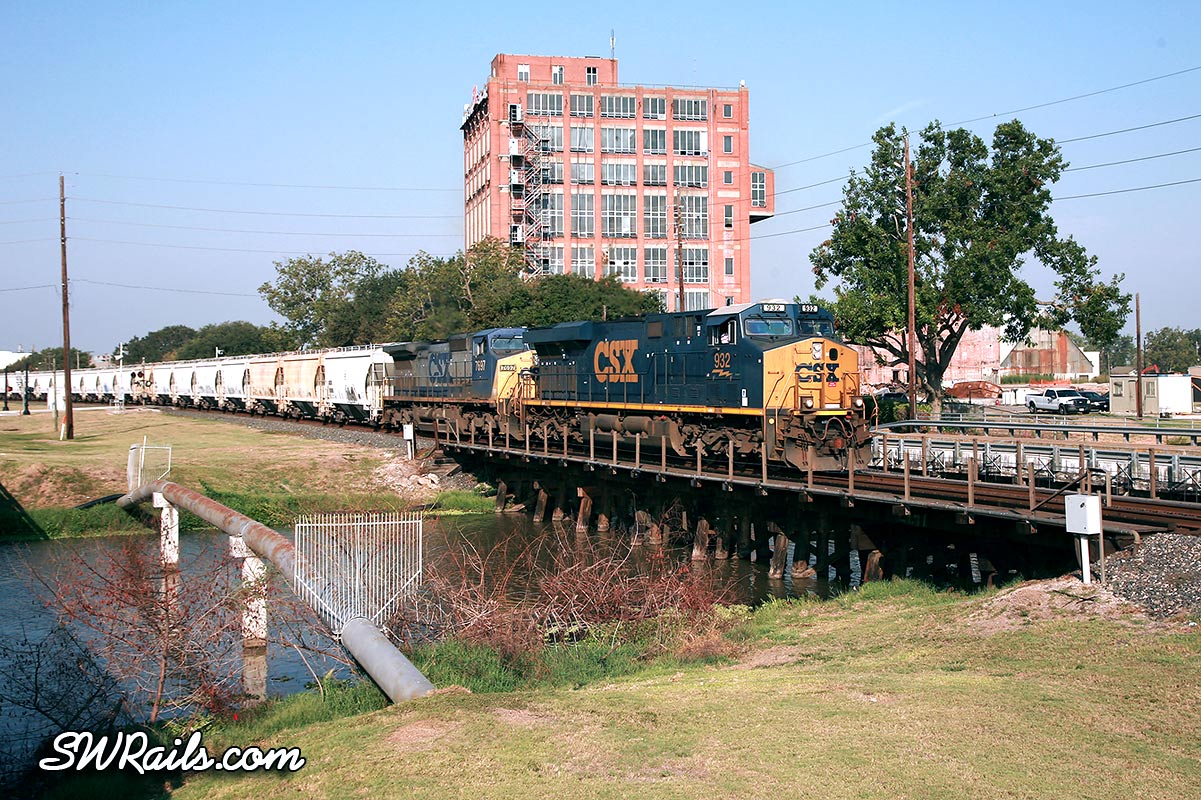
Two CSXT GE's bring an eastbound UP manifest across Oyster Creek on Sept. 16, 2011
Here’s a shot showing the view less than a year ago.
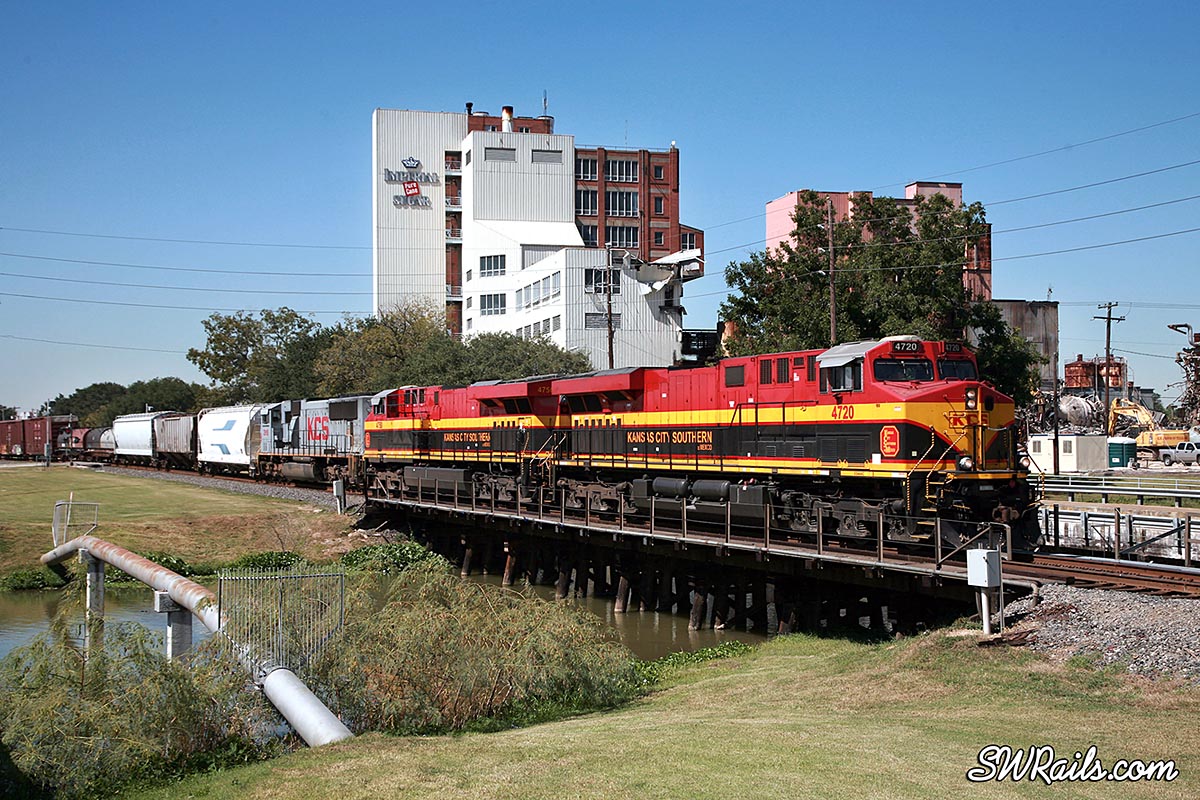
KCSM 4720 crossing Oyster Creek on October 6, 2010.
Yes, the Sugar Land skyline has changed a bit.
The Oldest Currently Operating Diesel?
Passing through Texas City recently, I saw an EMD switcher working along the fence of Oiltanking Texas City, a petrochemical storage facility. As I had a few moments to spare, I pulled off the road to see if I could get a shot or two of the operation.
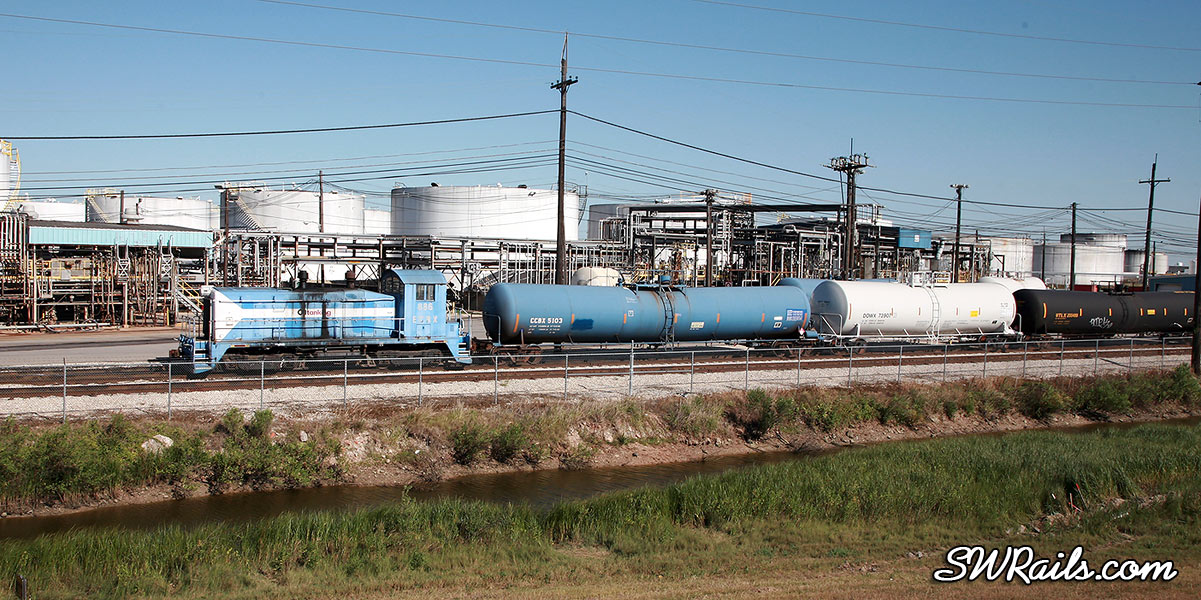
ECRX reporting marks on the locomotive tell me that EconoRail is the switching contractor for this industry. I was able to get a little closer for a slightly obstructed roster view of the locomotive.
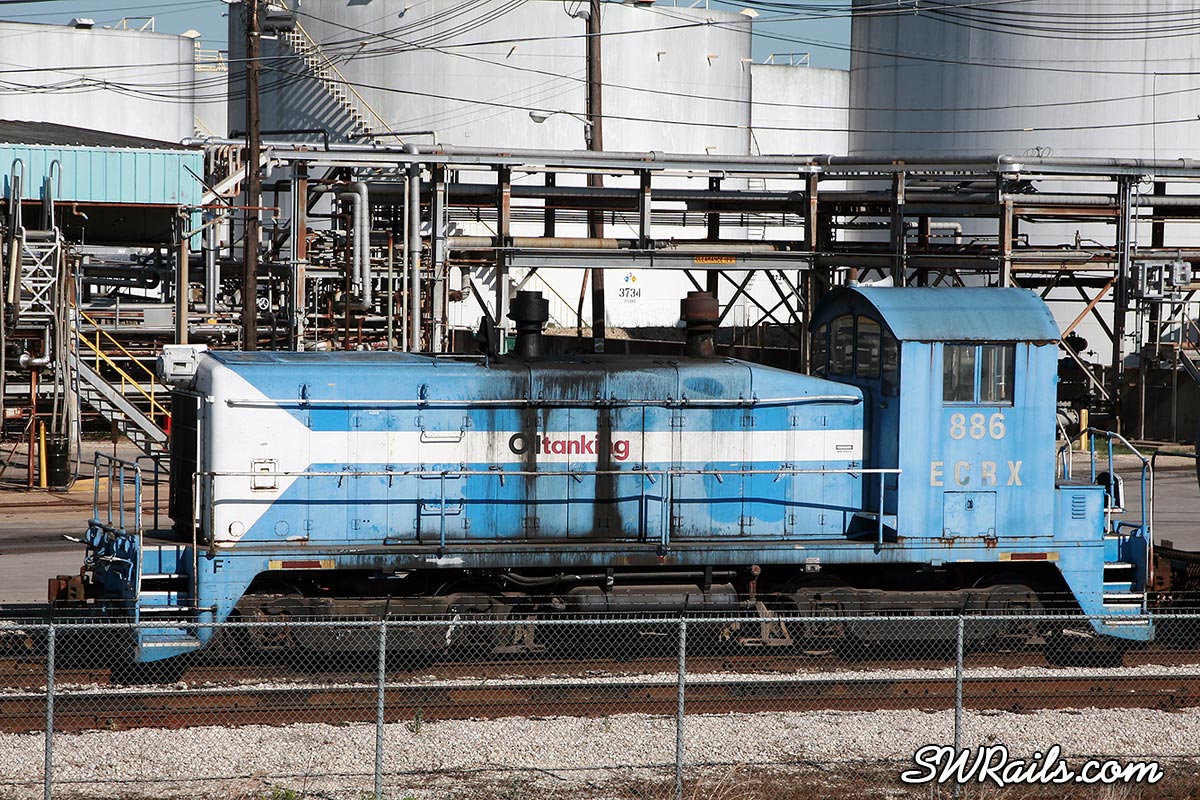
Other than being an 567 series EMD switcher, ECRX 886 seemed quite unremarkable. Photos in the bag, I got back on the road and didn’t give it any more thought.
Upon processing the images the next day, I became curious about the provenance of ECRX 886. Nothing that a quick search can’t answer.
ECRX 886. EMD NW2 Description: #886 is the serial; the order is E256-4, built 6/39 as Phelps Dodge Copper 4.
Holy Cow! This little switcher is over 72 years-old! I’m not an expert on the oldest operating diesels in the U.S., but I’d venture to say that this just might be the oldest one!
Upon closer inspection of the engine, there are a few clues to its vintage. No louvers along the hood and the windshield being curved along the top are features of very old EMD switchers.
To be technically correct, this engine is not an EMD product. It was built by Electro-Motive Corporation, a small division of GM. It was two years before General Motors merged EMC and Winton Engine to create the Electro-Motive Division (EMD) on January 1, 1941.
PS- A very classy move by the EconoRail folks to re-number this engine as 886 when they acquired it, 886 being its original serial number. It’s among the first 300 or so of more than 50,000 locomotives produced by EMC/EMD over the years.
Nicest When New
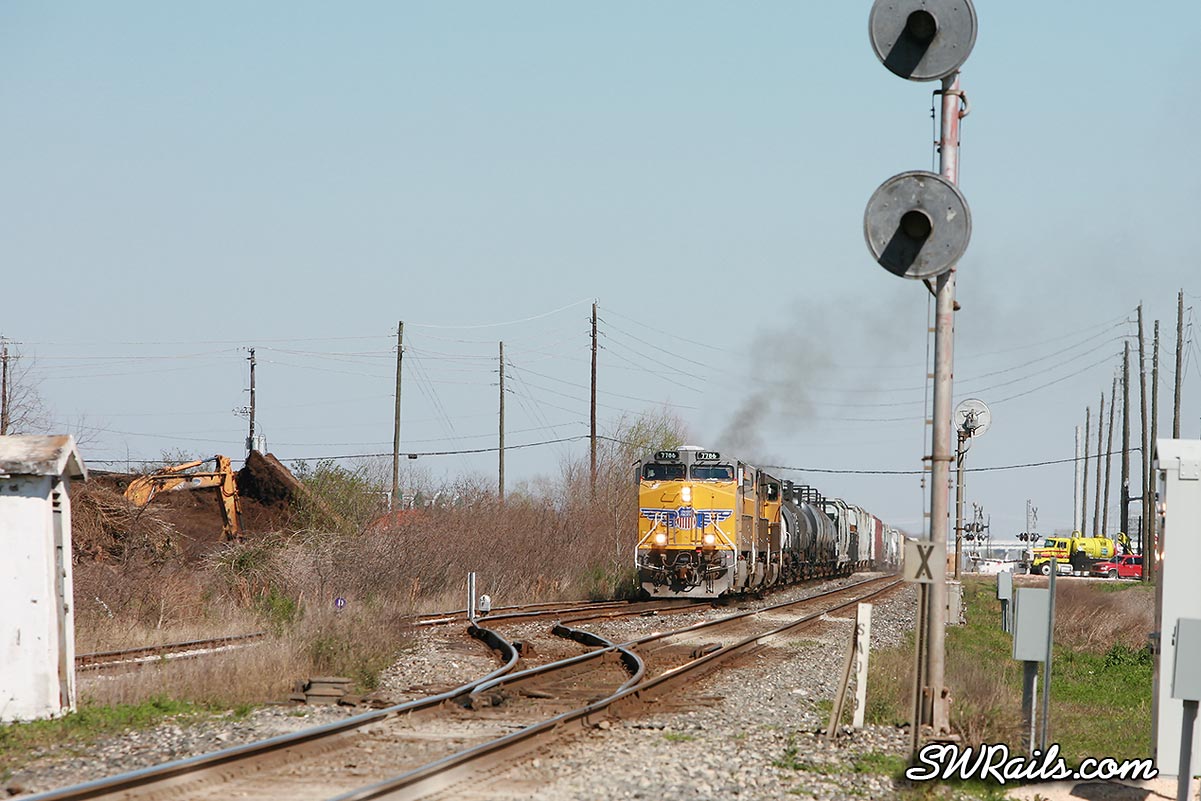
No matter how ubiquitous GE locomotives are on the UP (or BNSF for that matter), one can’t help but be impressed when you get a new one leading. That was the case for me on Feb. 26, 2008 when I came across a QEWWC train with 5-month-old ES44AC 7786 on the point. This calls for a chase, albeit a short one, because I was en route to a client meeting.
The first shot was near MP 15 on UP’s Glidden sub in far southwest Houston.
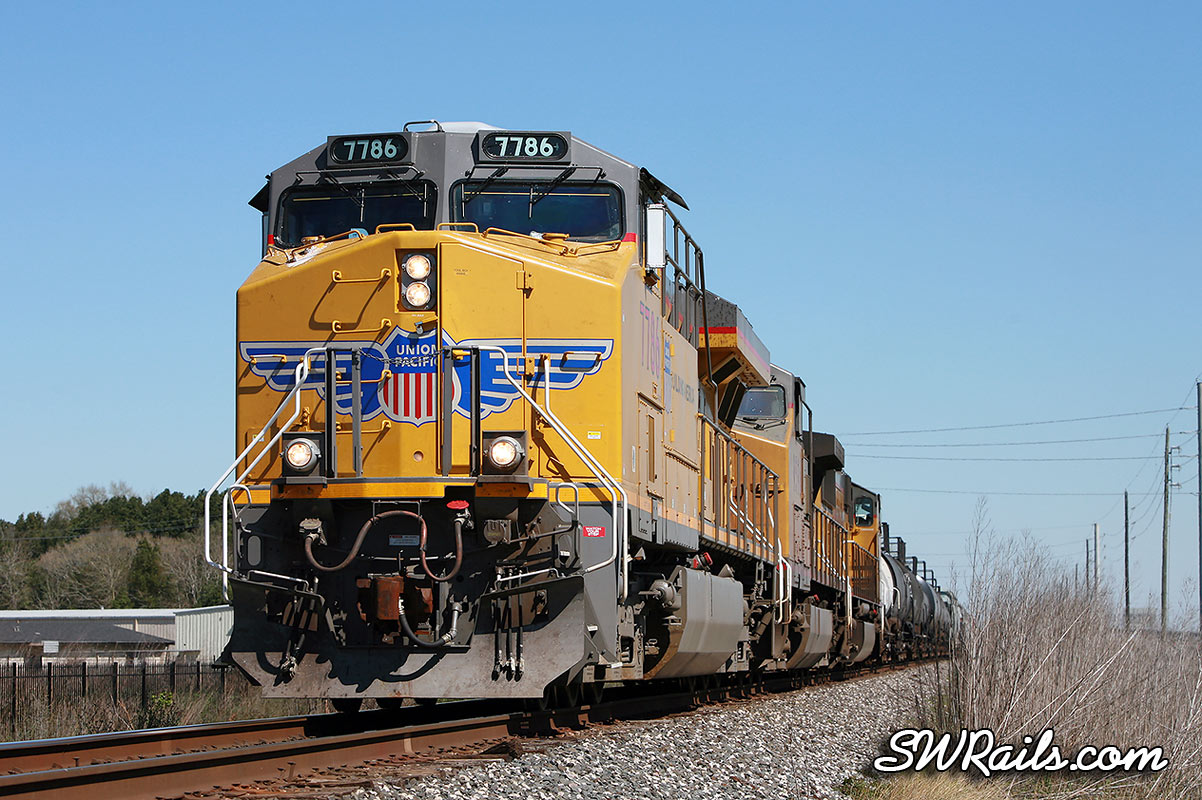
The train was slowing because it was taking the siding at Missouri City, MP 17, allowing me to get ahead of it in time to catch it going in the east end.
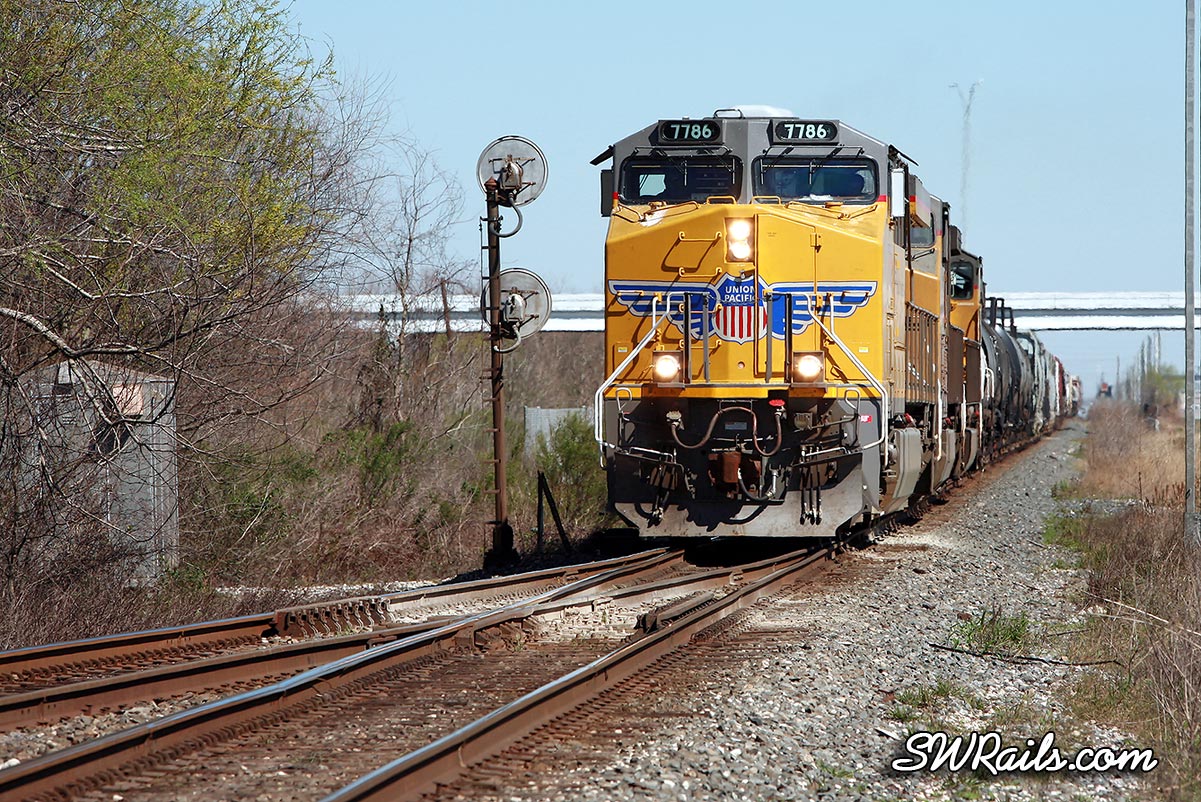
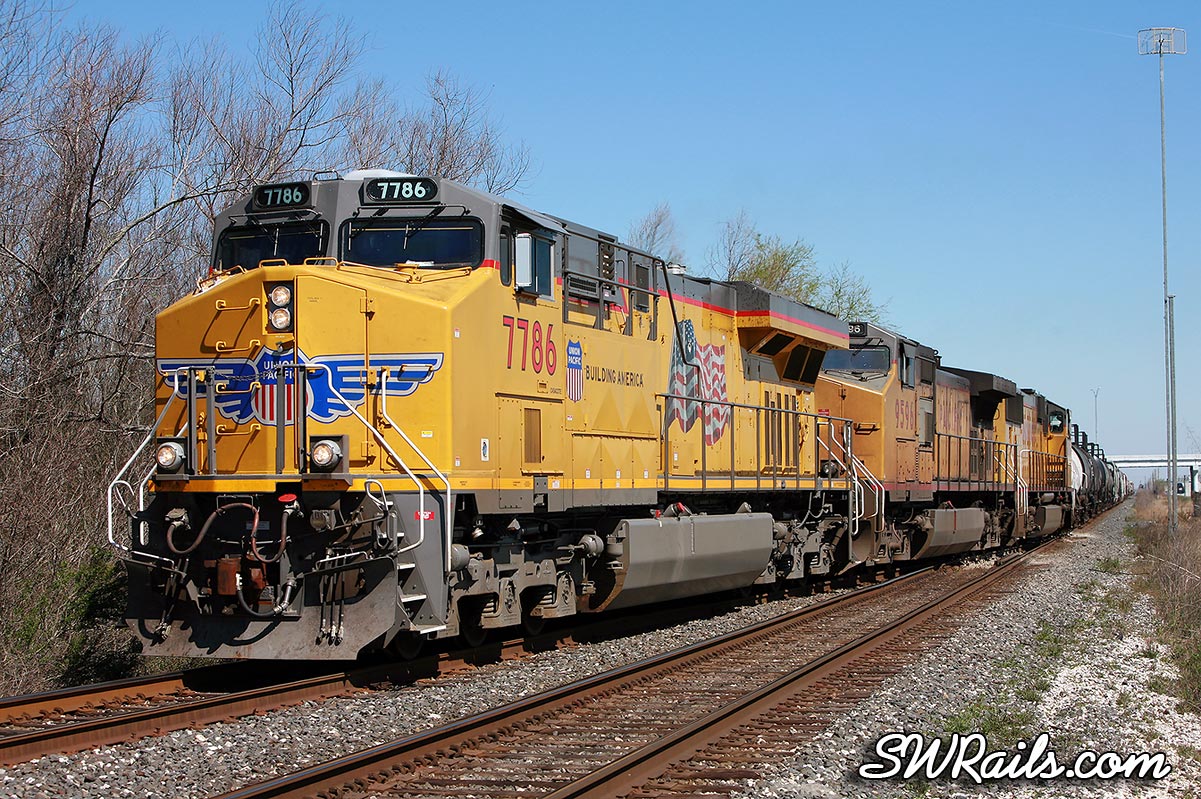
Once the eastbound got by, the DS lined the 7786 out the west end of the siding.
With time for just one more shot, I went for the iconic Sugar Mill shot at MP 25, the east end of Sugar Land.
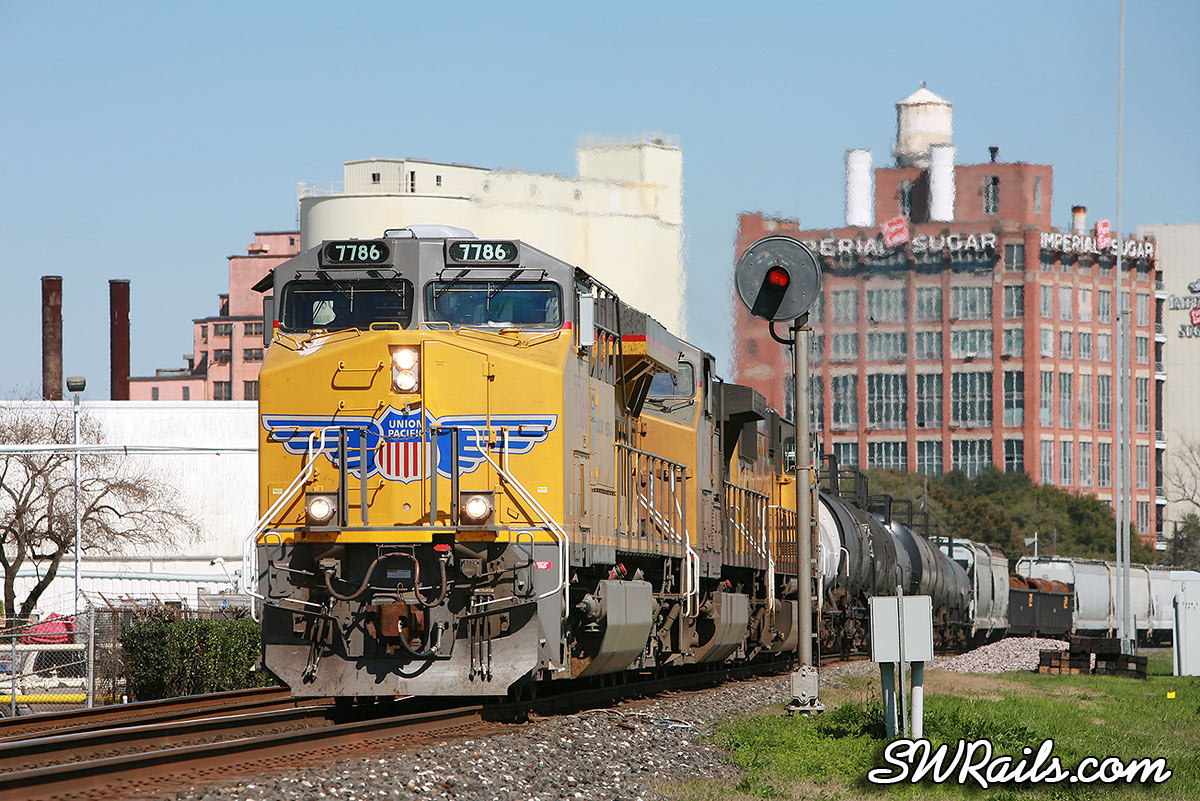
With that, my 20 minute chase of the QEWWC and its new lead engine was over.
The Santa Fe Was DPU Before DPU Was Cool
Before Distributed Power locomotives (DPU’s) became commonplace, the Santa Fe and the Southern Pacific used unmanned helper locomotives with an early version of DPU technology.
The Santa Fe installed Locotrol II equipment in its re-built U36C fleet in the mid 1980’s. This allowed remote control operation of mid-train helper engines. Even numbered units were masters, and would be used as the lead unit. Odd numbered units were the remotes, receiving radio commands from the lead unit.
Here we see a 785 train (Rustler Springs, NM – Galveston, TX sulfur unit train) approaching Wallis, Texas on May 5, 1990, with SF30C 9550 leading a SD45-2B and an SD45 on the head end.

The remote locomotive consist is B40-8 7414 MU’d to remote receiver SF30C 9519.

In a page straight out of the Southern Pacific playbook, a Santa Fe yardmaster has added a fill of loaded grain to what typically always ran a solid train of molten sulfur tankcars.
Out & About – July 10, 2011
Today’s tally was two UP trains, neither of which had any Union Pacific locomotives in the motive power consists. First up was a short ZLCAT with two CSXT motors. I set up at the Willowbend crossing, thinking that the train would arrive before the clouds. This is what I get for thinking:
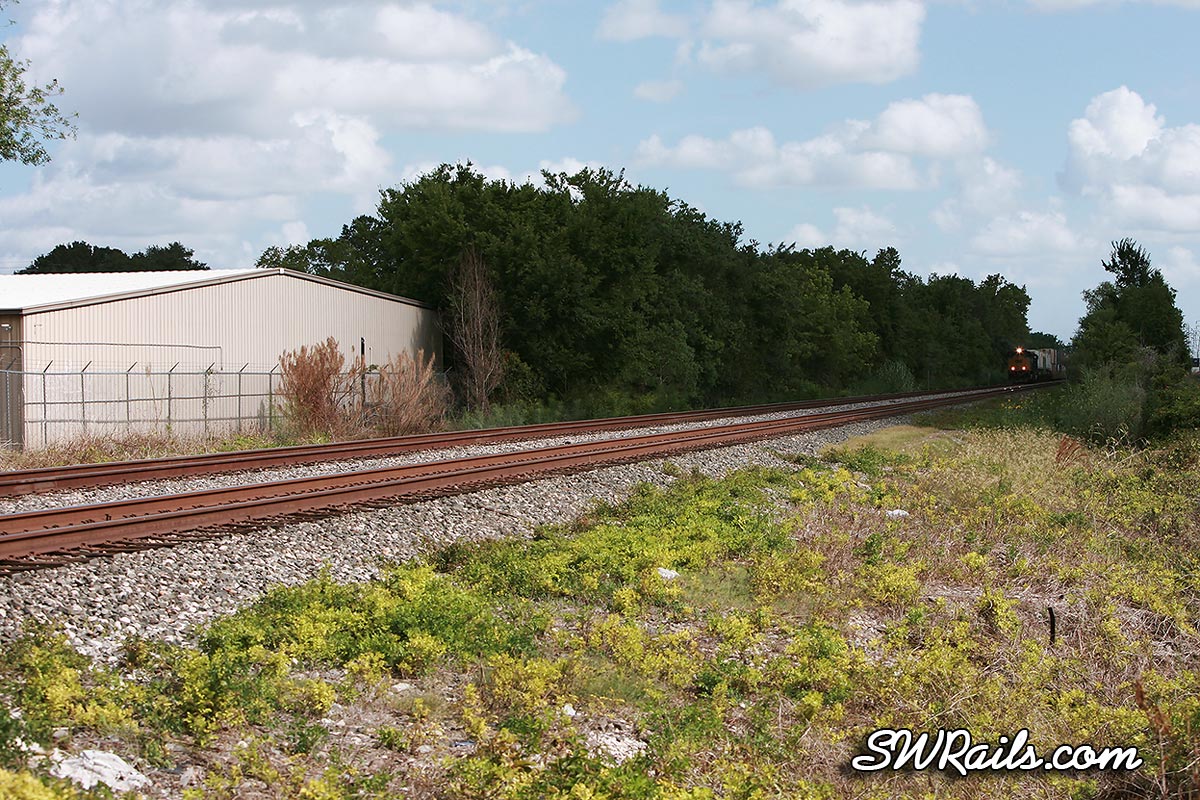
Normally, when I’d get hosed by the clouds like this, I would just pack it up and hope for better luck next time. But I figured since I’ve already burned the gas to get here, I might as well take a picture. I know, weak light like this just doesn’t cut it, but what can you really do?
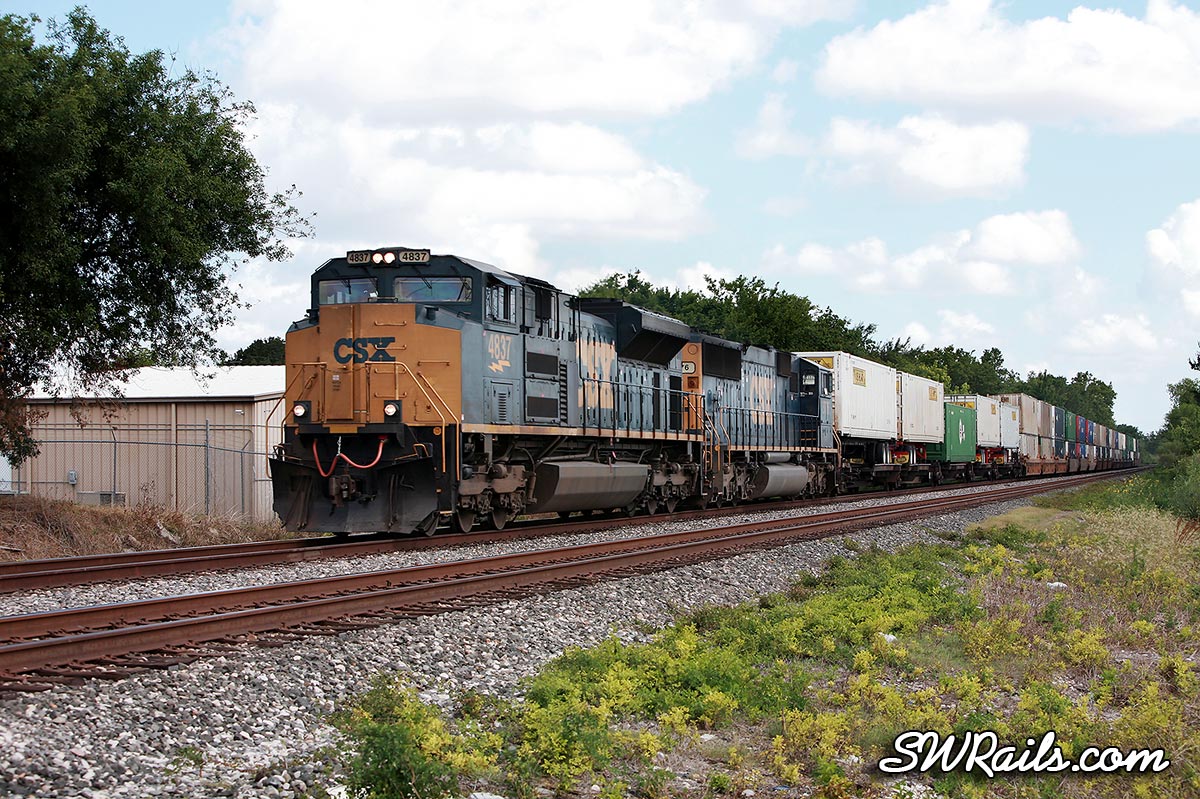
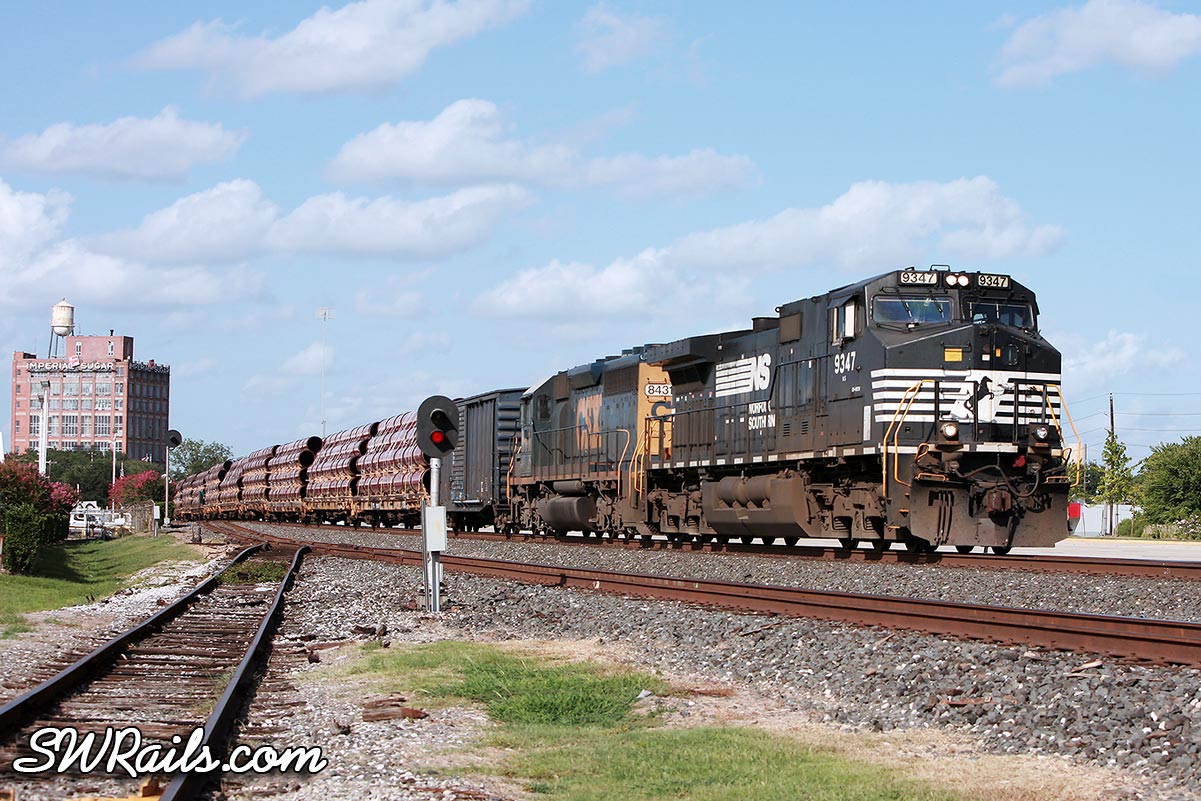
Next up was a westbound pipe train with NS and CSXT power. The best light would be just west of the Imperial Sugar building at MP 25 of the Glidden sub, so a 10 mile jaunt was called for. Fortunately, the clouds cooperated.



Consolation Prize
Things didn’t quite turn out the way I planned this past Thursday, 8/26/11.
The game plan was to head west in the early morning to meet UP intermodal train ILBBC-21. The lead motor was UP 1988, the MKT Heritage locomotive. I would chase it into the Houston area, taking advantage of the morning light to properly illuminate an eastbound. I actually turned down a legal video job because everything seemed to be lining up nicely.
As soon as the alarm went off at 0615, I did a trace on the 1988. “UP 1988, empty, departed Randolph (San Antonio), TX 3:31 AM”
Sweet! That should put it into the Columbus area around 7-10 AM, from where I would have a nice 60-70 mile chase into the Houston area. Time to hit the road!
As soon as I stepped out, I felt something funny. Like drops of water, or something. But it can’t be rain. Texas is in the midst of an unprecedented drought.
You guessed it. It was actually raining. No big deal. It’s just an isolated shower. I’ll just drive west and it will be nice. I’ll just check the weather radar for the Columbus area to make sure.
Good thing I did. The whole area between Houston and San Antonio was consumed with huge yellow and red splotches on the radar. That’s not good.
I decided to wait a bit, let the rain pass through, and I’d still be OK. By 9:45 AM, I did another trace on the 1988. “UP 1988, empty, departed Kingsbury, TX 9:30 AM”. The train has only moved 30 miles in 6 hours! It was still over 150 miles west of Houston. So much for morning light in the Houston area. By the way, it’s still sprinkling with heavy overcast! It wasn’t meant to be.
I occupied myself with some editing chores. I had left the radio on just for entertainment value, when out of the blue I hear the Glidden sub DS give a track warrant to the KCS 1.
The weather was still ugly, but ya gotta do what ya gotta do. As I had all the gear already in the car, I was able to get to the Sugar Mill quicker than normal. After a 2 minute wait, an officer special led by KCS 1 pulled into view.
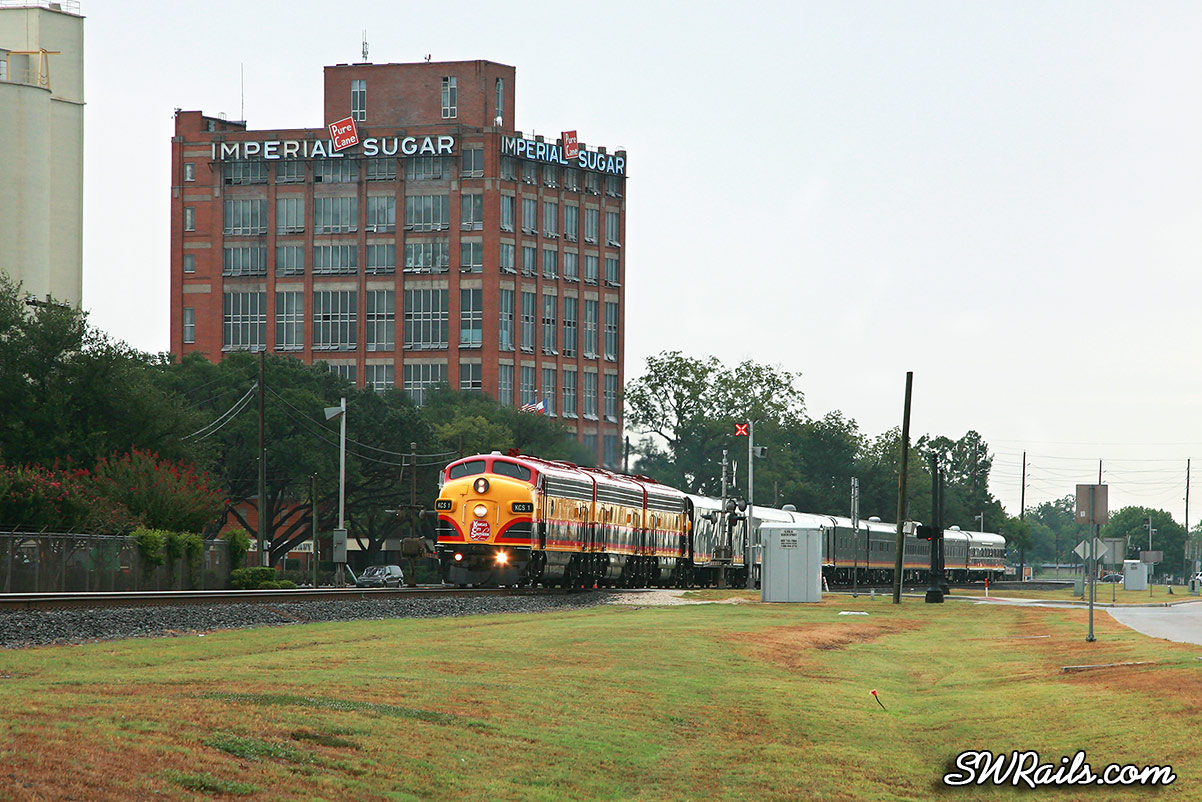
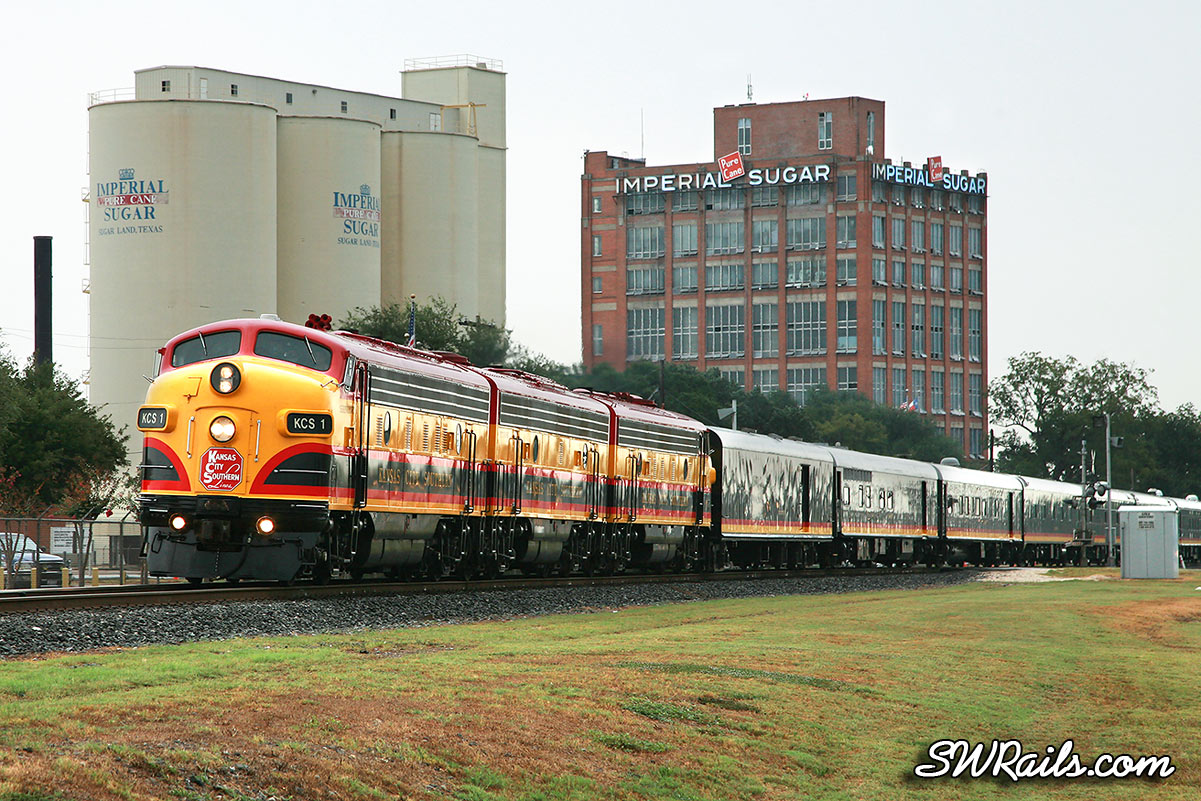
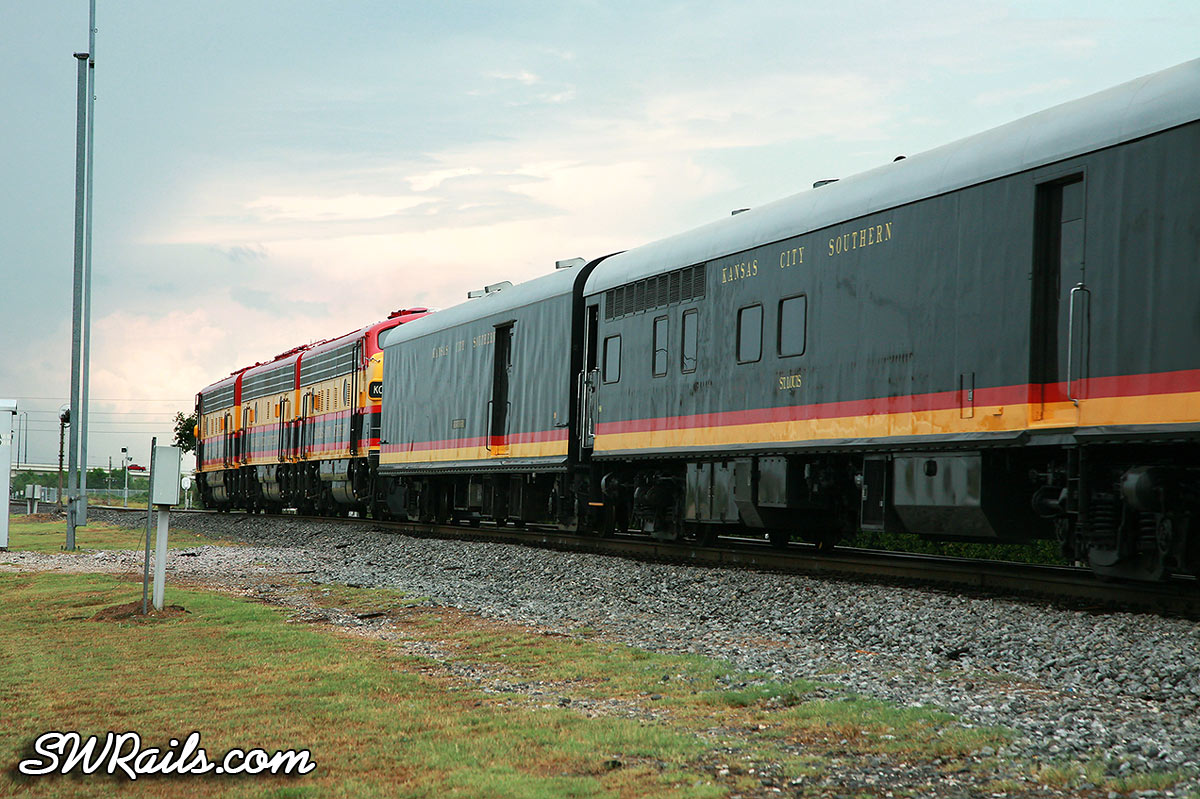
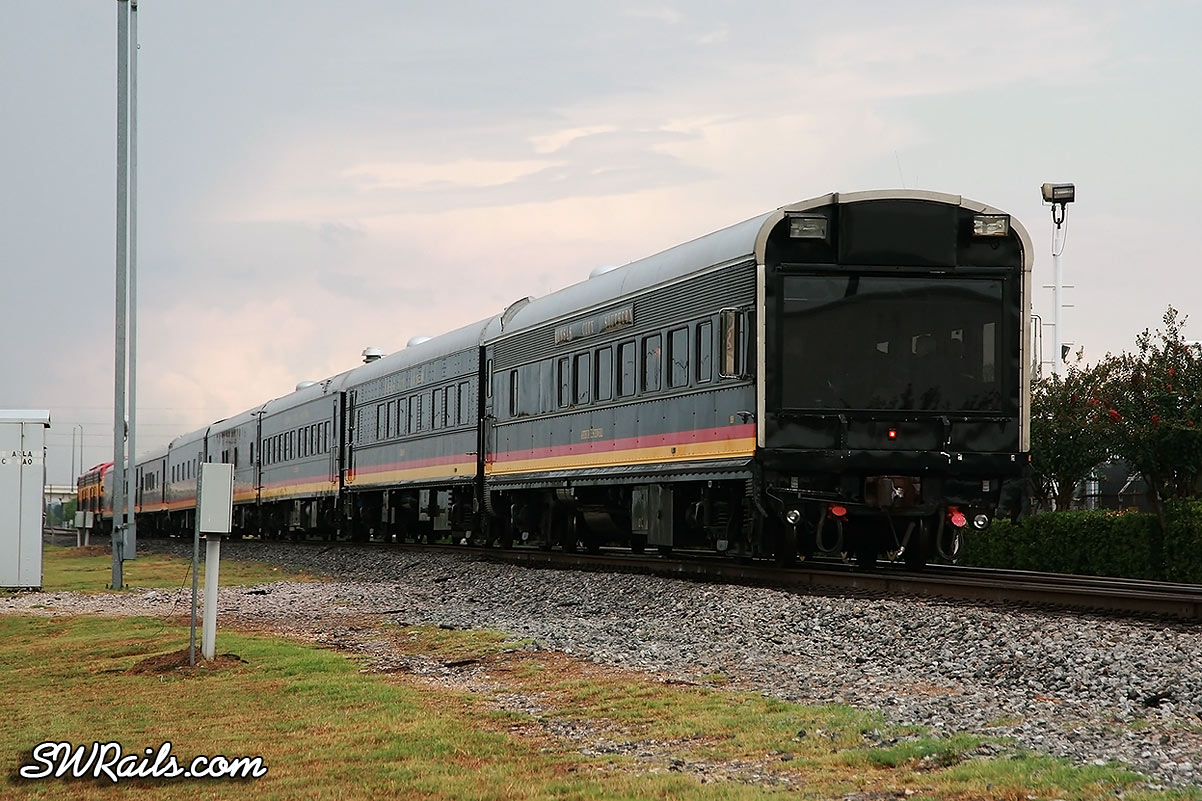
I didn’t get the main prize I had in mind today, but having the KCS Southern Belle fall into my lap is a pretty decent consolation prize!
Katy’s Coming Back
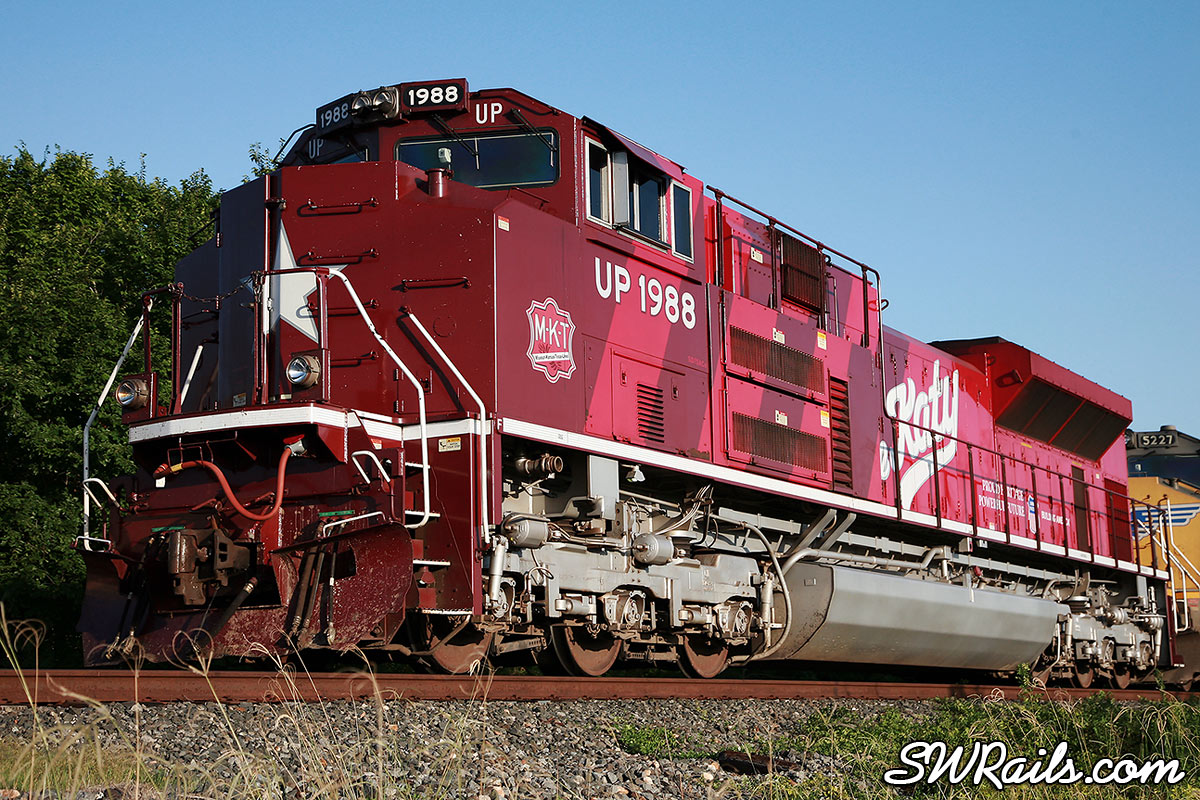
UP’s MKT Heritage locomotive, SD70ACe 1988, is coming back to the Houston area. It’s in far west Texas as I write this, leading intermodal train ILBBC-21 (Intermodal Long Beach-Barbour’s Cut). It’s scheduled into Barbour’s Cut (LaPorte, TX) just after 6 AM on August 25th.
The 1988 last visited the Houston area about 2 months ago. I posted a video of that visit of the 1988, leading another ILBBC intermodal train into the Houston area.
Decent light for an eastbound in the late afternoon around here is a scarce commodity. I only took a few pictures of the 1988 at the end of that chase once it turned north, into the sun, at West Junction.
First shot of it was coming around the corner at West Junction.
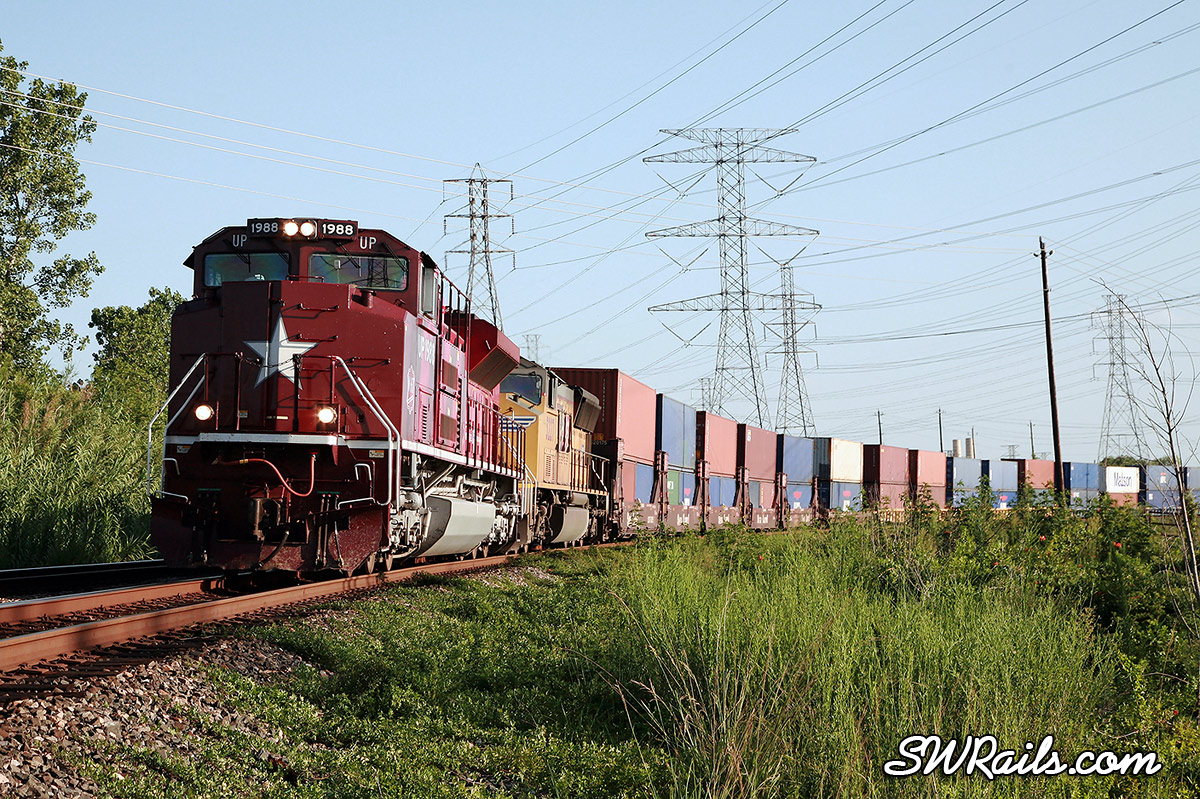
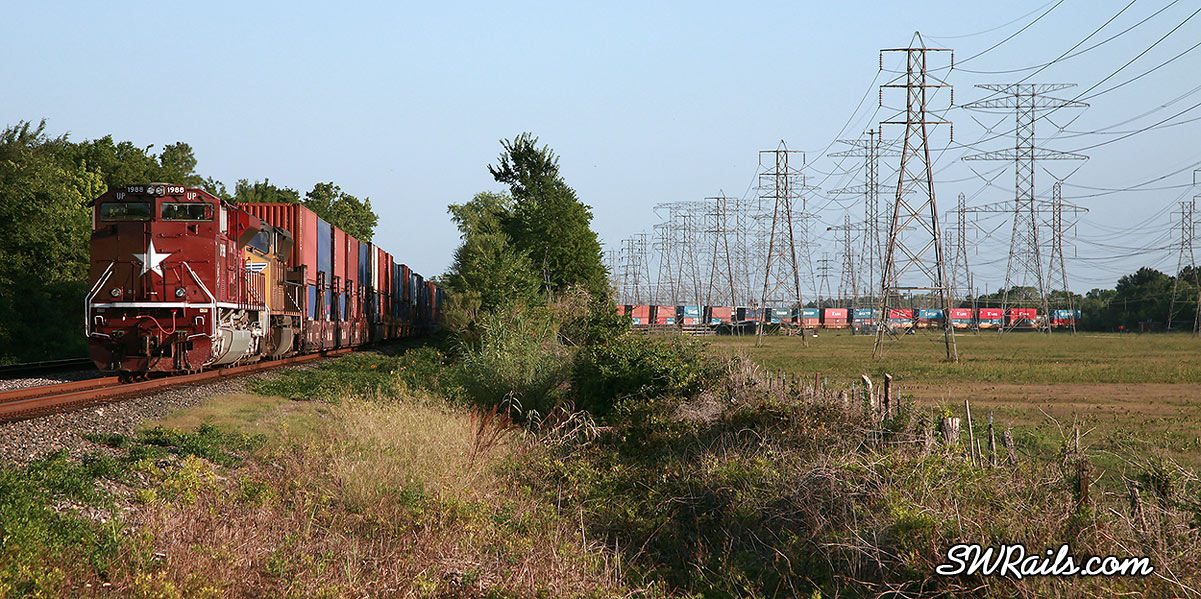
UP SD70Ace 1988 leads intermodal ILBBC-23 just east of West Junction on June 26, 2011
The train was braking as it passed me, preparing to stop at Willowbend for a crew change. A quick 1/4 mile drive to Willowbend Drive offered these views.
Happy 75th Anniversary
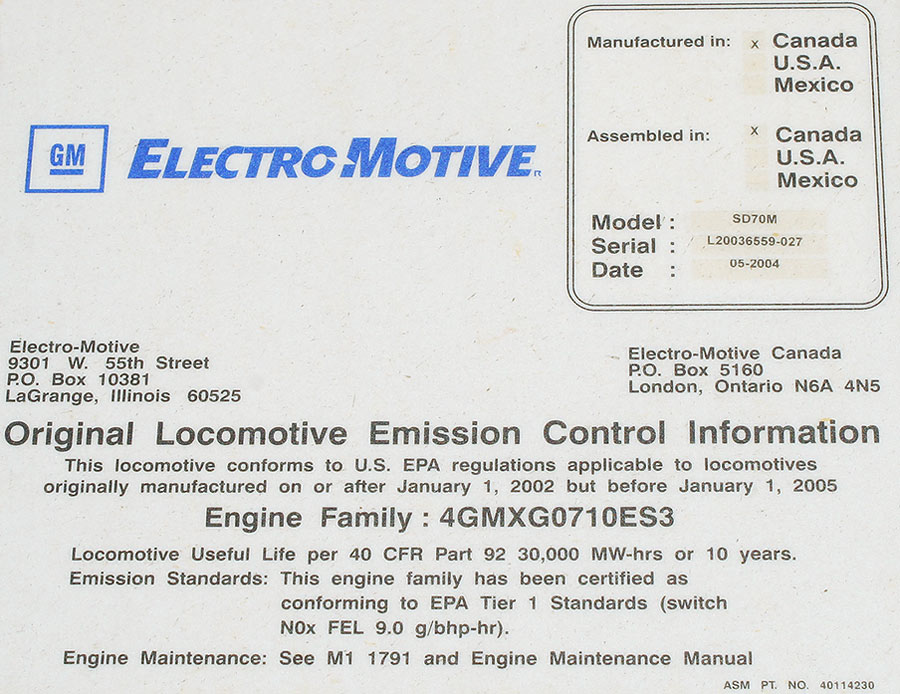
Pretty much every railfan knows that locomotives have a “builders plate” that memorializes the manufacturer, model, date of manufacture, etc.
Here’s a shot of the builders plate on UP SD70M 3805.

- Builders Plate on UP SD70M 3805
Little did I know that bridges had builders plates. When we visited Fort Worth recently, we had occasion to traverse the East Vickery Street underpass of the UP and BNSF tracks just south of Tower 55.
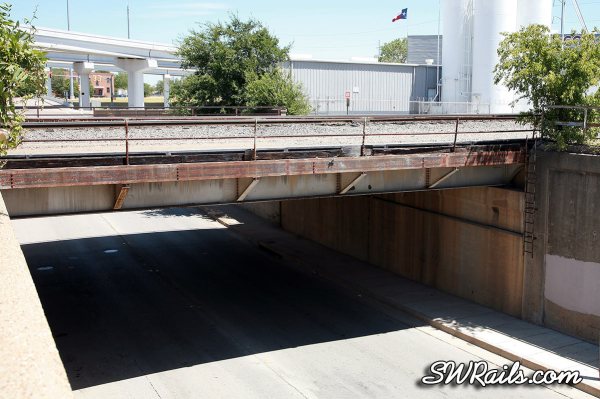
- UP / BNSF overpass of East Vickery Street in Fort Worth
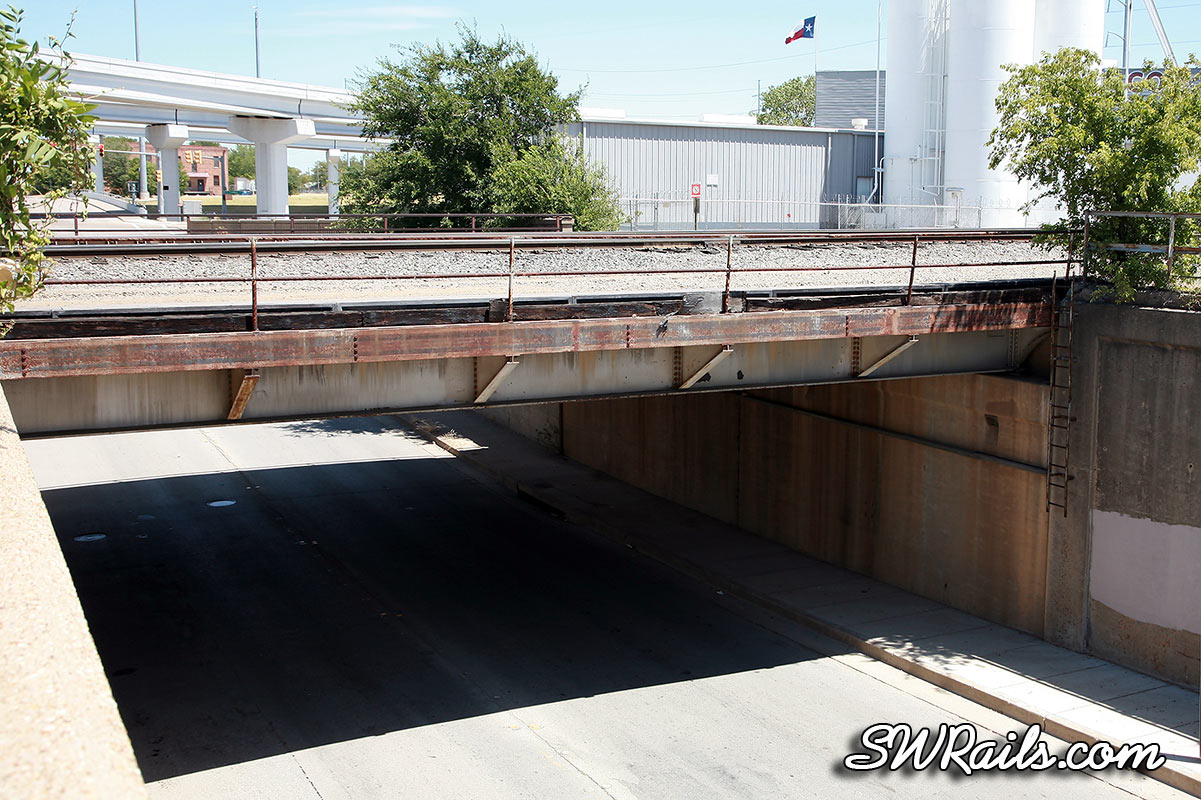
Just by looking at the bridge I knew that it was fairly old, but it wasn’t until I walked around under the bridge that I was able to put a date on the construction. I found this plate on the south end of the west side of the overpass.
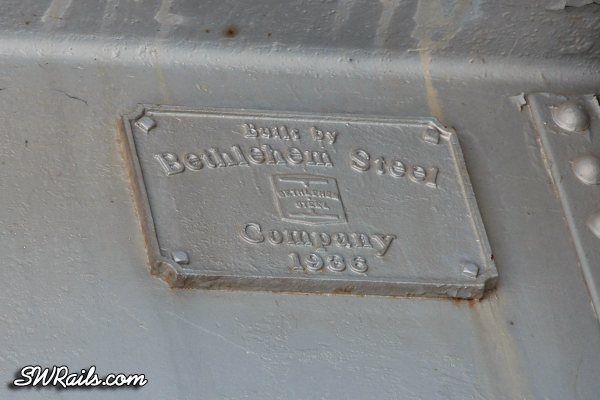
- Builders Plate on the railroad bridge over East Vickery Street in Fort Worth
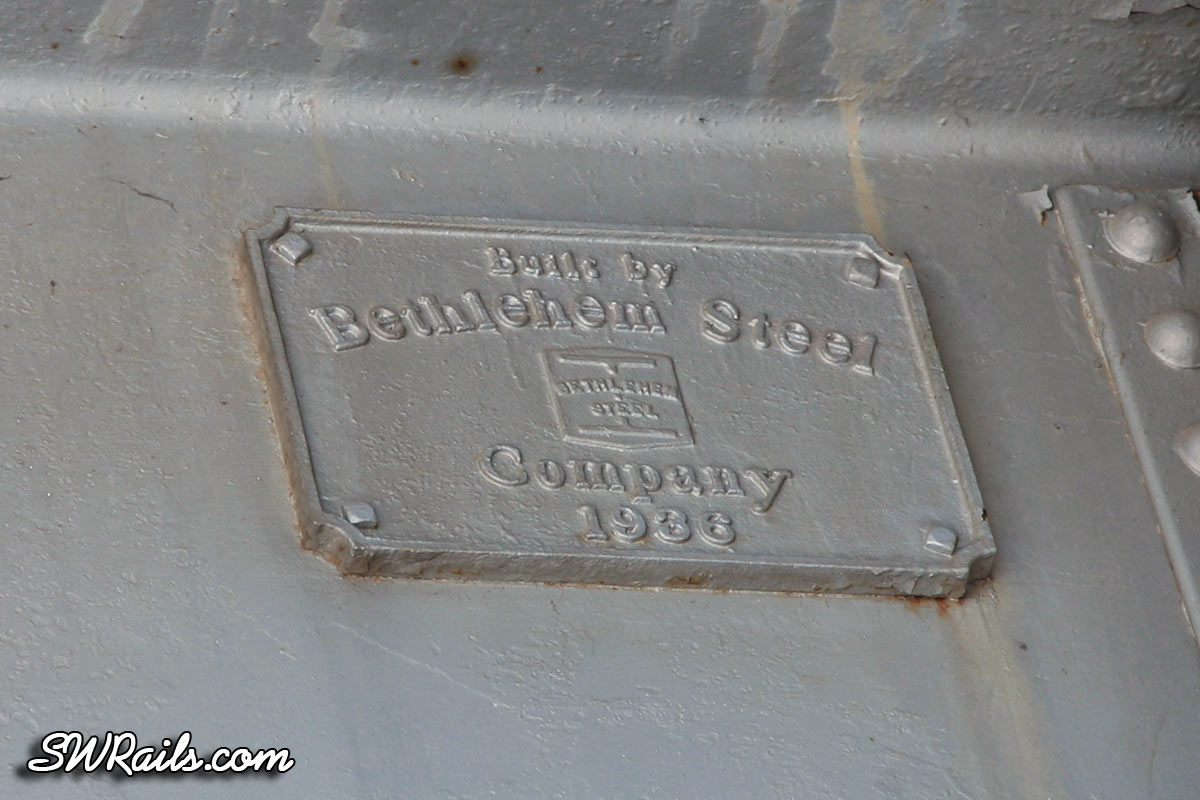
75 years old and still in service every day, not to mention bearing the weight of trains dramatically heavier than those in 1936. What a great memento of when we actually built stuff in our country.
The U.S. was in the midst of The Great Depression in 1936. I’m guessing that this overpass, and others in this neighborhood, were part of the New Deal / WPA public works projects that brought much-needed jobs to a desperate-for-work populace.
I Feel The Need For Speed – ISO, That Is
Last November 20th, I had occasion to do a photo shoot at a clients home in the Sugar Land area. We wrapped it up a little after 10:00 PM.
My route home took me across the UP Glidden sub mainline at CP SA025, the east switch of Sugar Land. As I crossed the track, I saw that a westbound was lined up.
Typically there’s not a lot you can do photographically with a speeding train after 10 PM, particularly without a tripod. But I happened to have my Canon 5D Mark II with me, which produces nice files up to 5600 ISO. It’s worth a try…
I found a spot near the signal hoping to capitalize on some light spilling over from the adjacent Nalco Chemical Plant. Within two minutes, the westbound showed up. Here goes nothing…
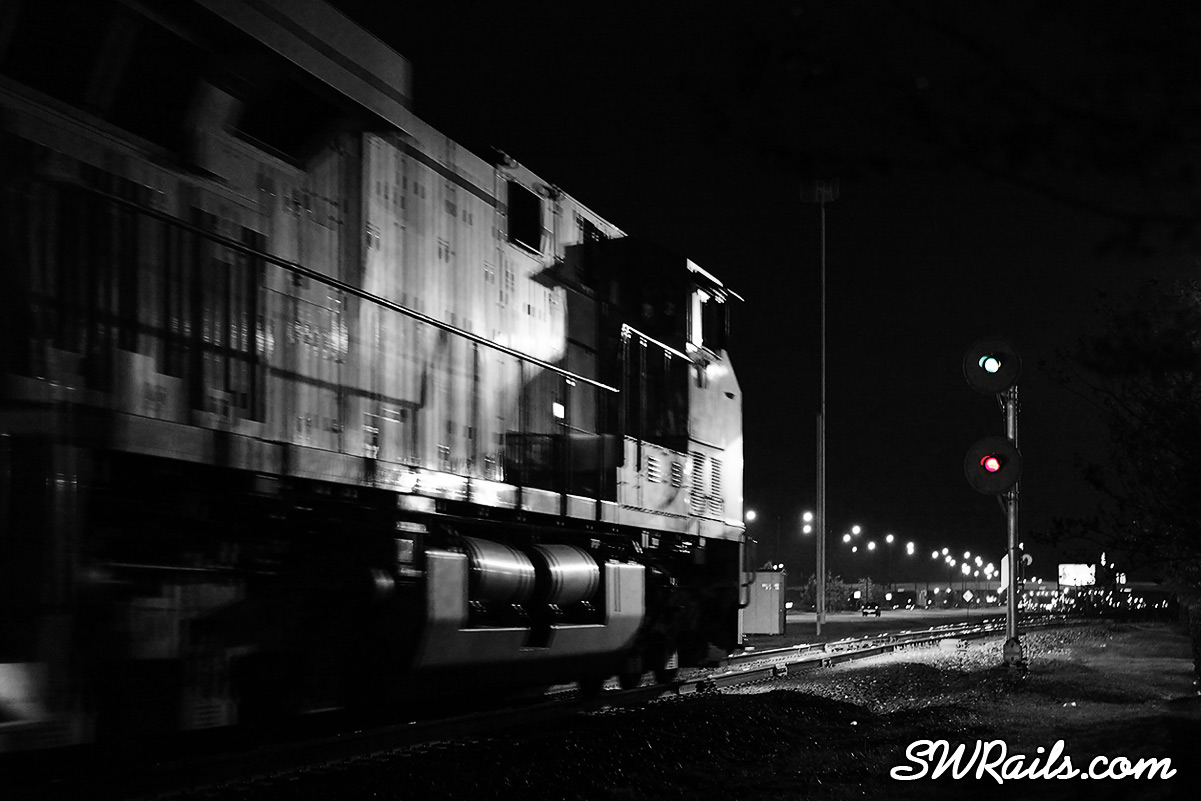
Union Pacific westbound hotshot passing the east switch at Sugar Land on Nov. 20, 2010
As luck would have it, the train was the ZATLC-the hottest westbound on the Glidden sub. And it was moving!
With the ISO set at 5600 with my 28-70 2.8 lens wide open, the best shutter speed I could get was 1/80th second, nowhere near fast enough to freeze the motion of the train. But it worked out nicely because the slow shutter speed nicely shows the motion of the train. The only thing I didn’t like was the color cast of the sodium arc lights on the lead engine, but I fixed that by converting the image to B&W, except the signals.
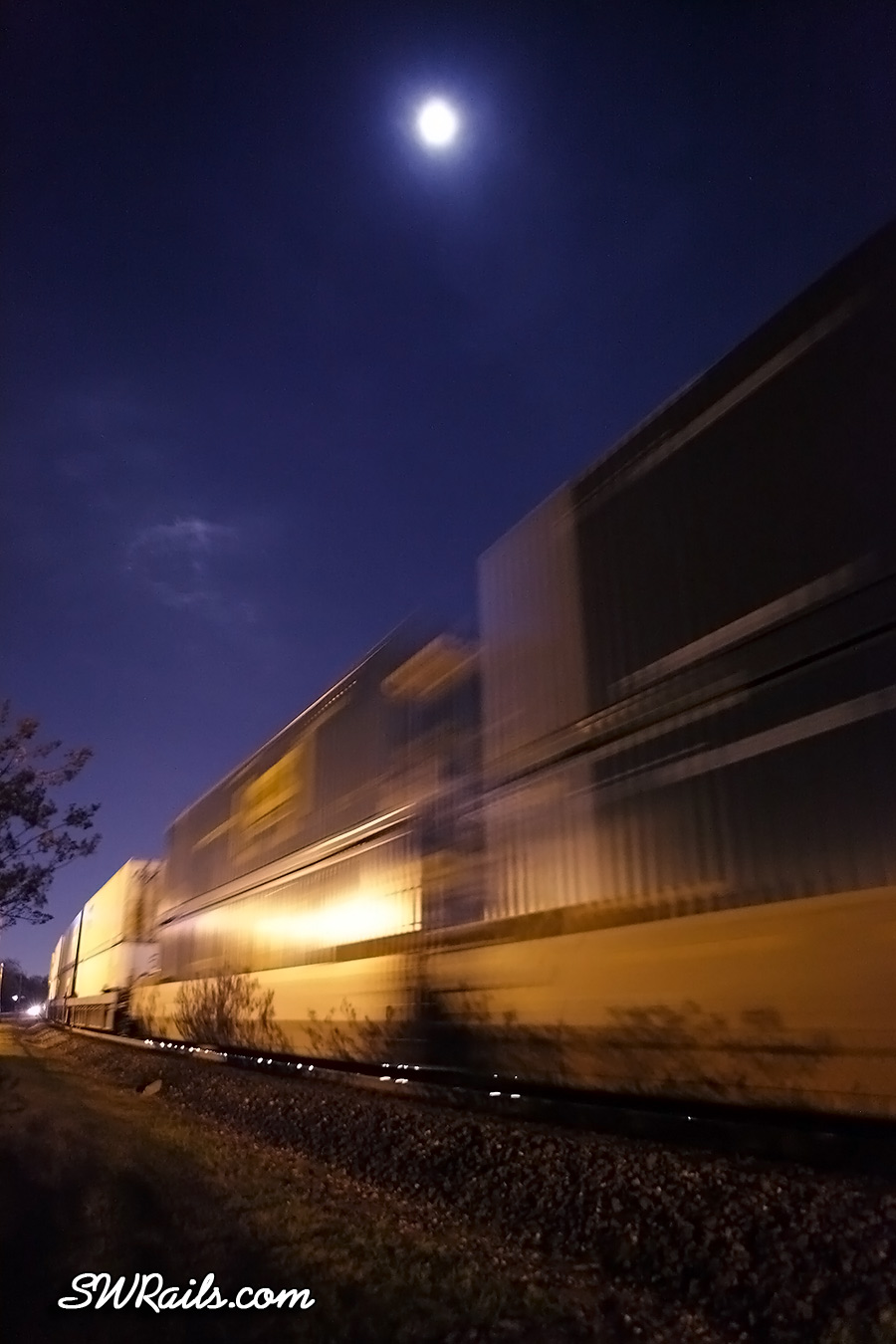
Nothing like some improvised late-night photography!
 Southwest Rails