Out & About – August 10, 2015
A short episode today as it’s entirely too hot to railfan in the afternoon. How hot is too hot? How about 105° this afternoon in Sugar Land?
But it did cool off to 98° by 6:45 PM, so I headed out to capture Amtrak #1 as it passed through Stafford, TX en route to LA.
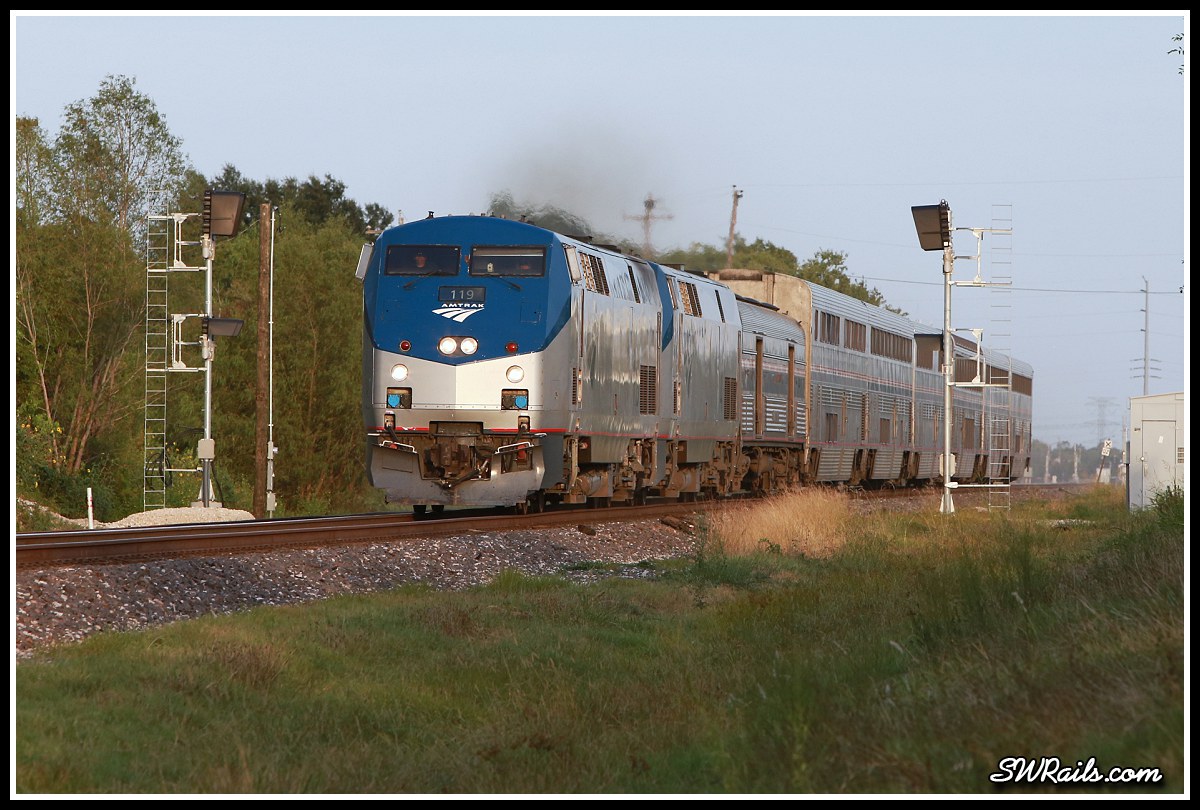
I set up at MP 20.7 where two new intermediate signals have been recently installed. They’ll be put in service when the second main track is cut in, possibly late this year.
Right on schedule, P42DC 119 leads #1 by me at 7:32 PM at a good 60 mph.
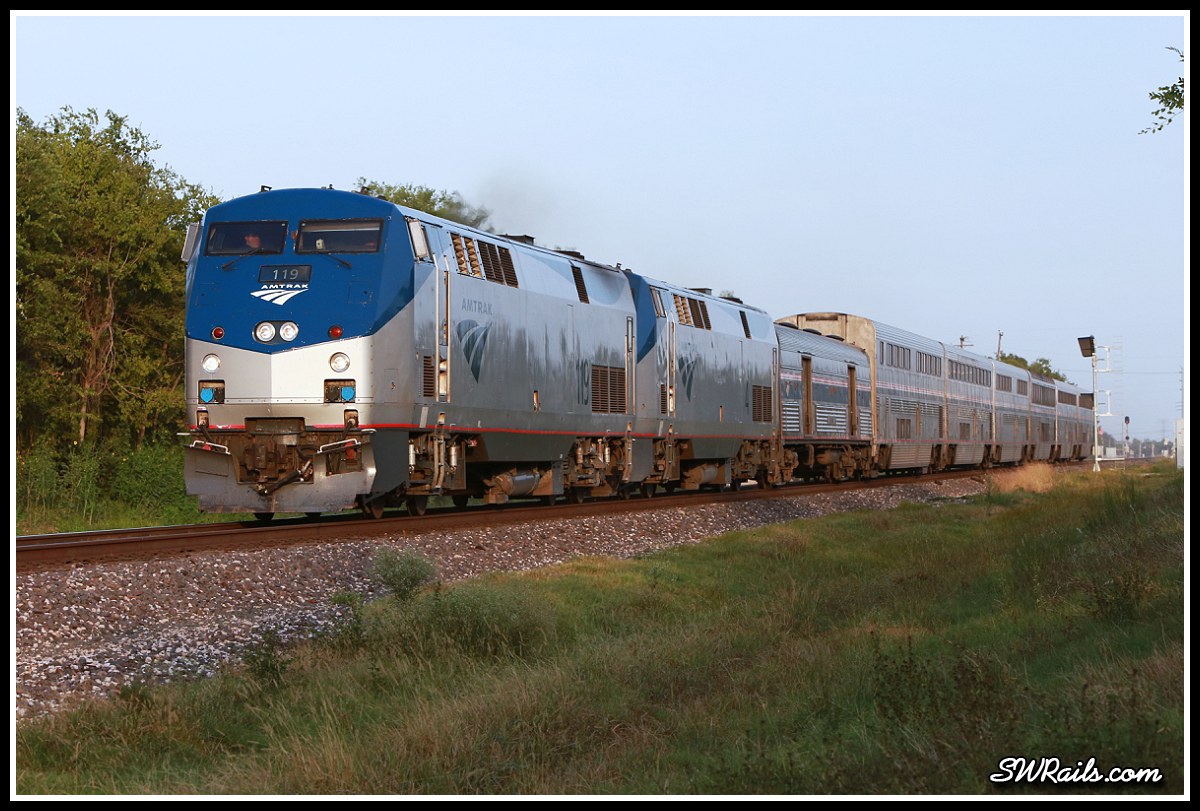
A quick turn to my left provides two nice glint shots:
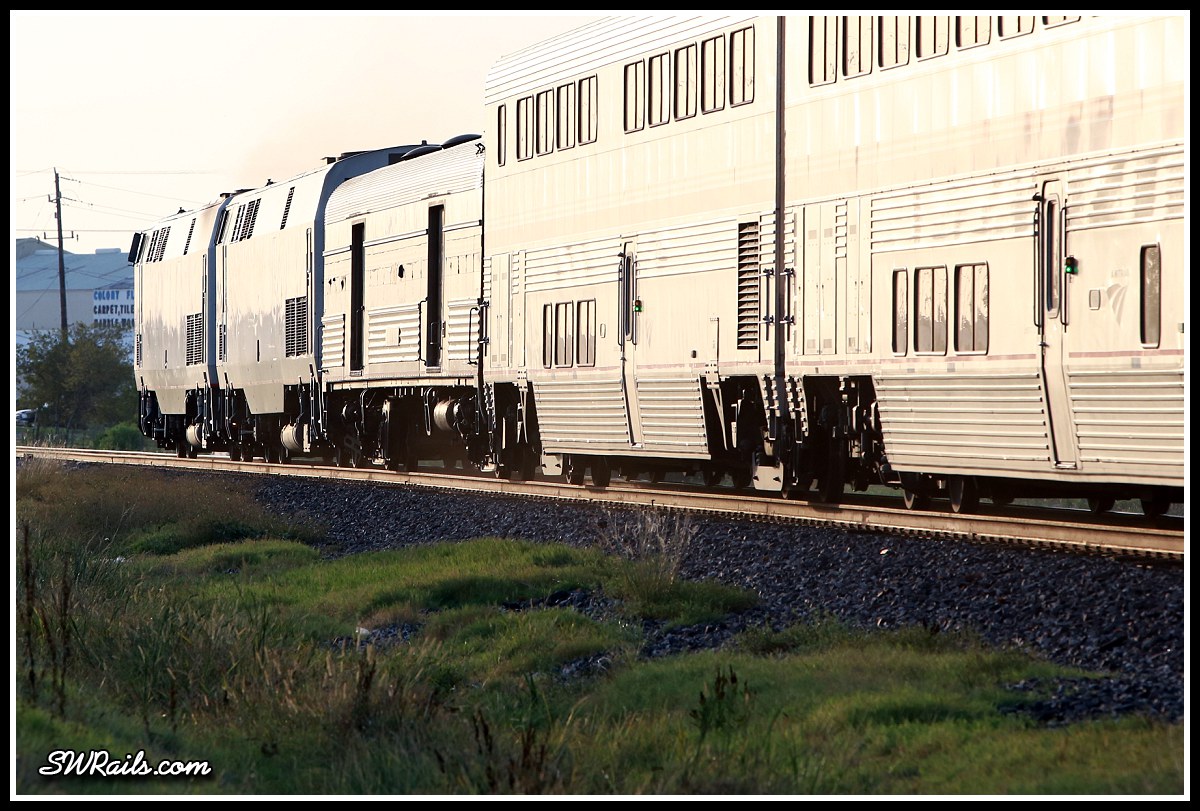

There was some eastbound traffic set to move once Amtrak got by, but nothing worth sacrificing quality time at home with my A/C…
Circus Train in the House!
The Ringling Brothers circus train arrived last night, June 6, 2015. Symboled SSAHO-06, it departed Kirby (San Antonio) just after midday.
I was able to catch it as it slow-rolled through Stafford, account a broken crossing gate, at 8:40 PM. The trains low-speed allowed me to easily get ahead of it for a second run-by 4 miles down the line at Ormandy, CP SA916, where it passed through at 8:55 PM.
As it was too dark for stills, I decided to try shooting some High-ISO SLR video. I added an LED light to help illuminate the train for the run-by at Ormandy. Overall, it turned out OK considering just how dark it was when the train arrived.
Update: I’ve been advised in comments that the circus train’s symbol was actually SKBDP-06 (Special Kirby – Dallerup).
I Wish I Were An Eagle
Union Pacific has just released a short video entitled “I wish I were an eagle”. It’s a tribute to generations of railroad families and the little ones that want to follow the tradition.
The star of the video is a short train led by SD70ACe’s 8838 and 8708 filmed in a breathtaking array of aerial shots as it traversed the Columbia River Gorge. The other 3-4 trains in the video seemingly had all EMD power, heavy on SD70ACe’s.
It’s worth 2 1/2 minutes of your time, especially in full-screen HD.
True Winter Railroading
Winter railroading in Southeast Texas this year has taken place under dreary overcast days with some chilly mornings and occasional rain. Far Eastern Canada is a different matter.
I came across this video of a westbound CN freight train at Salisbury, NB that illustrates what true winter railroading looks like – blue skies and snow. Lots of snow!
This video was uploaded but 3 days ago and already has more that 2.5 million views. Who knew there were that many railfans?
4 In A Row
It’s been exceptionally cloudy in Southeast Texas for the last 6 weeks, but there was a short respite from the darkness this past Tuesday, 1/6/2015.
Shortly after 9:00 AM, the Glidden dispatcher told MOW forces that they could have the track after he ran 4 eastbounds. Nothing like an oncoming fleet to get me out the door!
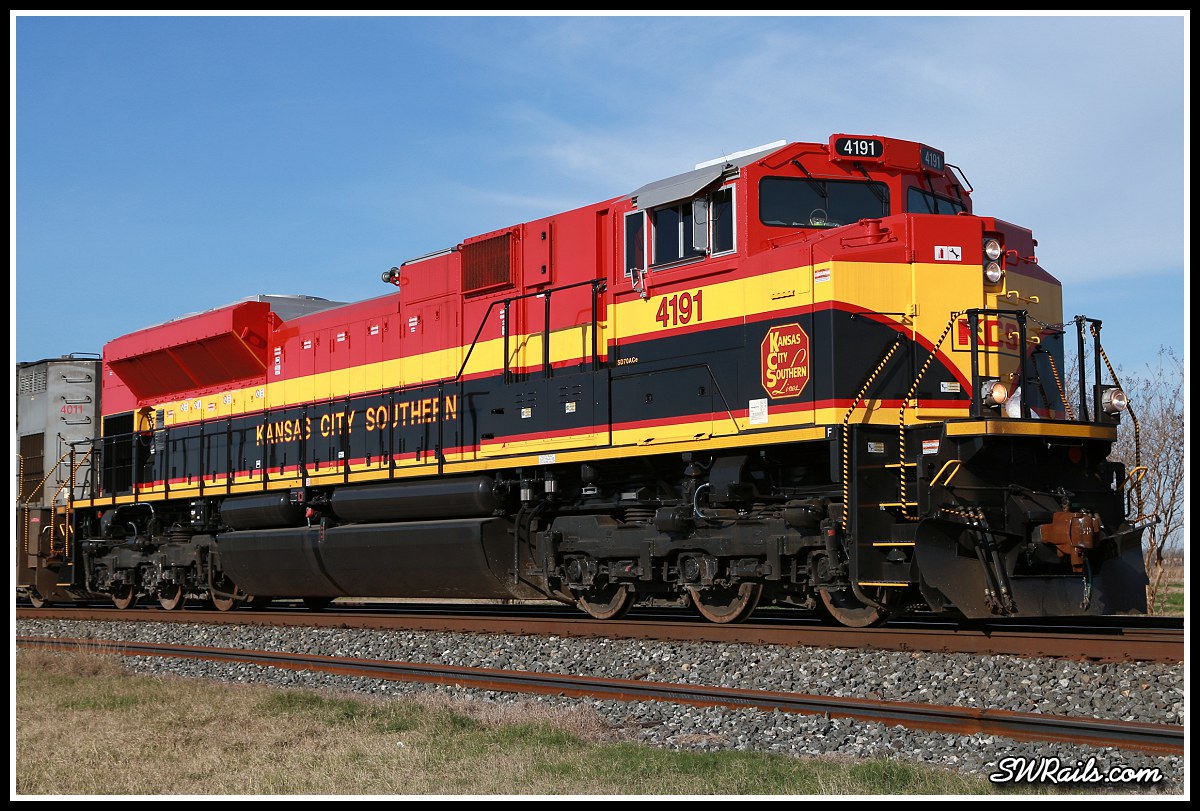
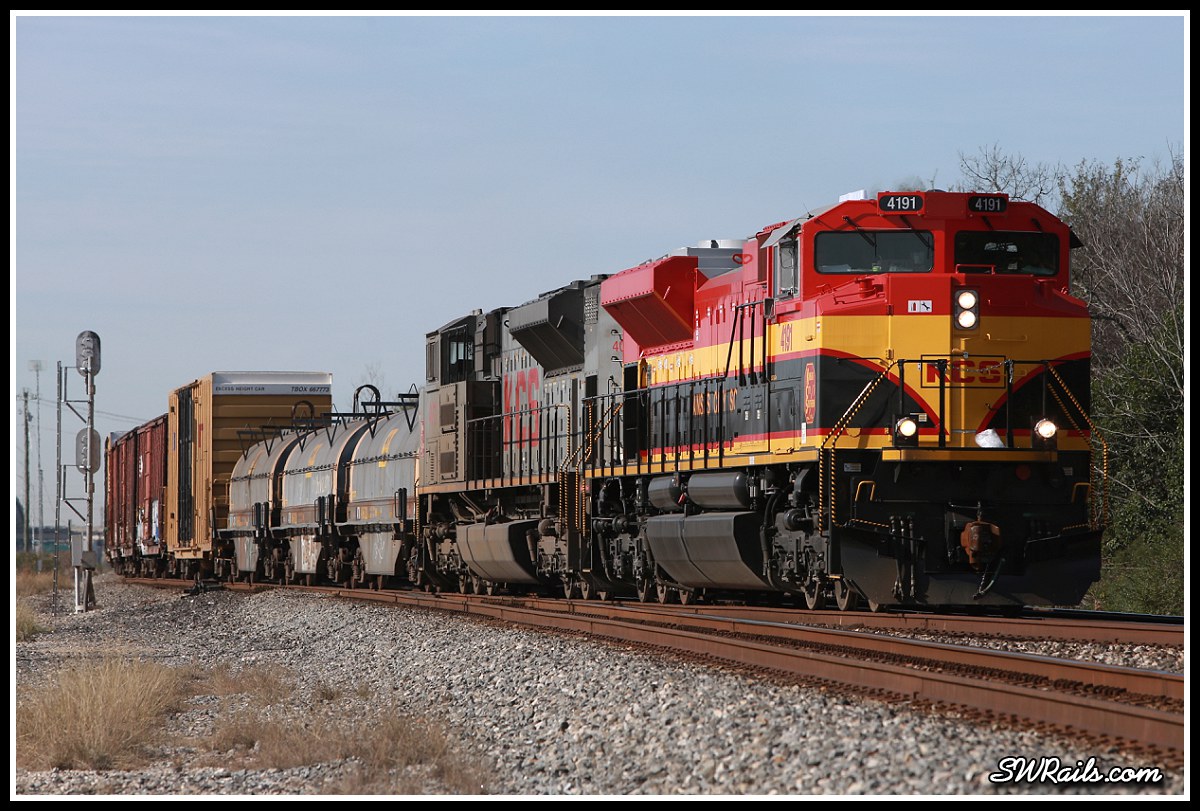
The first train was waiting at the prison road crossing hold-out spot near MP 26.5. Upon arriving, I saw that the lead unit was KCS 4191, a brand-new SD70ACe. Ahhhhh, yes, there’s nothing like the smell of fresh paint in the morning

After a few shots, KCS 4191 East got underway.

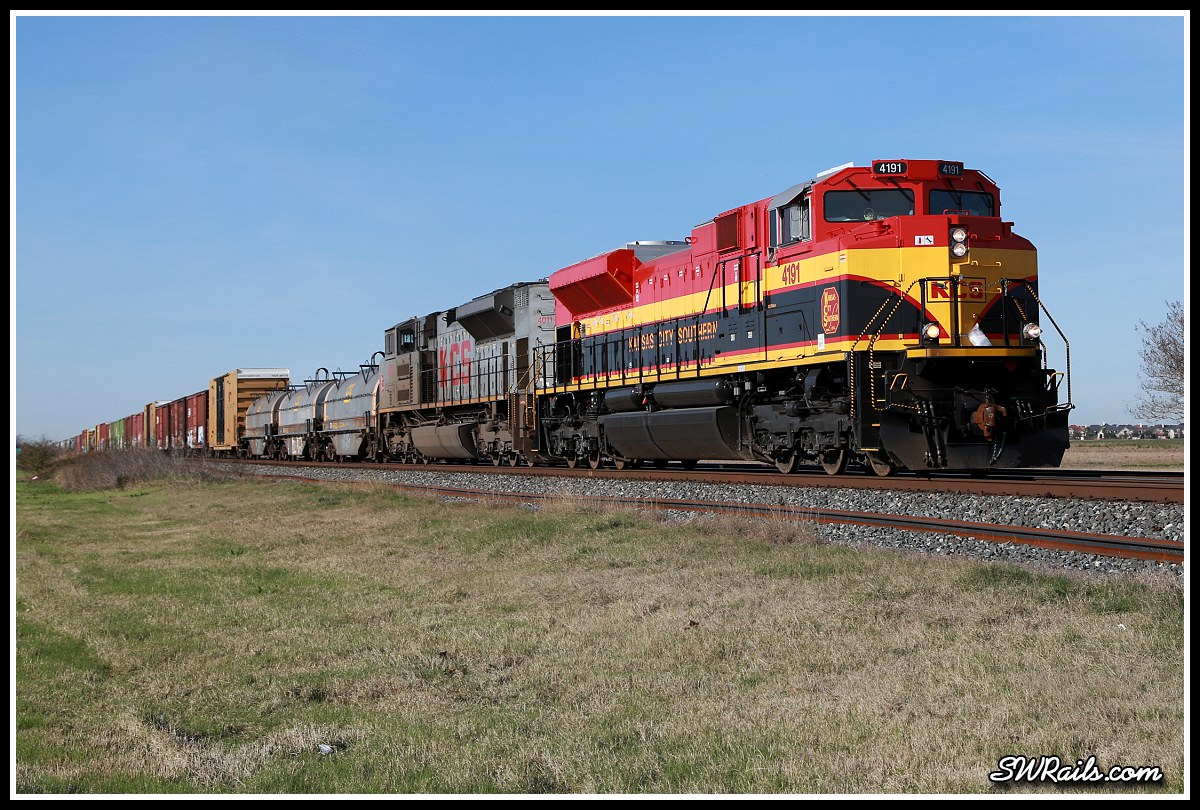
They only look this way for a short time:
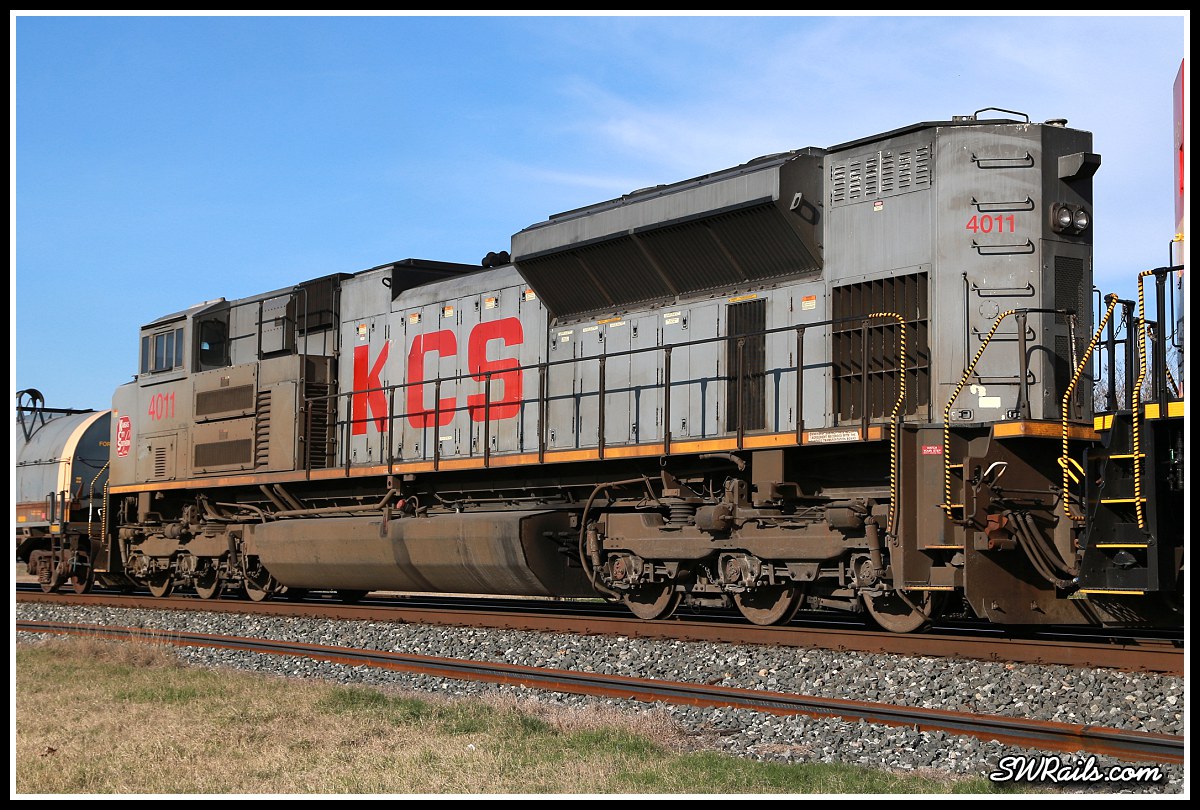
Trailing unit SD70ACe 4011 looks quite austere compared to the 4191.
My original plan was to let the 4 trains come to me, but brand-new power calls for a chase. The pursuit started out inauspiciously when the first 4-5 traffic lights screwed me over. Happily, my frustration was in vain because the train had to slow down for some slow orders and I was able to set up just east of MP 24 with no rush.
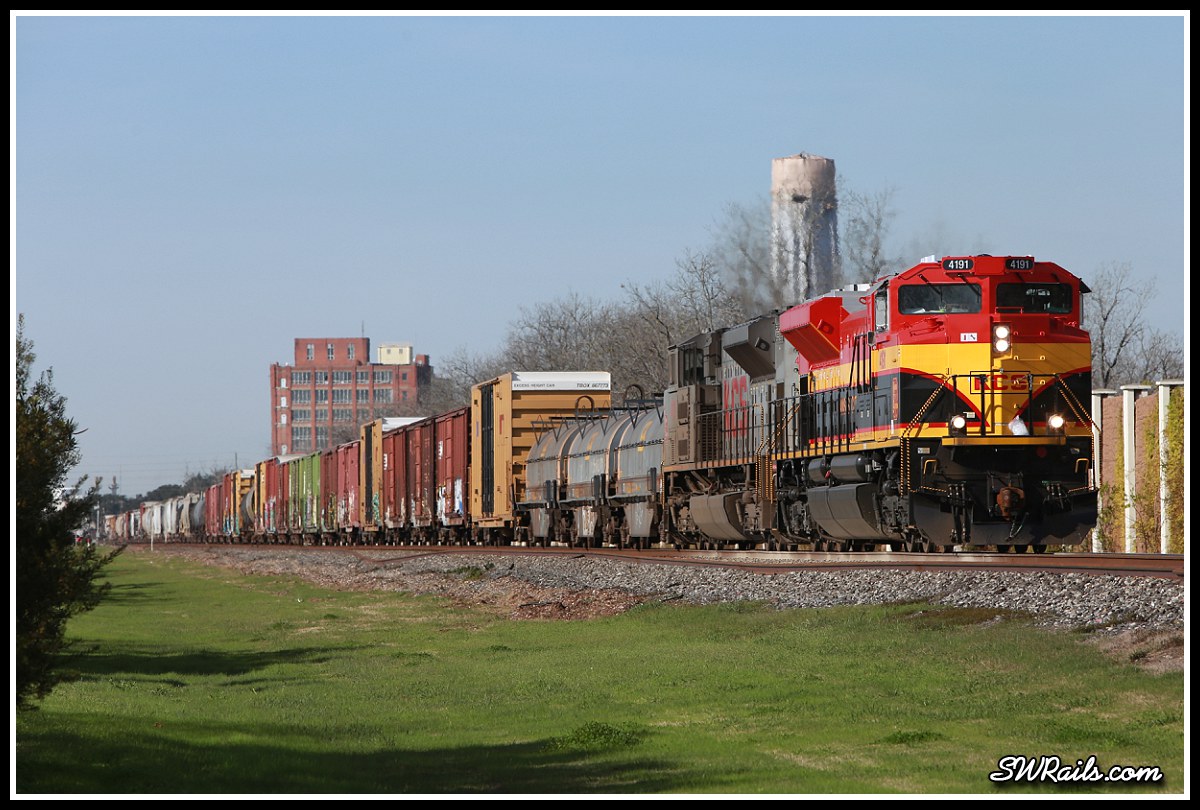
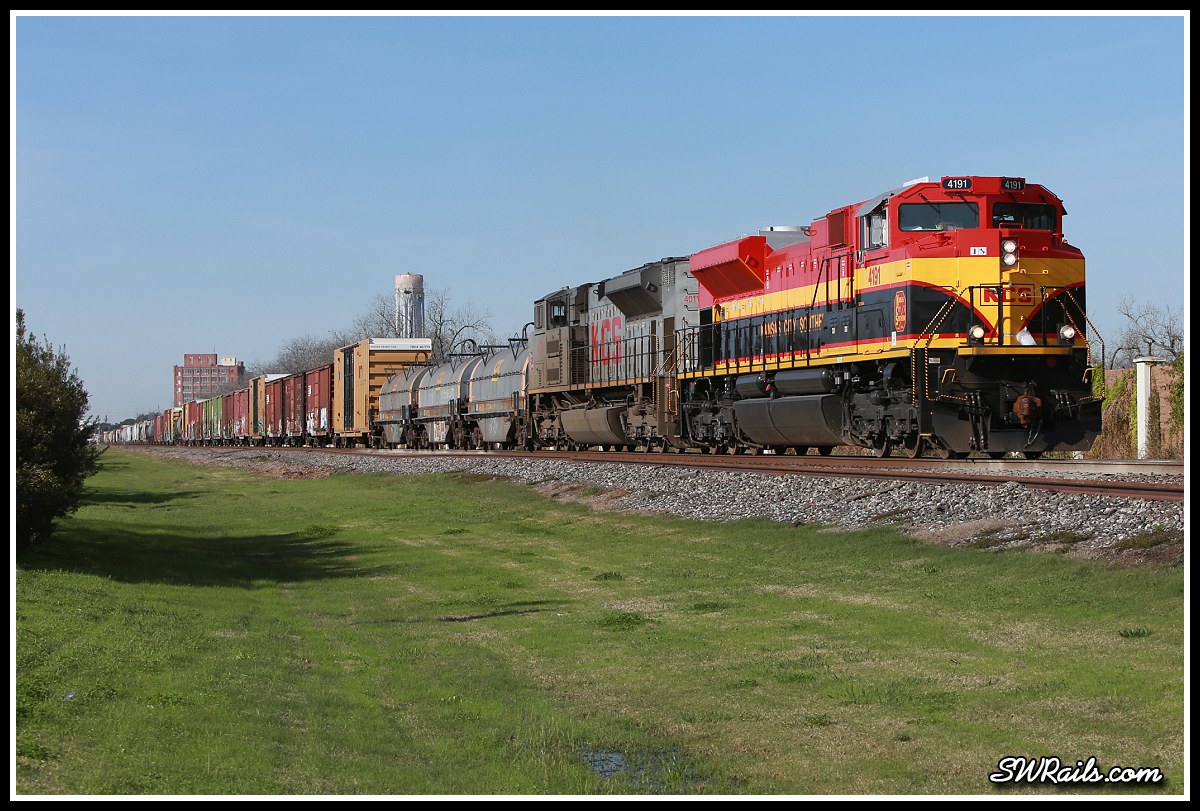
Since the train was slow-rolling, I moved up to Missouri City near MP 18 for another view:
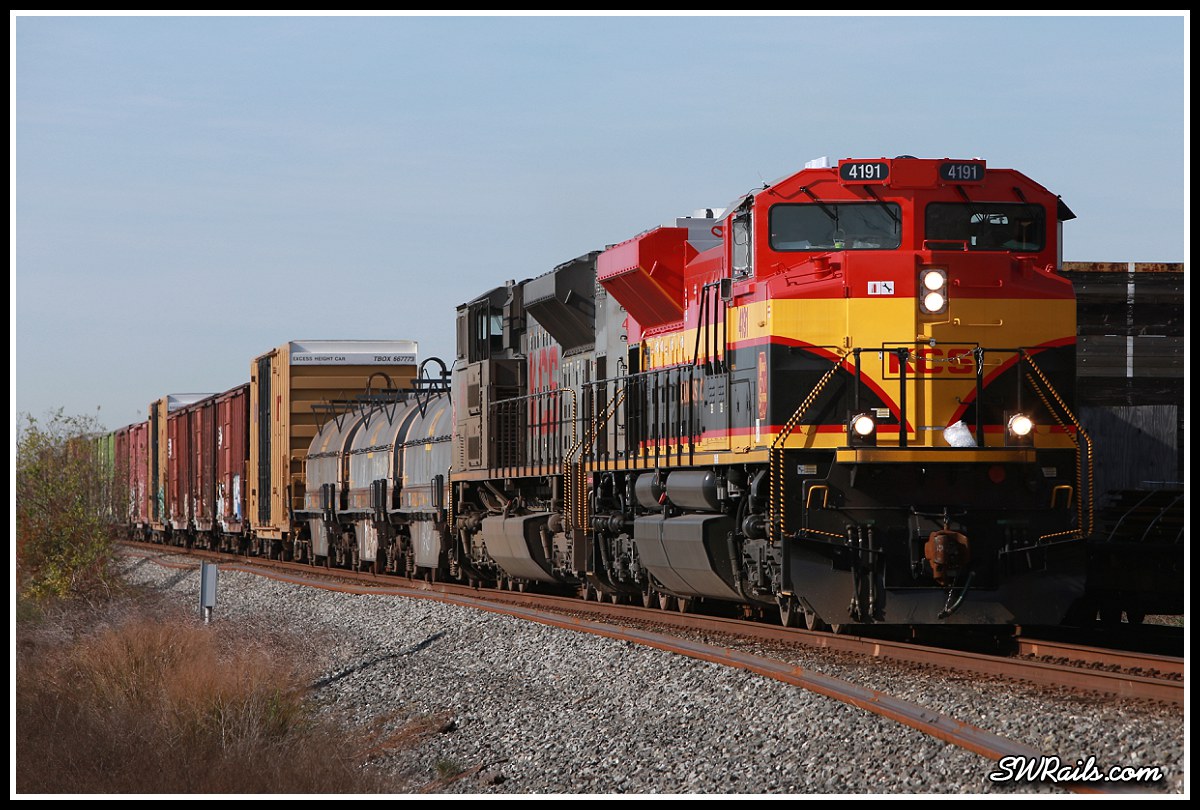
Since the getting was still good, I moved to West Junction for a final shot of the eastbound KCS manifest:
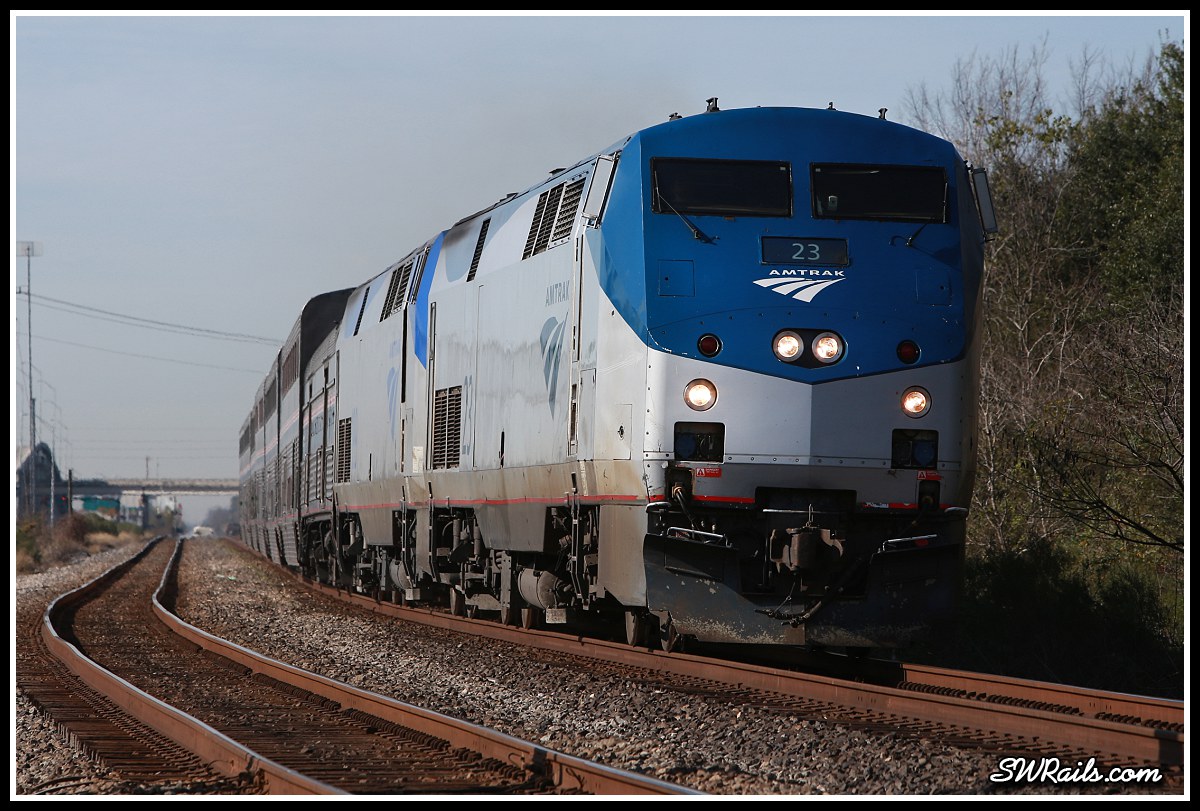
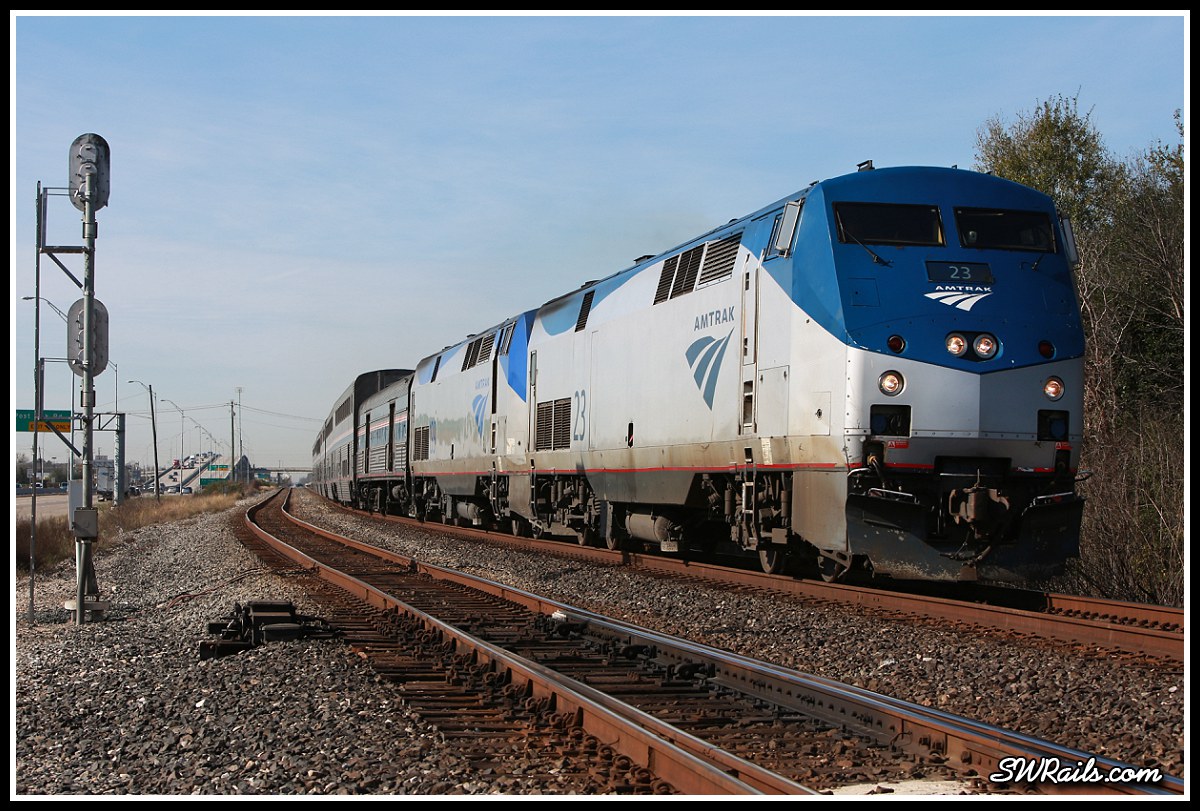
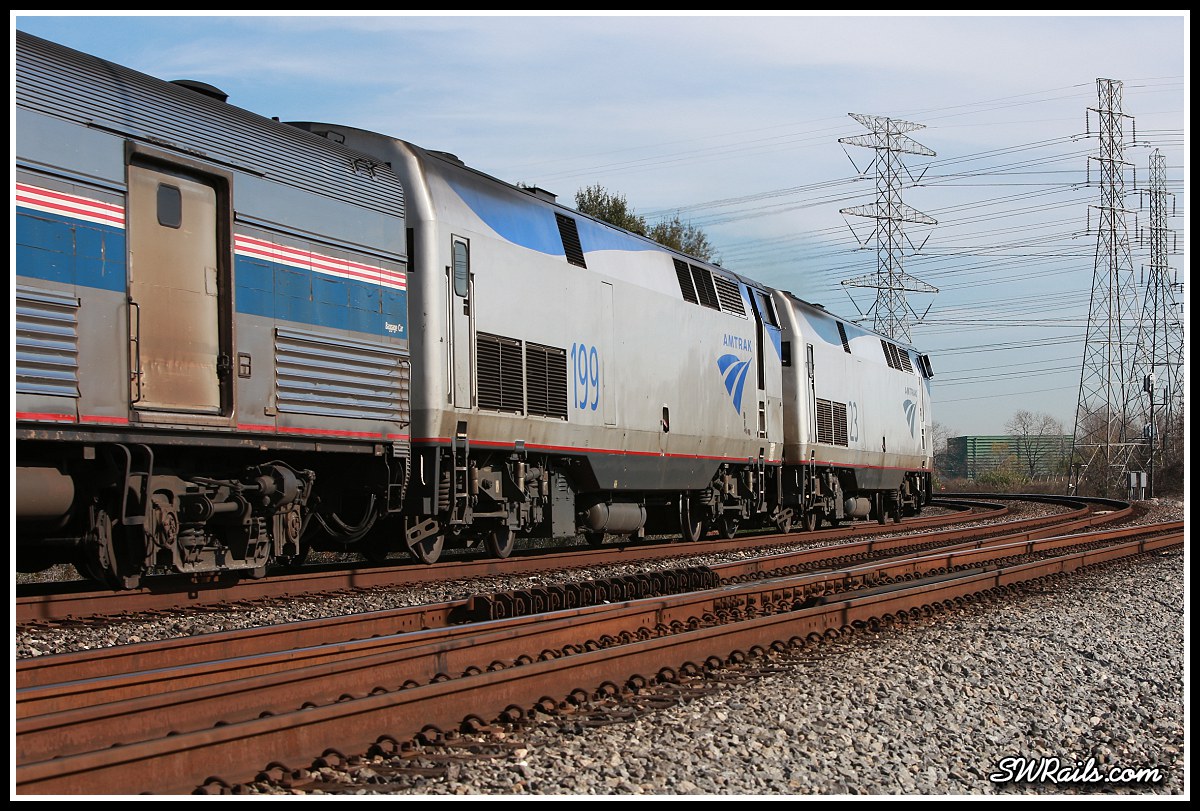
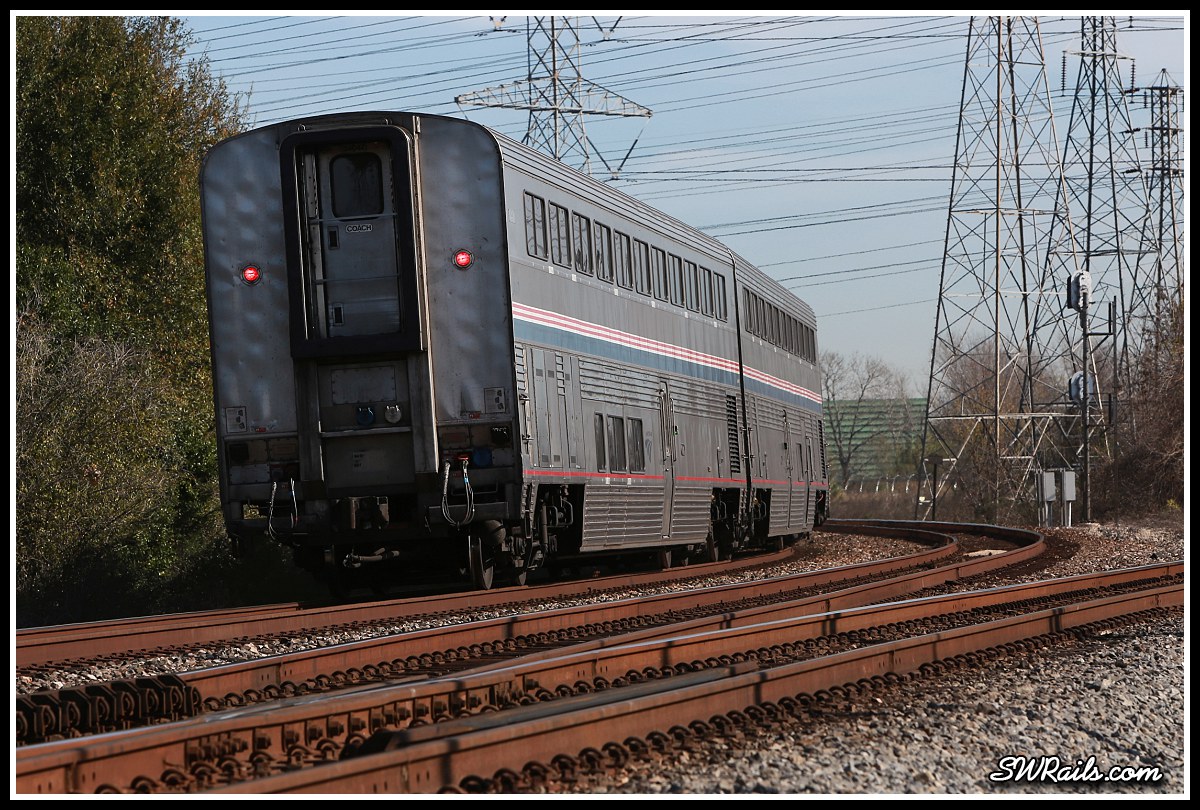
Amtrak #2 was a few minutes behind KCS 4191 so I stayed put at West Junction for it:

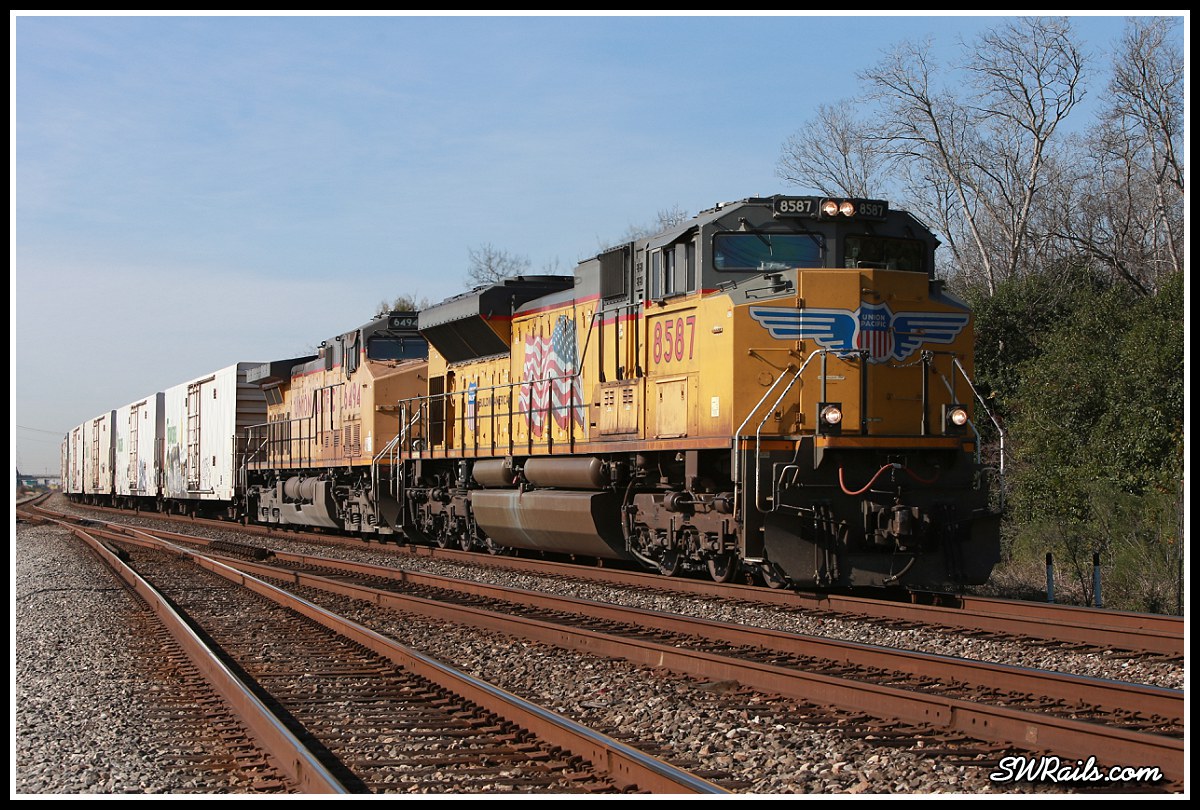
Minutes after Amtrak was UP 8587 leading UP’s hottest Glidden sub eastbound, the ZLAJX (expedited Los Angeles-Jackson, MS):
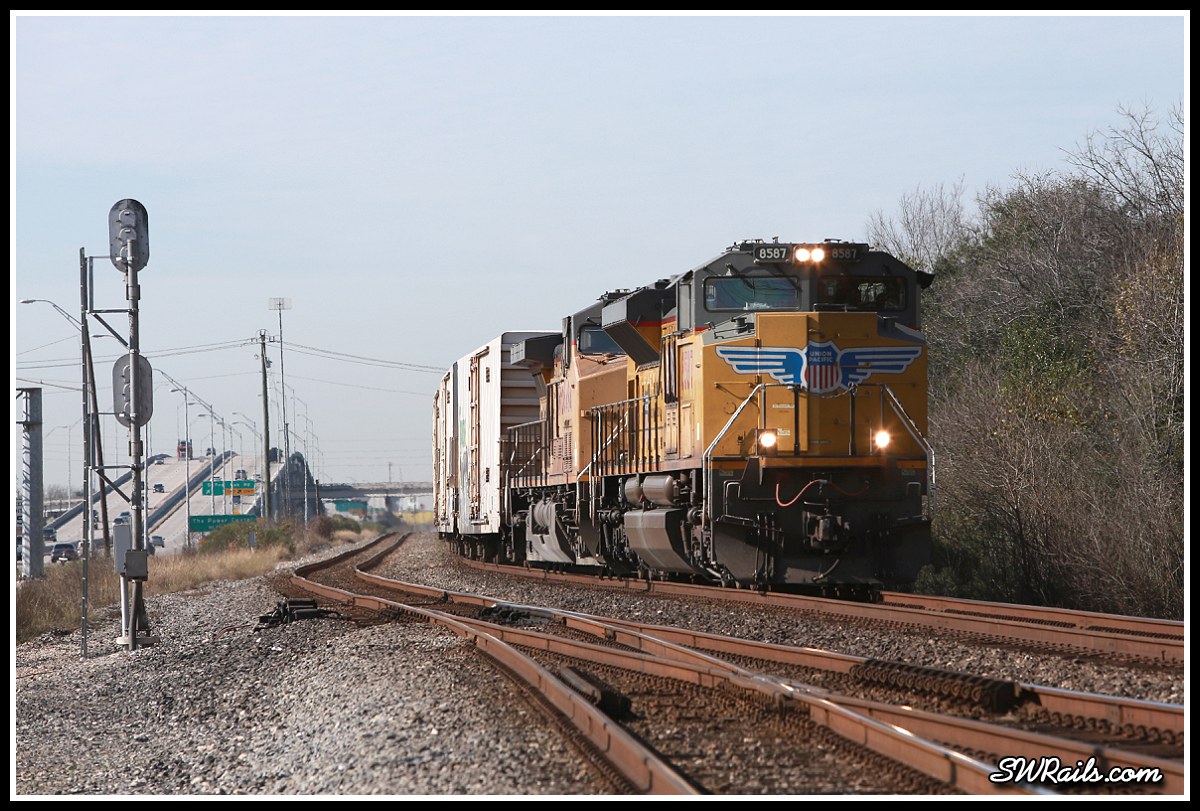
It seems like every other UP road engine has its trucks and fuel tank caked over with red dirt:
The Tropicana reefers are a fixture on the head-end of the ZLAJX:
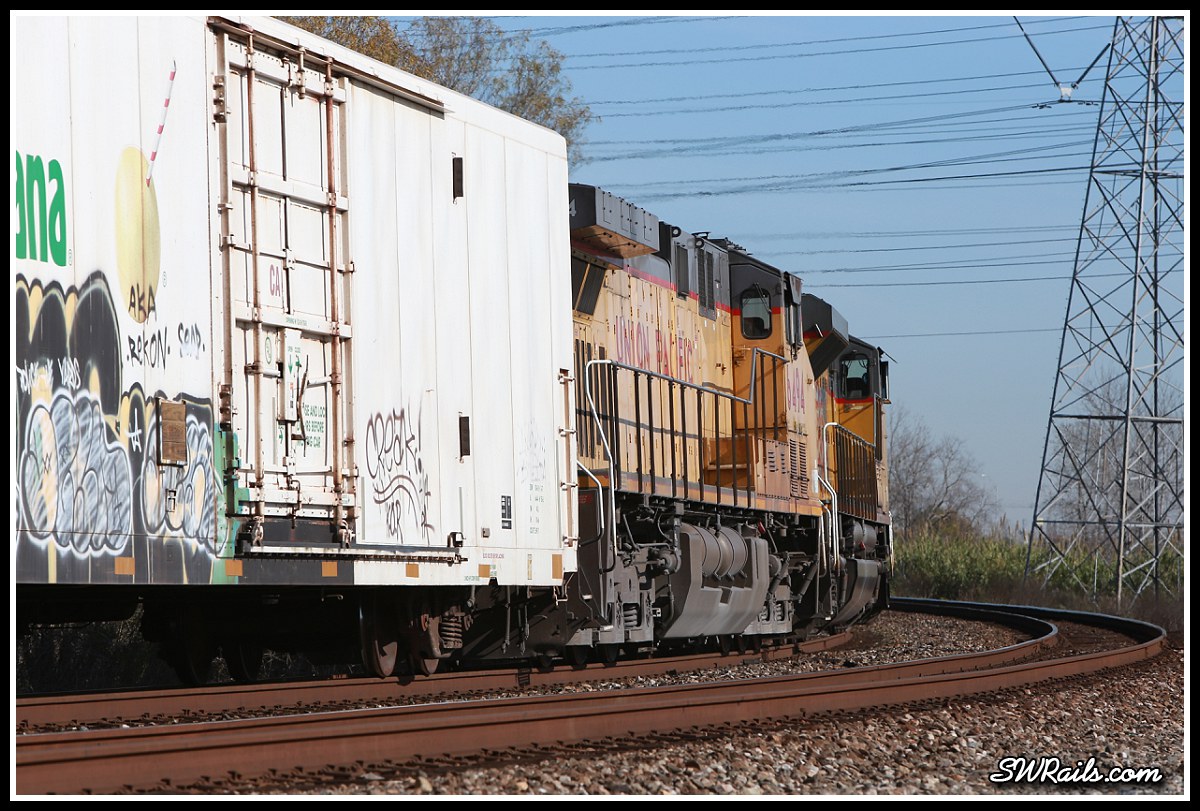
Another fixture on this train is a single DPU on the rear:
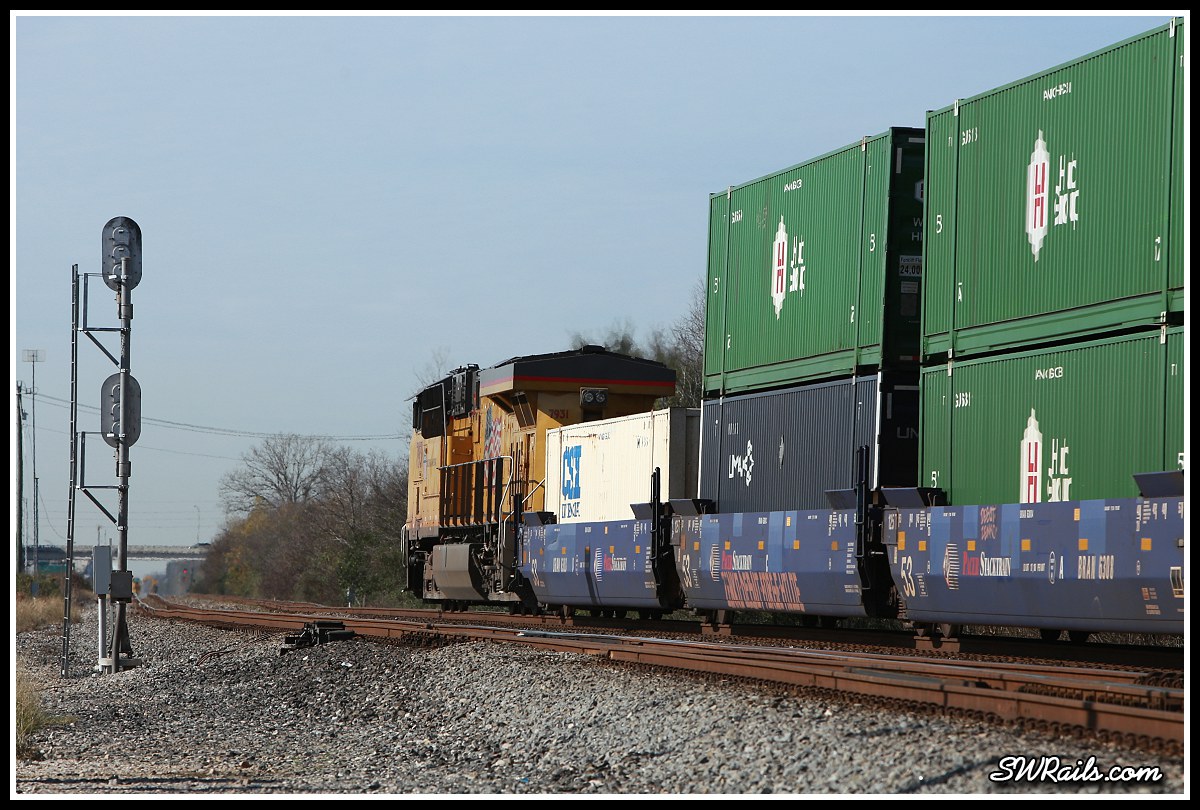
Notice the red dirt on the undercarriage of UP 7931:

The last train was just far enough away to allow me to move 1 1/2 miles west to Heacker where I caught UP manifest MKBHO with 2 BNSF Dash 9’s on the point:
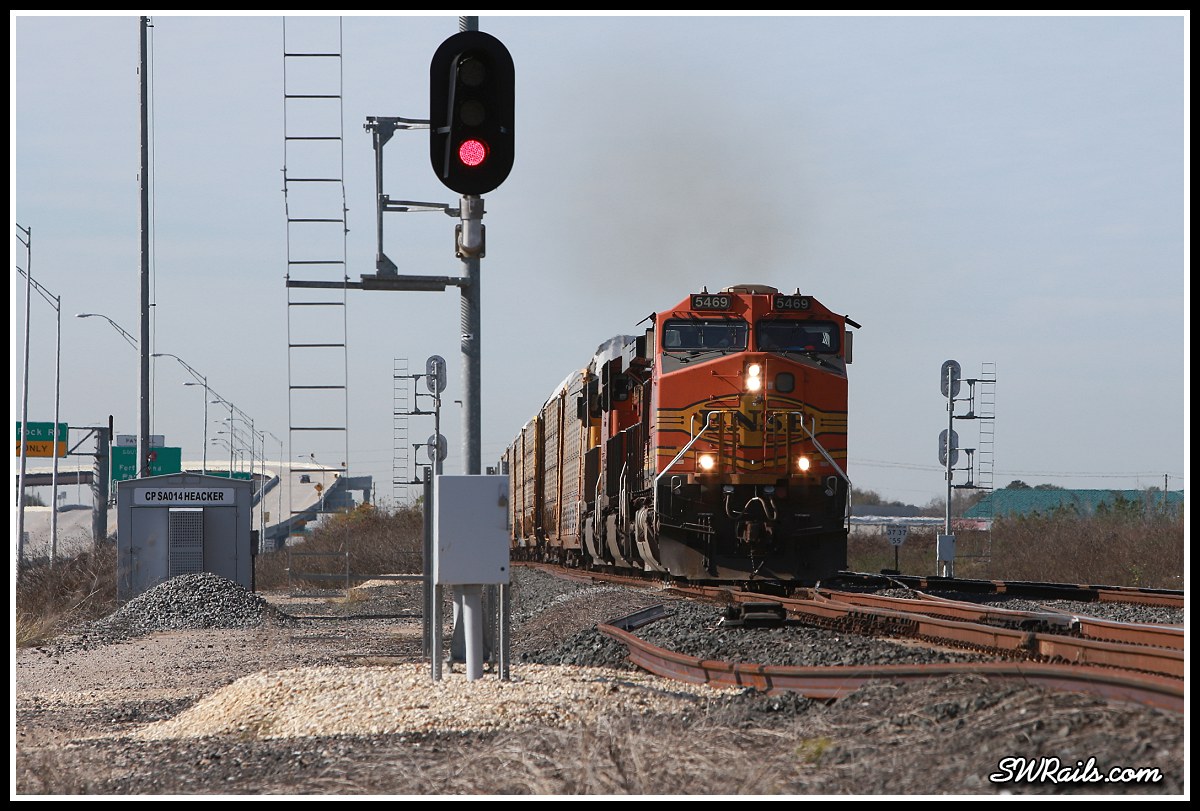
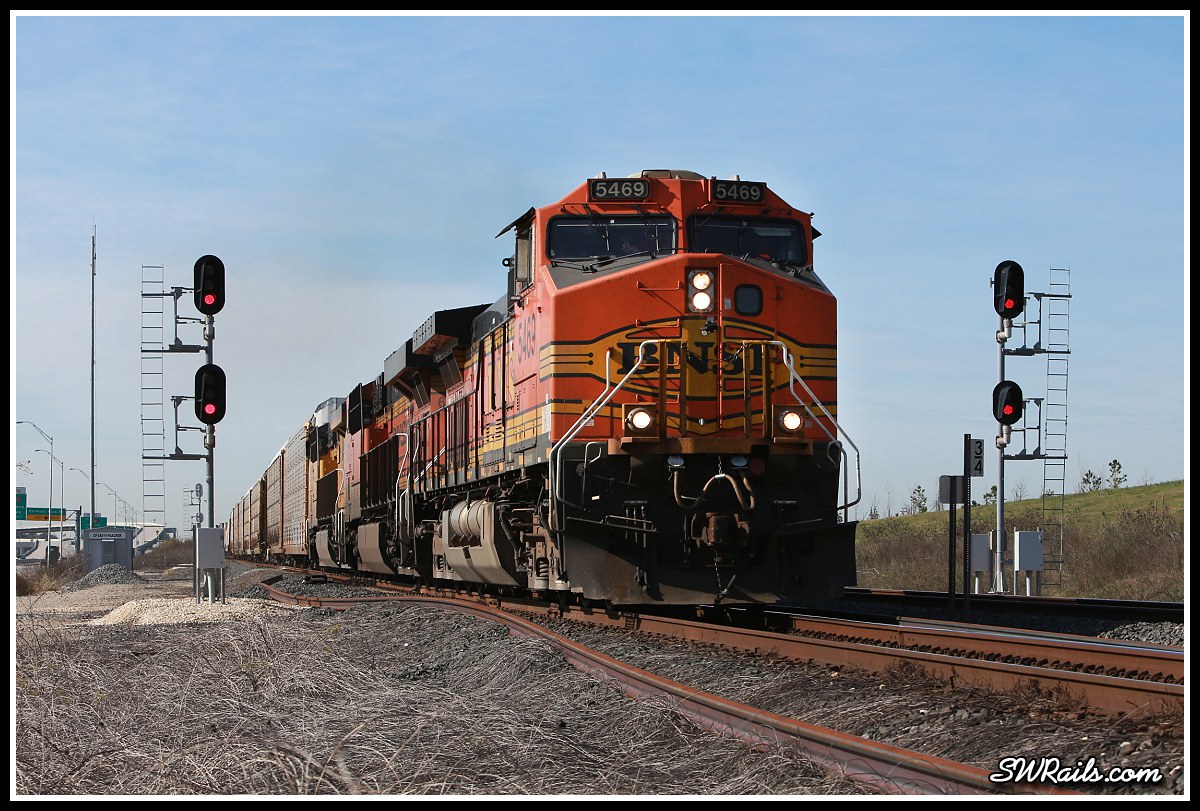
By the time I got to my car, MOW already had their track and time authority in place, putting an end to the festivities. No matter, 4 in a row ain’t too shabby. Besides, I was ready for some lunch…
MaPac Memory
I came across this interesting view of two ladies moving some MoPac MaPac GP38-2’s at Mt. Vernon, IL in August of 1987. (click image to view a larger version)
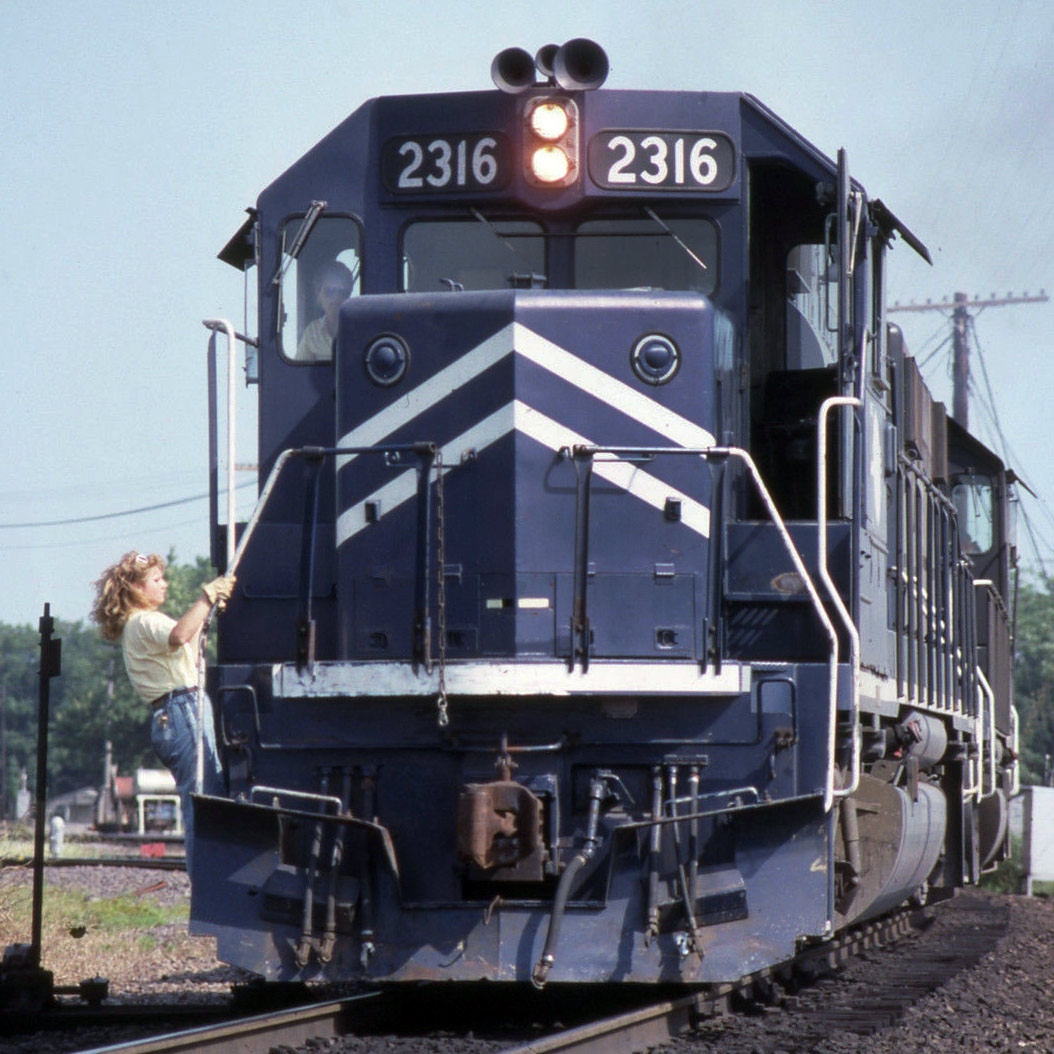
I get the impression that they’re hostlers, not a switch crew as such. Nevertheless, it’s an unusual scene. I can’t say I’ve ever seen two women working together like this. If I had, I might have railfanned a lot more…
For The Espee Lover in You
For the seafood lover in you, you can go to Red Lobster anytime. For the Espee lover in you, you have fewer options. It just so happens that I might have something for you today.
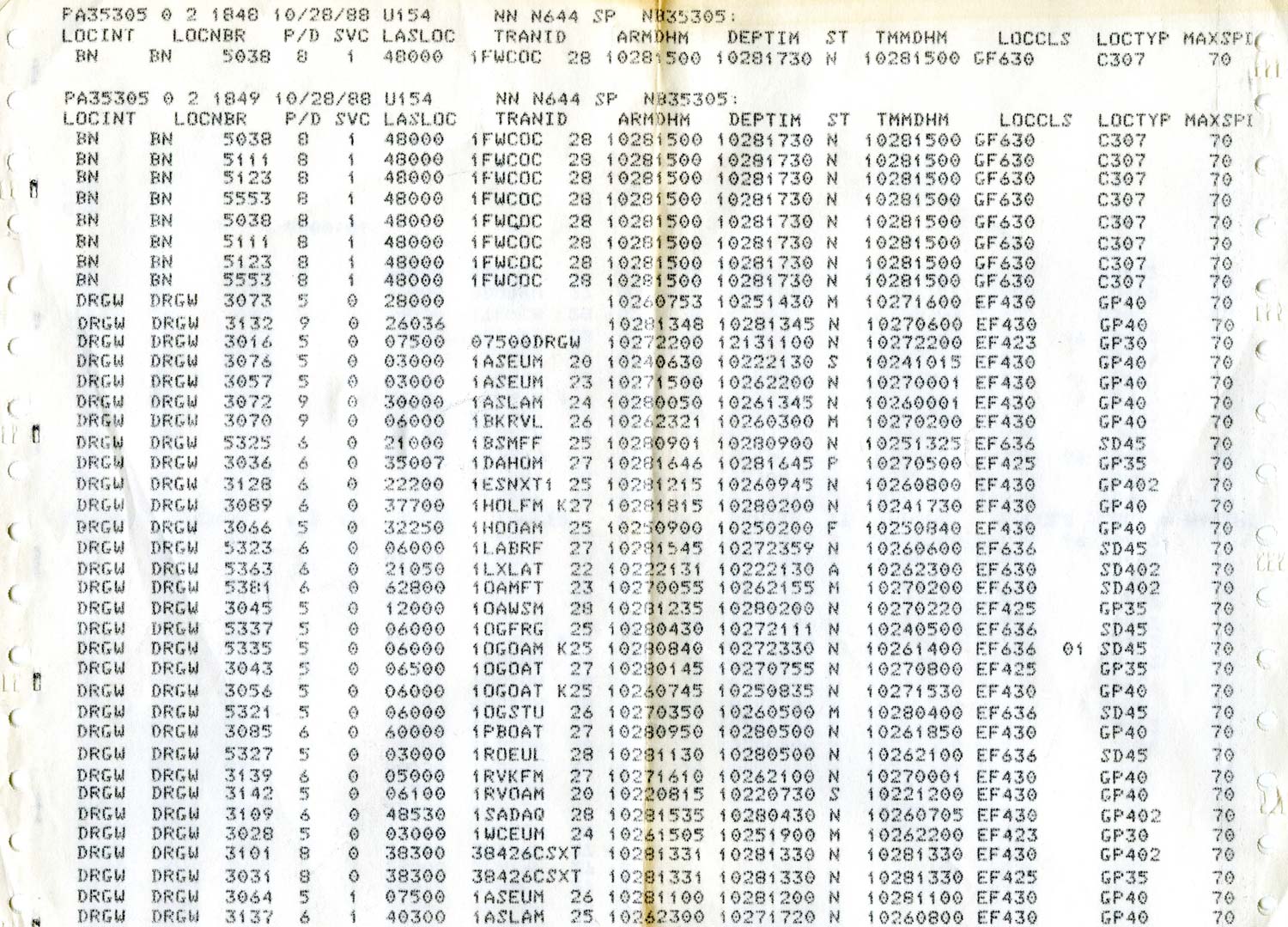
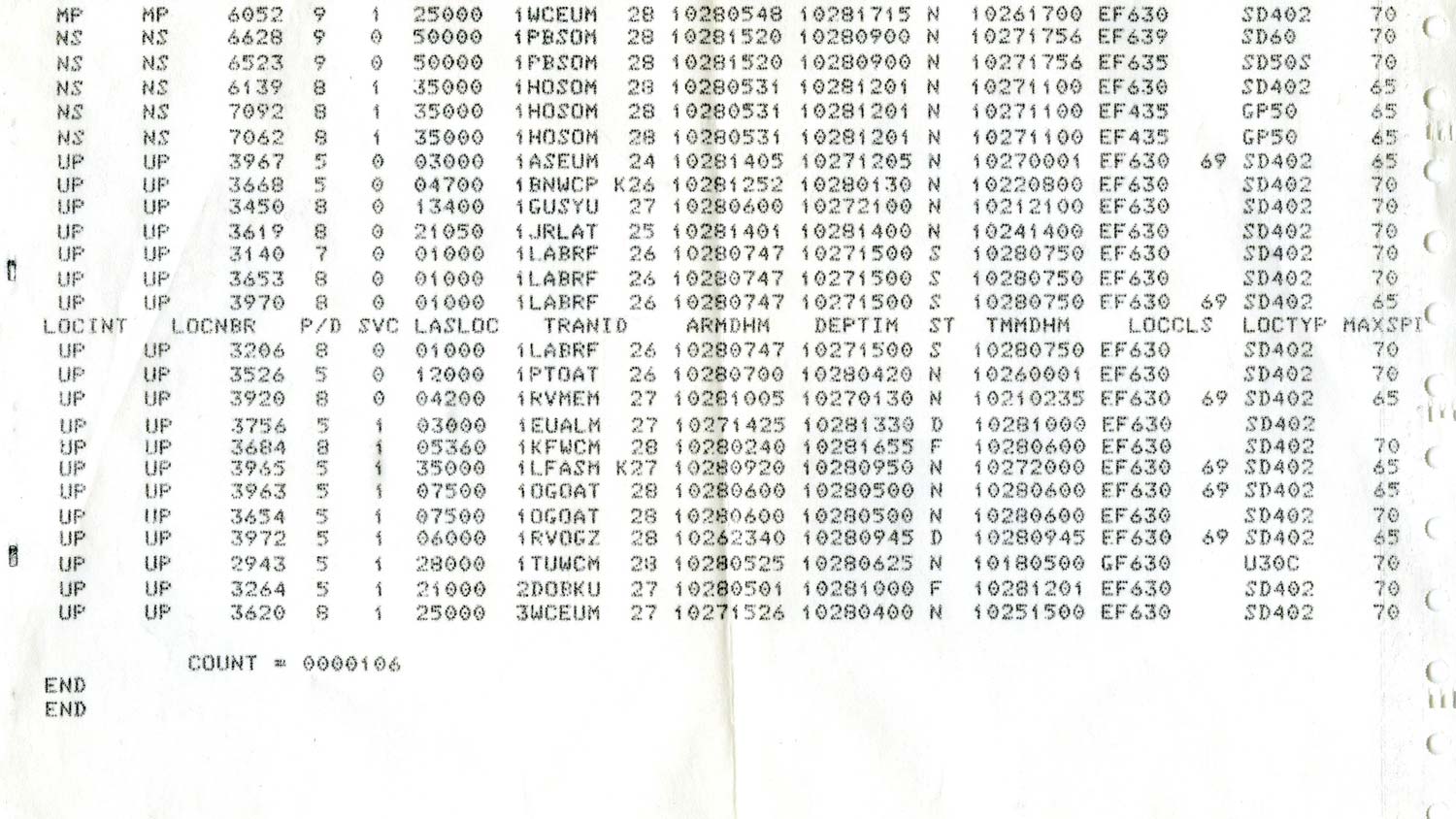
Allow me to serve up a portion of SP memorabilia suited for the hardest of the hard-core fan: a SYSON report from 10/28/88. SYSON was short for system-on, a list of all off-line power that was on the SP.
Back in the day, there was a friendly SP yardmasters with whom I’d hang out with at Cheney yard. I’d visit him typically on Friday evenings. He was always glad to provide line-ups and other miscellaneous info.
Among the information I requested was what trains had off-line power. Back then, off-line power was much less common than today, so knowing when and where to see it was valuable information. My friend didn’t know offhand how to find the information, but he made a call and was told about the SYSON report.
He showed me how to run it and from that point on I was like a kid in a candy store. But that was then, and this is now.
Just taking pictures of trains will get Homeland Security officers knocking on your door. No joke. But that’s a post for a different day.
As for the report itself and how to read it, if you knew the SP, no explanation is necessary. If you didn’t know the SP, no explanation is possible.
(The report is divided into 3 parts. Click to enlarge.)

Blue Monday
(All images from Nov. 24, 2014)
The Monday before this past Thanksgiving was a blue Monday for me. But not in the conventional sense of a blue Monday in which one is depressed because the weekend is over.
First I was blue because of a missed opportunity. Then I was even more blue, basking in the reflected light of my photographic subject.
I was just about to start some editing chores about 0830. Out of habit, I turned on the RR radio, just in case there was any traffic worth going out for.
Right off the bat, I hear a MOW foreman trying to clear a westbound through the Form B between MP 18.85 – MP 24.95. But the foreman was having radio issues. He finally told the westbound to call him back once they got closer.
A few minutes later, I hear NS 8-static-static-8 calling for clearance through the Form B. The foreman answered, telling them to stand by while he got some contractors out-of-the-way. By this point I was curious about this train because not too many 8000 series NS motors come through here.
The foreman gets back on the radio, calling the NS 8098 West with clearance through the Form B restriction. Hmmm, that is an odd number.
I googled NS 8098. The instant the Conrail heritage unit appeared on my monitor I flew out of my chair.
Crap! I knew it had been the DPU on a BNSF oil train that came into Houston over the weekend , but had no inkling it was headed at me right now!
I started fumbling around, looking for car keys, camera, lenses, memory card, while telling my wife that I had to leave. No time for explanation, but none was needed. She knows me well.
It seemingly took me forever to get out of the house, even though it wasn’t more than 3-4 minutes. Now I needed find decent light for a westbound at 8:45 AM
Of course, good light on a westbound at 0830 doesn’t exist, at least not around here. OK, I’ll settle for what I can get.
I decided to make my stand at the Hwy 6 grade crossing, near MP 25.5. But I got nailed by the traffic light at Hwy 6 and US 90, a mere 50 yards from my planned destination. Seconds later the crossing gates came down. Damn! But NS 8098 did look great as it went by me at a good 40mph. Double-damn!
The light did not change until the train had passed. I was ready to head back home because there’s no way I can catch the train. But at the last second, I speculated that the train might have to meet an eastbound at Harlem, so I turned left to follow the train.
Surprisingly, the train did start to slow. I was actually able to get ahead of it just west of MP 28. I pulled to the shoulder and quickly set up on the back bumper. My first shot of BNSF empty oil train UGPMELU 026T (Unit train – Galena Park, TX to Eland, ND) coasting by me was at 8:53 AM.
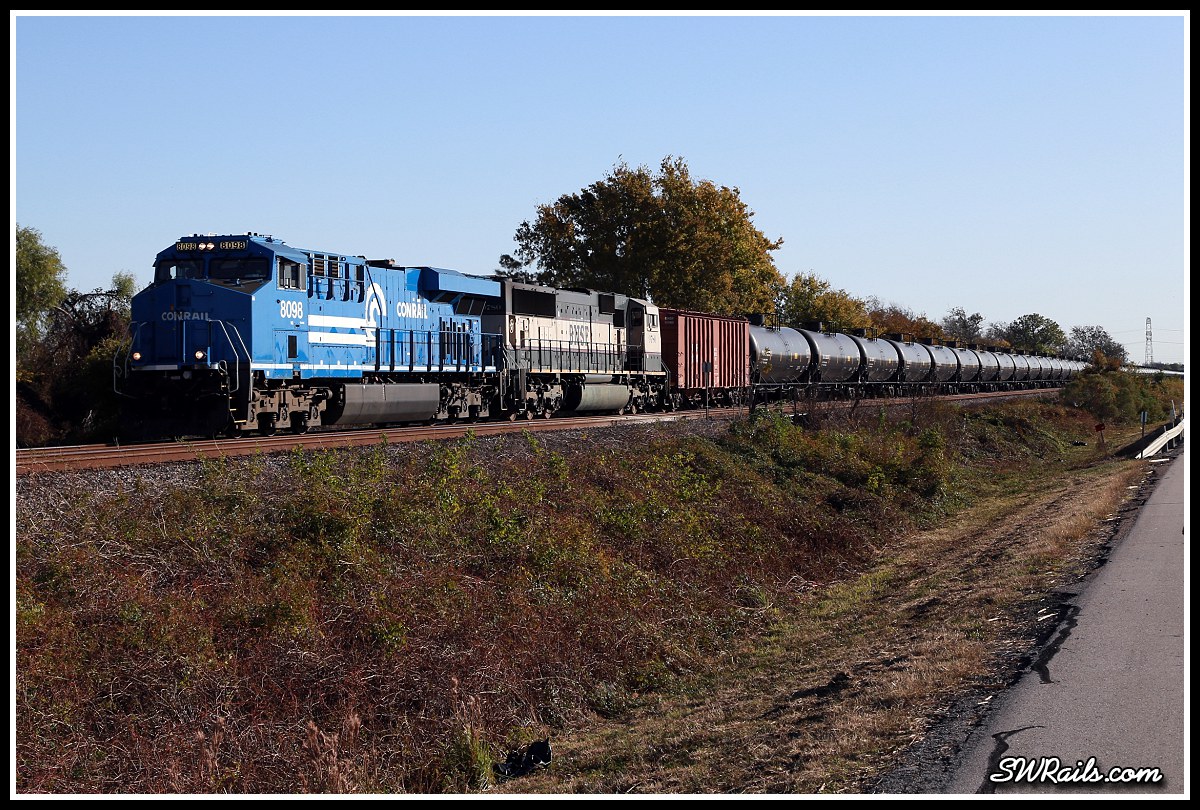
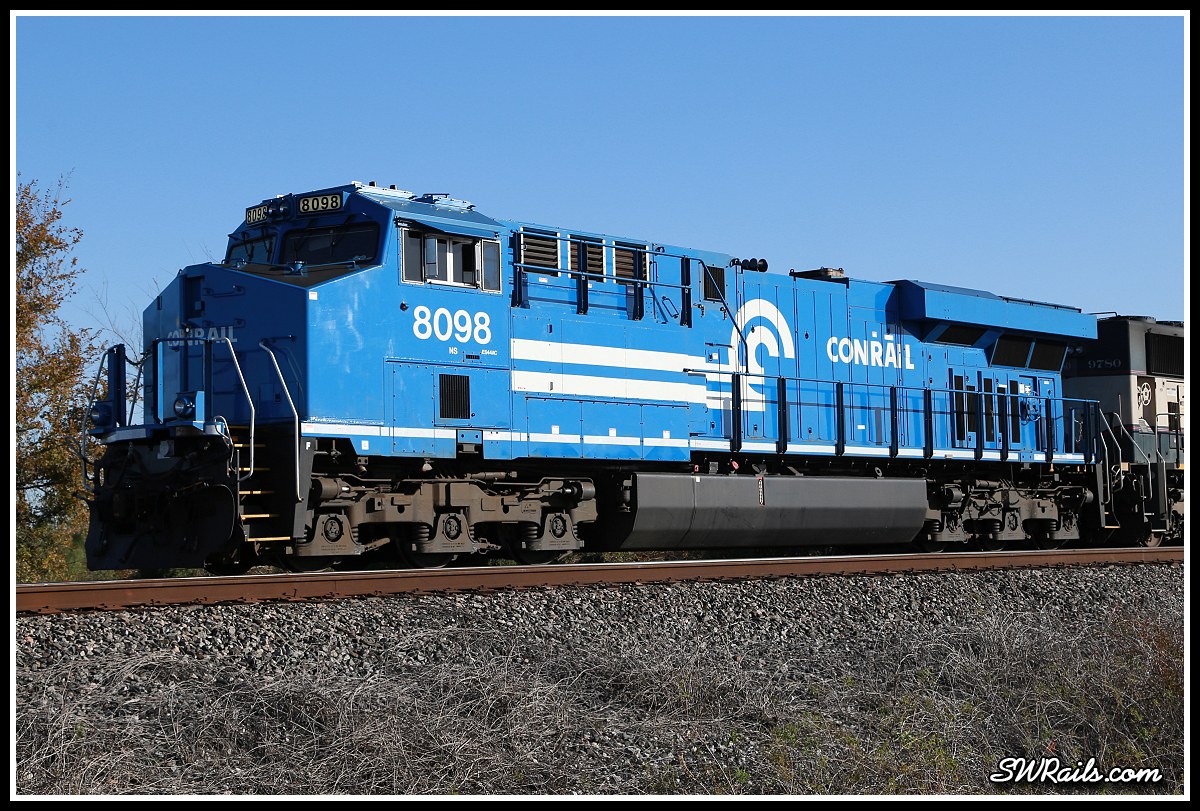
Nice train, but backlit like a mother! But I’ll take it. It’s a damn sight better than what I got a few minutes prior.
The train came to a stop just east of the Harlem Road grade crossing. I decided to get the best shots of the NS 8098 that were available.

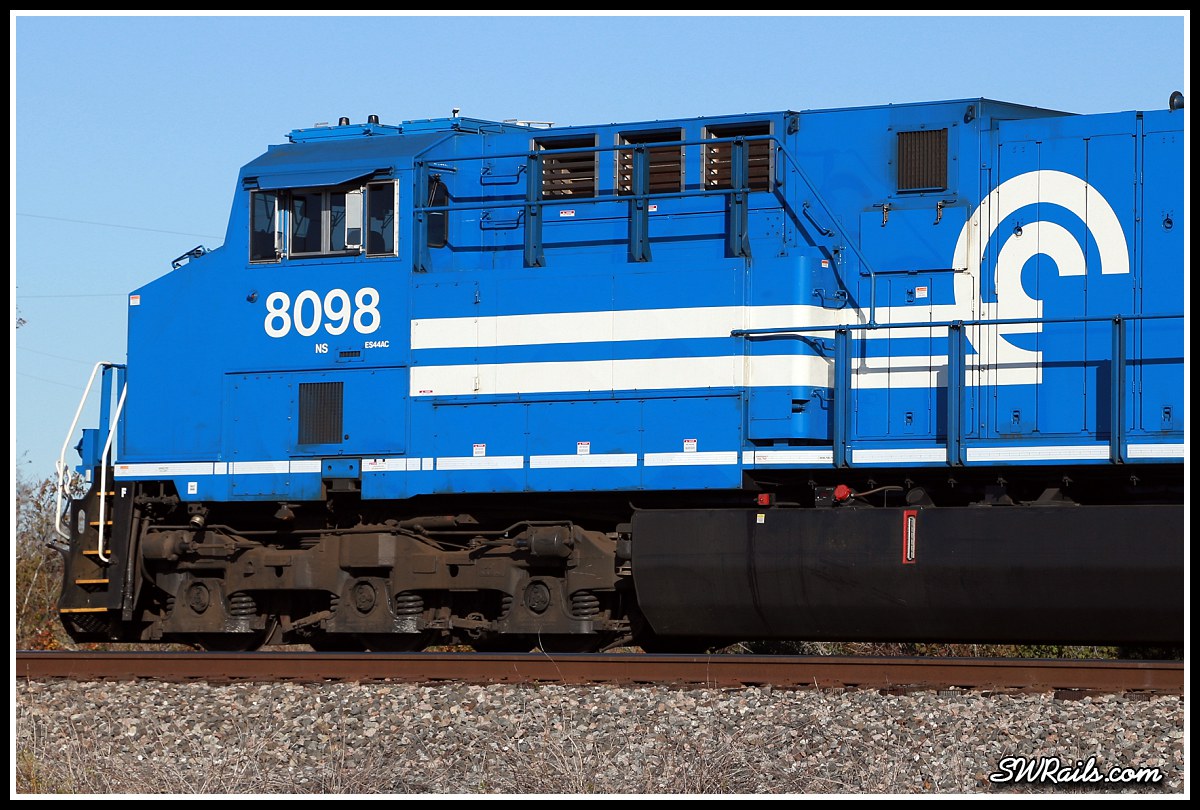
The conductor noticed me and came down to visit. He asked about my interest in their train. I told him about the significance of their lead motor. He had no idea, saying he thought it was just an NS unit. He also mentioned that they were waiting for a track rider to finish and get off the track ahead. He thought they’d get on the move again shortly.
Fair enough. I decided to stick around, maybe get another backlit shot leaving Harlem, and maybe a broadside shot crossing the Brazos River.
Around 0930, the DS called the NS 8098 to advise that the track inspector had released and that he’d light them up after one east. I set up for a shot showing the meet.
UP 8454, the QWCEW-21, came into view at 9:44 AM:
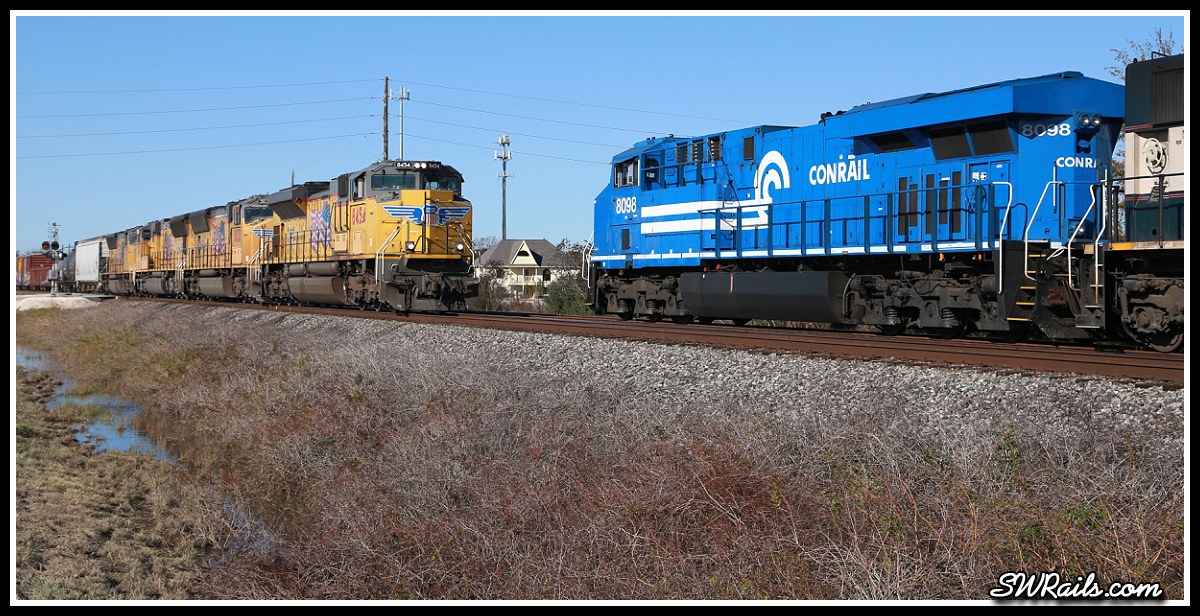
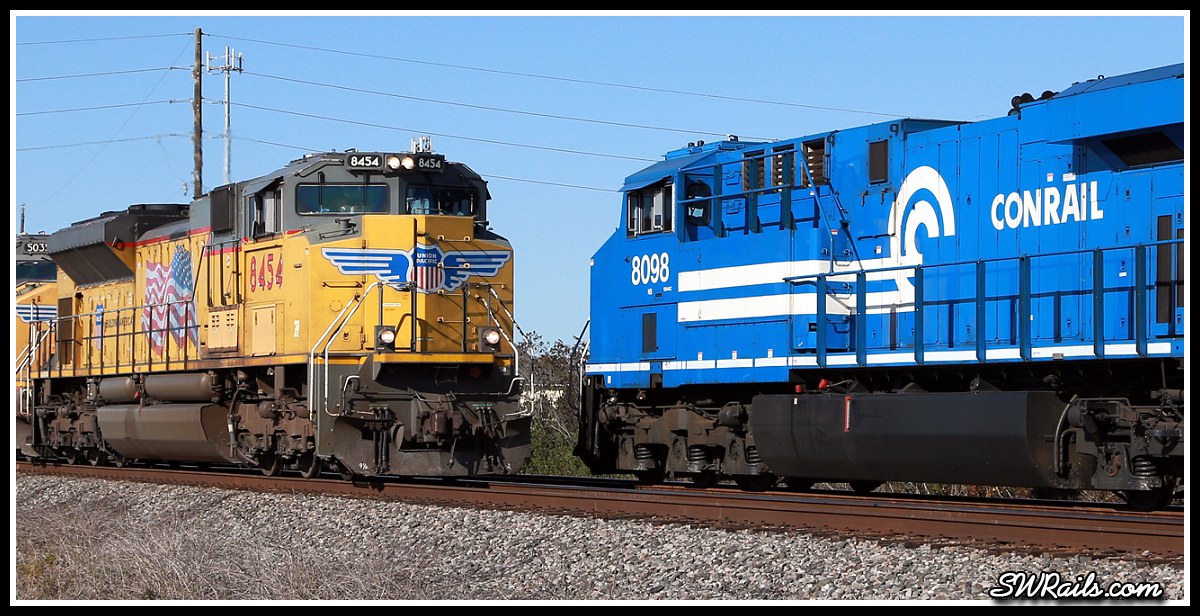
A very clean 7513 does the DPU honors:

I headed to the west switch to await the NS 8098’s departure. I had just set up when the NS 8098 tones up the DS to advise that they were having power problems. Specifically, the cab signal equipment was acting up and they were dead in the water. They needed to access the cab signal equipment to cut them out, but they didn’t have the necessary key to open the cabinet.
The engineer added that he might be able to access the equipment and fix the problem with the conductor’s hammer. The DS laughed as he turned down the engineer’s offer. The engineer said that he expected his suggestion wouldn’t be accepted. They had already called their people and South Yard was sending mechanical forces with the needed key.
The DS told them to keep him posted and that he was going to run some trains.
It was 10:00 AM at this point. The longer the NS 8098 sat, the better the sun angle would get. It’s misfortune just might be my good fortune.
Before anything else ran, I made the short drive to photograph NS 8098’s DPU:
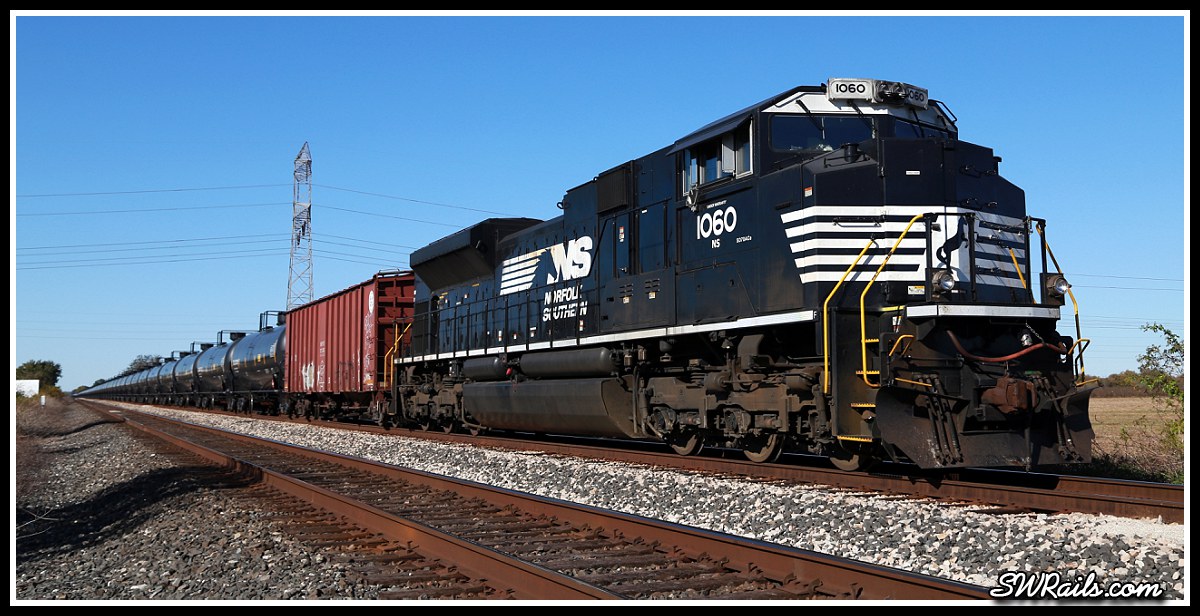
Next up was a loaded BNSF oil train, BNSF 5057 East, by me at 10:55 AM:

The oil train’s DPU, BNSF 4175, passes the NS 8098:
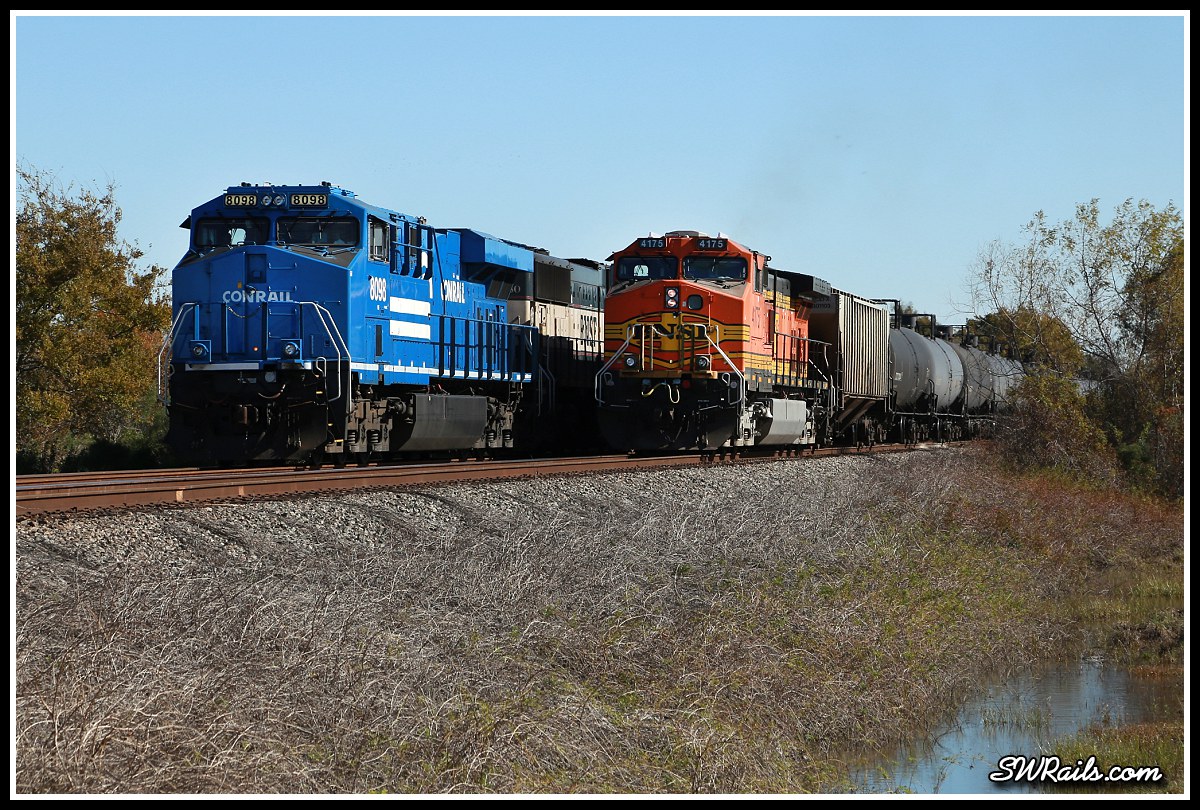
KCS 3941 East was right behind BNSF 5057, but it tripped the wide load detector at MP 34.5 and had to stop to inspect their train.
I couldn’t believe my luck! Yet one more problem to delay the NS 8098’s departure. I just might be able to get good light on my quarry.
BNSF mechanical forces arrived at 11:27 AM to assist the crew:
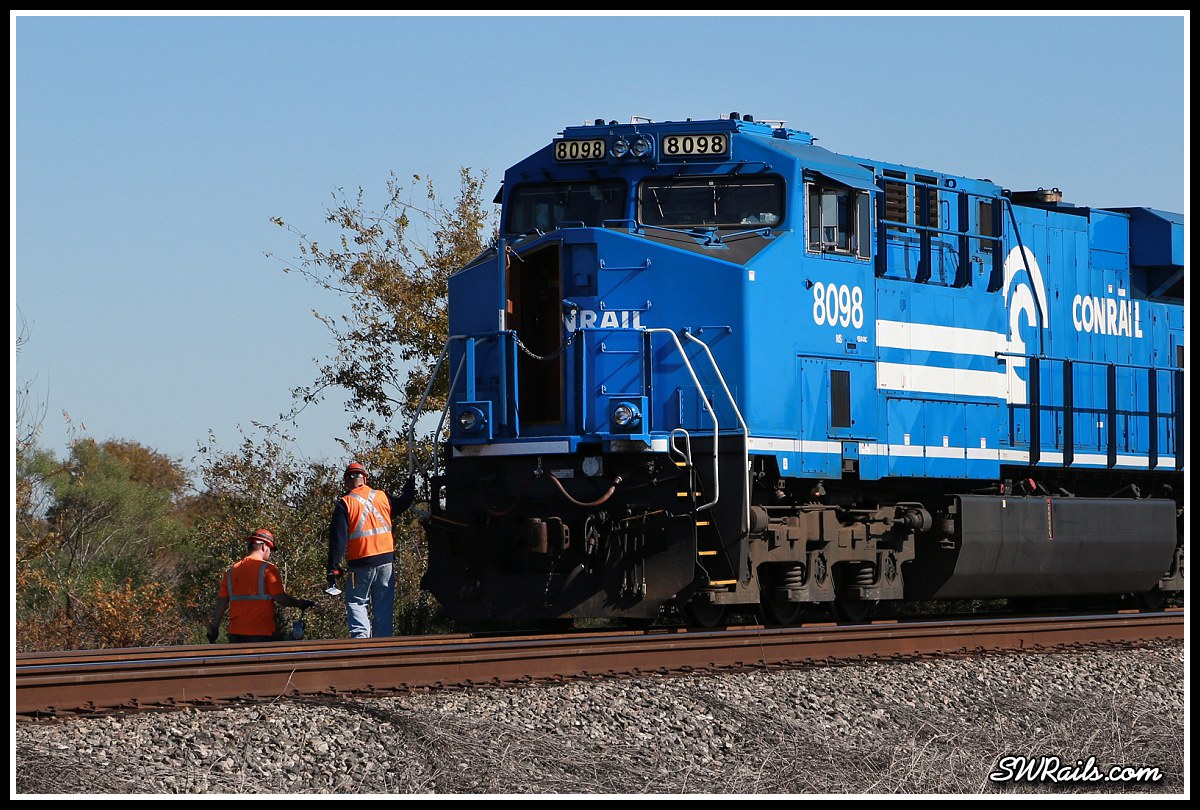
As they were working on the cutting out the cab signals on the NS 8098, I headed to Richmond to check on the KCS 3941. I found its head end just over the Collins Road grade crossing at MP 33.37.
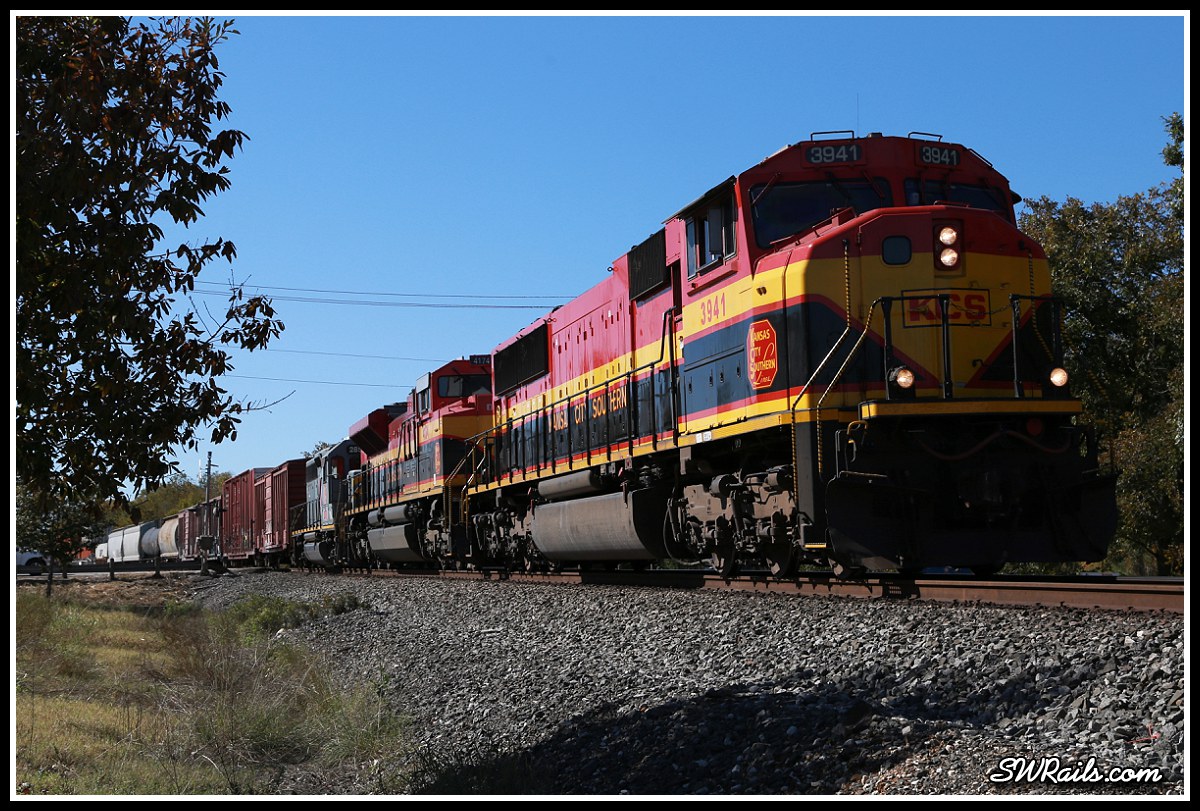
I occupied myself with some other shots of the stopped KCS train until shortly after noon, when the KCS 3941’s engineer advised the DS that they would be ready to pull shortly. He added that the conductor was headed back to the head end after securing some loose tie down straps that had activated the detector.
I headed back to Harlem to wait for KCS 3941. I set up just east of CP SA030, the west switch of Harlem. It came into view at 12:25 PM
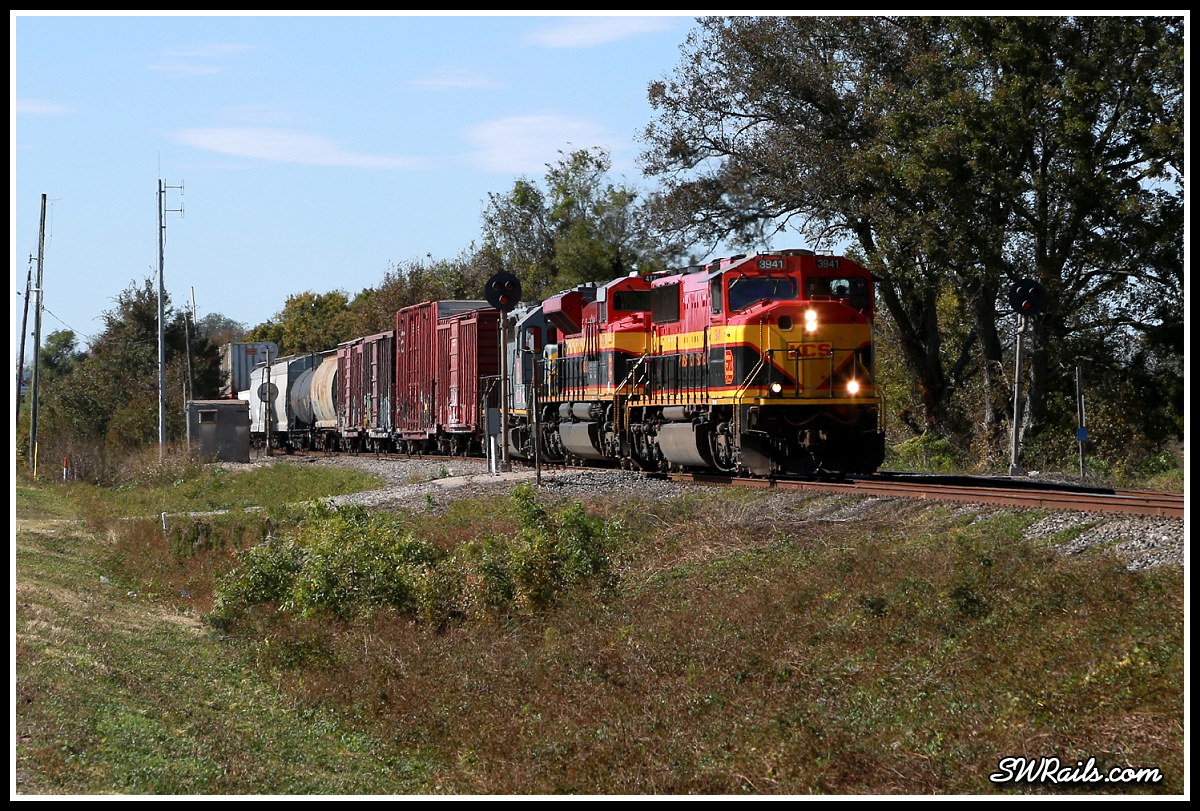
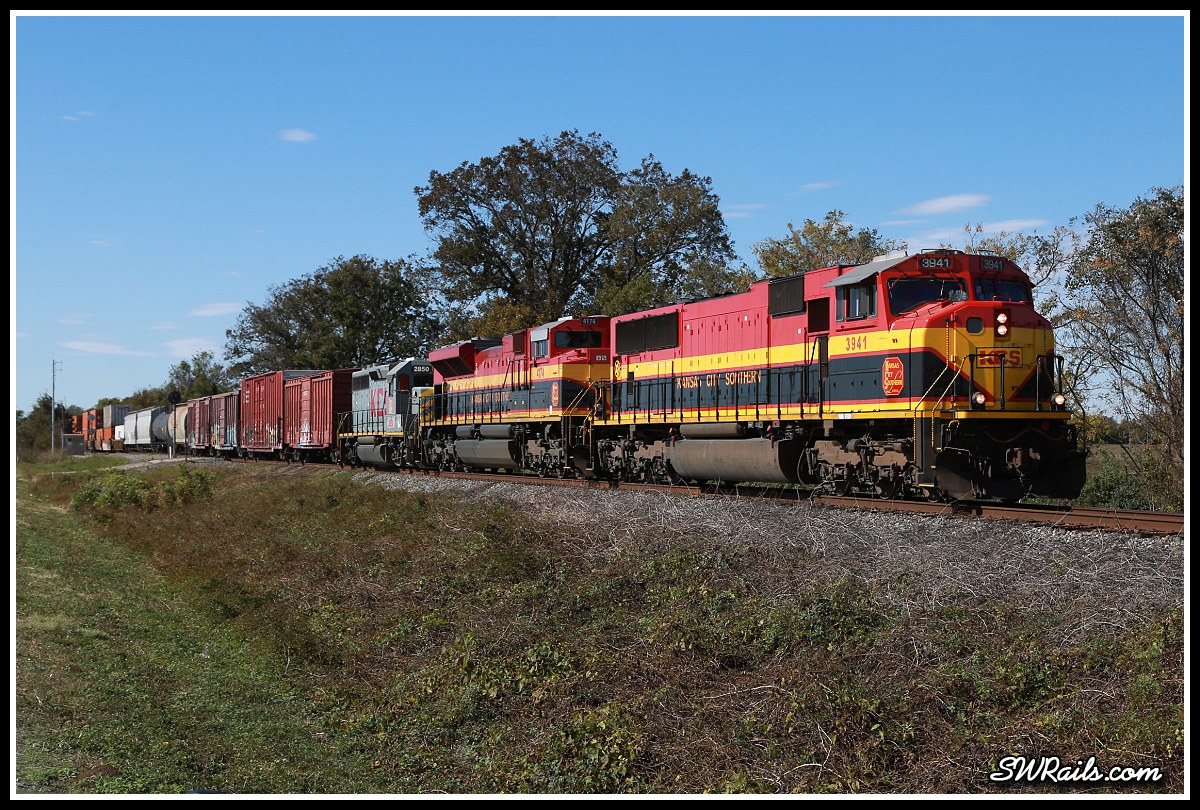
Once the KCS got by, NS 8098 toned up the DS to advise they were finally ready to go. The dispatcher replied “signal indication after one more eastbound”.
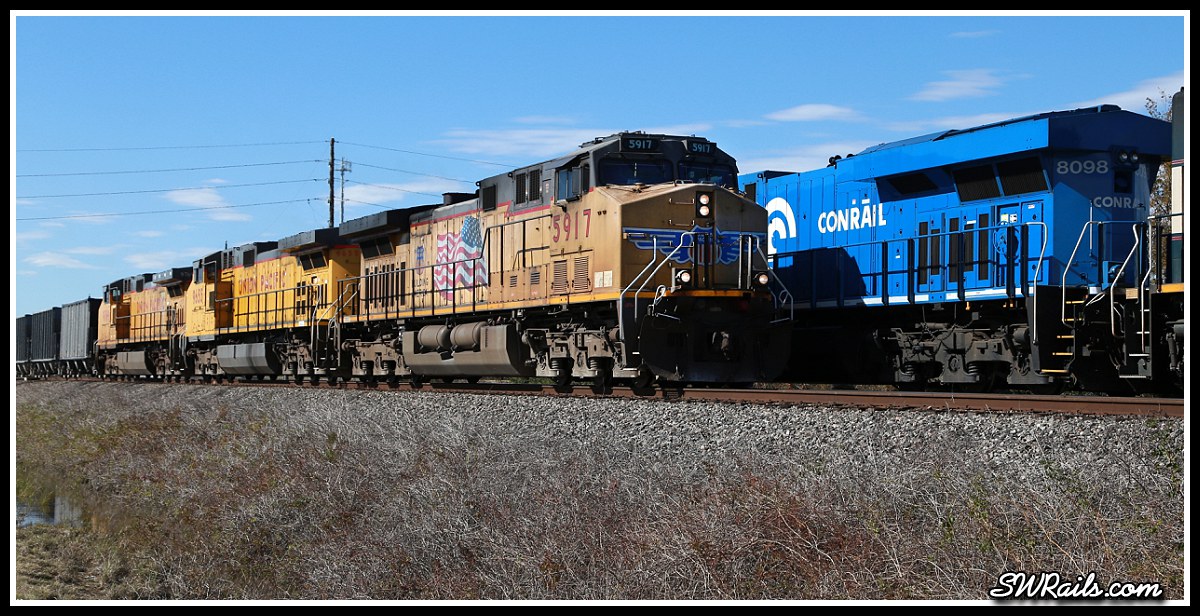
For the next eastbound, I decided to do a trial run of a shot I had in mind for the NS 8098. UP 5917 leads a loaded rock train over the Brazos River bridge at 12:39 PM:
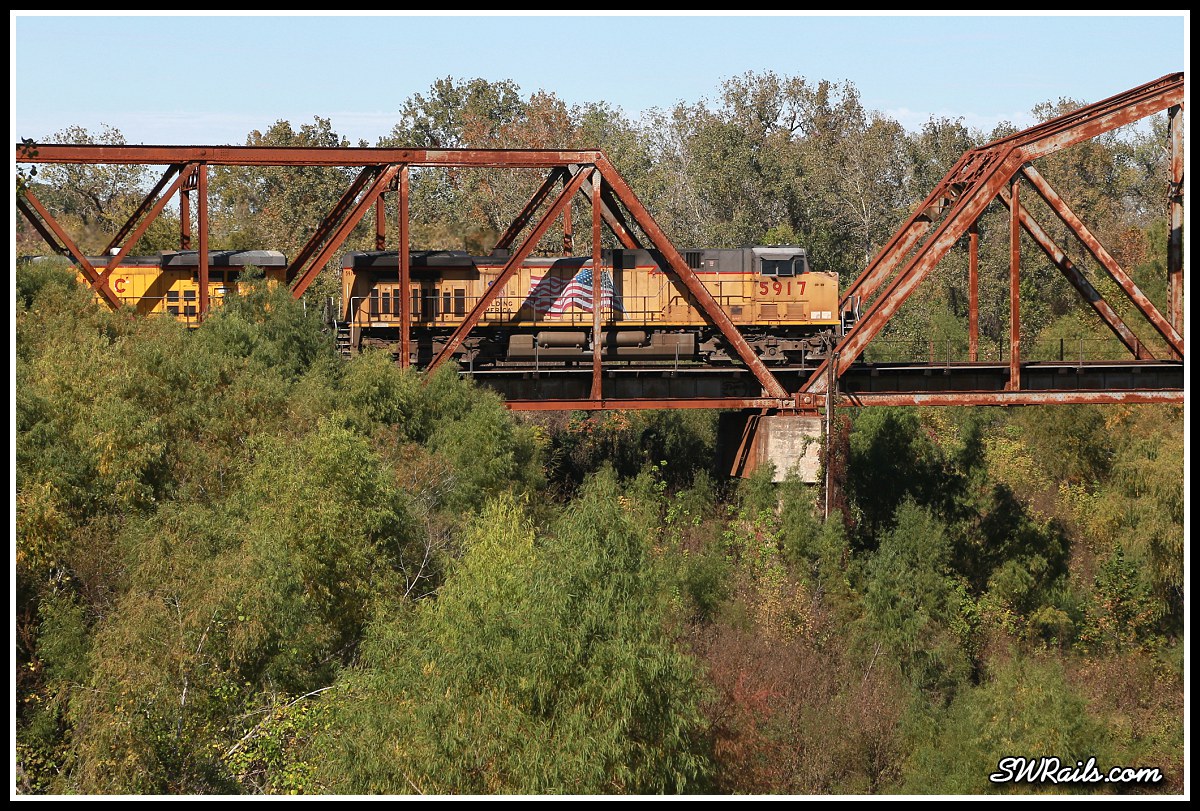

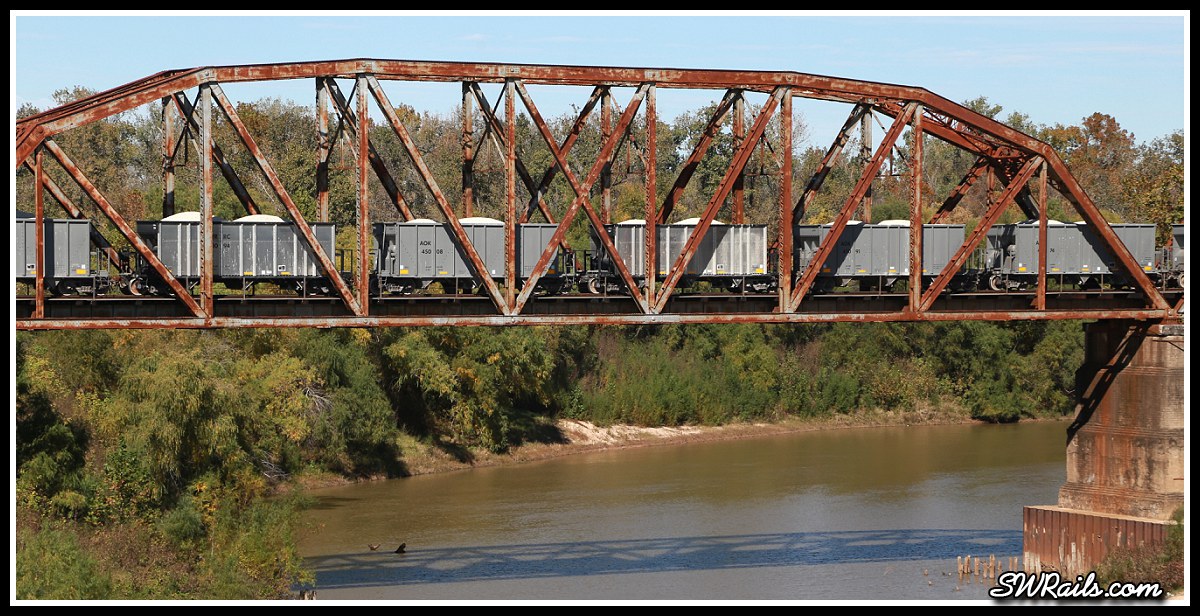
A 10 mph slow order just east of the bridge allowed me plenty of time to drive the 3 miles back to Harlem Road for a shot of this rock train passing the Conrail heritage led oil train. I actually had enough time for a few shots of NS 8098 before the rock train arrived
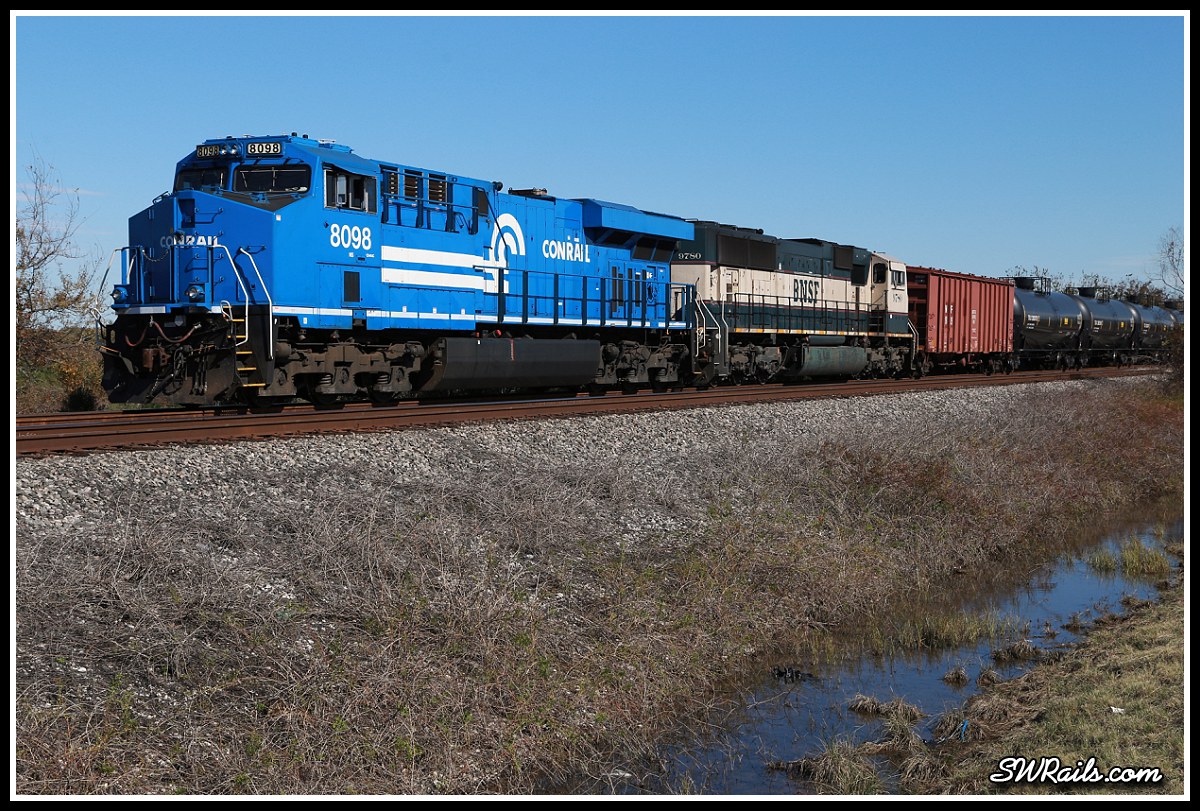
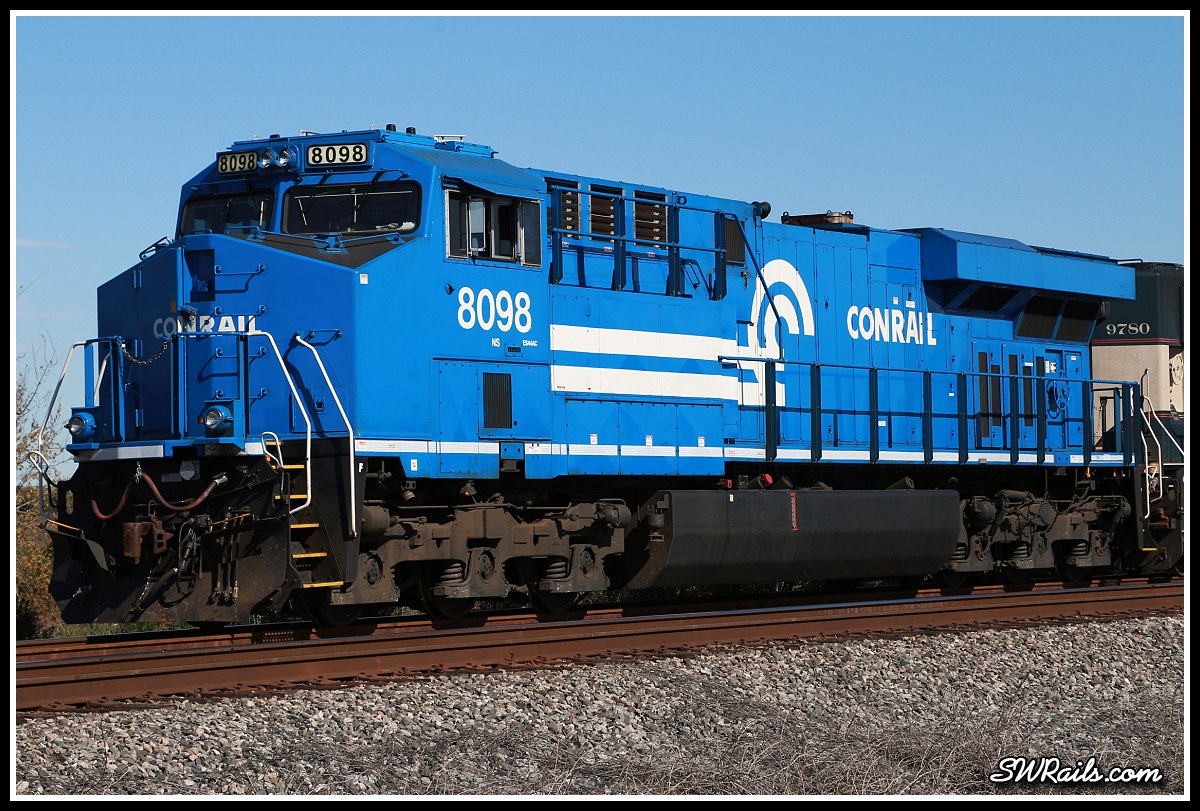
It wasn’t until 12:53 PM that UP 5917 passed by the NS 8098.

Just over 4 hours after my first “better than nothing” backlit shot of NS 8098, I am able to capture this train in much better light as it passes me at 1:02 PM:
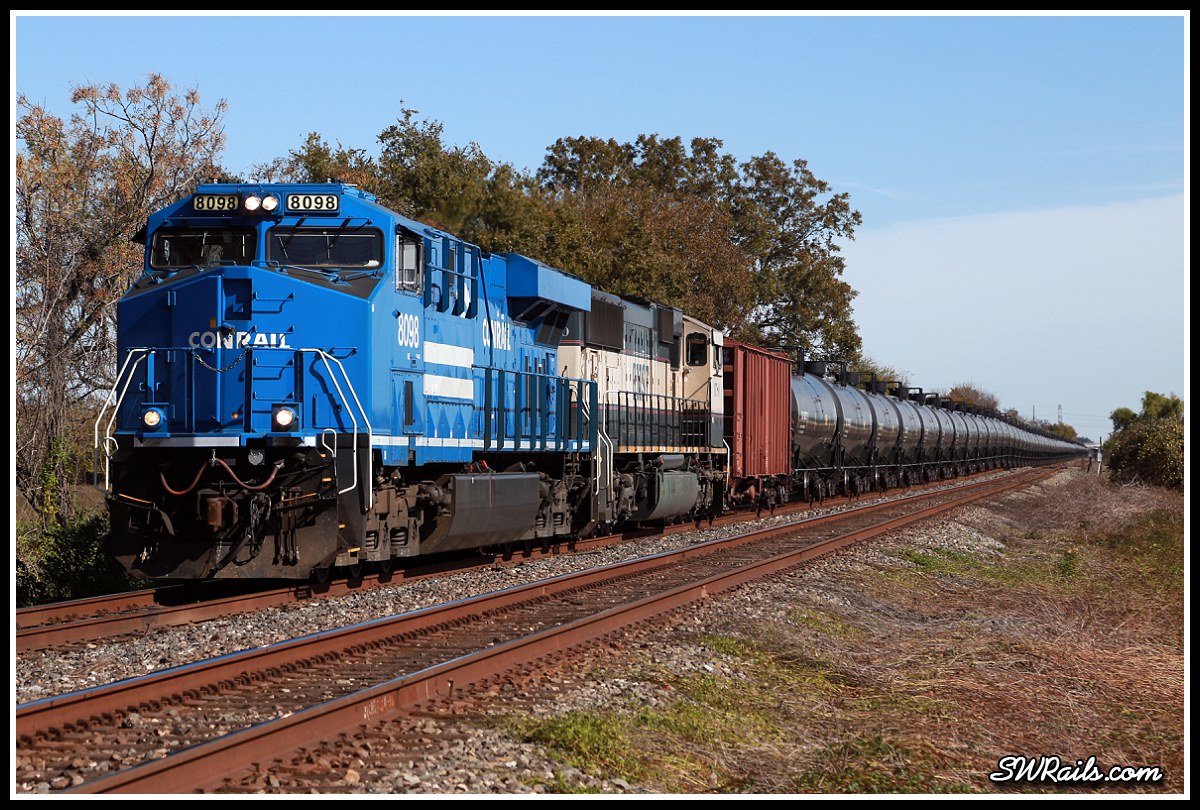
The money shot:
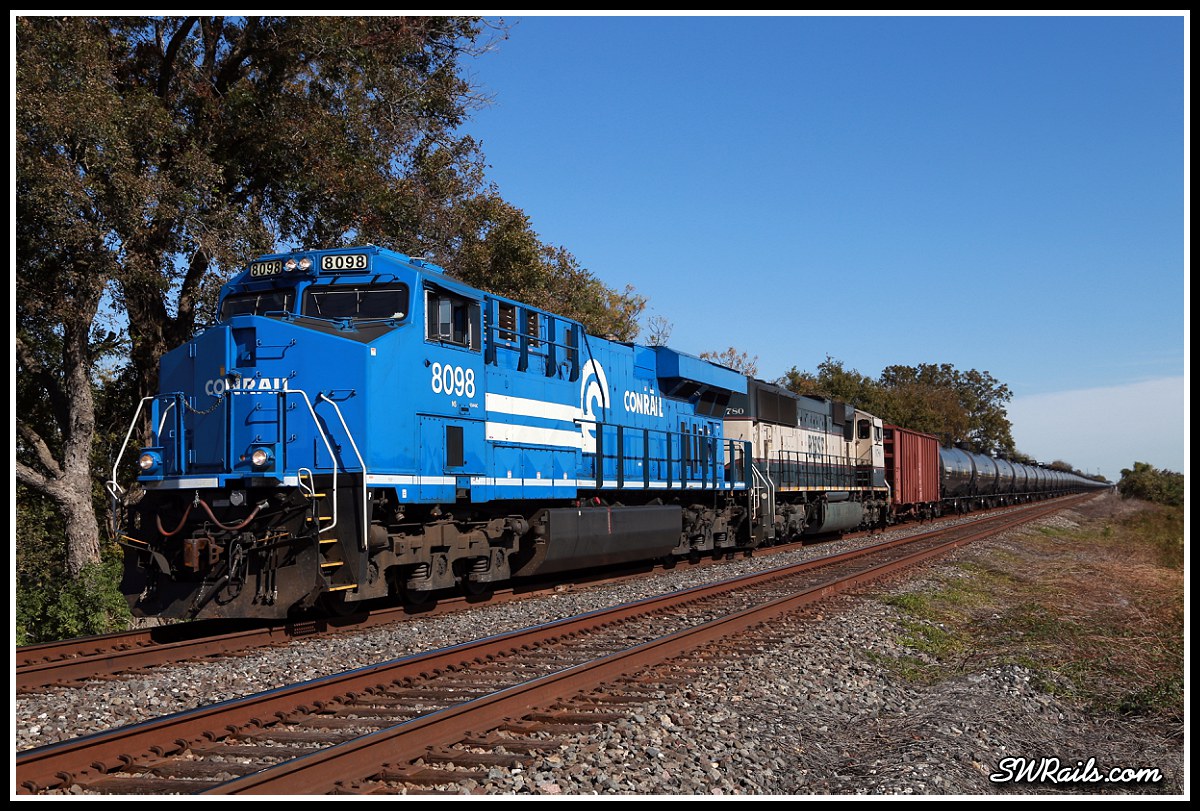
NS 8098 as it approaches CP SA 030.
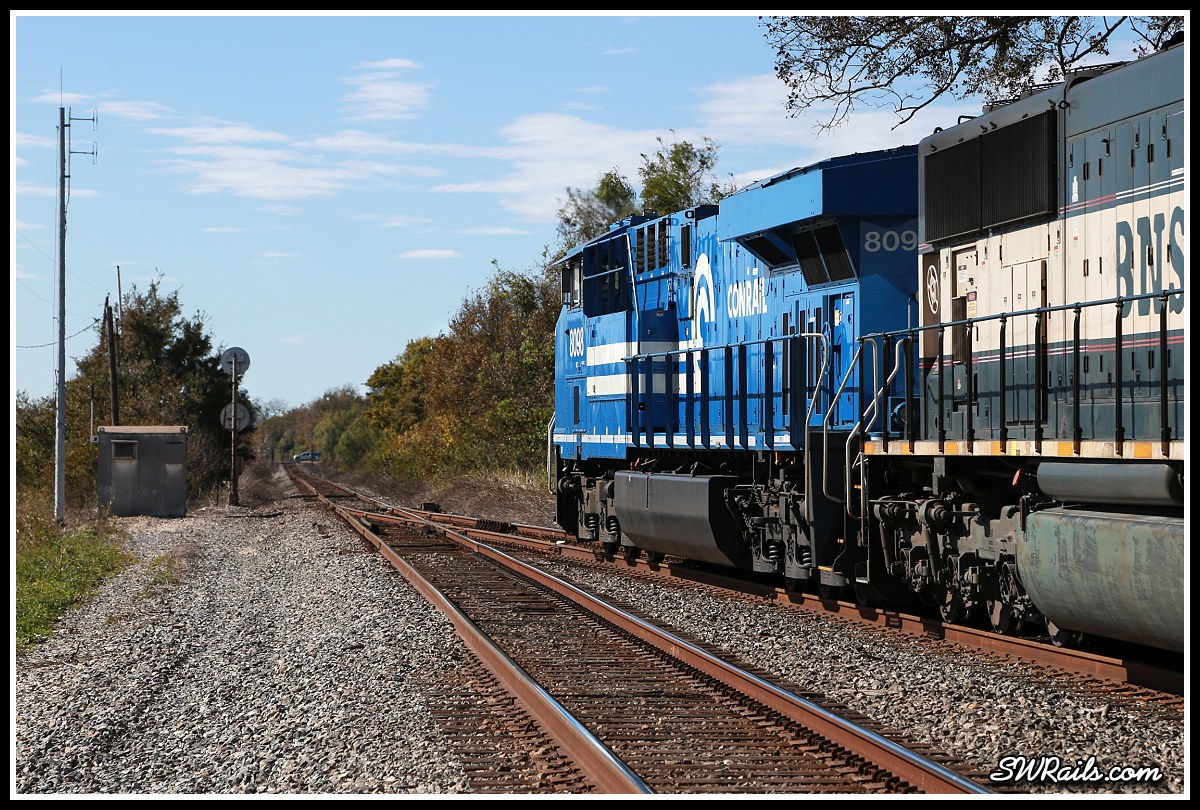
Well, that didn’t suck at all! But no time to savor the catch. The aforementioned 10 mph slow order allowed me to get ahead of the train easily for this shot at MP 30.75:

A short drive west provided these views as NS 8098 crossed the Brazos River at 1:14 PM:
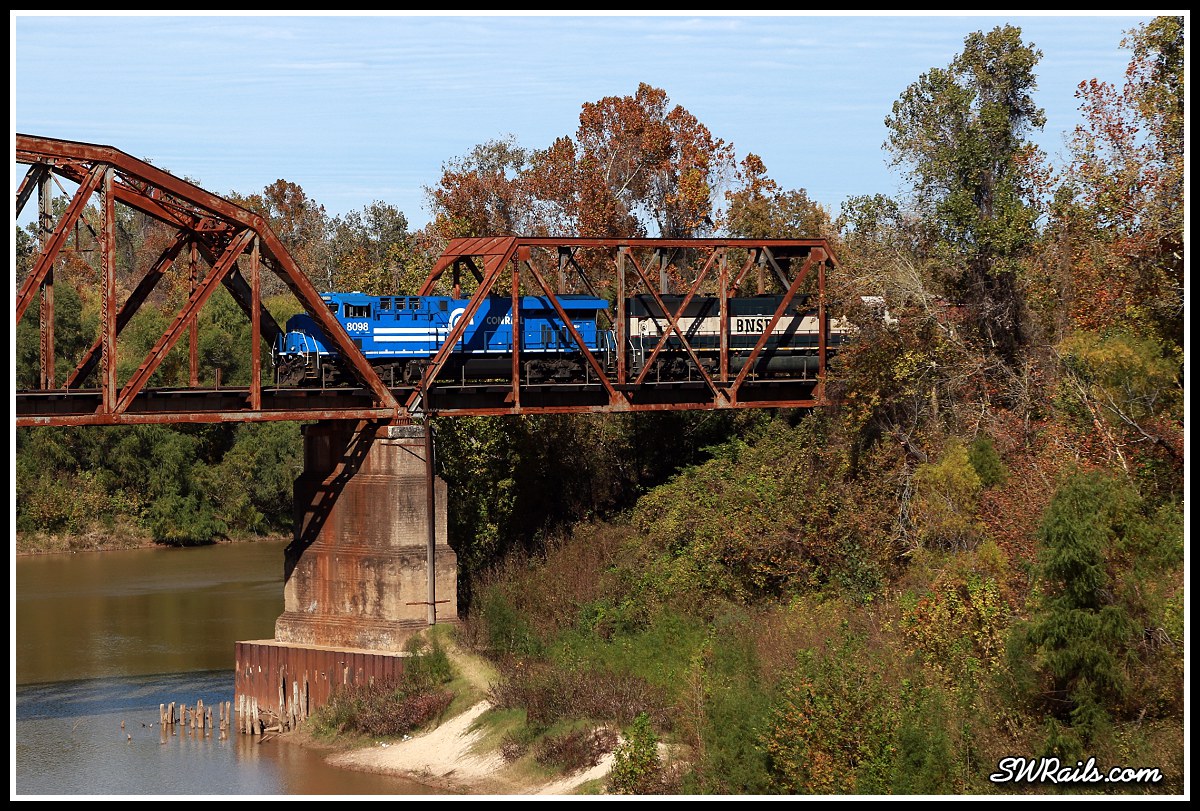

The train was starting to pick up speed as it crossed the river, so there would be no more photo-ops of it and its celebrity lead unit. But I was quite happy with how a big disappointment could turn into a major score.
I’d be remiss if I didn’t express gratitude for the factors that contributed to a 4-hour delay: track inspector track & time, motive-power problems, tripped wide-load detectors, and waits for opposing traffic to clear up.
In case you were wondering, the crew on NS 8098 came on duty at 0500 at South Yard, near MP 5. It took them over 8 hours to reach the Brazos River bridge at MP 32, an average speed of 3 mph! Just another day on the railroad….
I was ready to get back home, but there were 2 westbounds right behind the NS 8098. Gotta make hay while the sun shines, so I went back to Harlem to wait for them.
A short wait, maybe 3 minutes, before BNSF 4001 arrives at 1:21 PM:
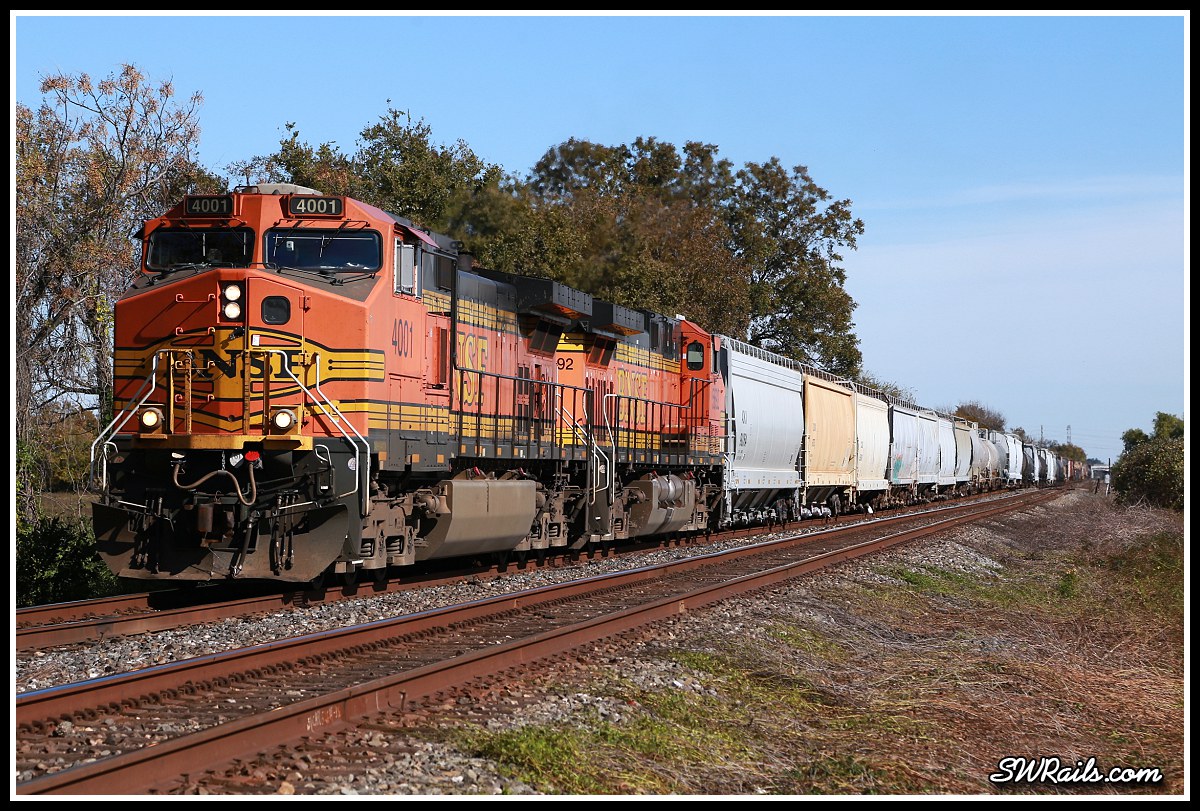
Bringing up the rear of BNSF 4001 were 4 of the cleanest tank cars I’ve ever seen:
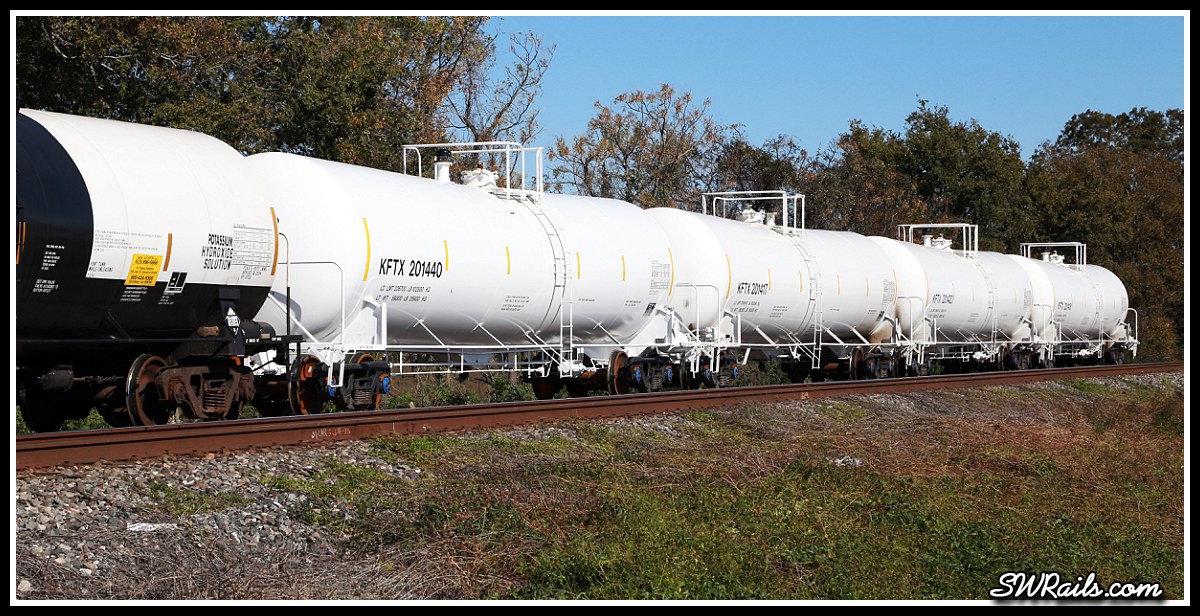
Wanting a different location for the next westbound, I headed east. It was a good plan, but I didn’t realize that the shot I had in mind was blocked by the tail end of UP 5917, the rock train I’d photographed an hour earlier. It was holding the main at the east switch of Harlem until the westbound traffic cleared up.
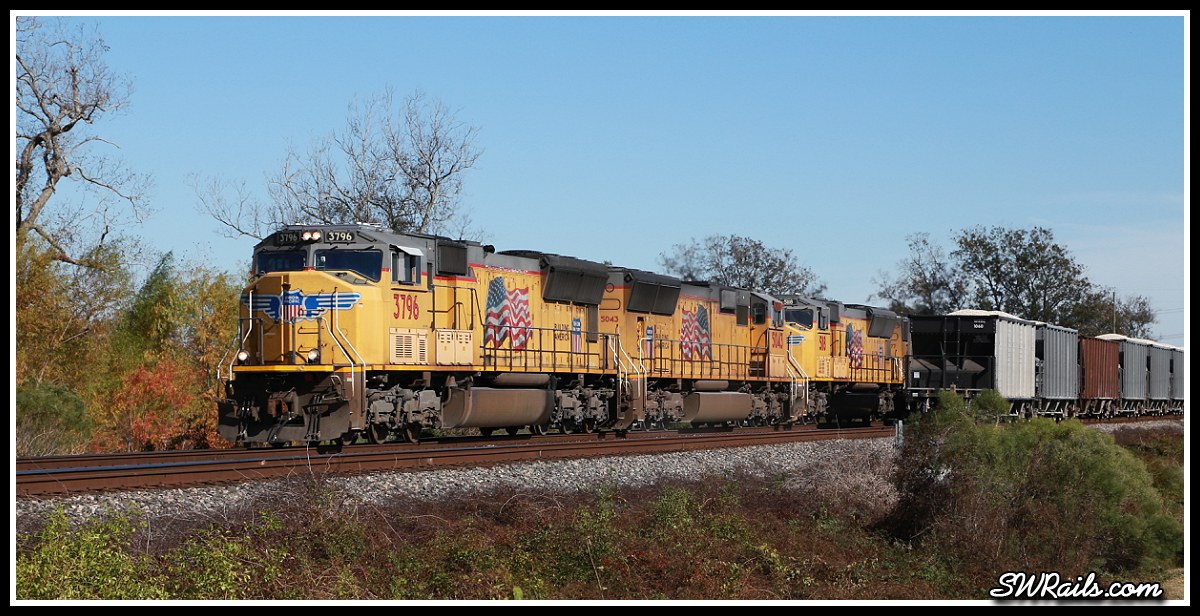
One shot of UP 3796 on the MEWEG-24 near MP 28 for the record:
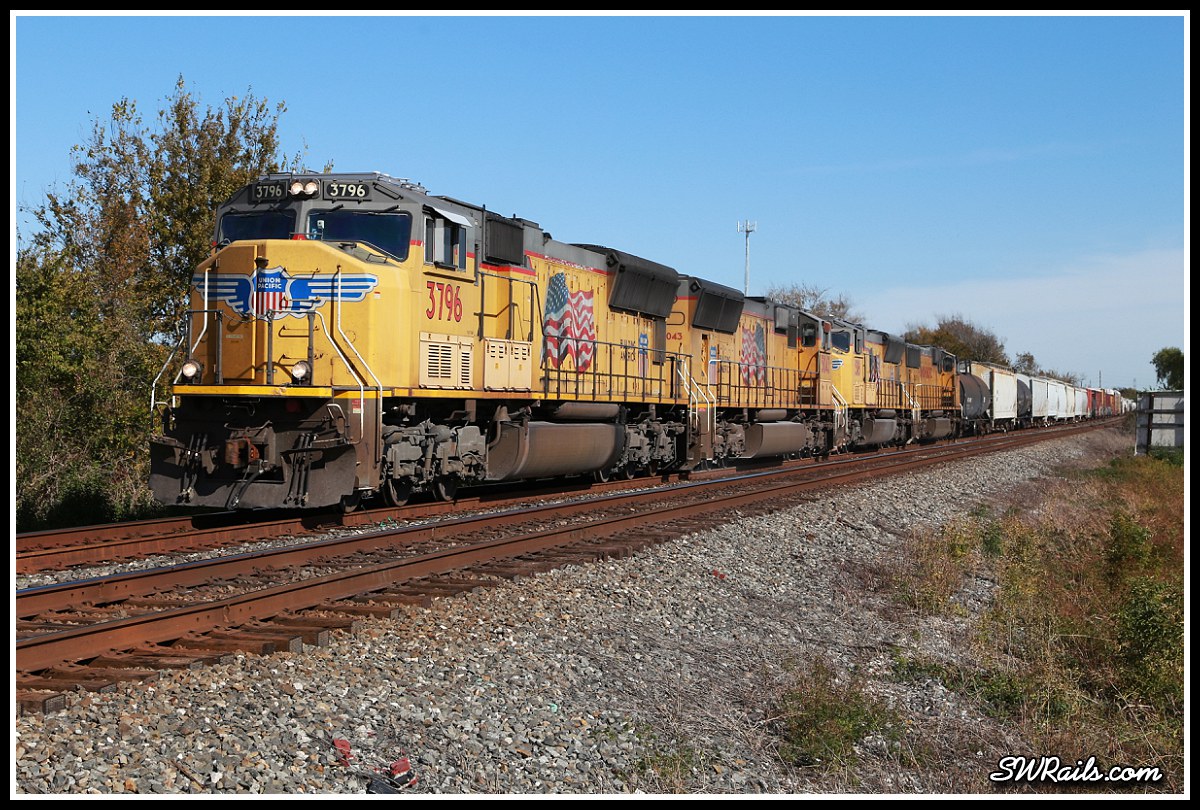
I returned to the west switch of Harlem for a proper wedgie:
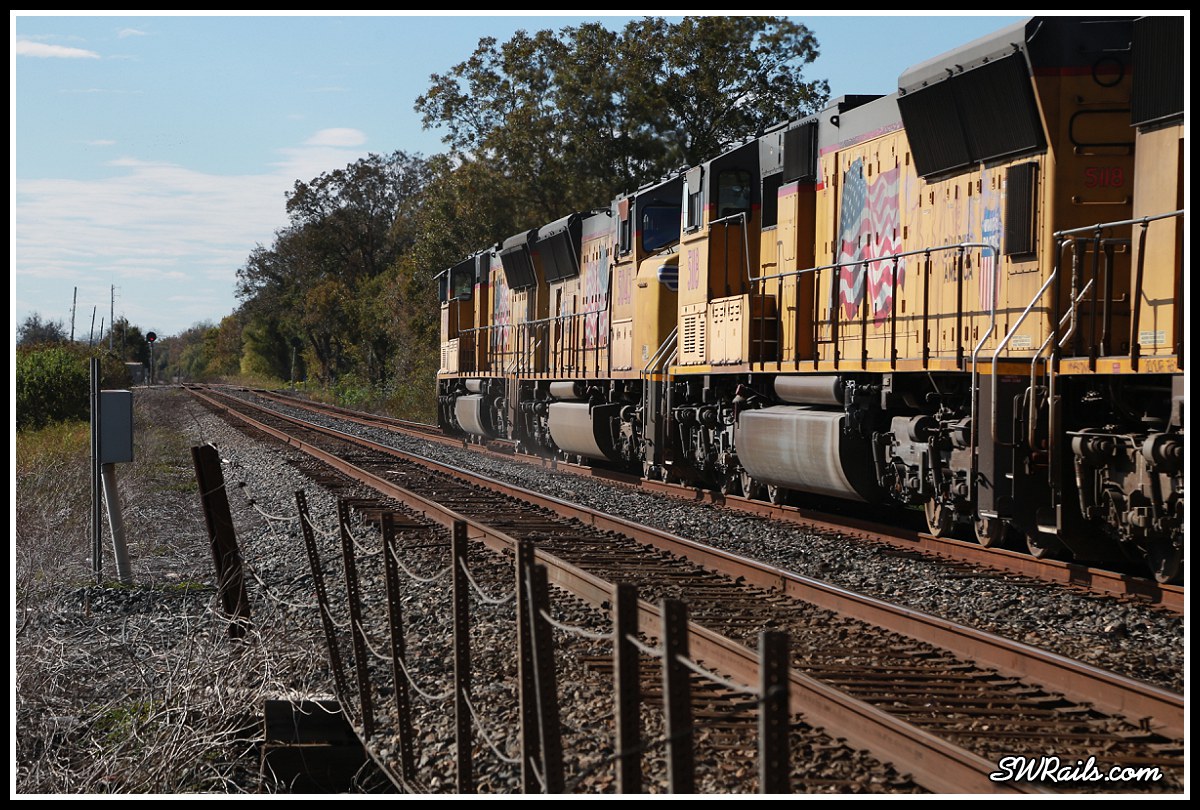
3 flared SD70M’s made a nice going-away shot.
If you’ve made it this far, thanks for hanging on through one of my longest posts ever. Not just anyone can endure 1592 words of blather, so congrats to you…
And before I forget, Happy New Year!
Happy Holidays!
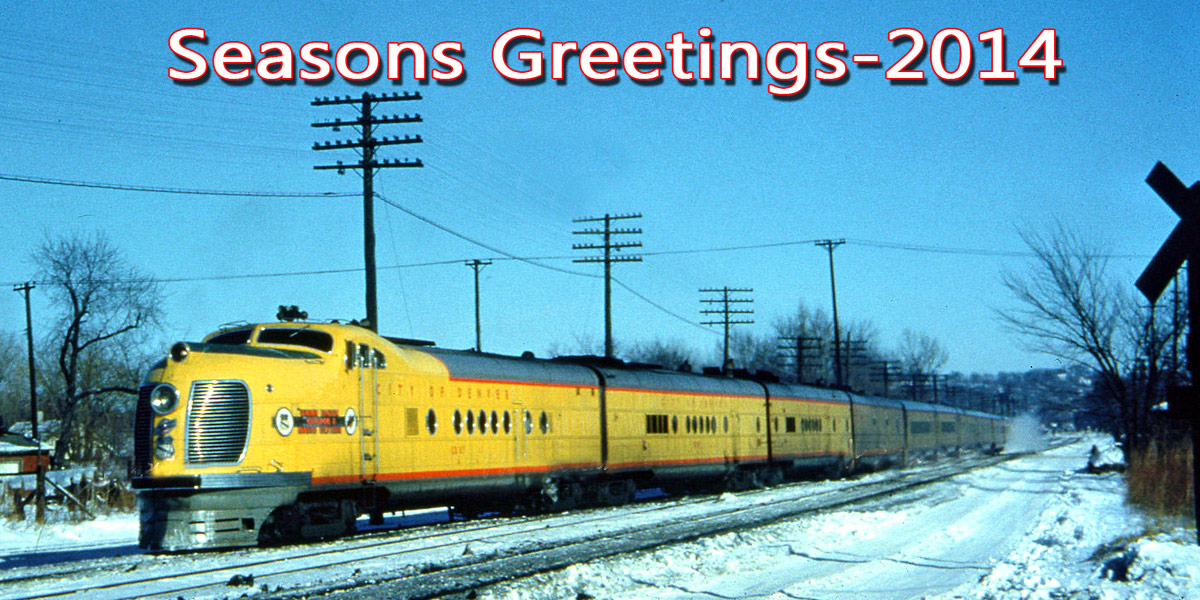
Just a quick post to wish all of you a Merry Christmas & Happy New Year…
Out & About – October 26, 2014
Another beautiful Sunday morning in the Houston area means it’s time to head out, try my luck with Amtrak #2, and whatever else might be running.
I started leaving the house when #2 was between East Bernard and Rosenberg, about 25 miles west of me. But I got sidetracked with letting the dog out, securing a loose gate, and several other trifles. Before I knew it, 15 minutes had gone by. Add in that the radio had been very quiet, which meant that there wasn’t any other traffic out there to slow down #2’s progress, and I was feeling pretty nervous. As I finally get going my fears are confirmed when I hear the detector at MP 30.5 announce no defects for 36 axles at 70 mph. Crap!
Here’s a word problem I would have appreciated in school: MP 22 is the closest shootable location. The train is less than 8 miles from there travelling 70 mph on clear signals. I’m 3 miles away, limited (allegedly) to 40 mph, and have 4 traffic signals to traverse pursuant to all traffic laws (circumstances permitting). Who arrives first to MP 22?
The problem can’t be solved mathematically, but I can tell you that I arrived with maybe 10 seconds to spare before #2 blew by.
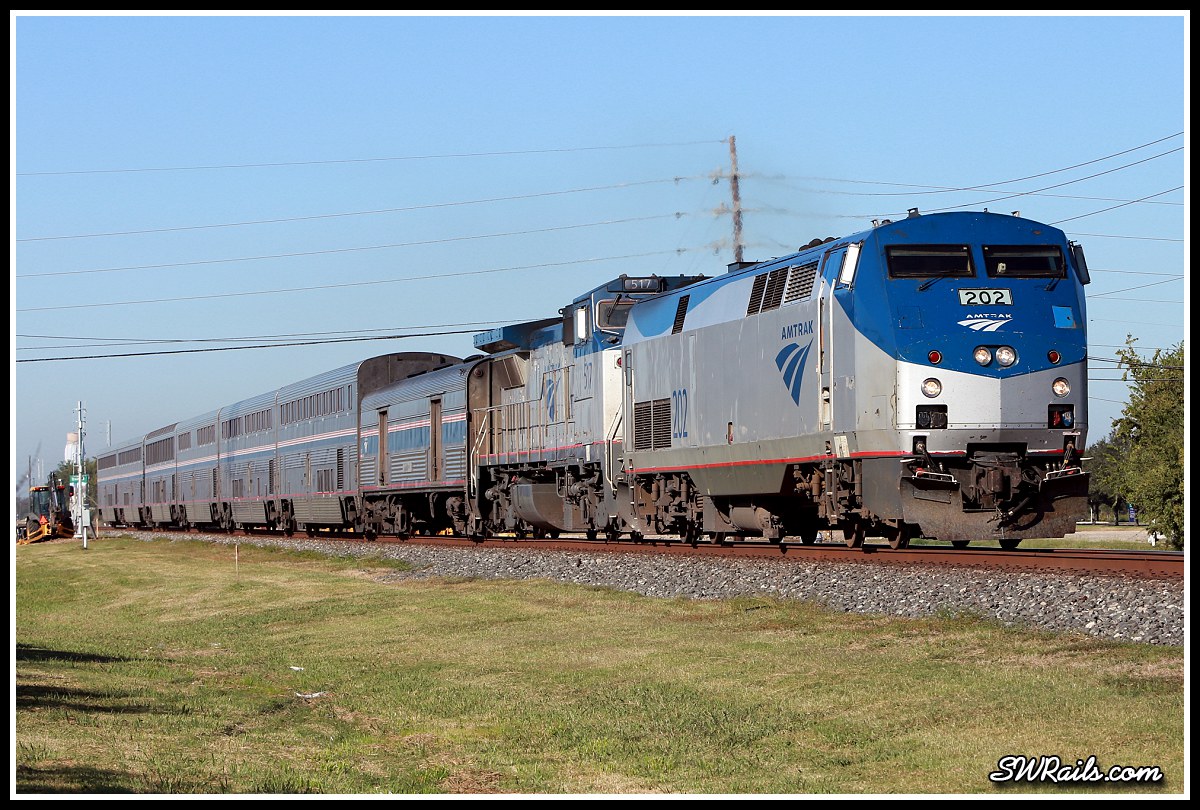
Nice to see another P32-8BWH in consist. One of these days I’ll catch one leading…
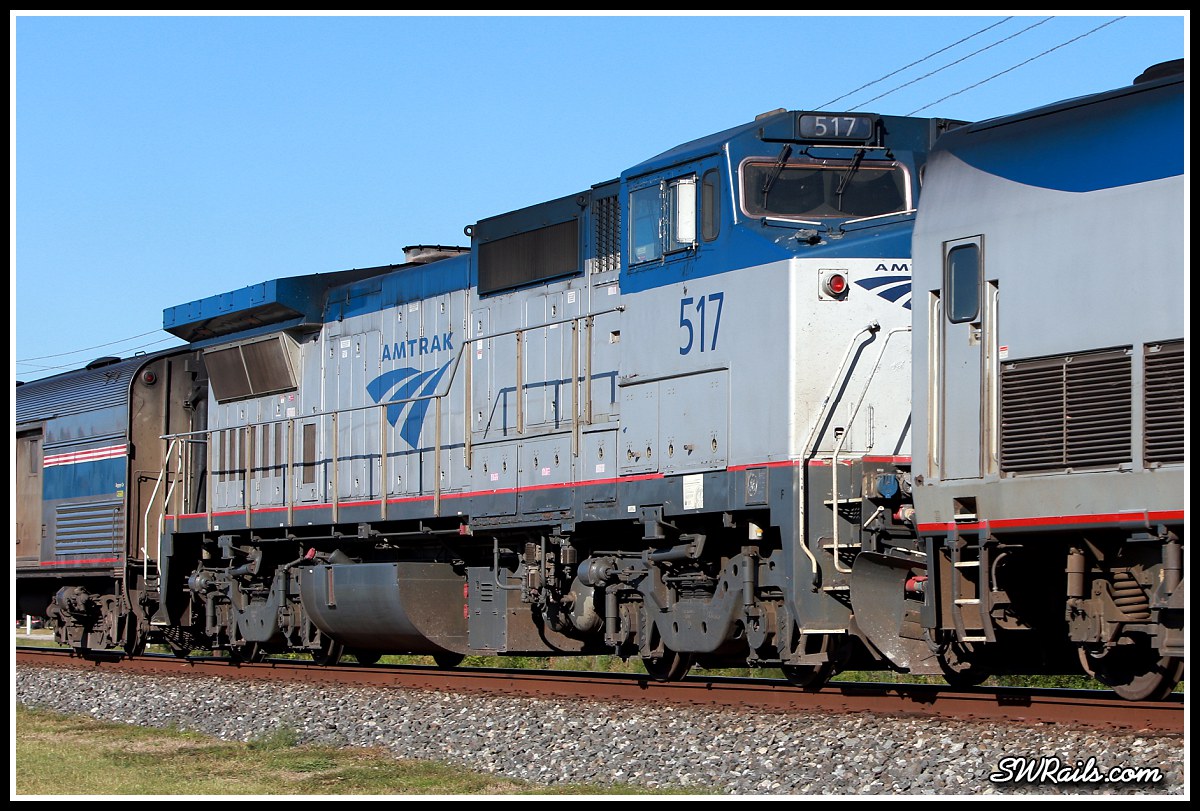
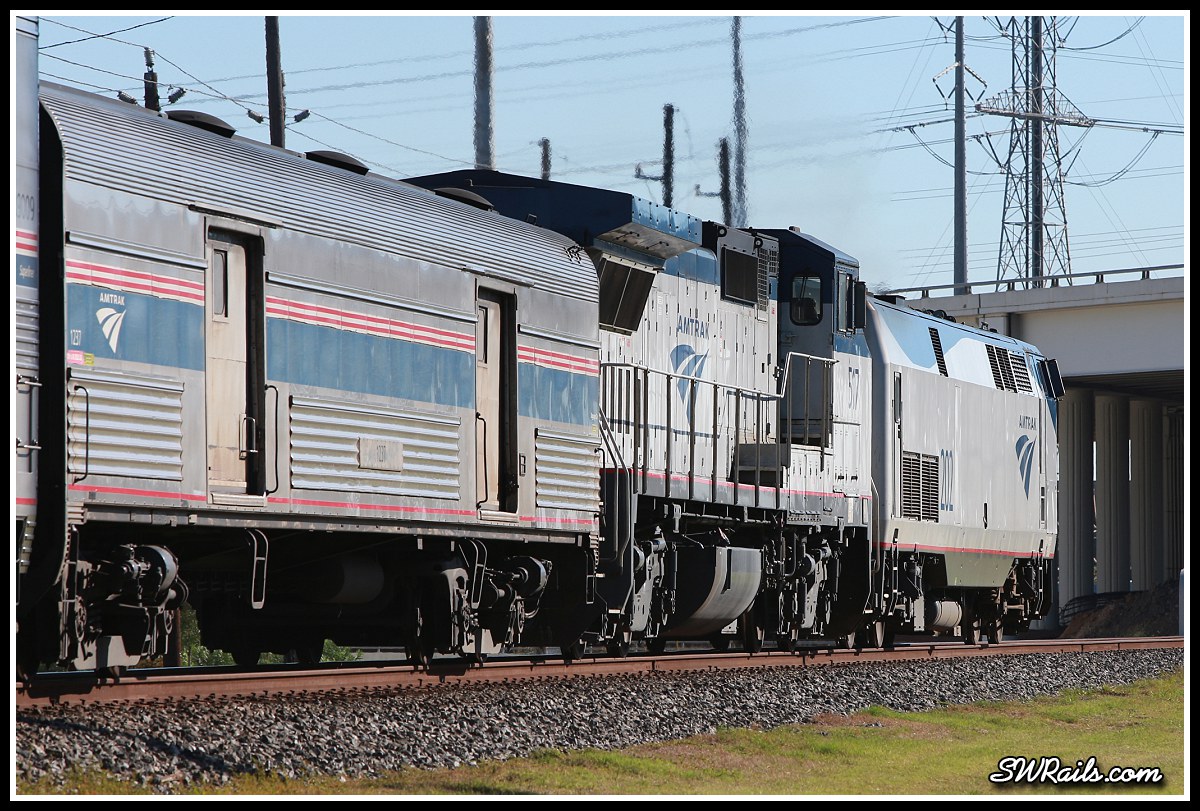
The dispatcher made reference to 2 eastbounds running behind Amtrak, but there’s time for a few shots of the MP 19 – MP 28 double-tracking project. All 3 views are looking west from MP 22.5. Note the old Imperial Sugar mill in the background of the first image.
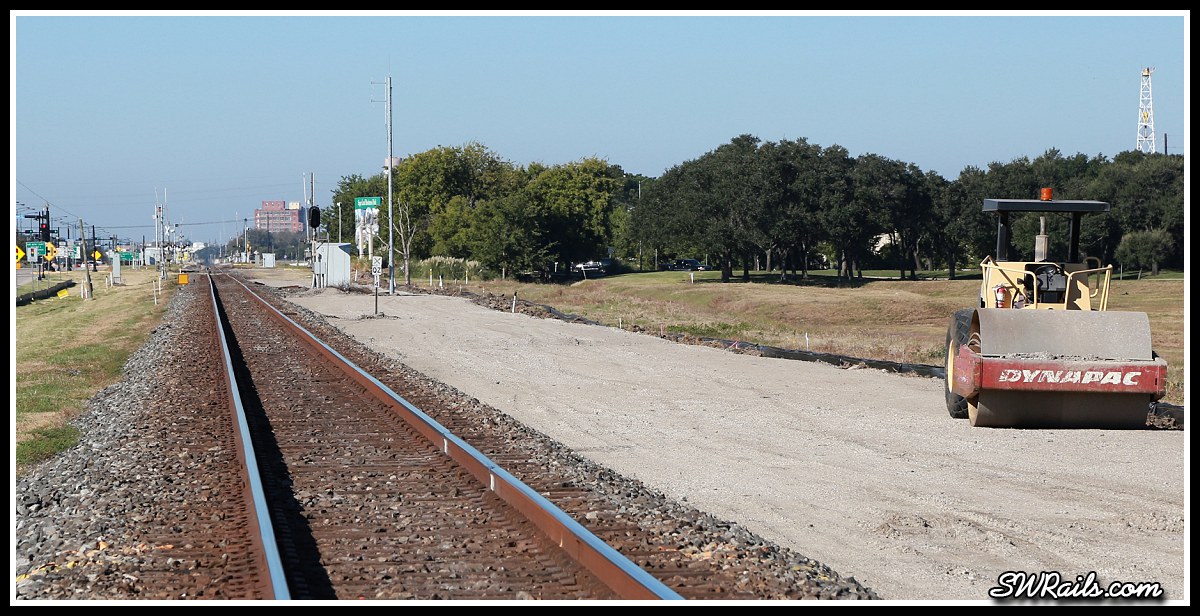
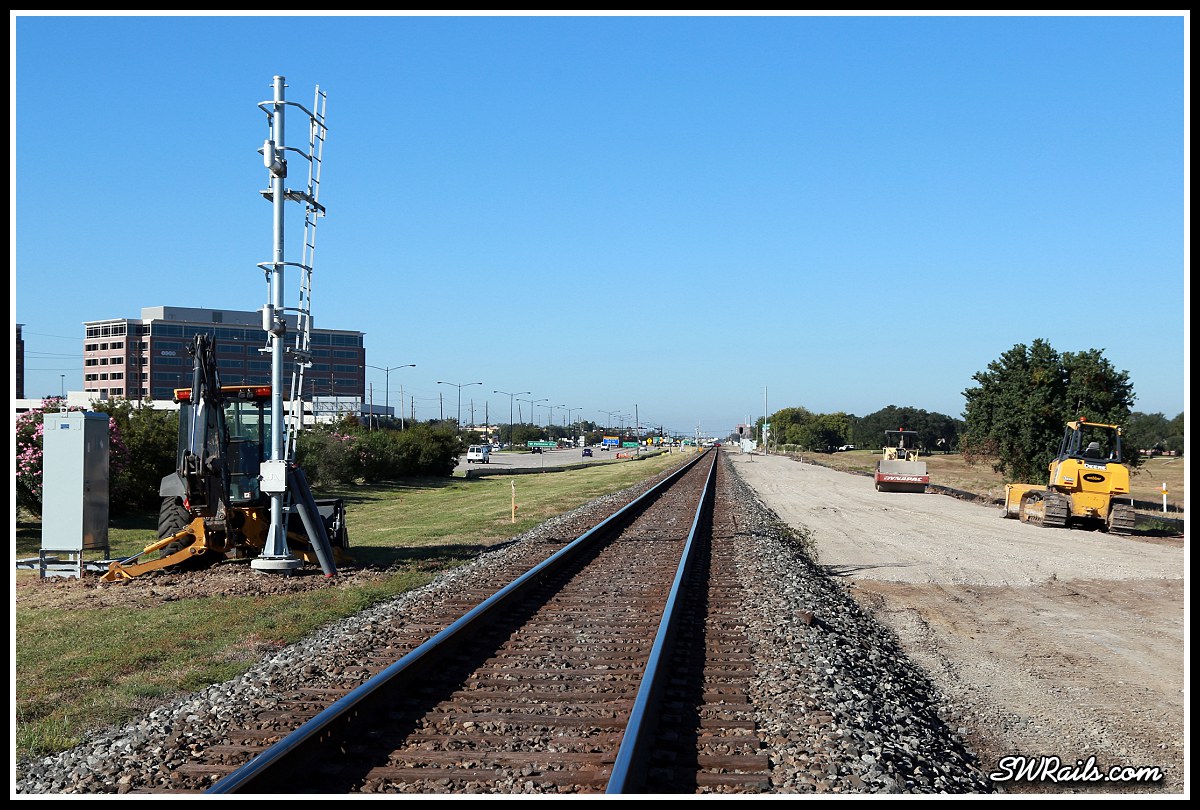
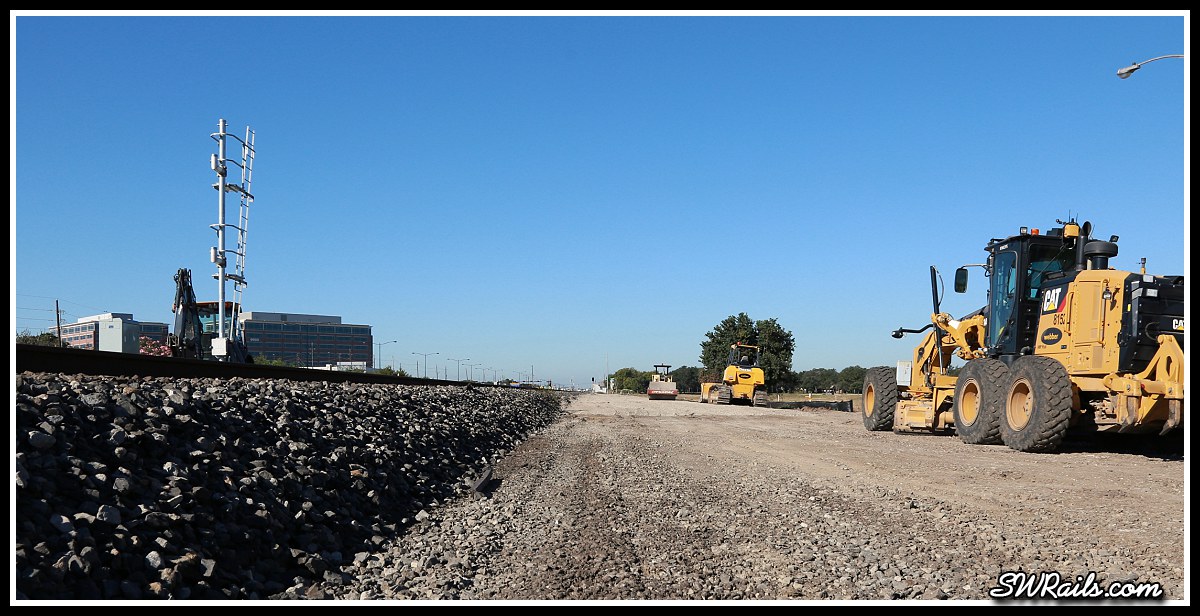
Since it’s a Sunday morning, traffic on US 59 should be fairly light, so I relocated to the US 59 overpass.
The next train was the MKBHO-25 with a sight-for-sore-eyes lead unit, C40-8 9303.
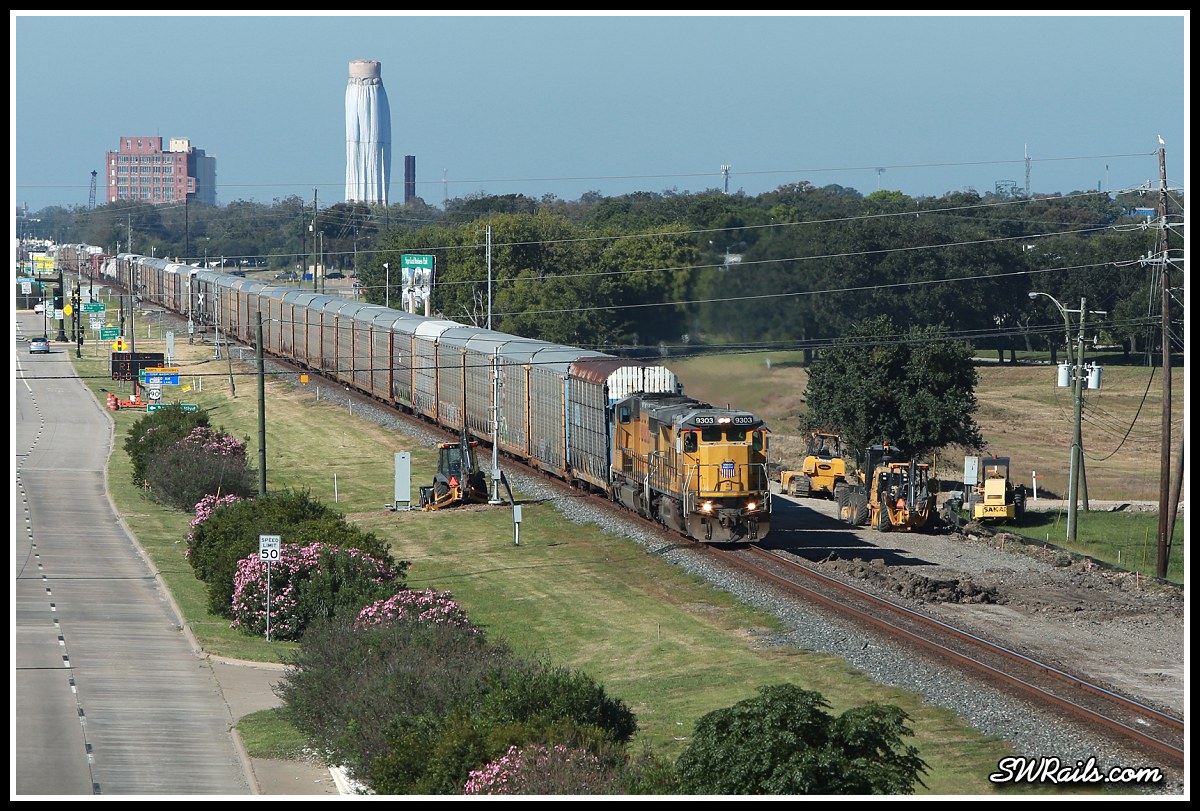
When UP stored its older power in 2009, I didn’t think these 25+ year-old GE’s would ever run again, much less on the main line.
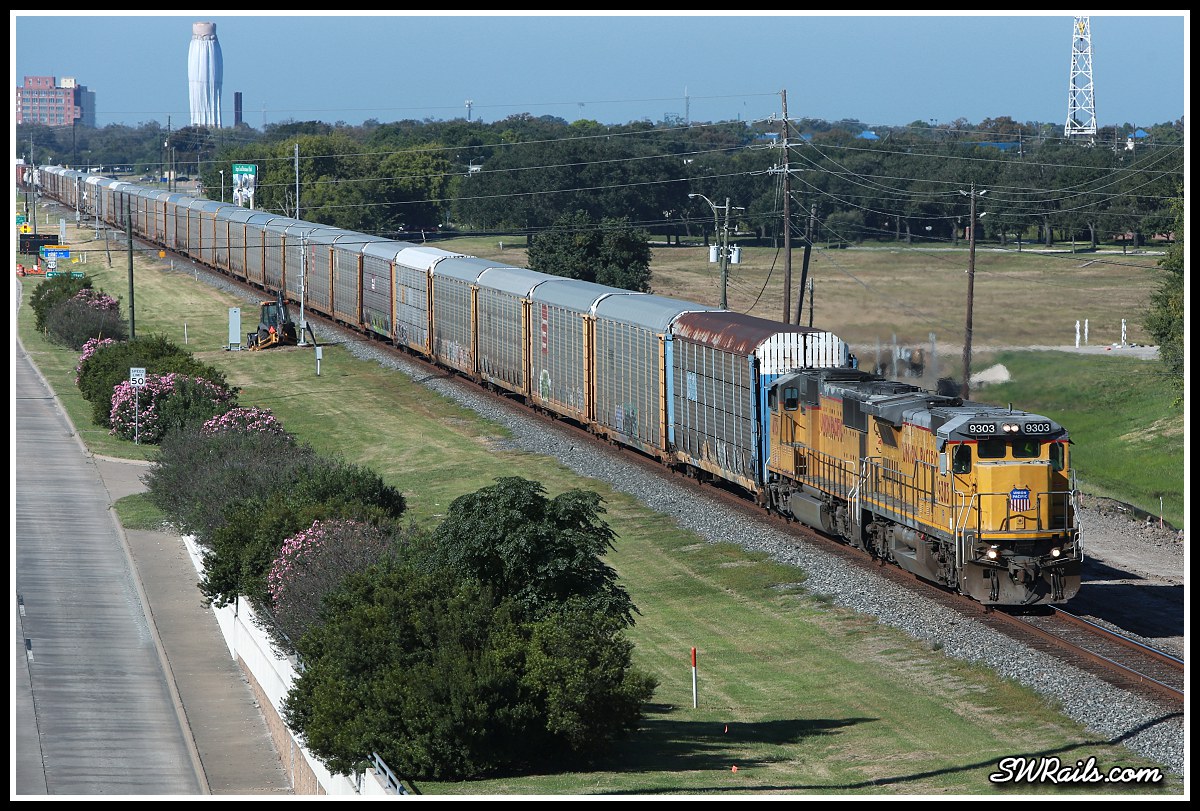
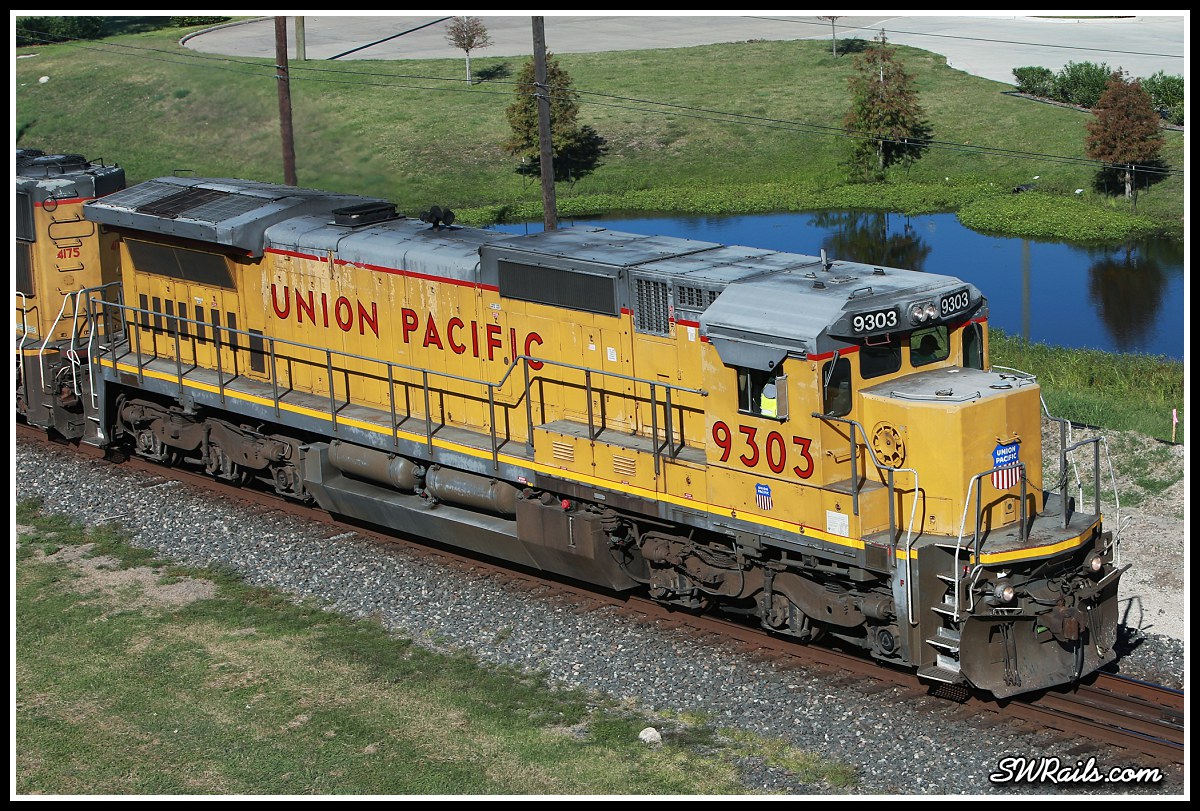
Wanting another bite at the UP 9303 apple, I drove the 8 miles to West Junction. If anything merits a chase these days, this train does.
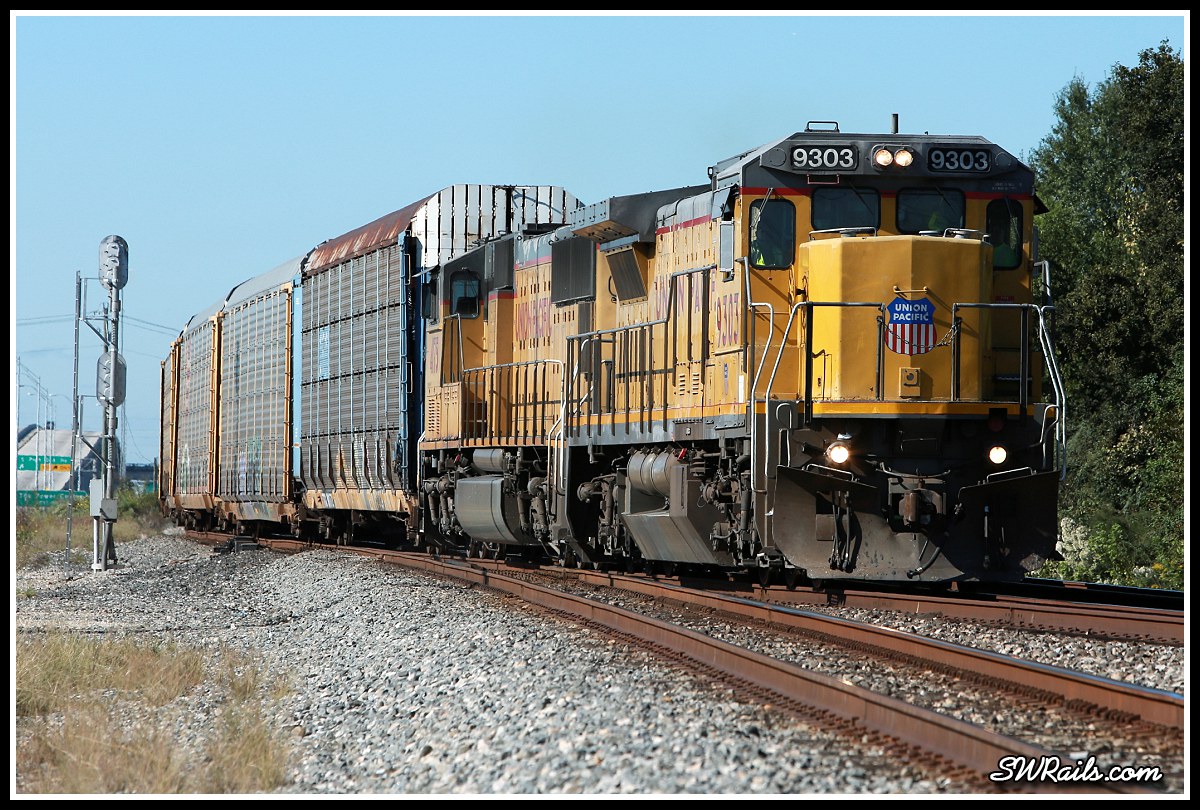
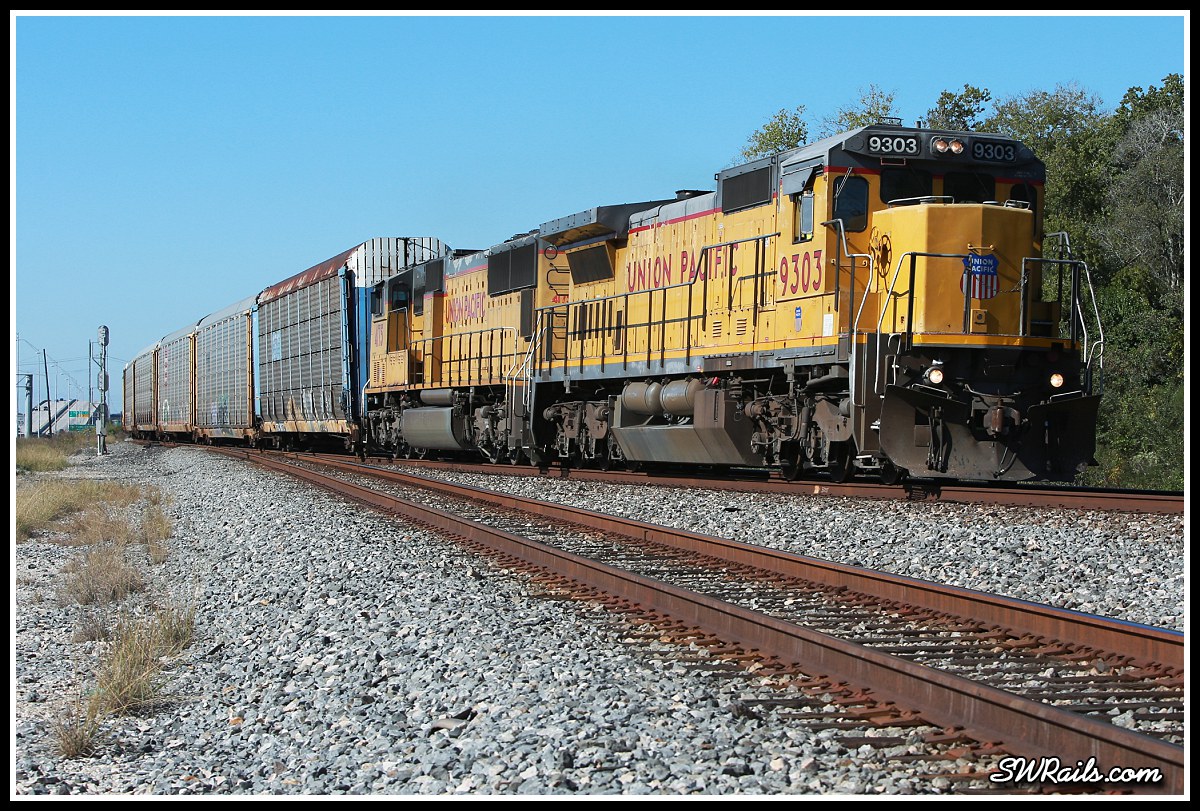
That was nice. It would sure be nice to see standard-cab power more often, but it’s unlikely with hundreds of new fuel-efficient units coming to the UP in 2015.
The last train of the morning, KCS 4844, was just leaving Rosenberg when I got back to the car. The light was nice where I was at West Junction, but it was nicer at the US 59 overpass, so I headed back. I got there about 5 minutes before the train did.
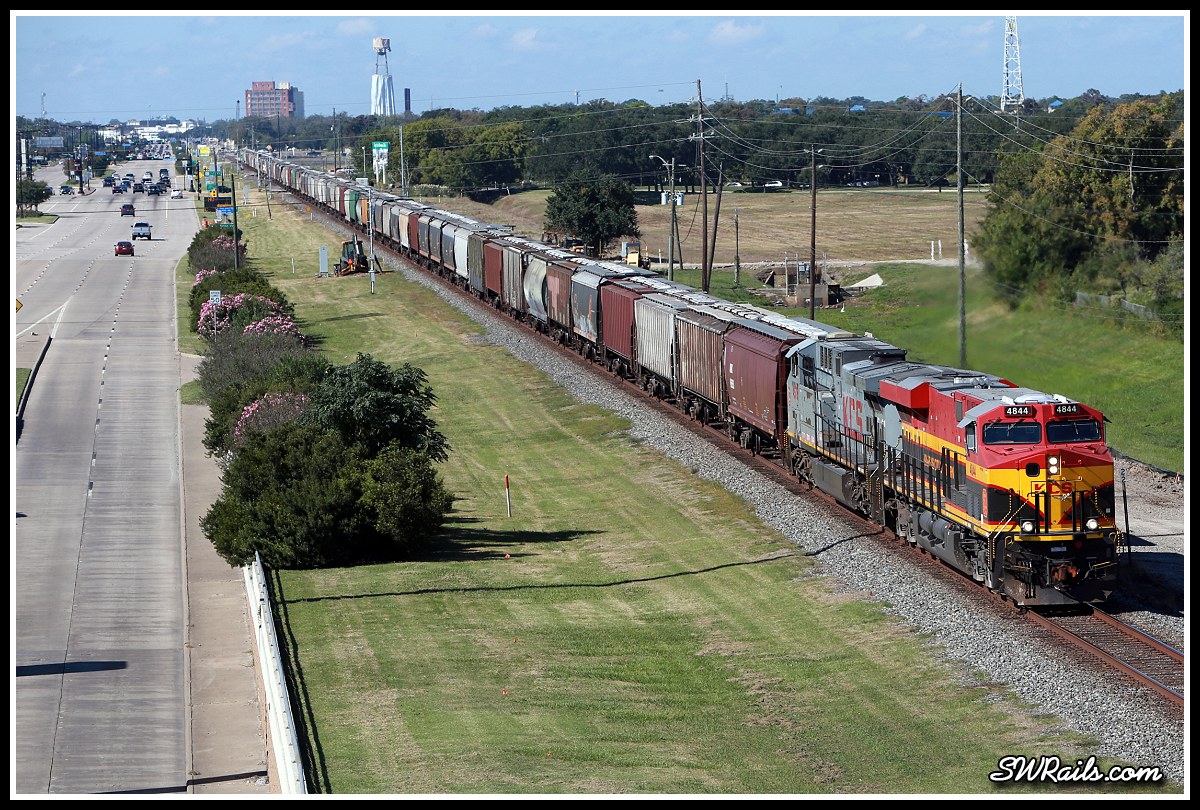

There’s not a better looking non-heritage fleet unit these days than a clean Retro-Belle. You may disagree with me, but you would be wrong.
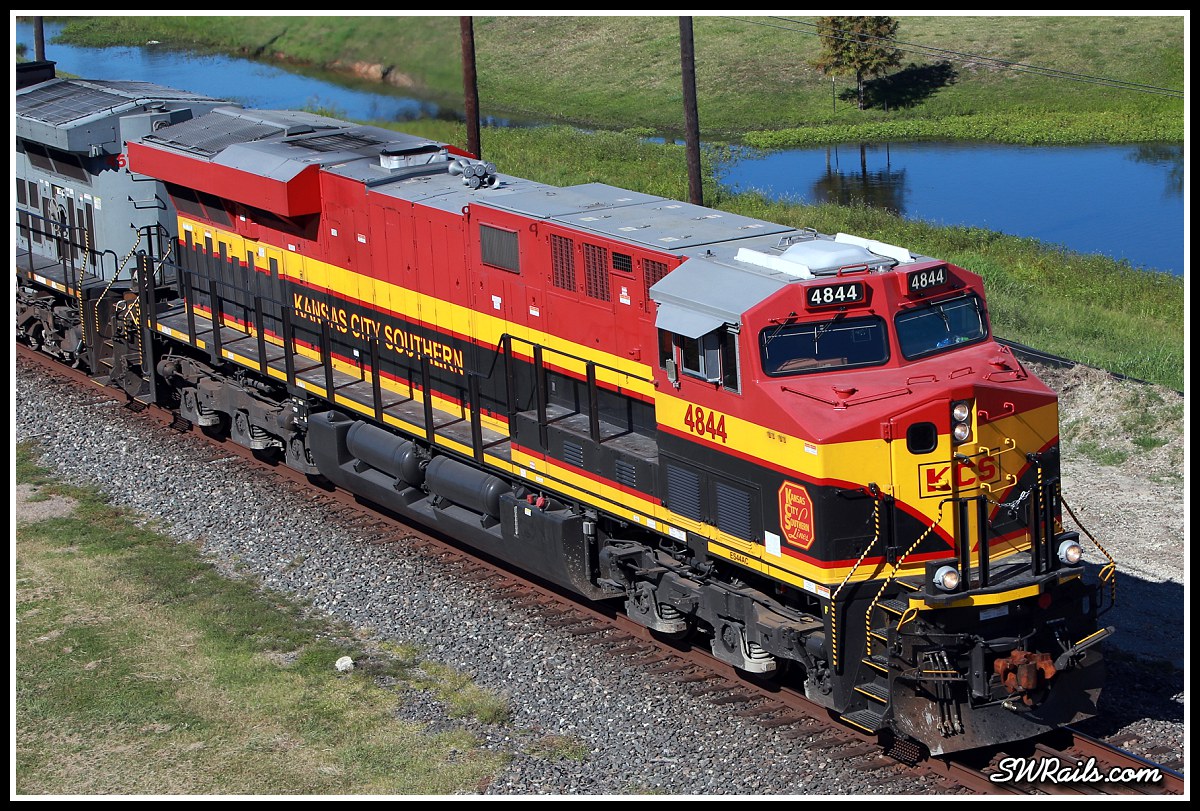

With no other traffic imminent and clouds moving my way, heading home for some breakfast was just the ticket.
Norfolk Southern’s Norfolk Southern Heritage Unit in Texas
Norfolk Southern 8114, Norfolk Southern’s Norfolk Southern Heritage unit, has been roaming around Texas on the UP for the last week.
It came to San Antonio on the ASMKB-06, arriving on the 9th. It made a San Antonio to Eagle Pass round trip over the last 6 days, before being assigned to the MKBHO-15.
This train didn’t get out of San Antonio until mid-morning, so I didn’t expect it to get into my area before dark. I had written it off so I was surprised to hear the DS call the NS 8114 about 6:45 PM.
Apparently the train had been at Harlem waiting for a route to Settegast Yard. The DS told the NS 8114 to head east on signal indication and stop at Willowbend Drive to allow Amtrak to get by.
I had just finished preparing dinner and I was actually quite hungry. Sunset was about 30 minutes off and the train would be coming pretty much out of the sun. Almost a worst case scenario. What to do?
I wrestled with the decision as I gathered some equipment. Let’s see. NS heritage leading through here is rare. Light is really bad, but it’s not storming. And I have a microwave to re-heat dinner. Let’s roll….
I set up at Ormandy, CP916, in an attempt to use some trees there to block the sun from shining directly into the camera lens. I took a few test shots, none of which looked decent, before the MKBHO arrived at 7:18 PM.
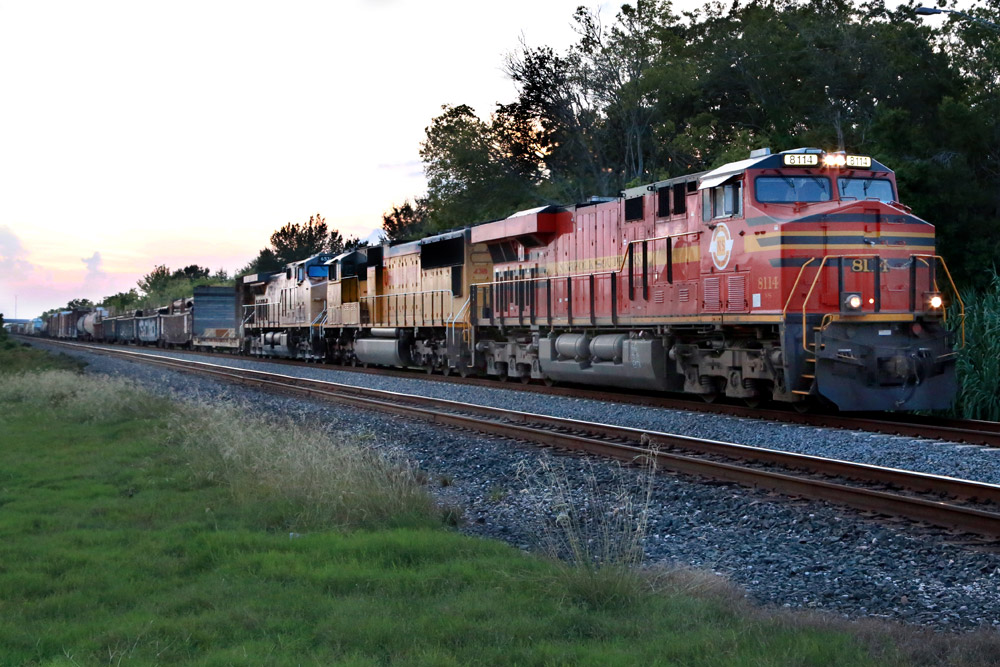
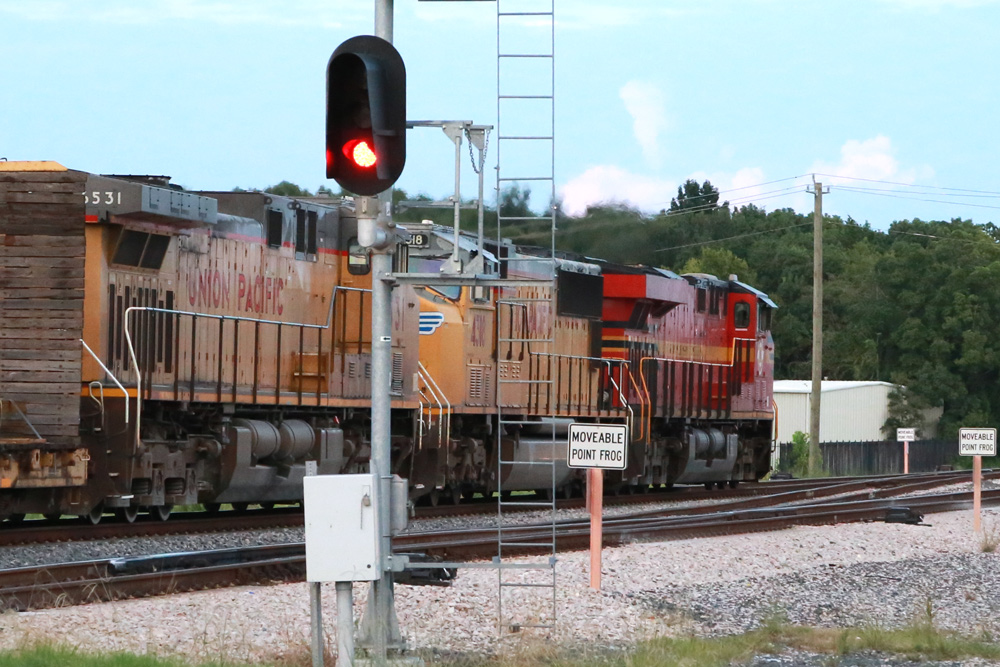
I knew Amtrak #1 was getting close, but I didn’t realize how close. Had I looked east after taking the going-away shot, I would have seen its headlight. But I didn’t, and #1 blew by Ormandy just seconds after I got to the car.
Since Amtrak has gotten by, I wasn’t sure if the MKBHO would still stop at Willowbend, so I made the 10 minute drive to the Willowbend Drive grade crossing in 7 minutes. Bad light or not, I didn’t want to miss the shot.
The MKBHO made the turn at West Junction and came into view at 7:32 PM.
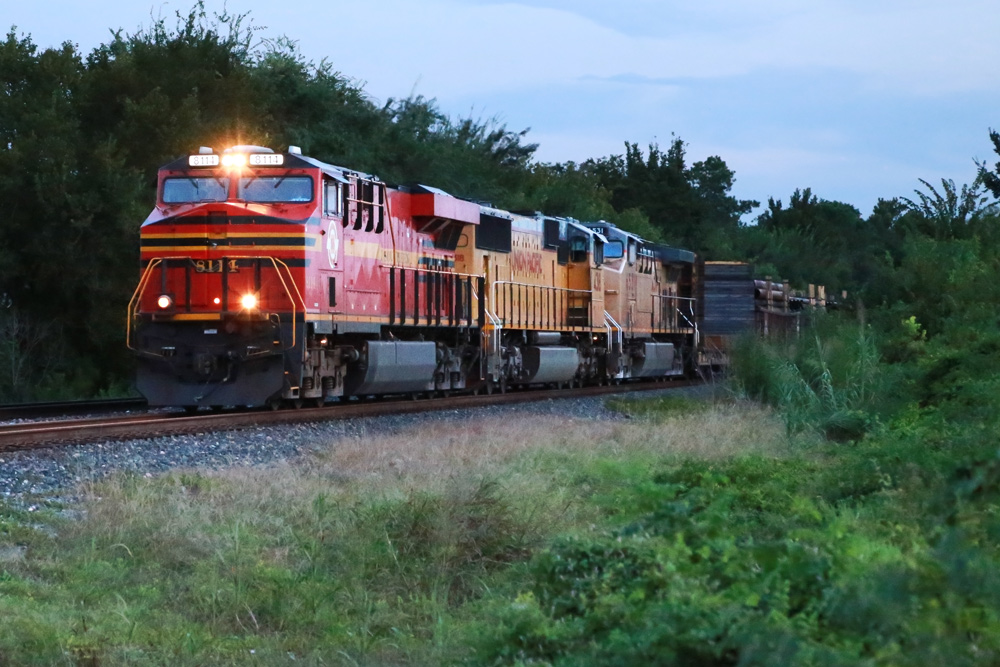
The train did stop, allowing me to spend about 10 minutes getting a couple of different angles as darkness took over. ISO for the first shot is 16,000. The second shot is 25,600. And to think I believed anything faster than K64 was communist!
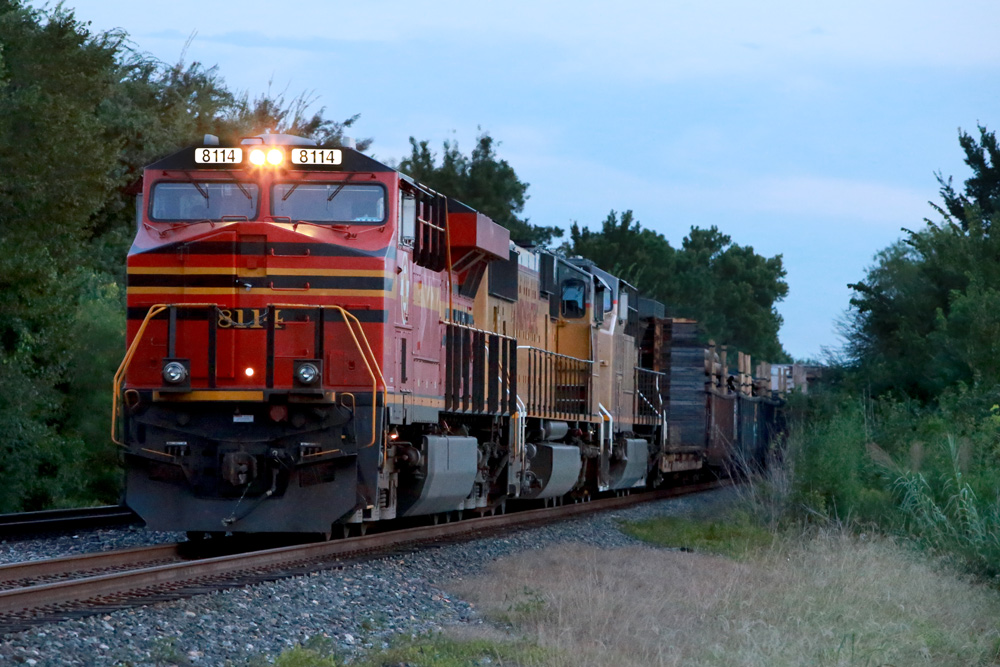
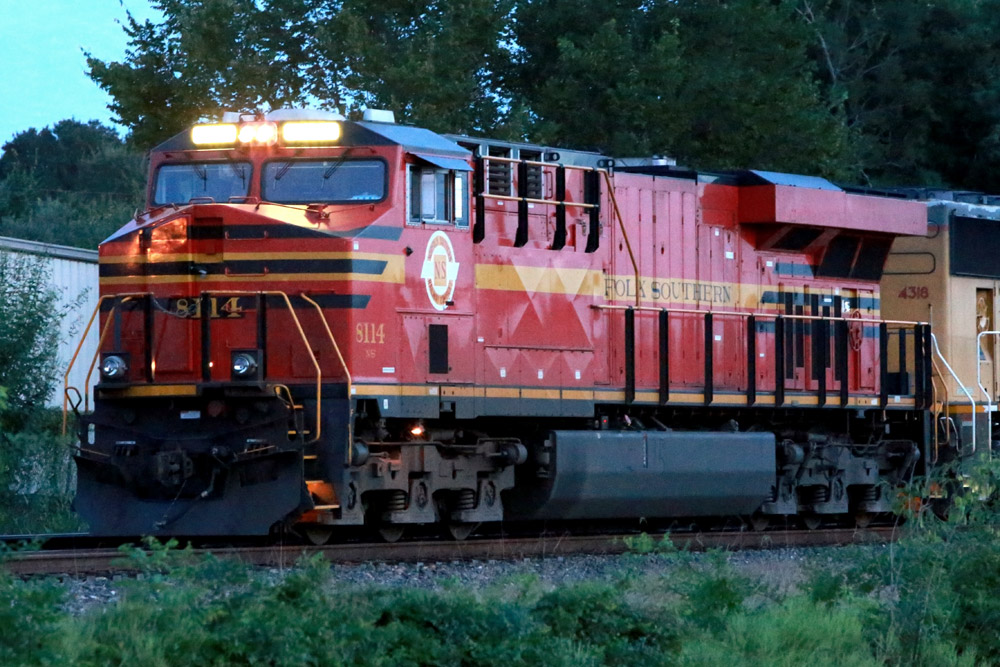
All in all, the shots are quite lame. But as a wise man once said, “I think that any love is good lovin’, so I took what I could get…”
All Change Isn’t Bad
There’s a strong sentiment among railfans, especially after a certain age, that change is bad. I’m no exception.
Consider just a few of the changes from the last 25 years or so. Cabooses were eliminated. Setting foot on railroad property is now a serious crime. Merger mania led to the disappearance of so many favorite railroad identities. And so forth…
Change is a constant in the railroad business, as it is in any human endeavour. And I’m against most change. I bet you are too. But I’m in favor of some changes that have occurred.
One that comes to mind is when KCS adopted its current locomotive color scheme. Another positive change took place in May, 1959 when the Santa Fe abandoned the black & silver “zebra stripe” scheme for its switchers and road-switchers, opting for the blue & yellow “bookend” paint scheme.
Of course I didn’t have an opinion about this when it occurred. My interests back then were limited to feeding times and diaper changes.
Let’s look at ATSF’s one and only ALCO RS2 2099 before and after.

ATSF RS2 working the San Bernardino, CA depot in the early 1960’s.

Santa Fe 2099 carrying out its switching chores in the Barstow bowl in 1968
You know what my opinion is between these 2 ATSF paint schemes. What’s yours?
 Southwest Rails