Englewood Derailment Clean-Up
There was a small derailment at the far east end of Englewood late Friday night / early Saturday morning (5/4 – 5/5/2012) . It appeared that 5 cars were involved, two covered hoppers, a tank car, and two coiled steel flats.
When I came across the scene about 3:00 P.M. yesterday, Hulcher was on the scene with several sidebooms and an array of other equipment.
Versus adding single images, I created a little slide show. Let me know in comments, or via email, how it works, or doesn’t work on your computer.
Update: Thanks for the feedback on the slideshow. It seems to work well for everybody. I’ll use that format for posts that have multiple images with little, if any, narrative.
Rush Hour on the TRE
I made some time during our last family trip to Fort Worth to check out rush hour on the west end of the Trinity Railway Express system.
I only shot video due to the mostly cloudy conditions this past March 16th, but uncooperative weather notwithstanding, it was a lot of fun catching 13 TRE trains between 4:00 and 6:30.
Hopefully I can get back this summer and do it in better weather. The late afternoon light angles should be really nice on the north side of the TRE track.
Video-Pinch Hitting for UP 844 is…
As promised in the previous post, here’s the video from our April 22, 2012 chase of the UP150 passenger special. We met the train at Glidden and stayed with it just over 2 hours until parting ways at West Junction.
Pinch Hitting for Union Pacific 844 is….
The wheel problems that developed on Union Pacific 844 in Mount Pleasant last week sidelined the legendary locomotive. Fortunately, UP had its E9 trio on a different special train laying over in Hearne, so the UP150 Passenger Special was able to continue its travels with motive power of almost the same vintage. The 844 is 68 years old, the E’s are 57 years old. Who knew?
The train departed San Antonio Sunday morning, April 22, 2012, at 8 AM. We left Sugar Land about 9 AM with the plan of driving west until we knew the special was getting close, then chasing it back to Houston.
Just after 11 AM I heard UP 949 responding to the dispatcher. We had just left Glidden on Hwy 90, so I did a quick U-turn and set up at the west switch of the Glidden siding.
At 11:09 AM the UP150 special came into view.

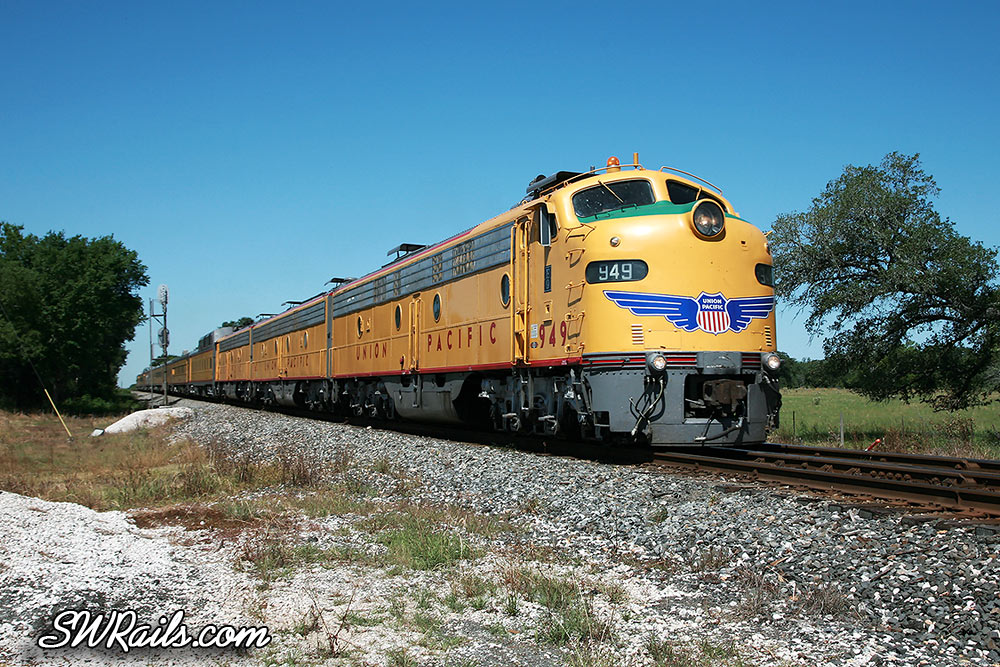
The train blew by at a pretty good clip, 55-60mph, so I knew that it would be a while before we caught up with the train. I thought there was a chance to see the train at Ramsey, when the track and highway converge, but when we got there we saw the train was far ahead of us. But I wasn’t too worried because the train was scheduled to stop at Eagle Lake for 30 minutes, allowing me to easily get ahead of the train.
Imagine my surprise when the train passed right through town, fortunately at a much slower pace. Finally being able to pass the train on the east side of Eagle Lake, I pulled over at the east end of Lissie for this next view.
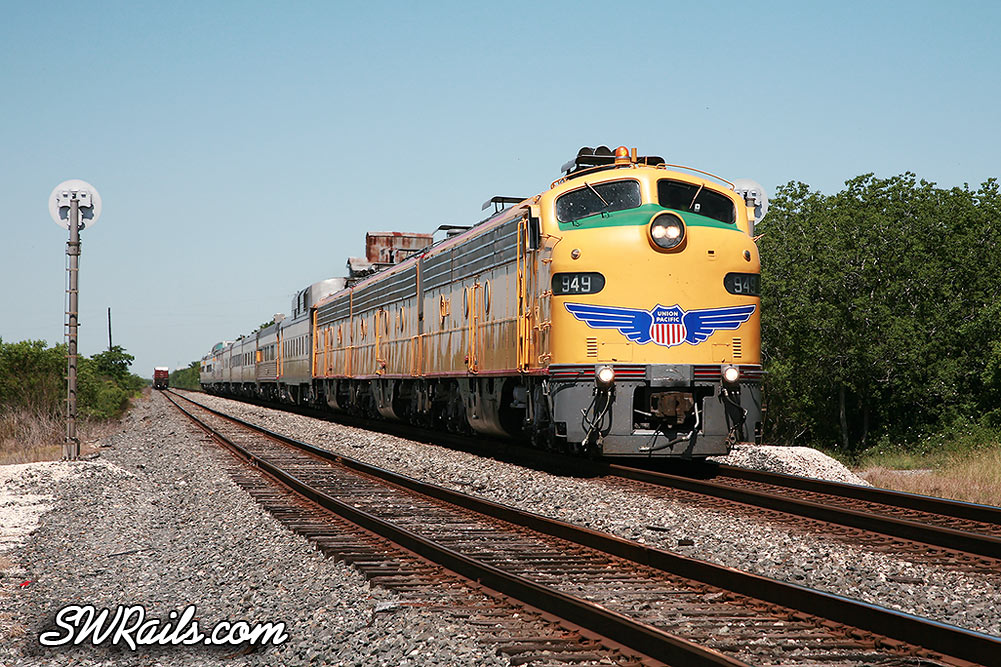
As the train went by us, it was clear that it was going much slower than it was at Glidden. I hadn’t heard any speed restrictions. As a matter of fact, shortly after the train passed us, the DS called UP 949 to ask if he was moving! The engineer responded affirmatively. The next shot opportunity was near MP 54, just west of East Bernard.

The train was still proceeding at a leisurely pace, maybe 30-35mph. As we caught up again with the train at the East Bernard run-around track, I chose to capitalize on the slow speed of the train to shoot some pacing footage of the 949 as it passed through East Bernard. I’ll post that video soon.
Next stop was near the east switch of the East Bernard siding, where the SSAHO-22 passed us, still running about 30mph.
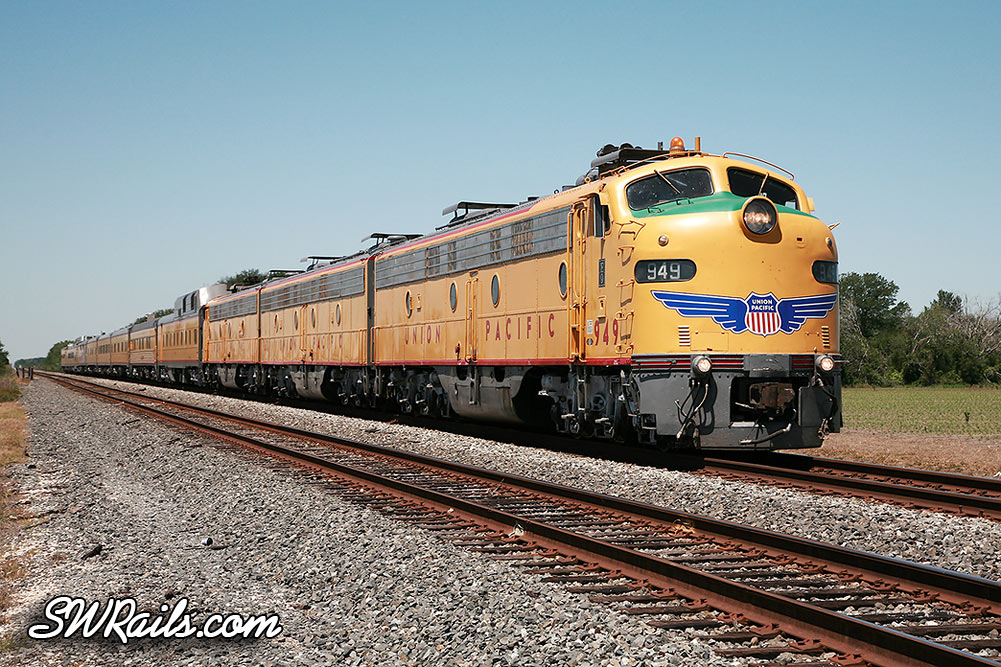
Due to the overgrown brush along the right-of-way, there’s no real shot opportunity until you reach the far west side of Rosenberg. So be it. (I totally lucked out catching the mile marker. I didn’t see it until I processed the file.)
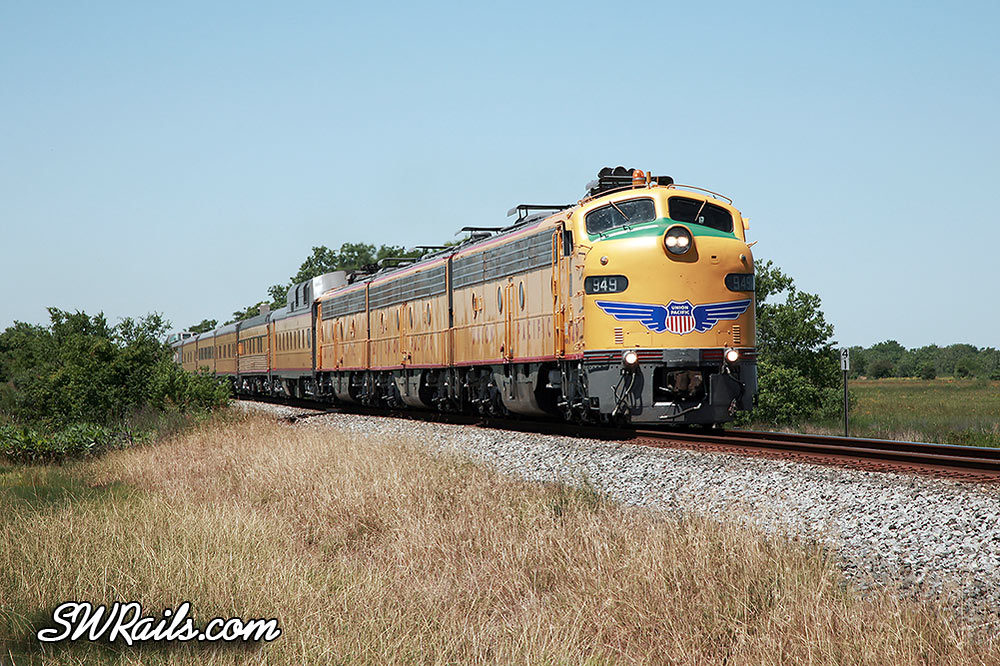
Not wanting to tempt fate by continuing to pace the train through traffic light-infested Rosenberg, Richmond, and Sugar Land, I opted to jump ahead of the train to Stafford, via Hwy 59. I set up at the intermediate at MP 20.5.
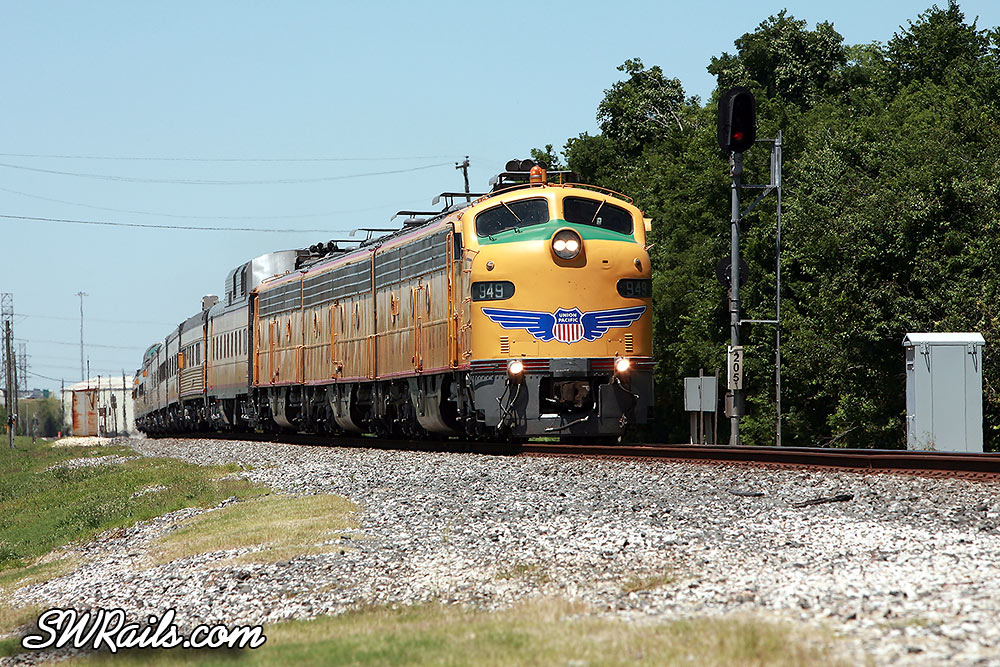
I thought that this would be the last shot as typically is difficult to get ahead of a train before West Junction, where the track veers away from Hwy 90. But the train ambled by at about 30mph, encouraging me to try my luck at Wrest Junction, 8 miles east of the previous shot.
My worries were unfounded, as the train actually took 21 minutes to arrive where we had set up at MP 12.6.
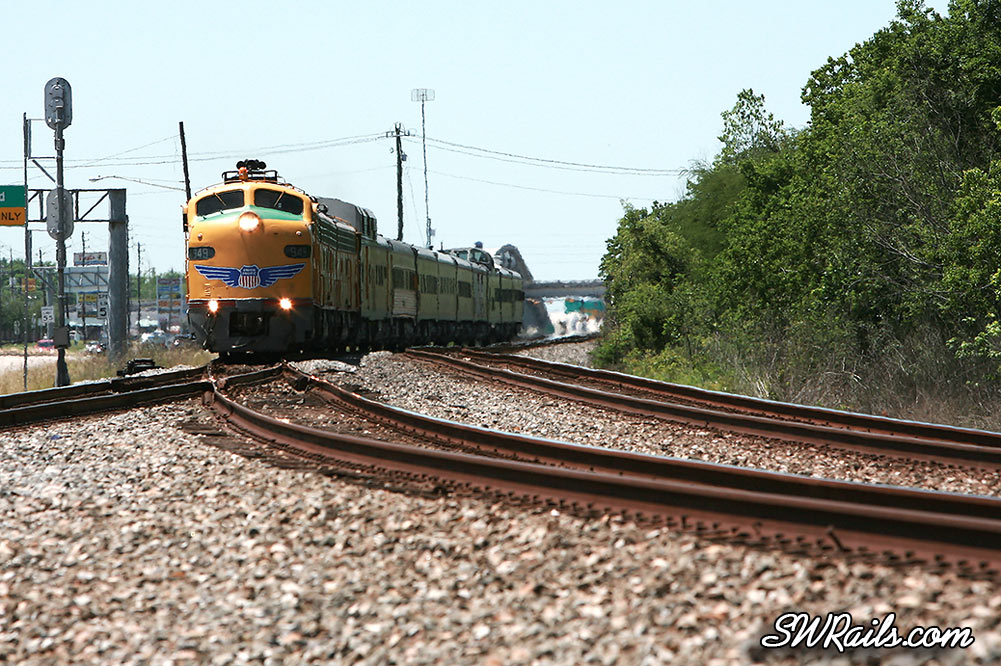
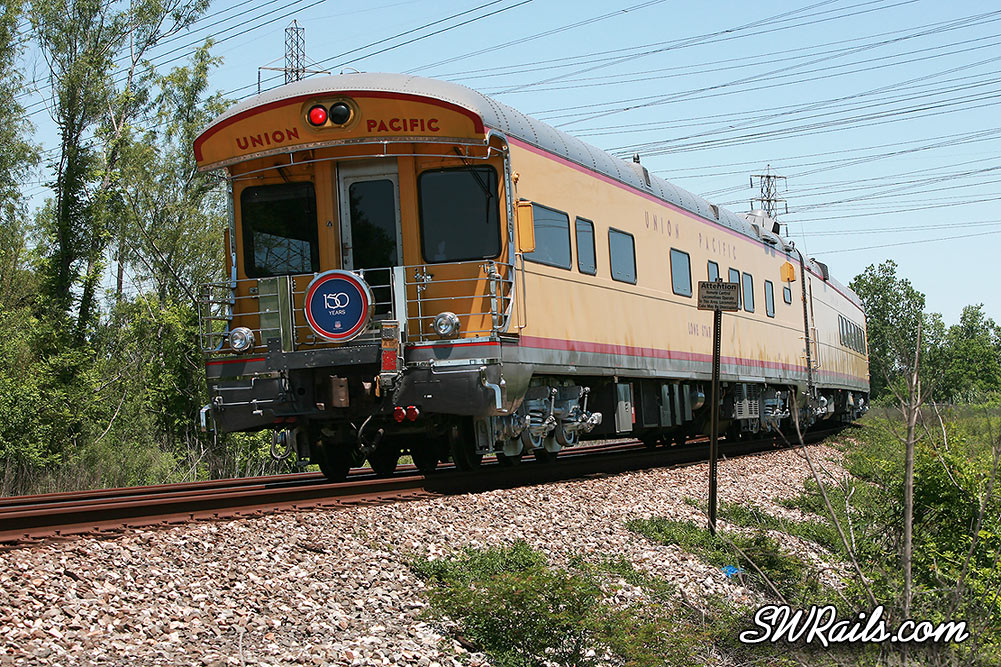
With that, the train was by us for the last time. What had started out as a frantic chase ended up being a very leisurely pursuit. The first shot at Glidden, MP 89.3, was at 11:09 AM. The final shot at West Junction, MP 12.6, occurred at 1:09 PM. The train traveled 77 miles in 2 hours and 5 minutes, making its average speed about 35mph.
Englewood Ghost Town
I covered a wedding in East Houston this past March 10, 2012. As is my custom when I have a bit of spare time between the ceremony and reception, I swung by UP’s Englewood Yard just to see what was going on.
As I approached the yard office, something didn’t seem right. It took me a few moments to realize why. The yard office parking lot was completely empty of vehicles! No limos in front. No employee cars parked under the Wayside overpass or anywhere, for that matter.
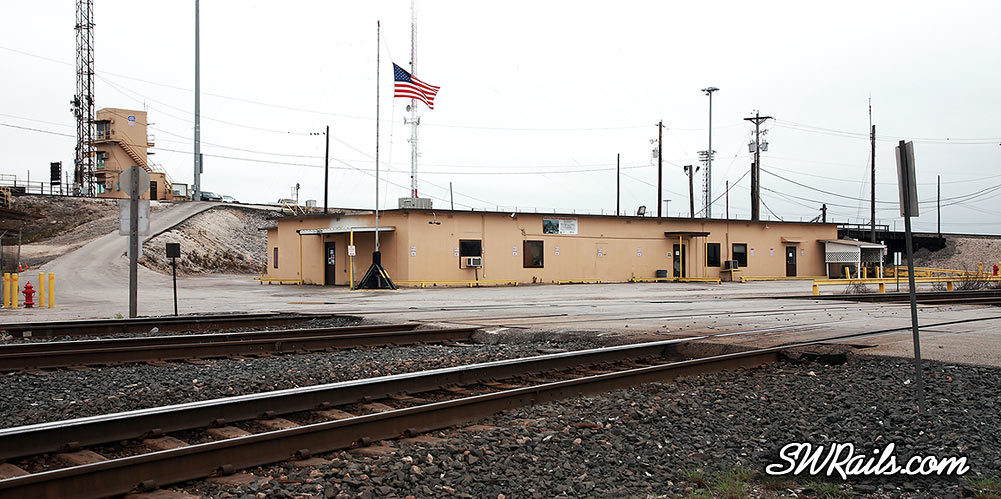
This is what the yard office is supposed to look like, taken on Feb. 4, 2012.:
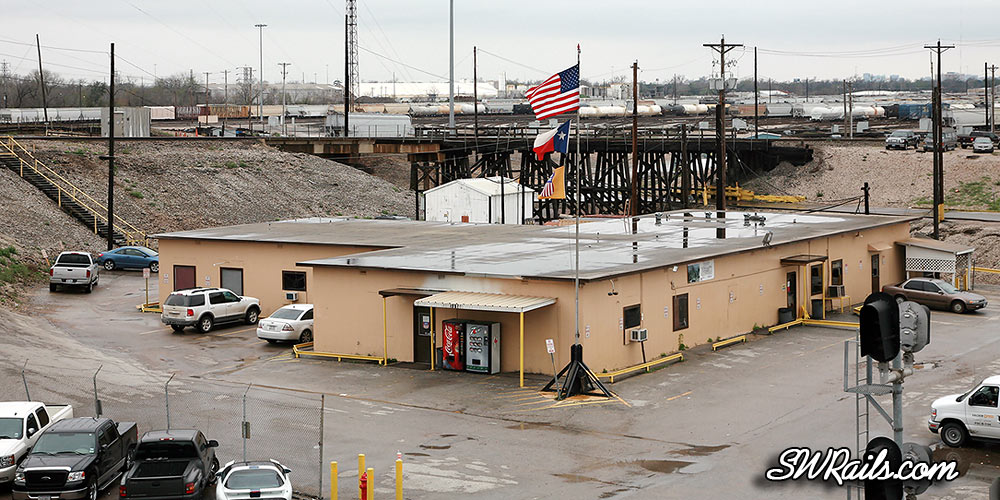
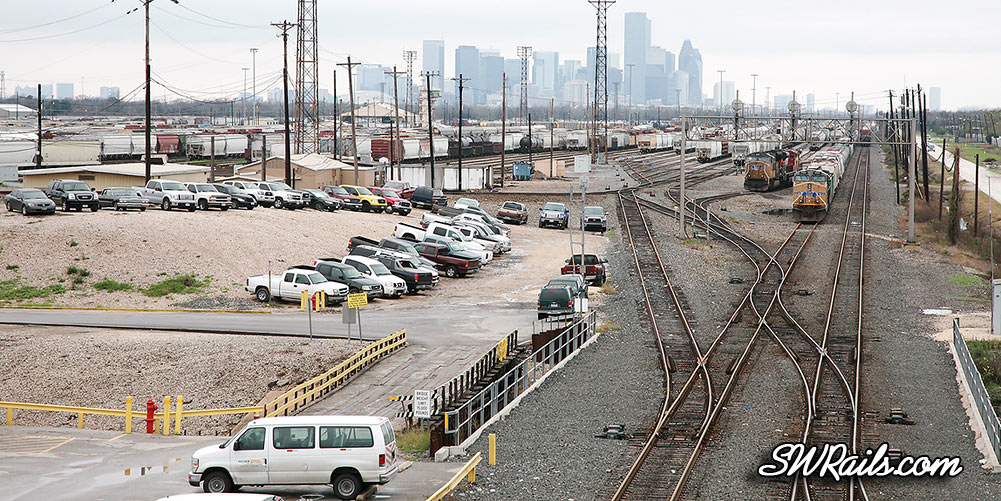
I was actually wondering if there was some special holiday that I had completely overlooked! Once I was satisfied that March 10, 2012 is just a normal Saturday, I just had to figure out where the heck did all the UP employees go? They had to be around here somewhere…
It only took a few minutes of driving along the south side of the receiving yard to find this a few hundred yards east of the Signal Dept. offices:
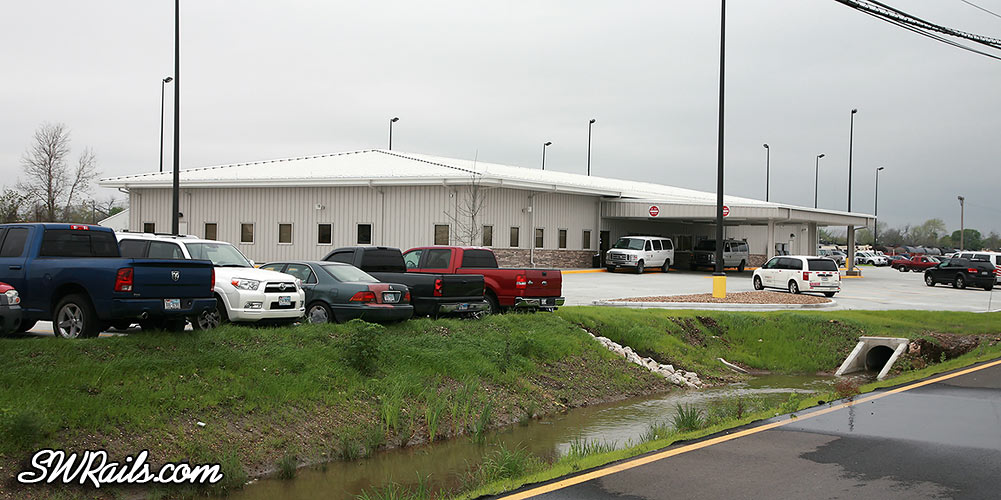
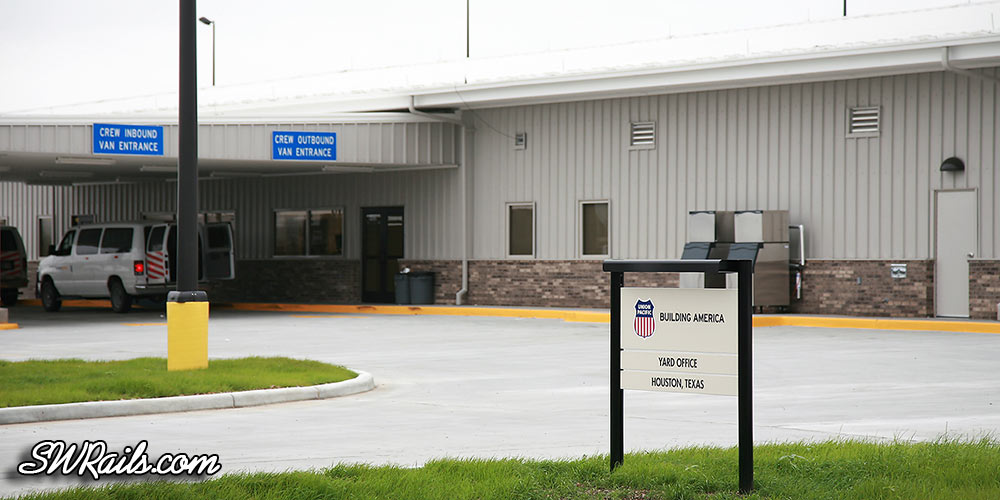
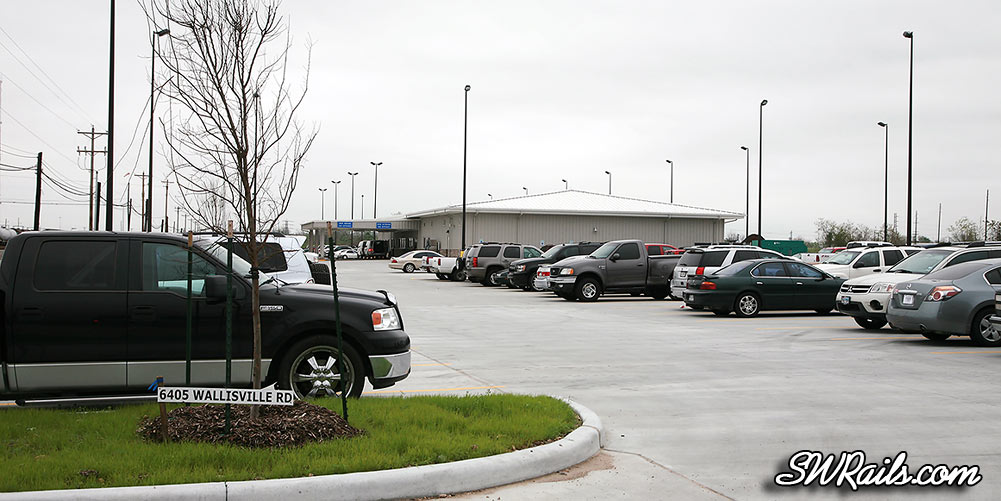
Talk about some nice digs! This new Englewood yard office is at least triple the size of the of the old one, with a huge, paved (Progress, baby!) parking lot for the TY&E guys. A canopy so the limos can load / unload crews without getting rained on. The crews must be loving the new locker room. (Maybe not on that last point, crews are notorious kvetchers.)
The old yard office is the last substantial structure left from the SP days. It wasn’t much to look at even in the mid-1990’s when I would hang out with some of the SP officers there, (back when that was acceptable). I know it had to be woefully inadequate for today’s requirements, but hopefully the UP will find another use for the old yard office and not demolish it. How about an Englewood Yard Visitors Center?
Efficiency Illustrated
I photographed this KCS southbound passing through Stafford this past Saturday (3/24/12) afternoon. At first glance, it’s an unremarkable train. But if you look at the train in its entirety, note the thought and effort put into making this particular train as efficient as possible.
One locomotive on the point followed by a solid block of manifest.

The block of manifest is followed by a block of containers and a solid block of loaded grain cars.
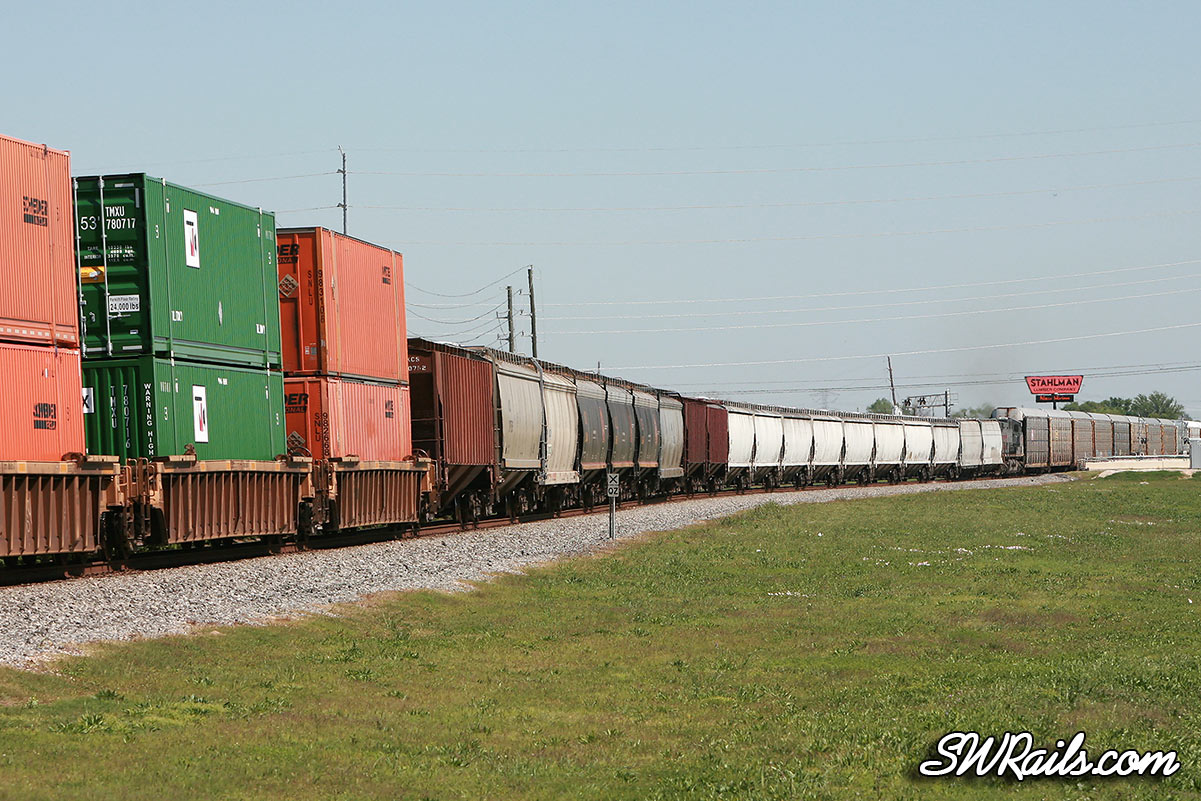
Cut in between the grain cars and a solid block of auto racks is a single DPU.
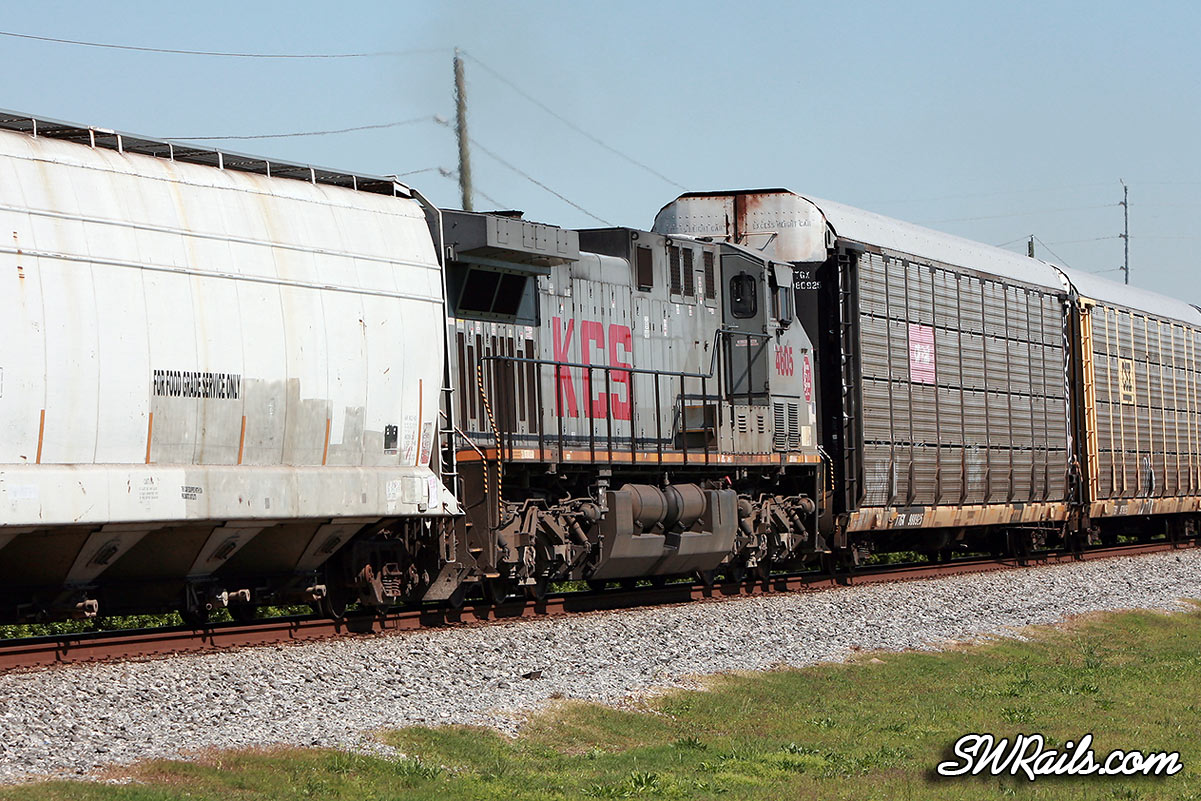
The block of racks is followed by another block of stacks.
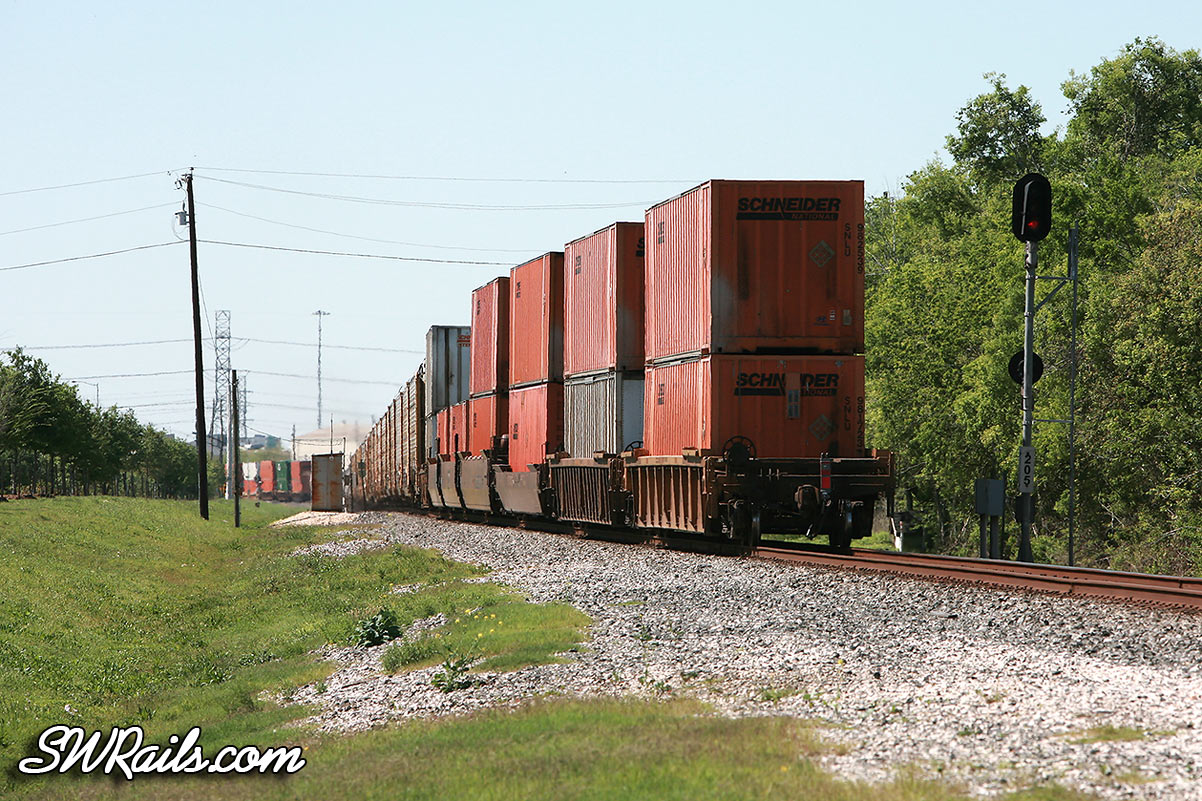
KCS runs trains of solid intermodal, grain, autos, and manifest traffic. In this case, there might not have been enough manifest, grain, intermodal, or autos to justify a solid train, so KCS chose to throw them all together. Once each block reaches its destination terminal, those cars can be cut-off with a minimum of time and effort.
All together, this train illustrates how KCS was able to minimize fuel consumption, crew-starts and dwell time, maximize the utilization of locomotives and personnel, and reduce delivery time for the shippers.
All of which illustrates how KCS achieved Q3 2011 operating ratio of 66.6%, best among all major U.S. carriers!
Temptation 1, Willpower 0
I was trying to bear down and actually get some editing done the morning of March 5th, 2012. But it was difficult because I could see that it was a nice, clear day. Being the typical railfan, sunny days are for, well, railfanning.
As I worked my way through the folder of images, I was listening to the Glidden sub road channel. There was a fair amount of traffic, but all pretty humdrum, so it was easy to stay on task. At least until 11:30 A.M.
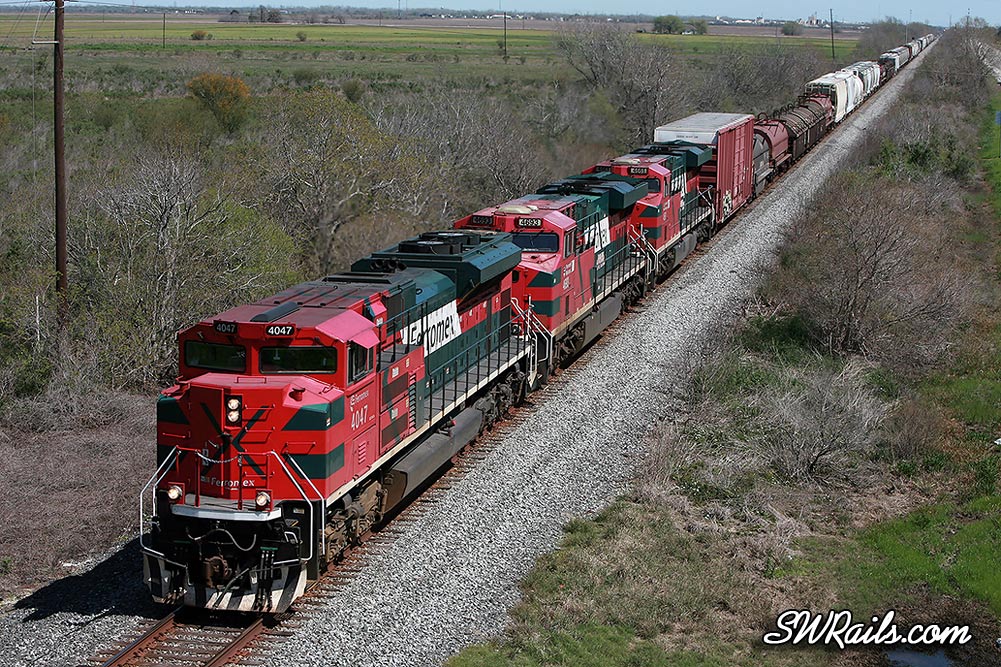
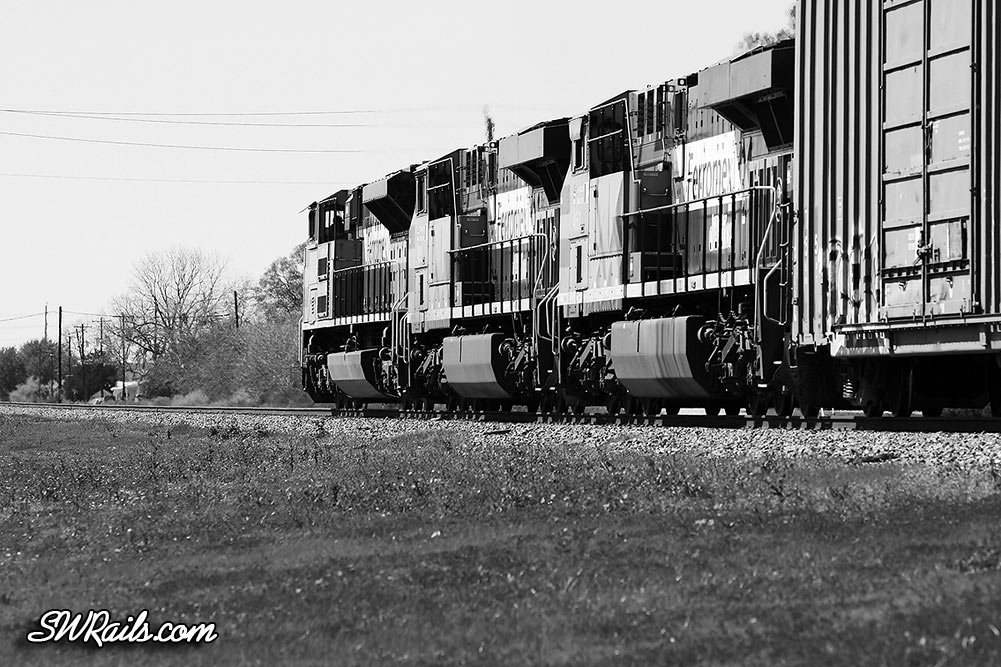
That’s when the DS gives an unforseen 10 mph slow order at MP 28 to FXE 4047. Sweet! A Ferromex SD70ACe leading!
It only took a few minutes to get on the road and head to the vicinity of the slow order. En route, I learned that it was an MHOEG train (Manifest Houston-Eagle Pass), a westbound. That called for a first shot at the west switch of Harlem, about 3 miles west of the slow order.

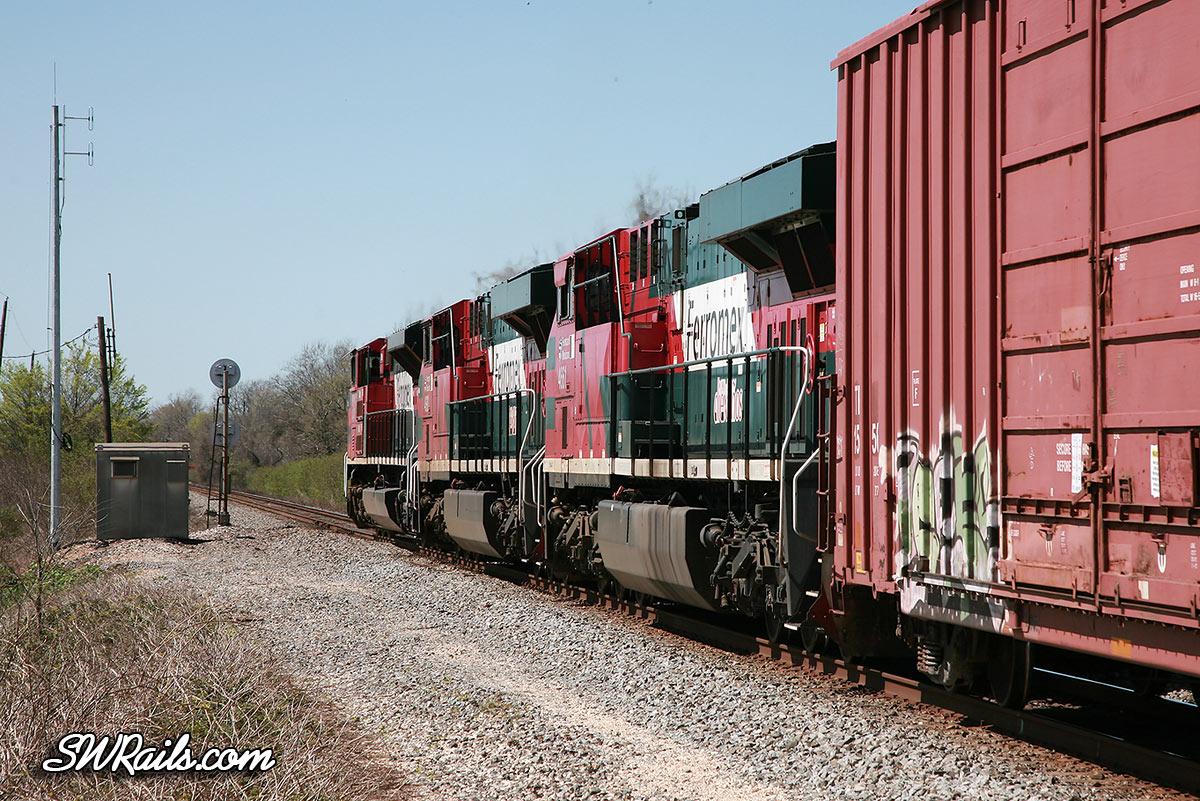
I was looking forward to one FXE unit leading, but a solid consist is an unexpected windfall! The chase is on!
The next shot opportunity is going to be on the other side of Rosenberg. I was concerned that the train would get way ahead of me as the drive on US 90A through Richmond and Rosenberg is replete with traffic lights.
But lady luck was on my side today. As I got back to the tracks just west of Rosenberg, I saw the train was stopped in the Rosenberg siding.
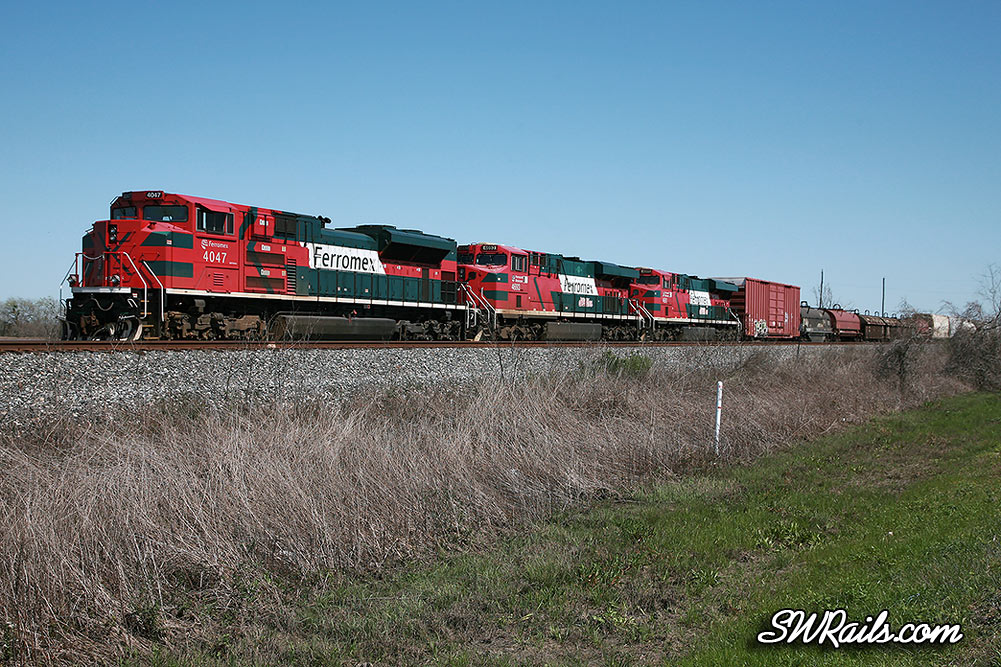
I assumed the MHOEG was put in to meet eastbound traffic, but nothing showed up. About 20 minutes later, FXE 4047 got the signal to proceed west.
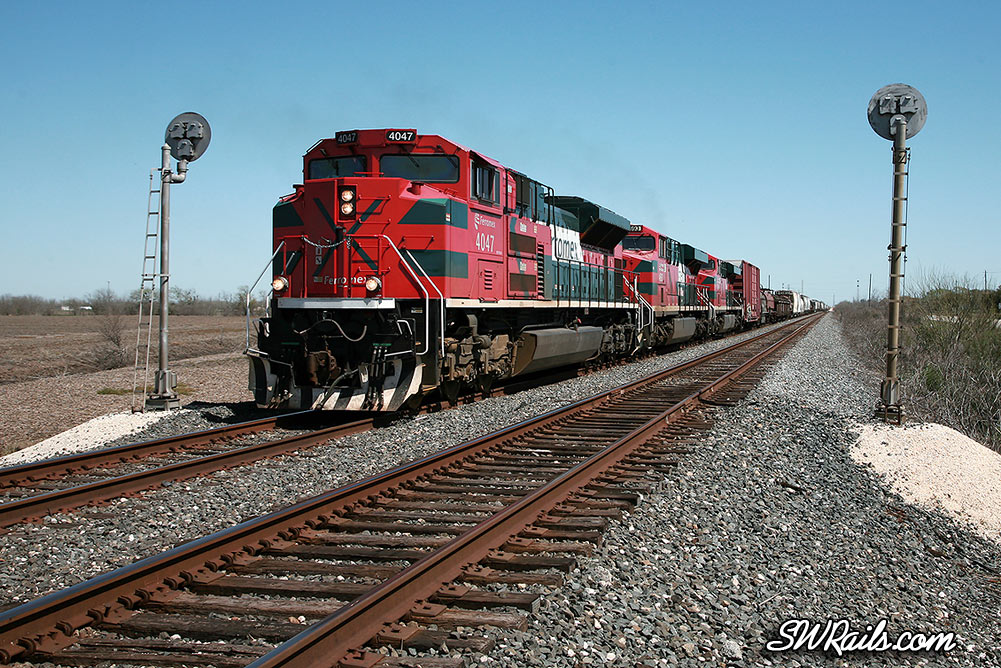
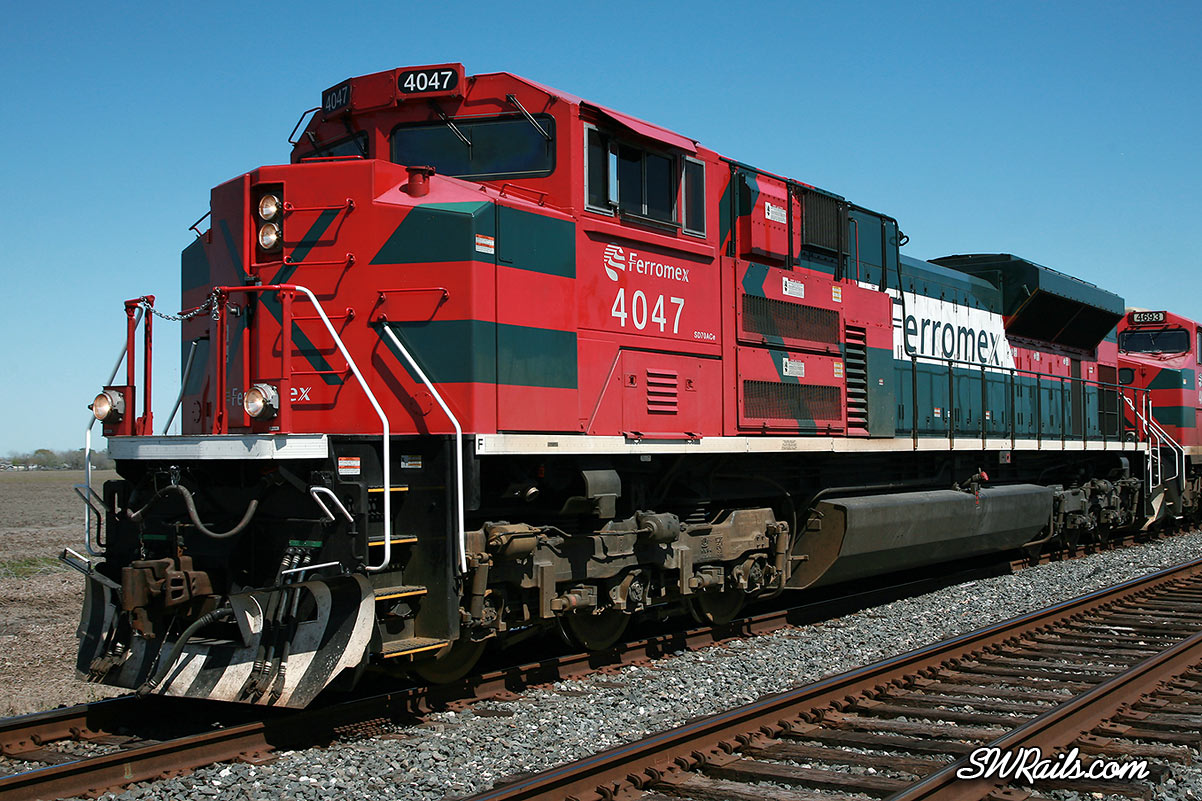
Next shots were from the Spur 10 overpass, about a mile and a half west.
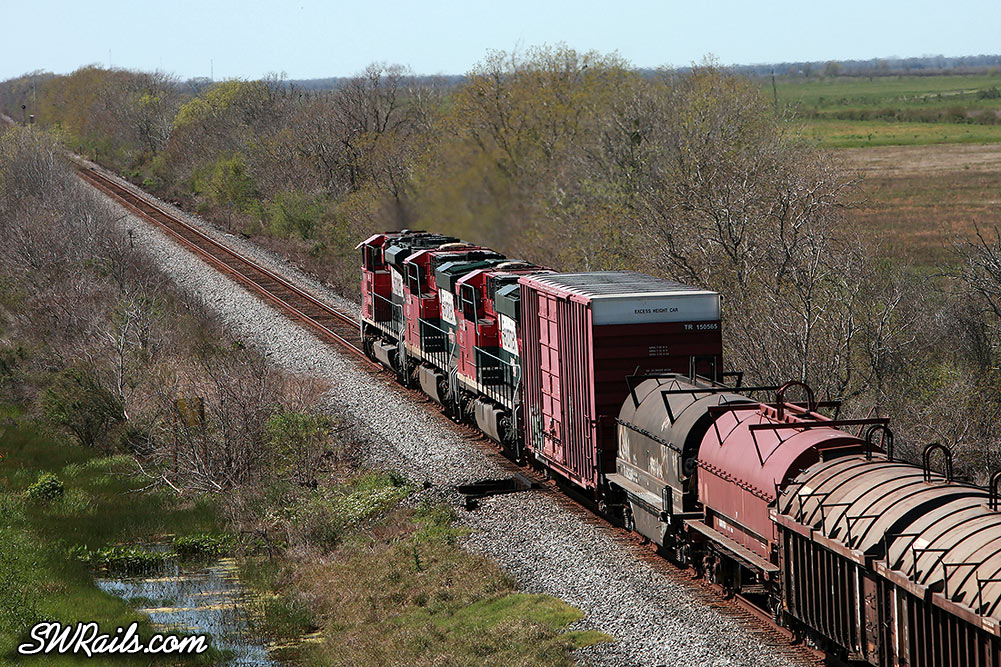
I decided to follow this train another 13 miles to East Bernard, where I wanted to get a shot of it crossing the San Bernard River. I hadn’t quite caught up to the head end when an interesting exchange occurred between the conductor, a track foreman, and the dispatcher.
The track foreman called the FXE 4047 to give it a 25mph slow order where he was working, about 5 miles ahead. The conductor copied the slow order, but with a somewhat puzzled tone in his voice.
Once the conductor was done with the track foreman, he toned up the dispatcher. The conductor proceeds to ask the dispatcher why was a track foreman giving slow orders? The dispatcher replied that it was common practice for track foreman to give slow orders to crews.
At this point the conductor responds “Per Rule 6.11, ‘radio slow orders should be issued by the dispatcher’” I couldn’t believe what I just heard!
The dispatcher was noticeably upset when he responded “Well what are you going to do when a track foreman calls you on the radio to tell you that the track or a bridge is washed out? Are you just going to keep going 60 mph?
“We just want to do it by the rules” replied the conductor. I have never heard a crew challenge a dispatcher like this.
“If you want to do it that way, fine. Stop your train! And we’re going to talk about this later. Make sure you see an MTO when you get to Kirby.” I have never heard a DS this upset.
The DS called the foreman, got the slow order info, and then called the FXE 4047 with the unforseen slow order.
I have gotten ahead of the train enough to set up for a shot at Tavener, about 500 yards east of the east switch at East Bernard siding. First shot at 200mm, second shot at 70mm.


I saw the MOW crew in the siding at East Bernard, so I decided to get a shot with 2 of the 3 actors from the aforementioned drama.
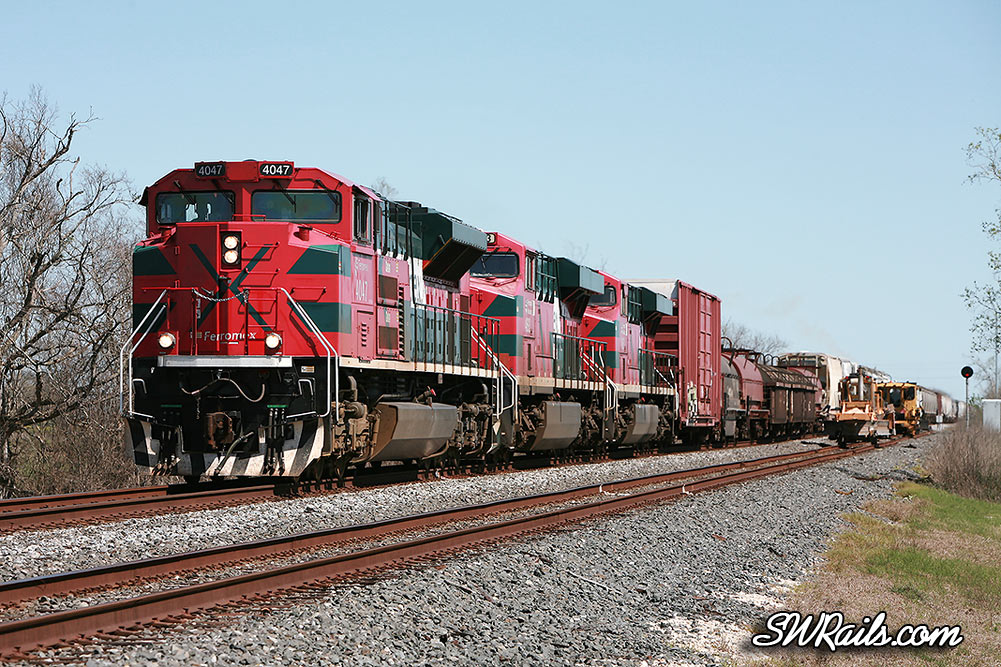
The train is still going pretty slow, but I decided to go ahead to the San Bernard River bridge to set up for my shot. I had two options, a semi-wide shot from the middle of the Hwy 90A bridge, or a short telephoto shot from the west bank of the river. I chose door #2.
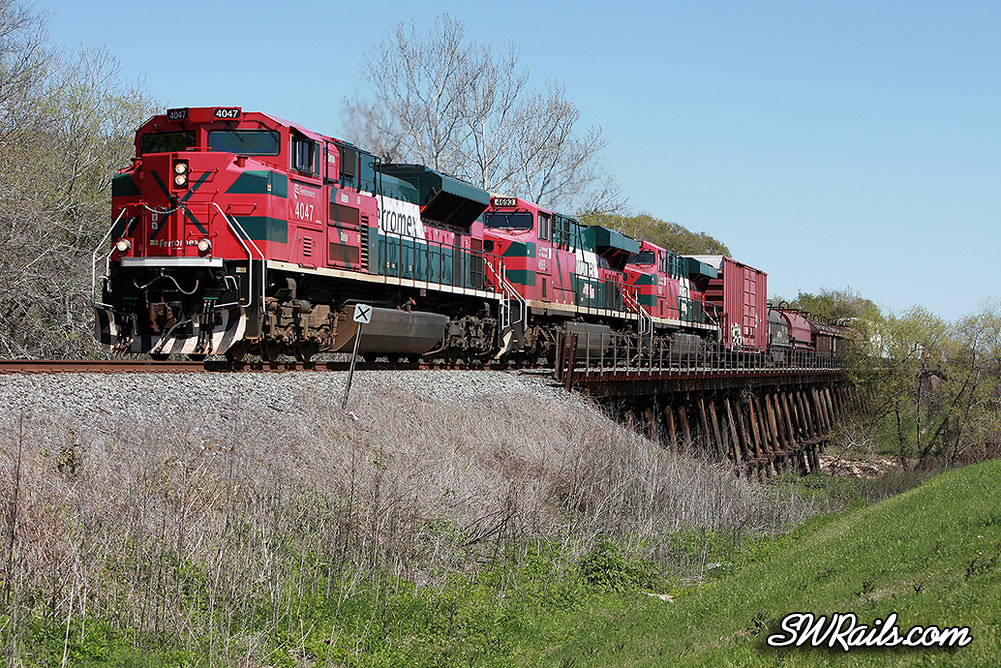
The LHT47 local was running behind the FXE 4047, so I opted to set up for the semi-wide angle shot from the middle of the Hwy 90A bridge. It arrived about 10 minutes later.
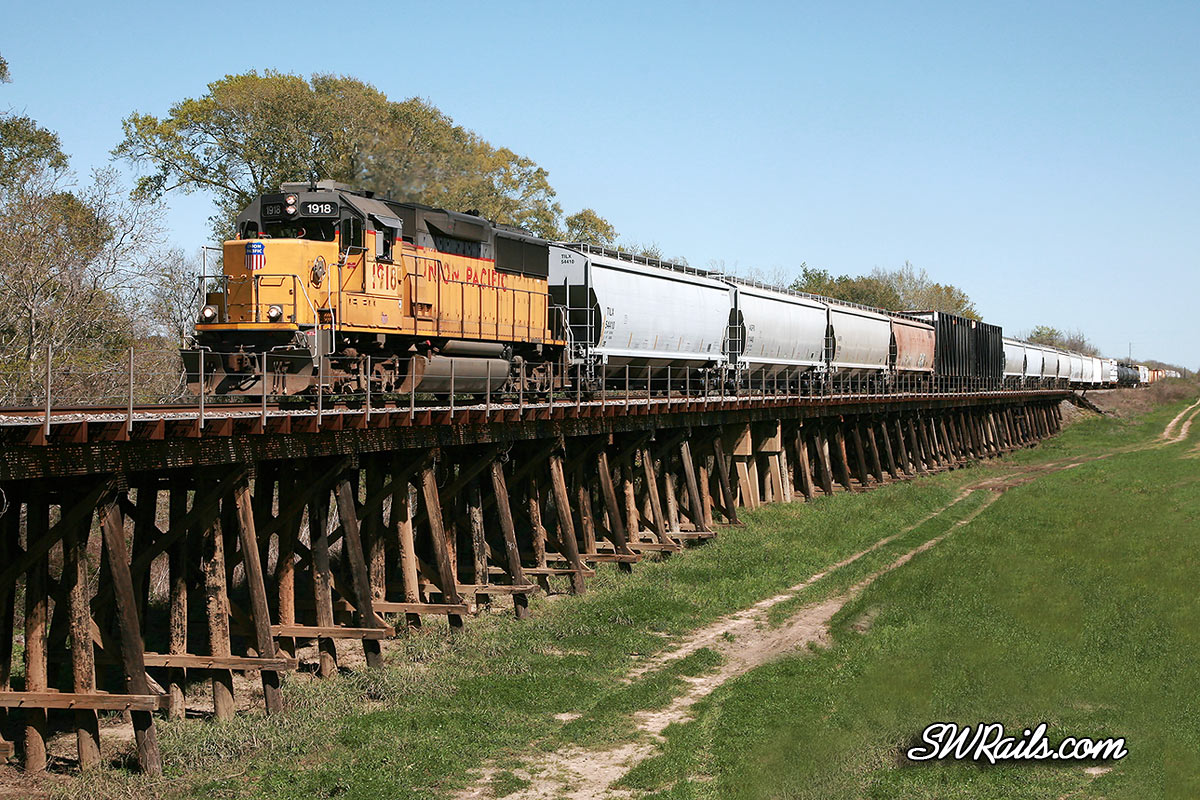
I do believe that this is the better shot, I should have shot the FXE 4047 from here as well. Maybe next time…
Are you wondering why I didn’t select a spot that actually showed the train and the San Bernard River?
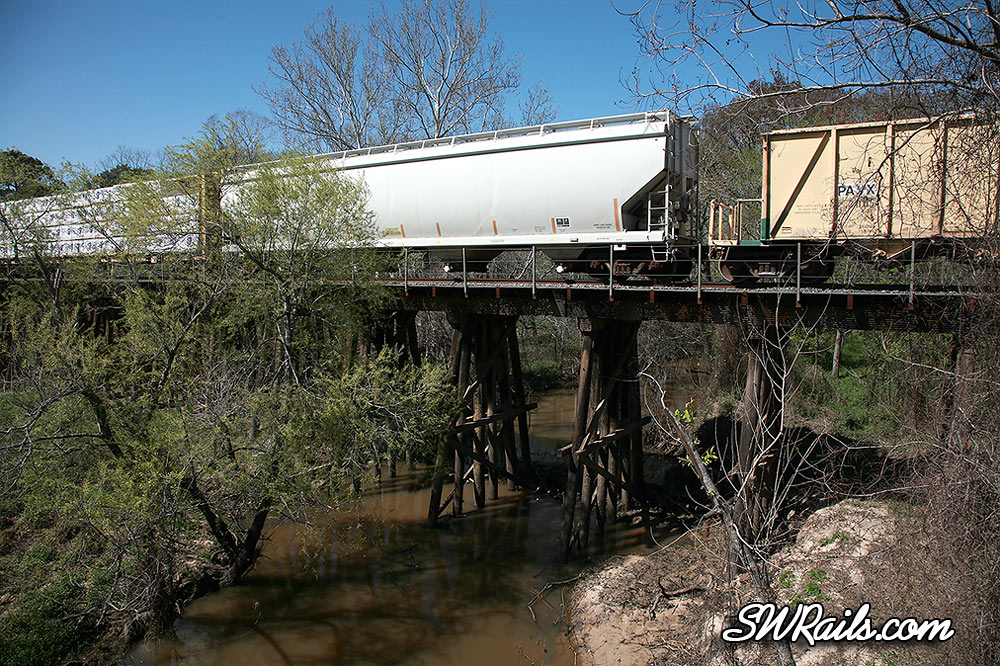
That was going to be it for westbound traffic on the UP for a while, so I headed back east to Sugar Land on the freeway to save a few minutes. As I’m approaching the exit to go home, I hear the dispatcher flag KCS 4016 out of the east end of Sugar Land. Since I’ve already given in to temptation, I might as well get one more shot. So I stayed on the freeway and went to Stafford.
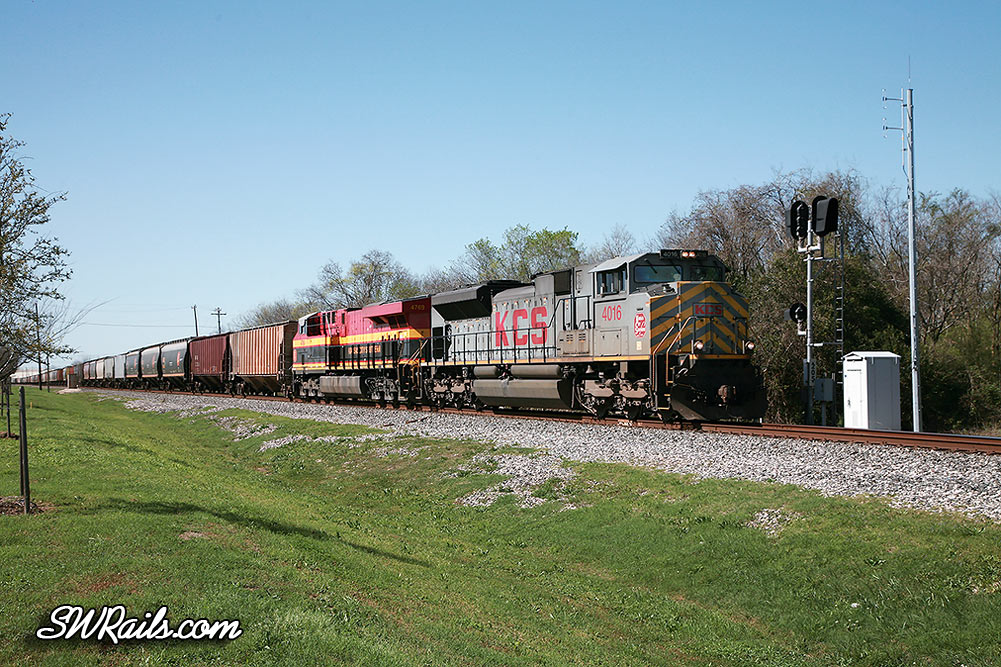
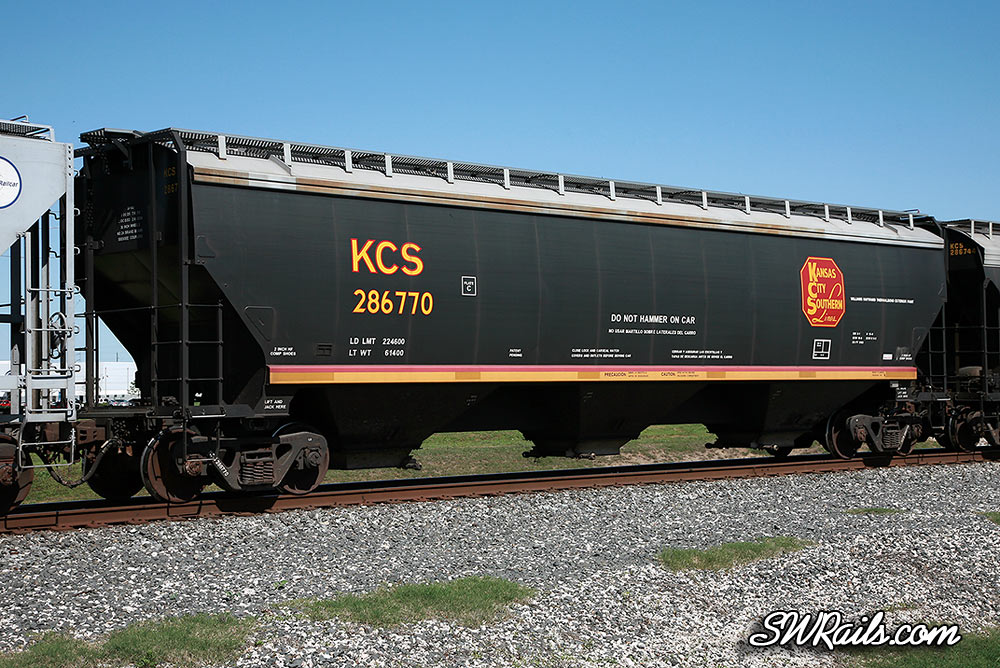
The solid trains of Belle covered hoppers are a thing of the past, but there’s still a lot of them that haven’t been graffiti-ed. Get your pictures now.
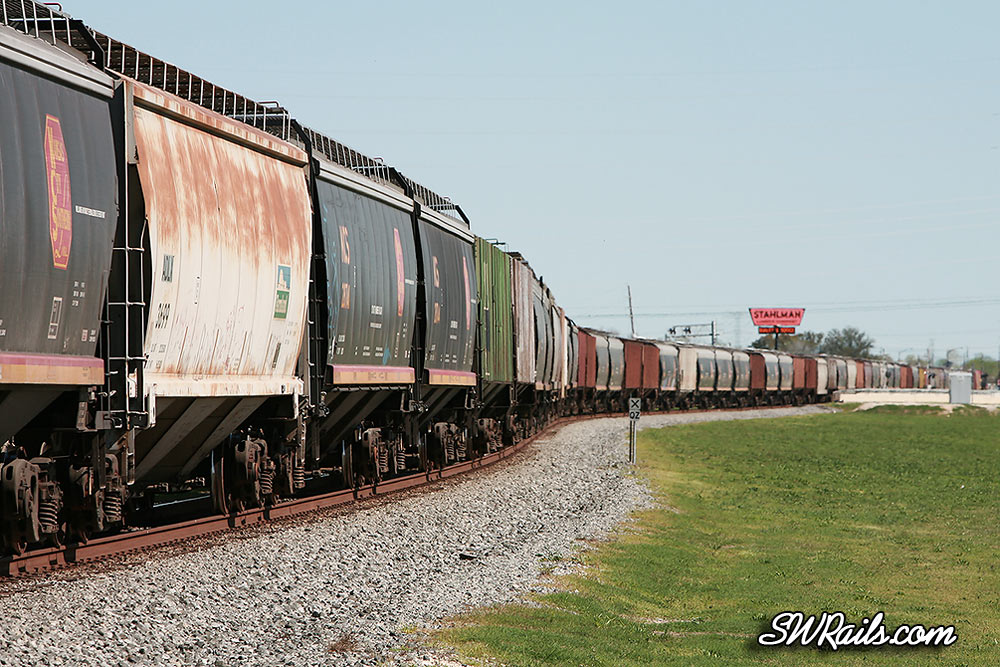
I liked how the train looked in the slight s-curve between my location and Murphy Road.
That didn’t look too bad. I’ve never tried to catch a westbound right here. And since I just heard the dispatcher tell this train that he’d see one at the east switch of Missouri City, there’s no time like the present to try this shot.
Within 10 minutes this empty rock train came into view.
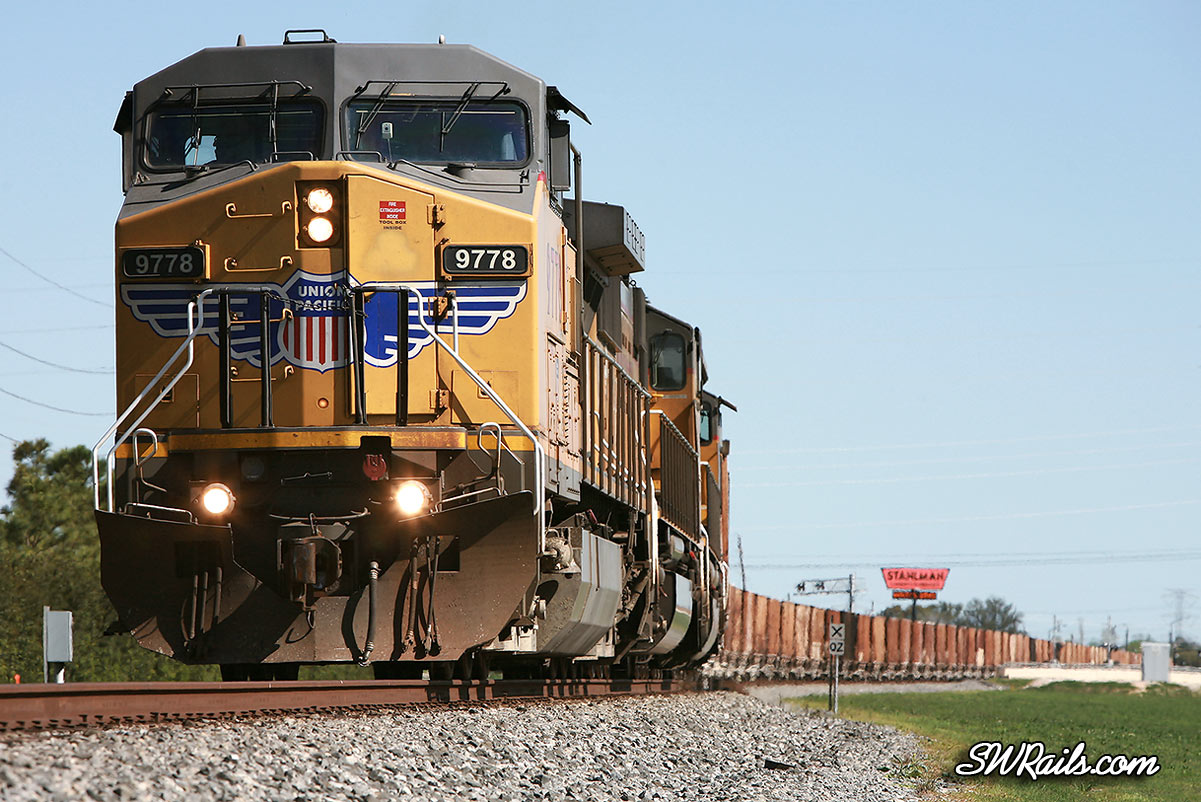

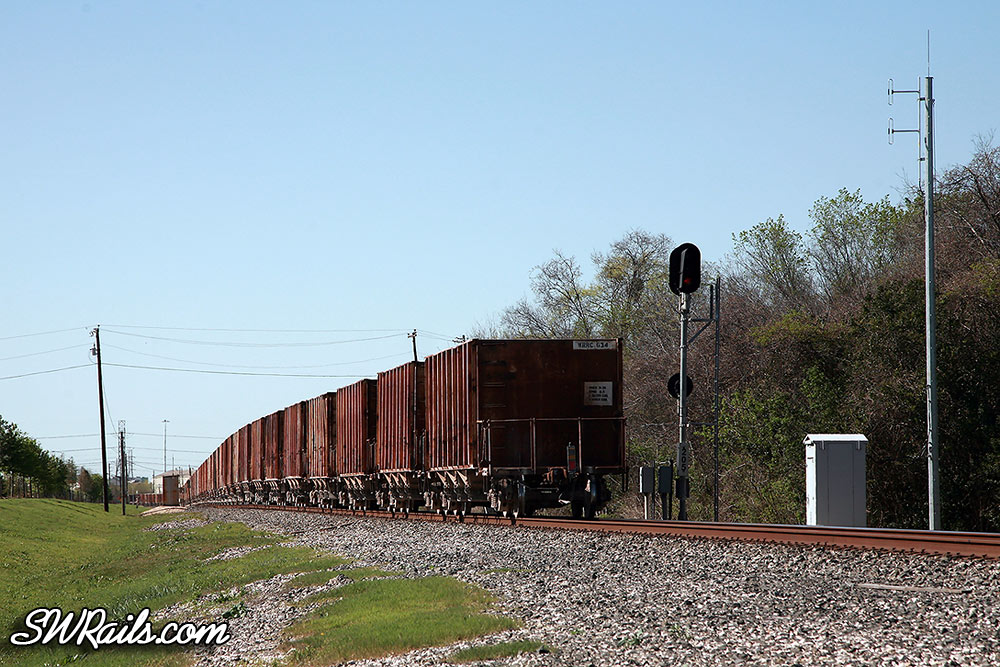
What started out innocently enough as “getting a shot of an FXE leading” ended up being a lot more than I bargained for, nearly 4 hours of unauthorized fun.
But I’m sure the editing work is still there waiting for me at home, so no harm, no foul, right?
Party Like It’s 1996
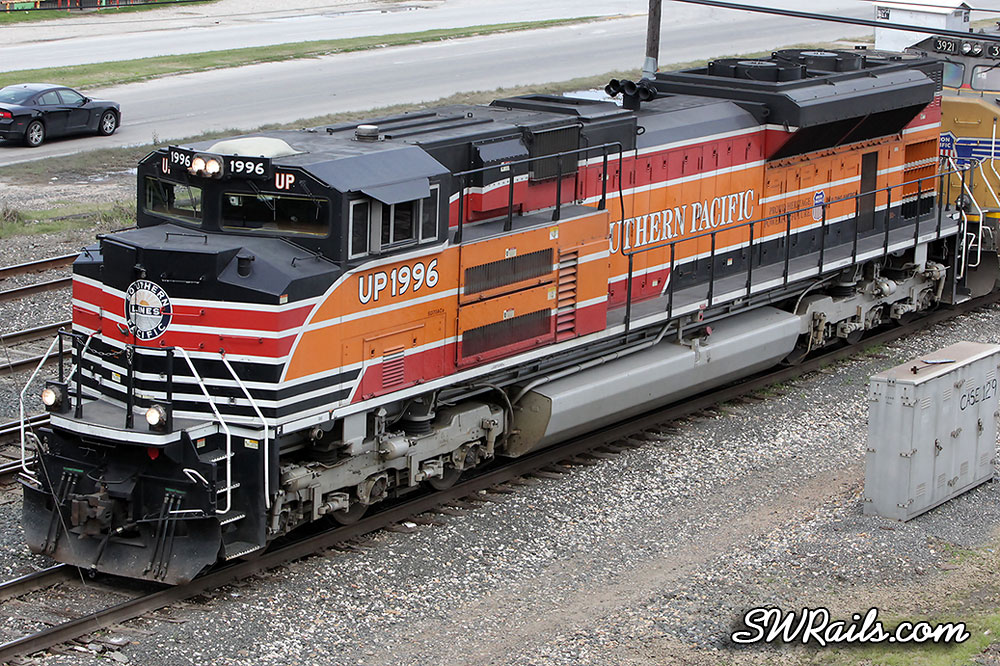
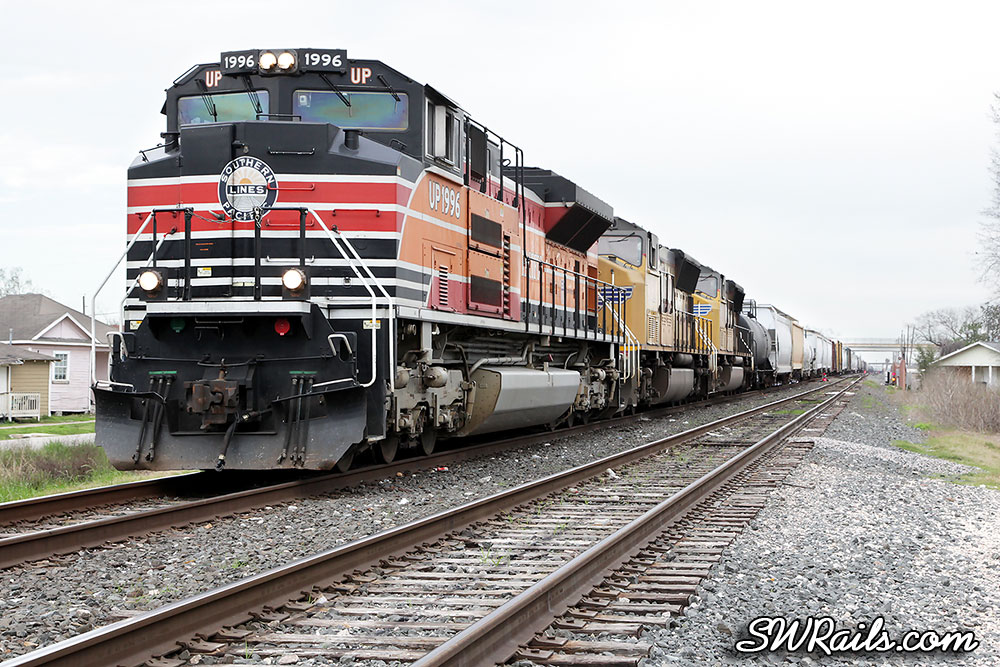
UP SD70ACe 1996, the Southern Pacific heritage locomotive, visited Houston this past weekend. It was the lead unit on the QWCEW-8 (Quality West Colton to Englewood) priority manifest. The train arrived at SoSan Yard at 3:48 PM on Friday. To the extent this train has work at SoSan and East Yard in San Antonio, I was optimistic that it would get to the Houston area mid-morning on Saturday. Which would have been perfect, because the weather was perfect on Saturday.
Unfortunately for me, the train made better then expected time. The train passed through my neck of the Glidden sub before sunrise, arriving at Englewood at 6:28 Saturday morning.
I learned that the 1996 was scheduled to lead the QEWWC-12 train, heading back to West Colton, Sunday afternoon. Of course the perfect weather had moved on, leaving the Houston area with some seriously overcast skies.
Overcast skies can’t stop a true heritage fleet junkie from doing his thing, so I headed out to try my luck at photography under poor lighting conditions.
Arriving to the west end of Englewood about 2 PM was perfect because the QEWWC-12 was just starting his double over. I scrambled up the Lockwood Drive overpass for my first shots:
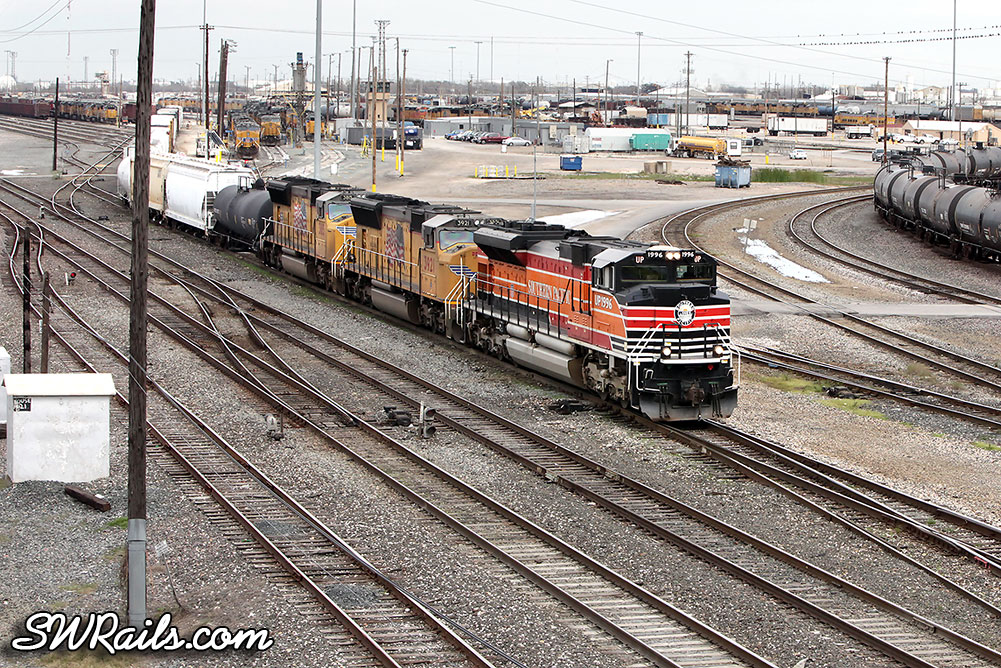
At it shoved back to couple up with the balance of its train, I moved to capture the other side of the 1996.
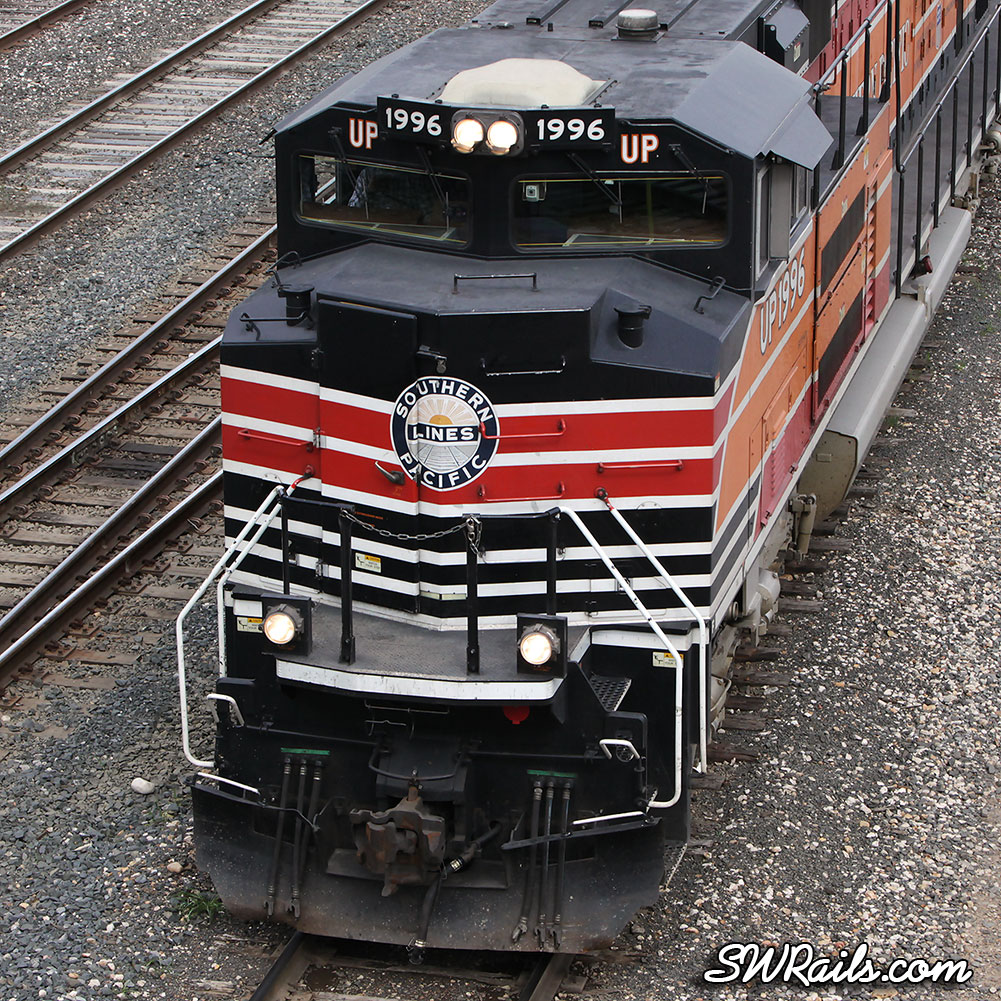
Its train coupled up, the 1996 drags west to Bringhurst Street for its air test.
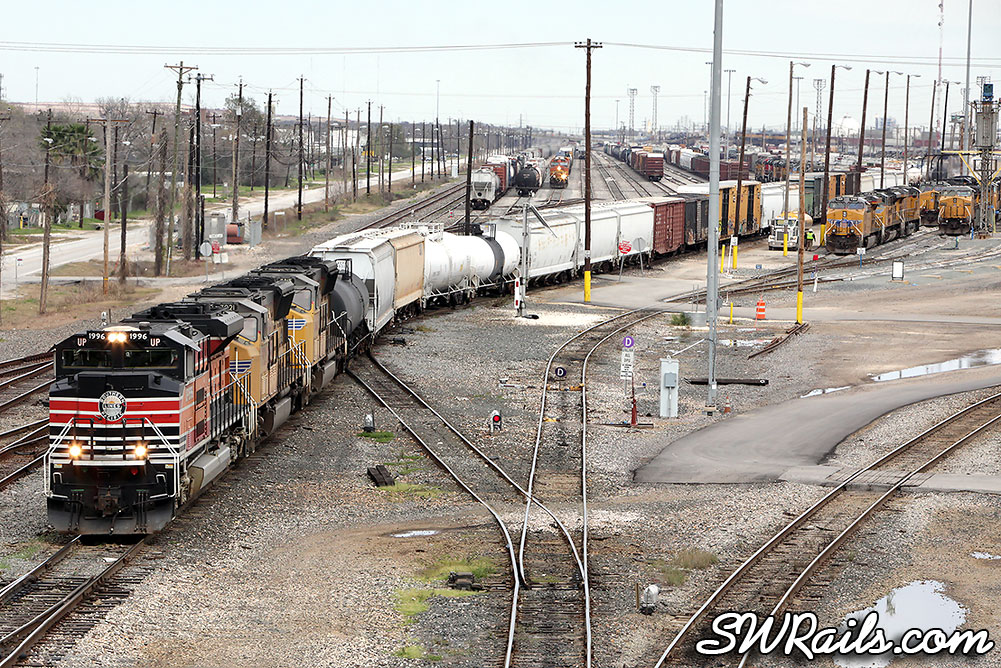
Bringhurst Street is the first grade crossing west of Englewood. It’s at MP 359.85 on the Terminal sub, about 2/3 mile beyond the overpass in the background of the below image. No, I don’t know what’s taken over the pole behind the third unit…
Time for me to move to Bringhurst.
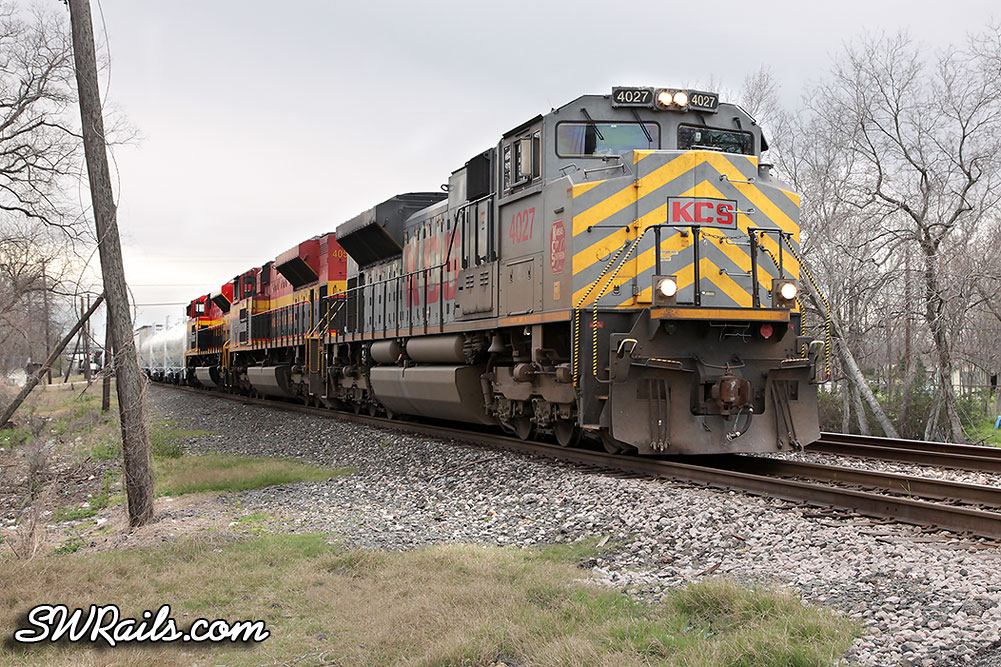
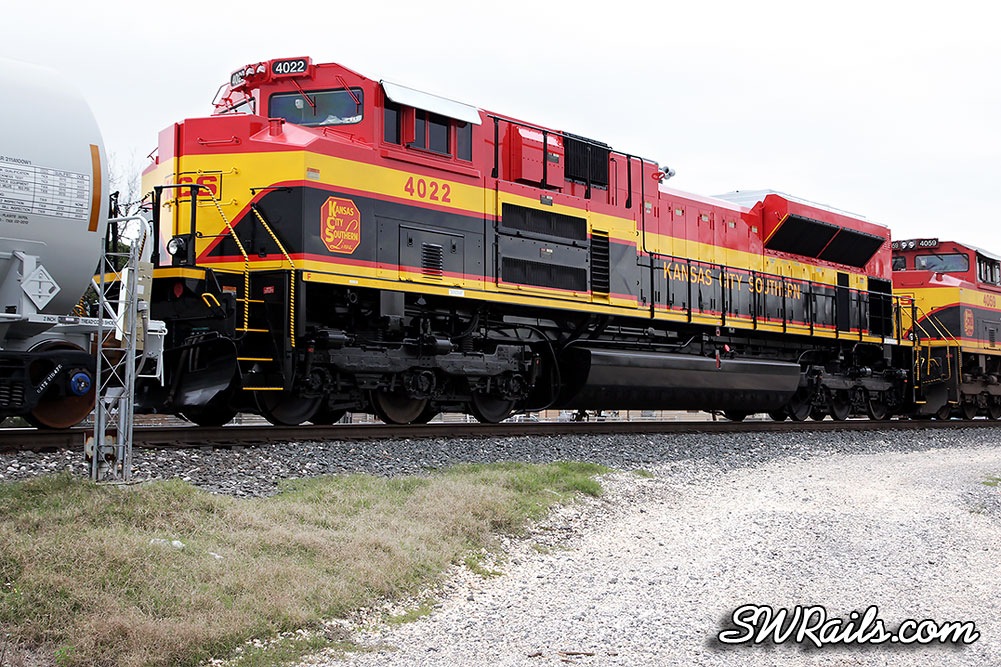
As soon as the QEWWC pulled to a stop at Bringhurst, an eastbound KCS arrived. The trailing unit looks pretty new.
The crew change had to wait until the KCS got by.
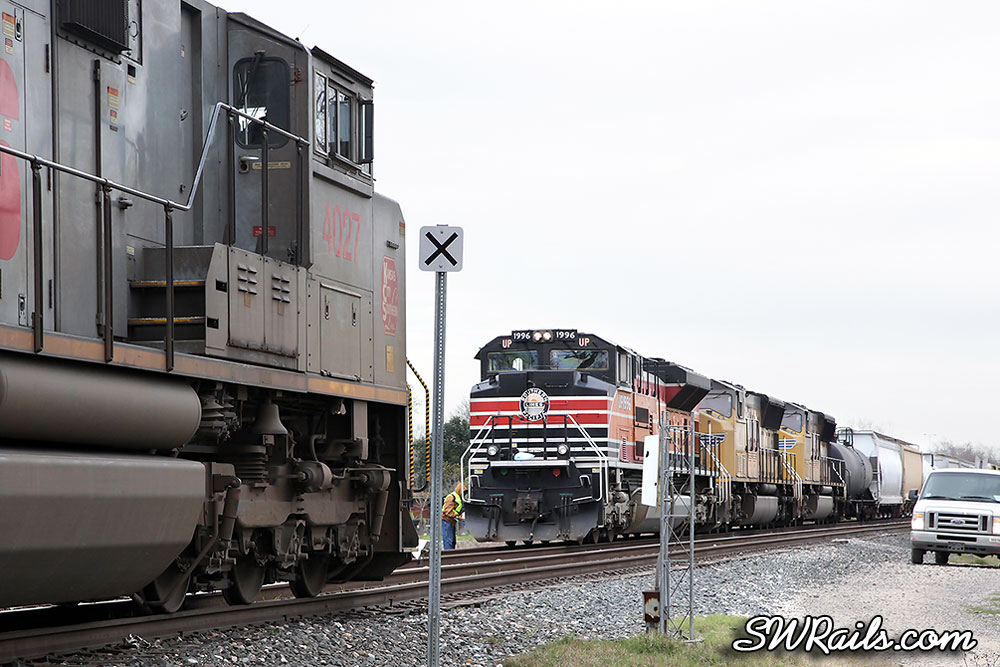
I did a double-take when I saw this because the KCS doesn’t have brand-new SD70ACe’s right now. When I saw the cab number, 4022, I realized that this was a sibling of lead unit 4027. It’s one of KCS’ original SD70ACe’s, delivered in the gray scheme in 2005. The 4022 is spotless, leading me to believe this unit is fresh from being repainted by KCSM in Mexico.
Once the KCS cleared up and the air test was completed, the 1996 departed Bringhurst.
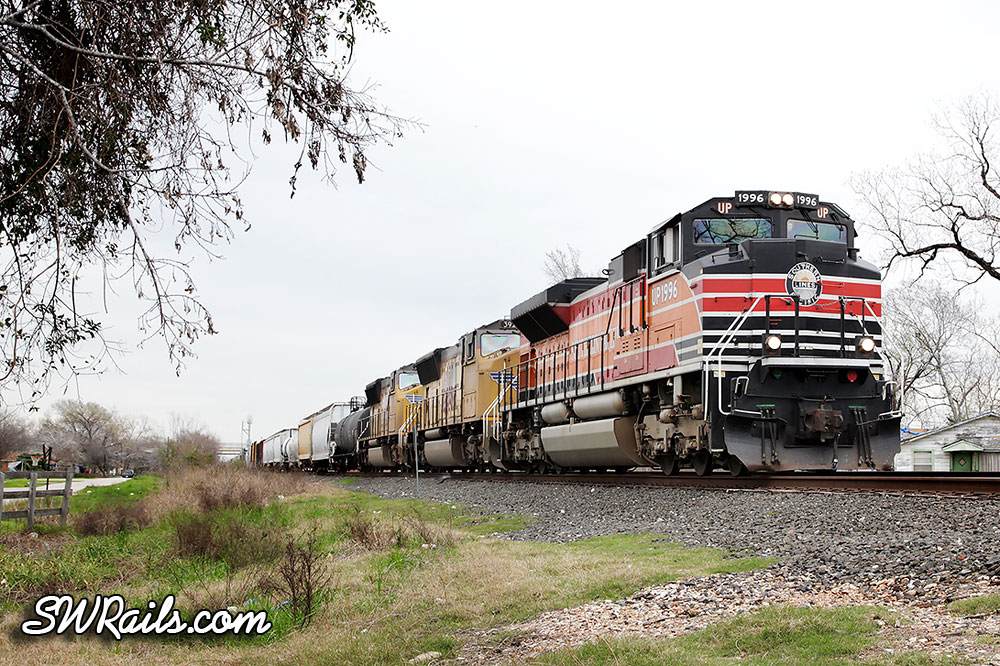
It’s close to 4 PM by now, getting darker and darker, but I’m no longer afraid of the dark side. So I cranked up the ISO to 1600 and headed west to attempt one more shot of the 1996. I ended up at the UP overpass of I-10, near MP 365, looking toward downtown. Within 2-3 minutes, the 1996 arrives.

The QEWWC and QWCEW trains typically have DPU’s, so I hung out to see what might be bringing up the rear of today’s QEWWC. Within a few minutes, an SD70m and an SD70ACe arrived, with the 4570 laying sand on the rails. You sure don’t see that much in the flat lands of Houston!
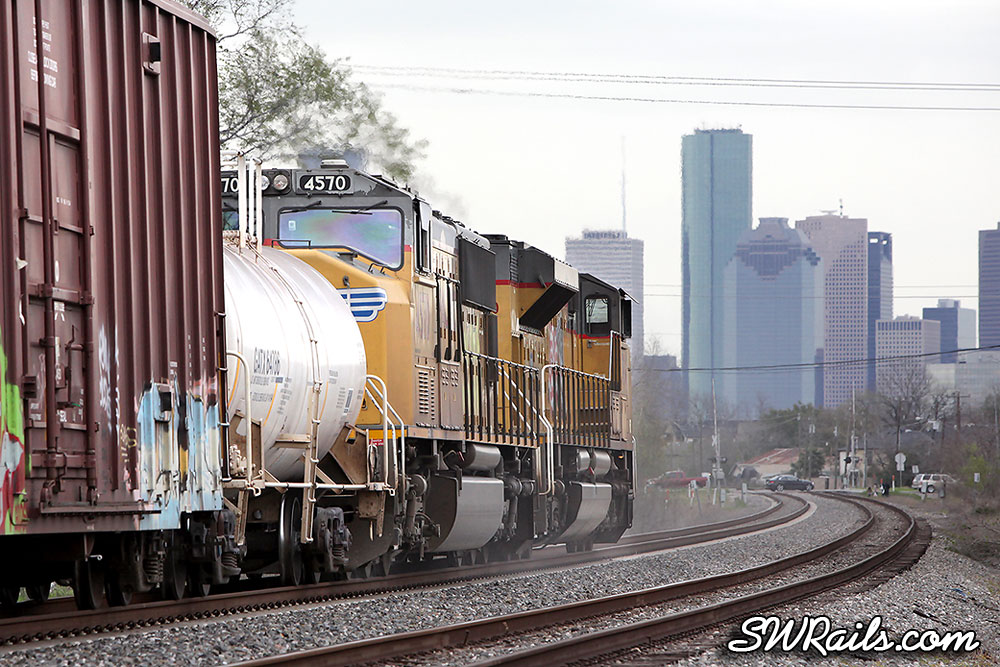
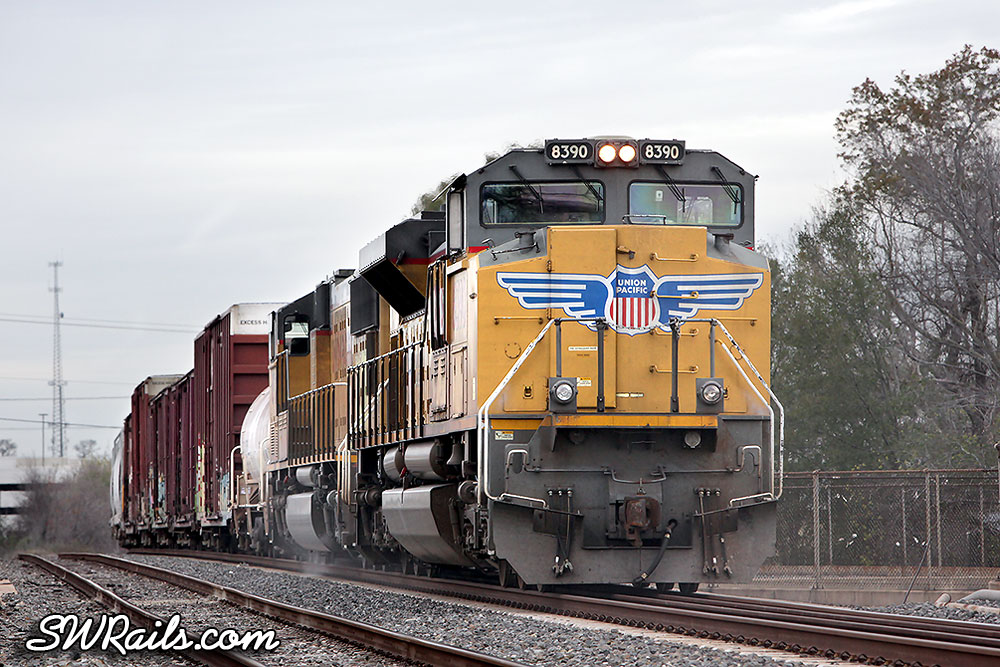
With the passage of the DPU’s, I finally surrendered to the increasing darkness. All in all, not a bad day, considering just how dark it was. With digital, especially the 5D II, the dark side is not as bad as I thought it was.
BTW, in preparing this post, I just realized that it was an all EMD day. The power for the two trains I caught was 5 SD70ACe’s and 3 SD70M’s.
The Galveston Causeway – 2012
I’ve had a series of posts covering some of the history of the Galveston Causeway of 1912. This post will cover the causeway as of 2012, and the upcoming replacement of the lift bridge.
The first view is from Virginia Point, looking toward the lift bridge and Galveston Island. UP’s Galveston sub main line comes in from the left to converge with the BNSF’s Galveston sub mainline.

I’ve moved up several hundred yards to the beginning of the causeway.
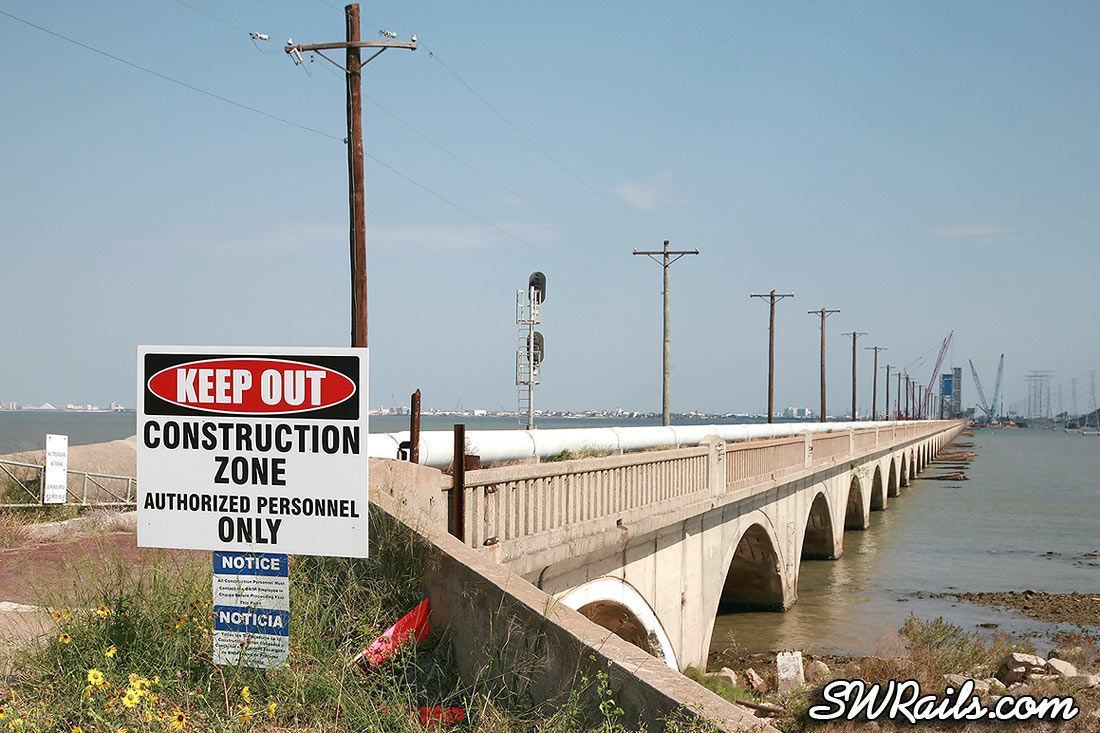
Looking down old Highway 75. This roadway was state-of-the-art for auto traffic in 1912, the early stage of the automobile era. As cars became more numerous, this roadway became inadequate. Car and truck traffic was transferred to dual 2-lane highway causeways in 1939.
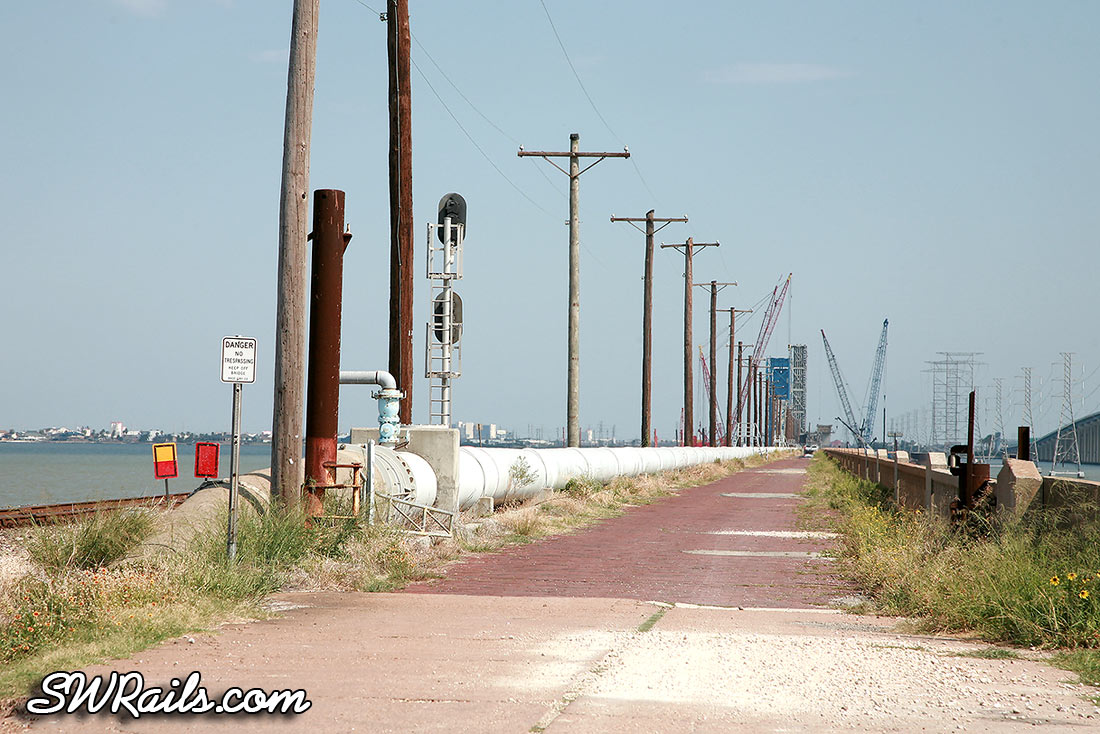
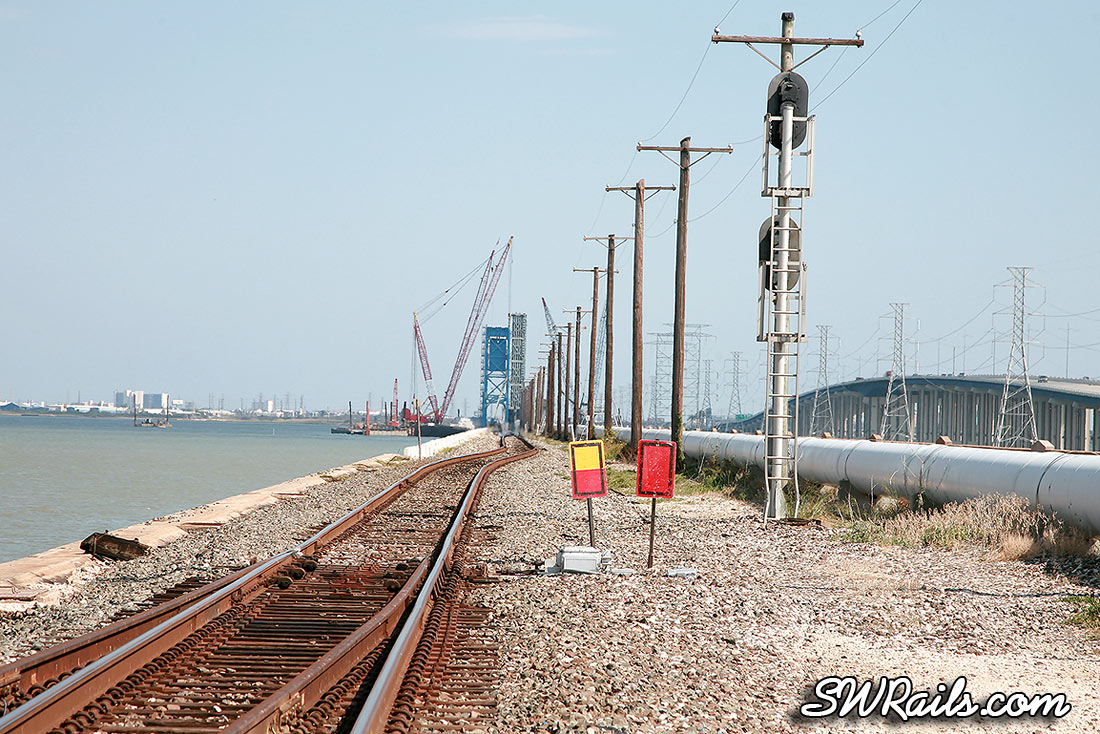
Note how the track structure has already been moved to line up with the new lift bridge. The bend to the right will be straightened when the new lift bridge is operational. The turnout in the foreground is not the UP main. It leads to the Texas City Industrial Lead, a 12.5 mile long spur that extends all the way to industries on the north end of Texas City.
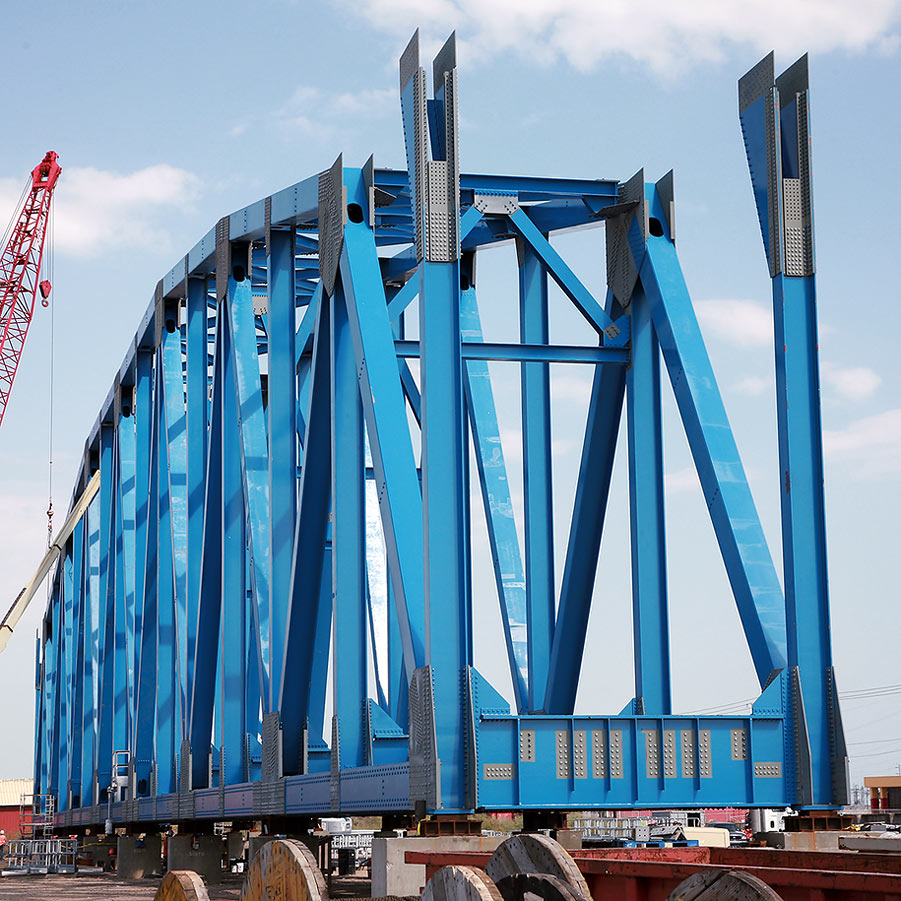
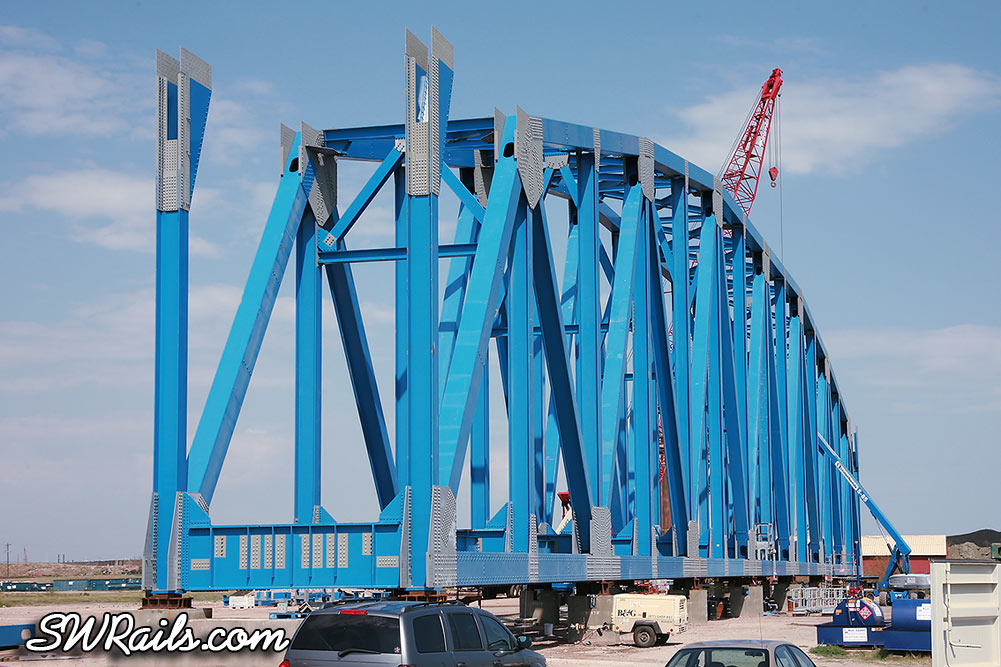
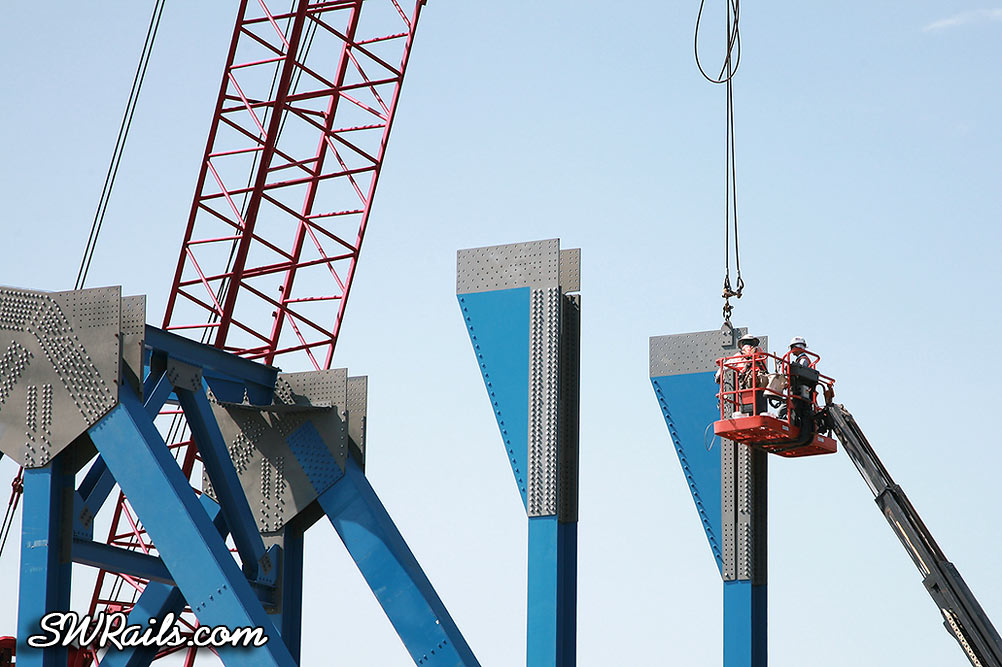
Let’s cross over to Galveston Island to visit the job site where the new lift bridge is being constructed at 5828 Harborside Drive. All of these images are from Sept. 21, 2011.
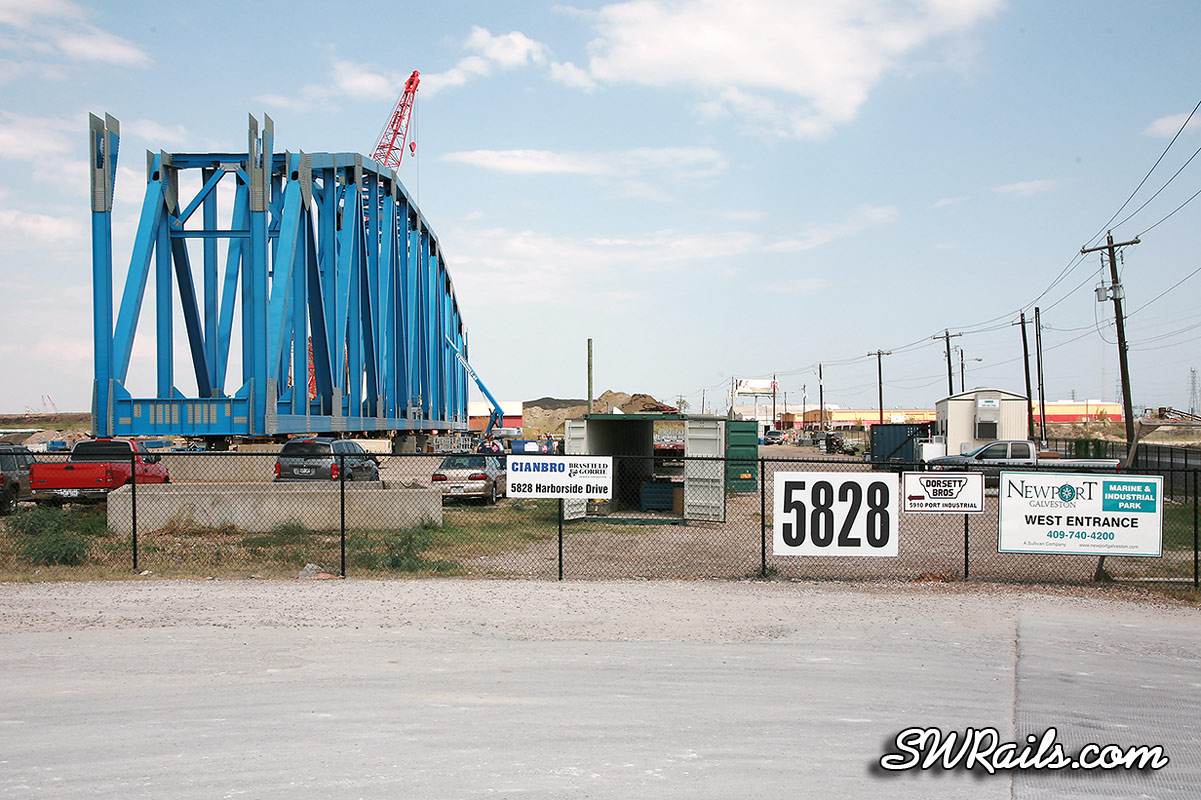
When completed, the 1,580 ton bridge structure will be moved (veeeerrrrry carefully) with trailers about 250 yards where it will be loaded on to a 300-foot-long, 100-foot-wide barge. Once loaded and secured, tug boats will move the barge adjacent to where the bridge will be installed. The contractors will have two windows in which to complete the installation. Marine traffic on the Gulf Intracoastal Waterway, one of the busiest in the country, will be stopped for 72 hours. Rail traffic will be stopped for 12 hours.
As it stands now, the new bridge is scheduled to be in operation on Feb. 14, 2012.


T-Bird Gets T-Boned
KCS 4589, an eastbound manifest, struck a Ford Thunderbird this evening in Houston. The collision occurred about 9:30 P.M at the Bellaire Avenue grade crossing on the Terminal sub in southwest Houston.
It appears to have been a low-speed collision, as the car has only been pushed 40-50 feet from the eastbound lanes to the westbound lanes. According to the account in the Houston Chronicle, there were no injuries. However, no information was available about the condition of the T-Bird driver’s undergarments.

Here’s a street view showing the location of this collision:
Out & About – Feb. 4, 2012
I had a photo/video job in Houston this last Saturday. There was a 2-hour gap between the end of the ceremony and the beginning of the reception. Not really enough time to go home, so how do I kill two hours?
Of course, I’ll see what’s going on at UP’s Englewood Yard. The fact that it had been raining all day would normally deter me from this, but not today. I’ve been wanting to develop inclement weather photography skills, and there’s no time like the present.
I arrived at the east end of Englewood just in time to catch a hump job shoving a cut:
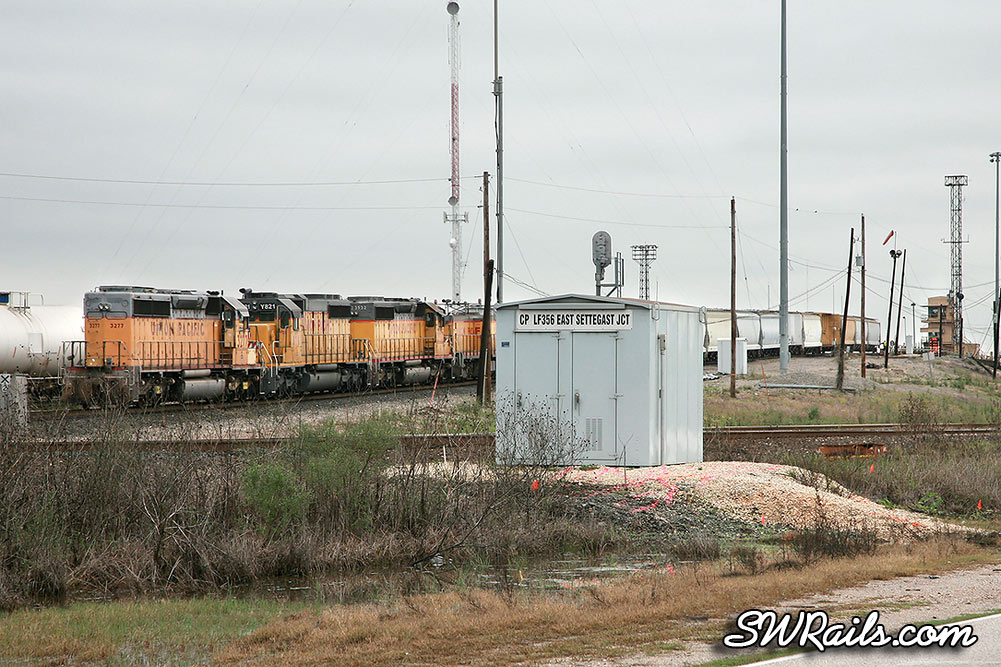
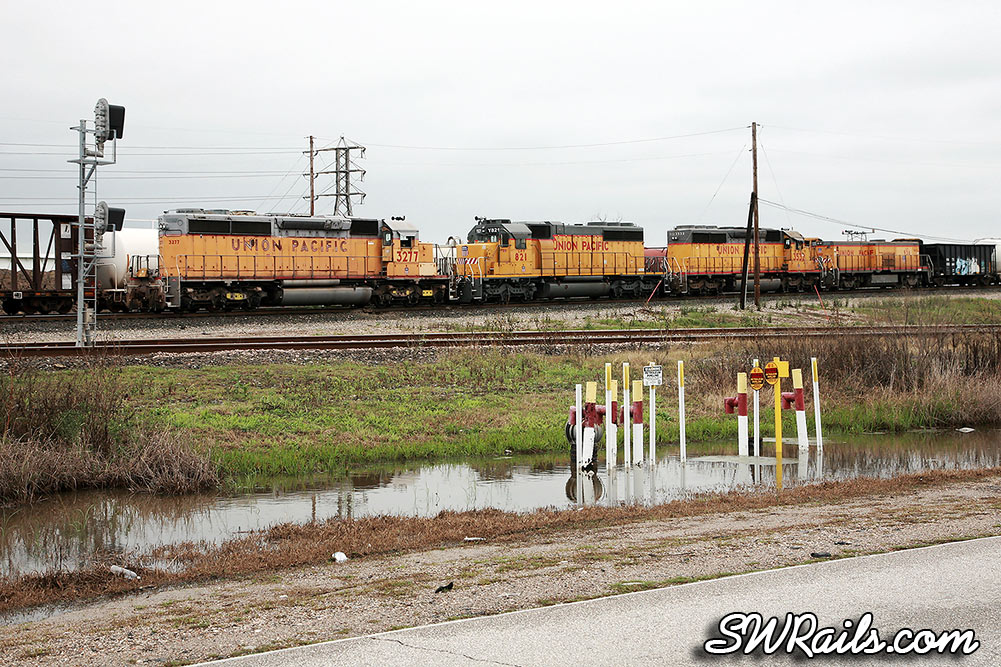
Englewood hump power has changed up over the last few years. 3-unit sets of SD38-s were standard for years, but lash-ups of SD40-2’s and SD38-2’s are the norm now. Note the remote-control sled at right.
You can only watch a hump job so much, so I headed east to see what might be coming into town on the Lafayette sub. I didn’t have to go very far before I saw a KCS grain train slow-rolling between switches at Dawes.
Nice to catch new ES44AC 4779 leading this train. The KCS took delivery of 25 ES44AC’s, numbered 4765-4789, late last year.

KCS 4779 leads a Mexico-bound grain train at Dawes on Feb. 4, 2012.
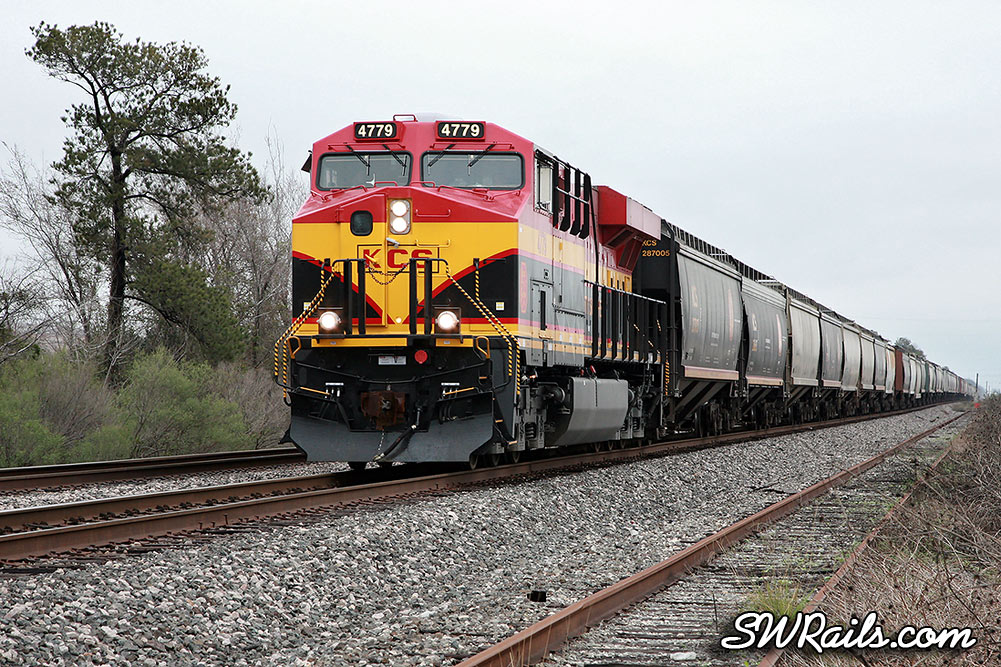
The 4779 is coasting to a stop for the red signal at Mesa, CP LF355.
Interesting to see an approaching eastbound train here, as virtually all traffic on the Lafayette sub is westbound.
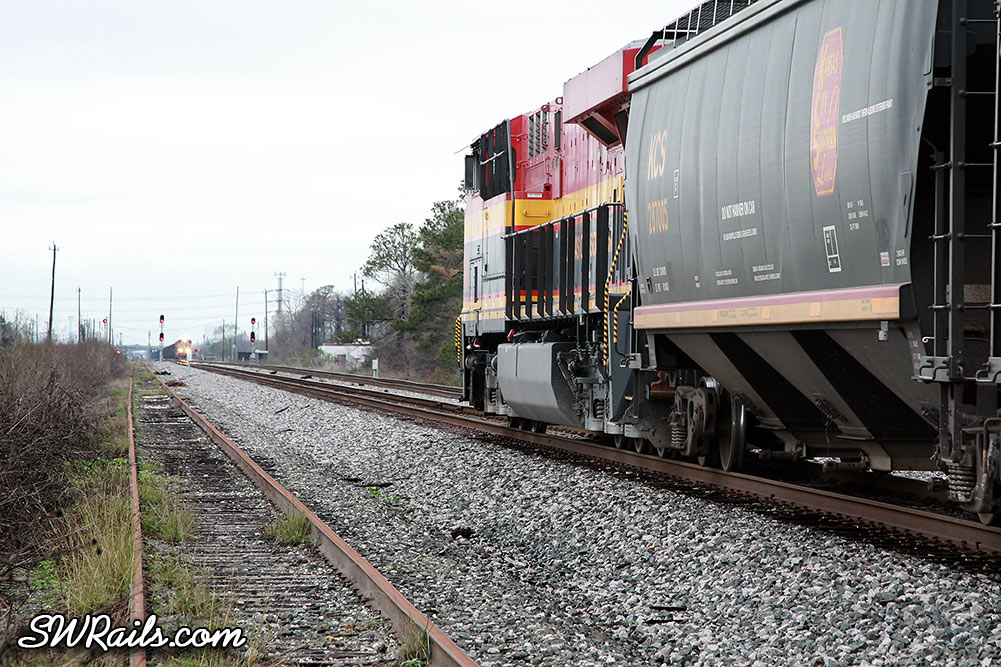
I decided to get my shot of the eastbound as it passed by the DPU on the KCS grain train.
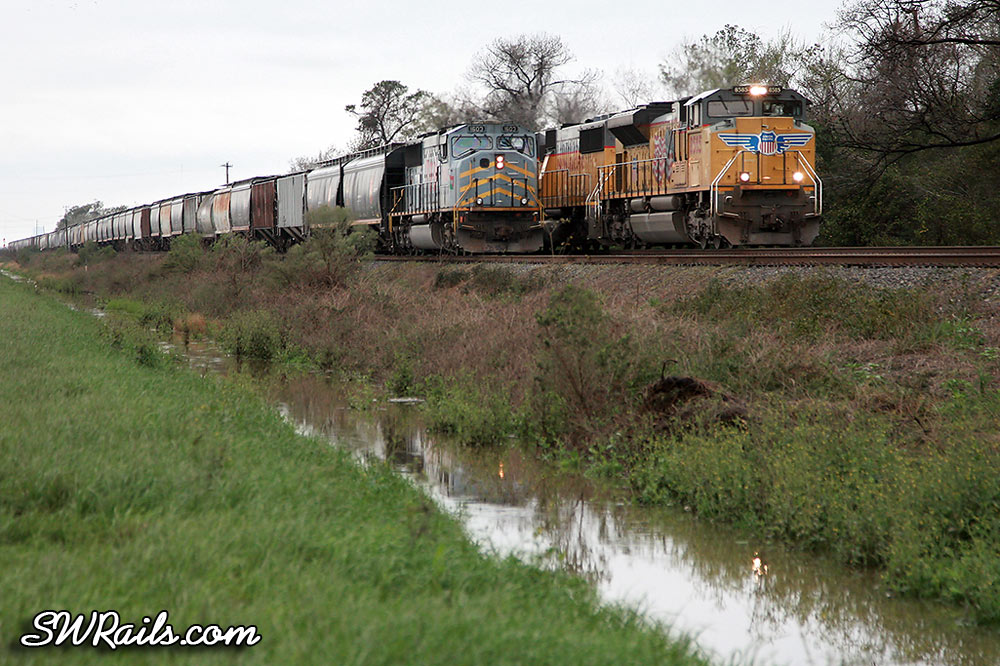
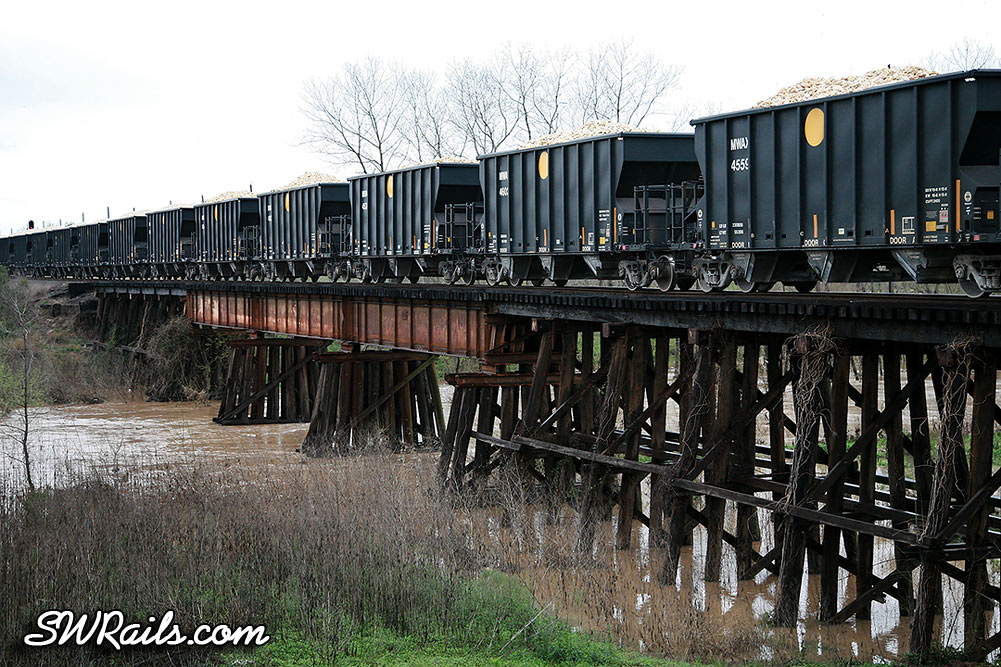
The only eastbounds typically through here is local traffic for Dayton, TX, about 30 miles east of Houston. There’s a large aggregate plant there, which would be the destination of UP 8585.
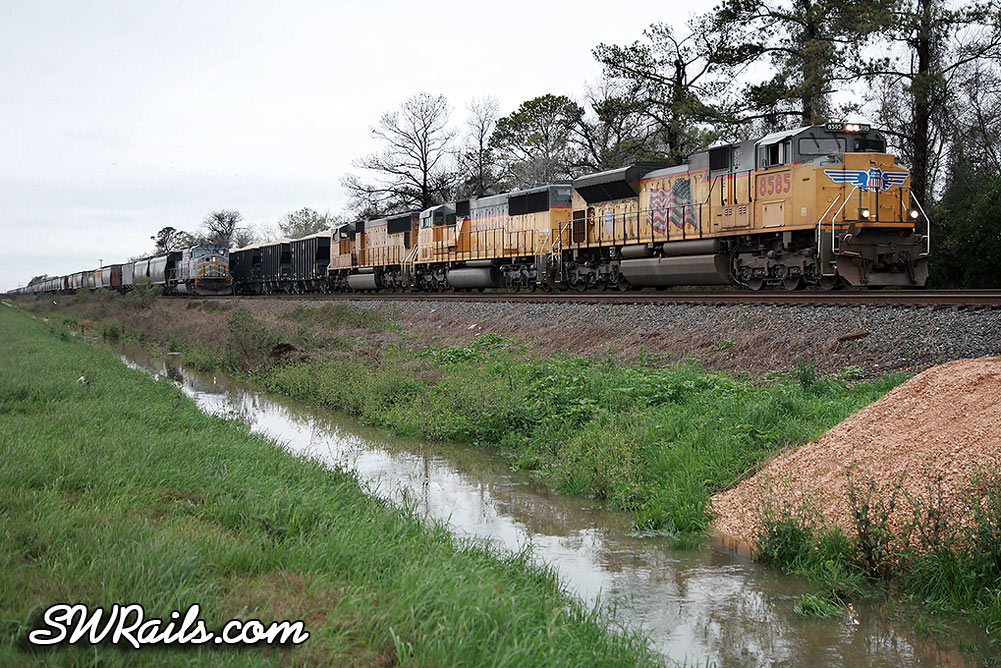
The 8585 was traveling on yellows, so it was easy to get ahead of it for some shots of it at Greens Bayou, just east of the east switch of Dawes.
Like I said, it had been raining all day.

Click here for a picture of Greens Bayou under normal conditions.
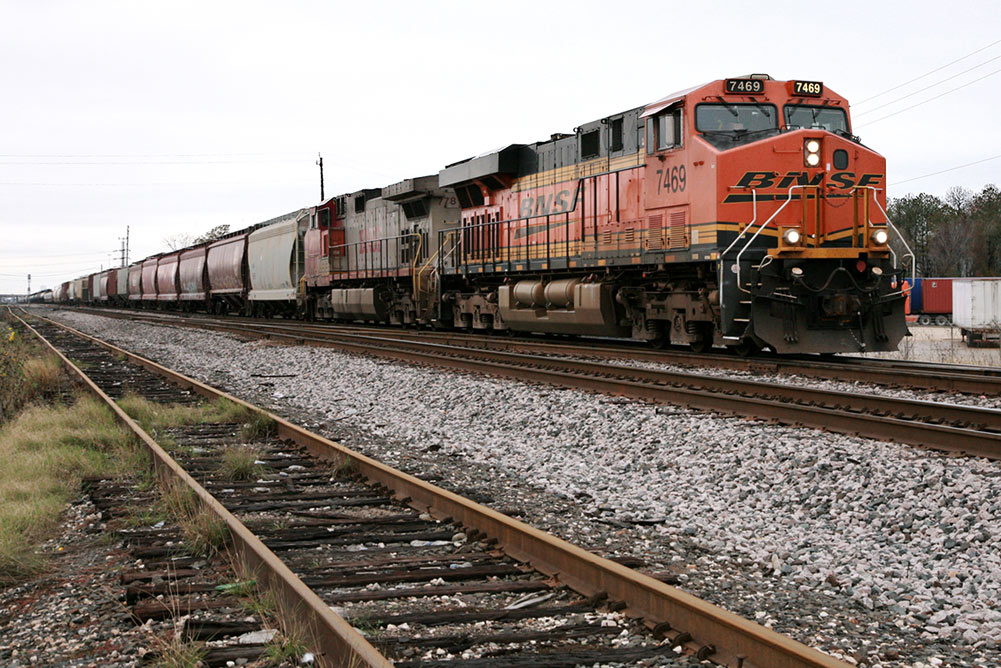
I decided to head back west to see if there might be some shots of the KCS 4779 where it had stopped. When I got to Mesa, I saw another eastbound approaching. I thought eastbounds were uncommon here!
This train is also headed for Dayton. BNSF has trackage rights to Dayton to access trackage rights on UP’s Baytown Branch, where BNSF and UP generate lots of chemical traffic.
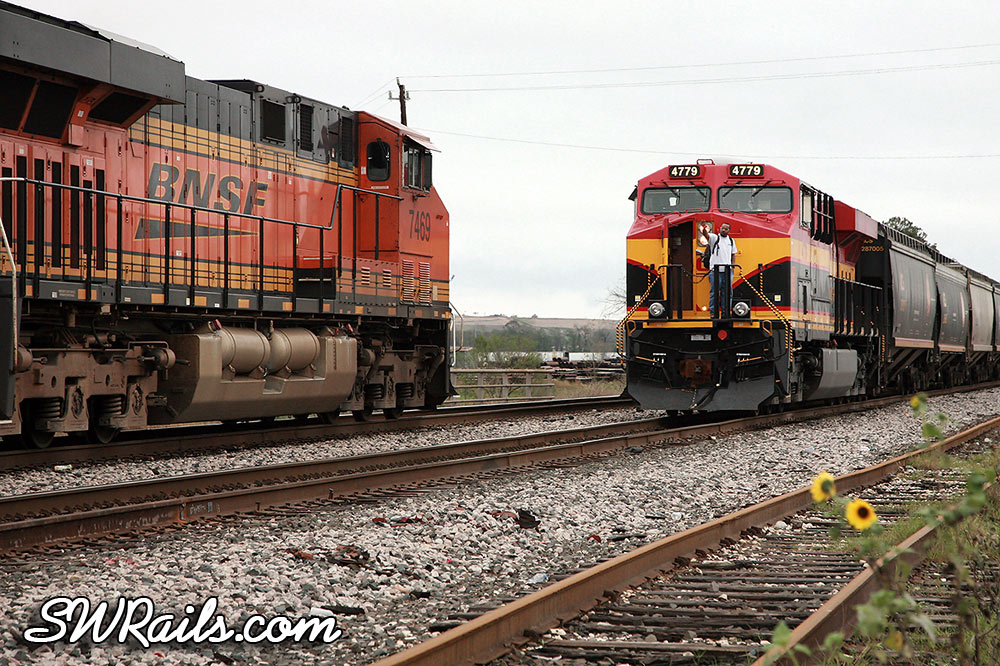
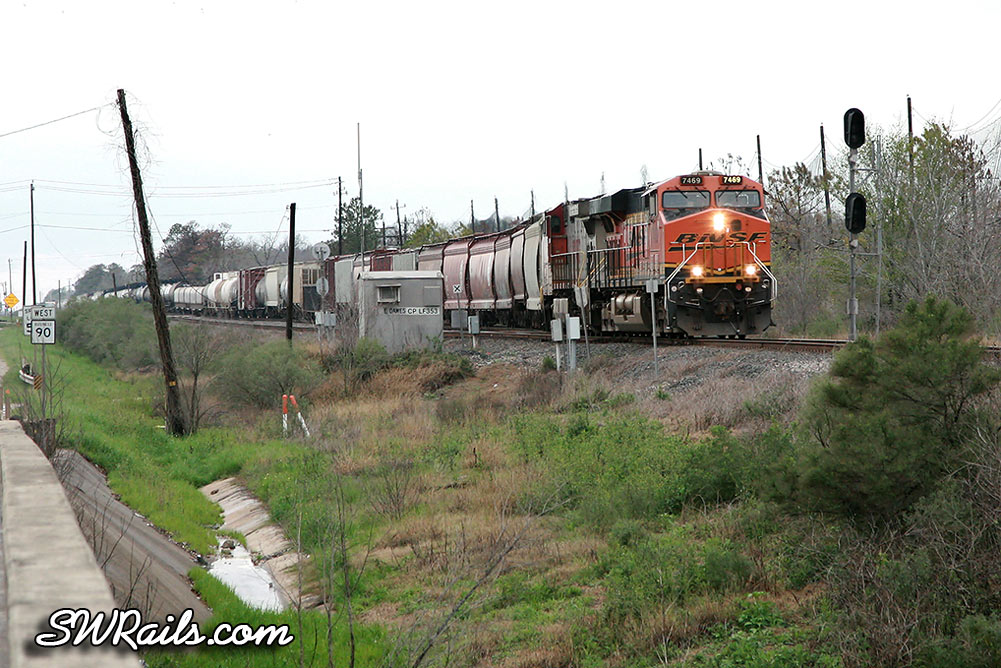
The KCS conductor has a friendly wave for the crew on the BNSF 7469.
I was impressed by the amount of water in Green’s Bayou, so back there for shots of BNSF 7469. The first shot shows it just west of the bayou at CP LF353, the east switch of Dawes.
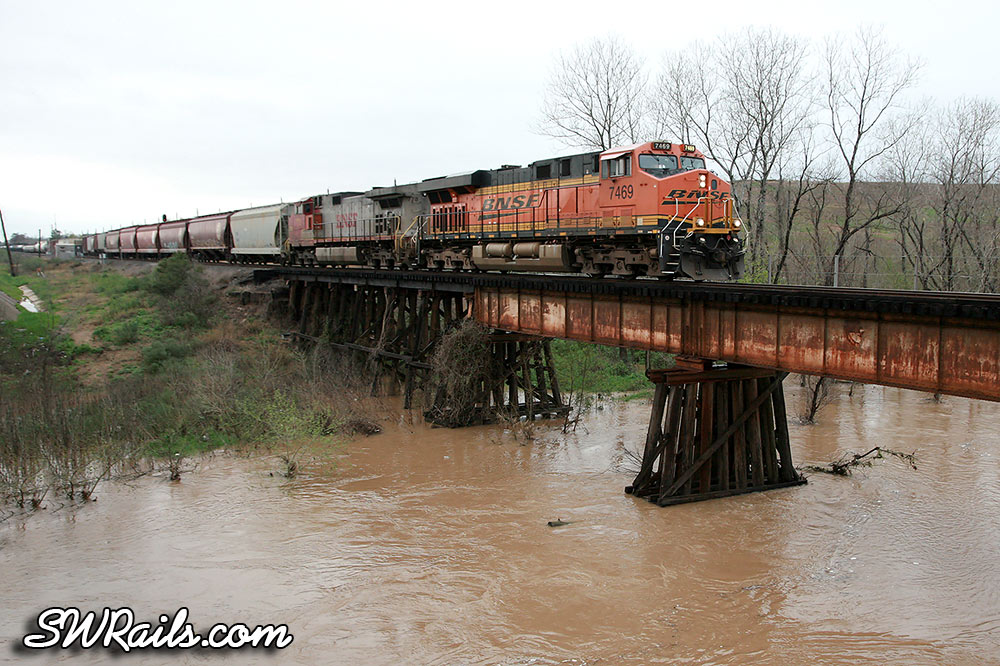
BNSF 7469 crossing the old bridge across Green’s Bayou. Anybody care to hazard a guess what year this bridge was built? Enter your guess in comments below. Hint: it’s older than the Galveston Causeway.
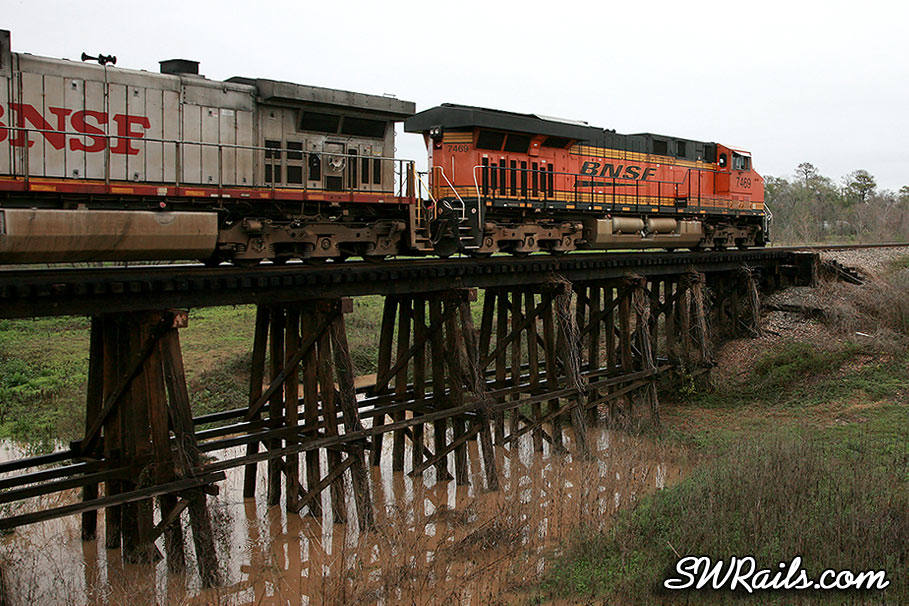
I had heard another train roll-by the first eastbound, UP 8585, at Fauna. I headed east to see what might be waiting there for the BNSF 7469.
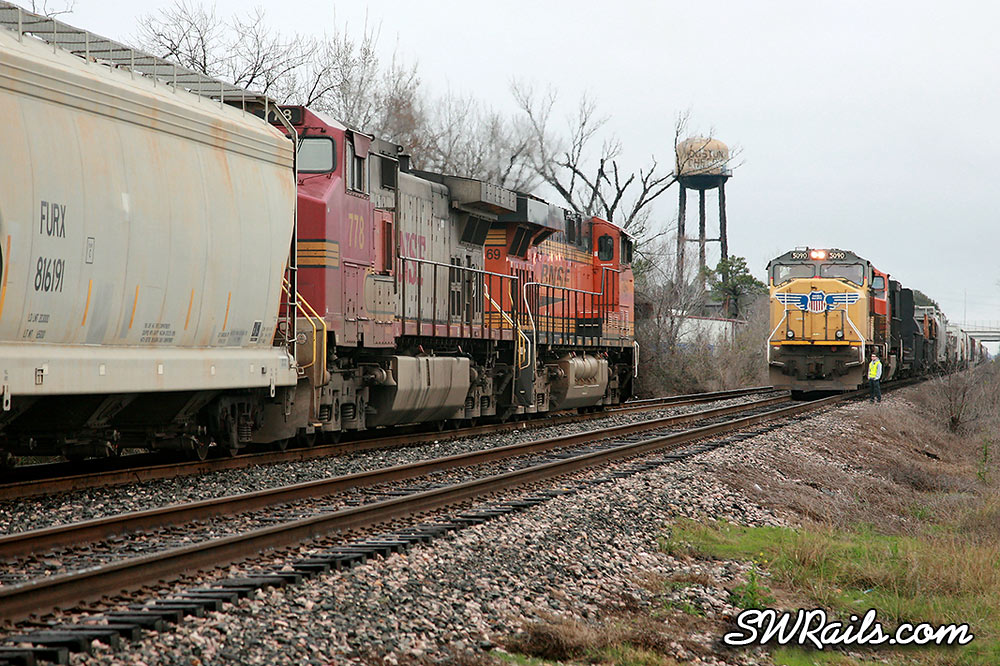
Here’s BNSF 7469 going in at CP LF351, the east switch of Fauna.
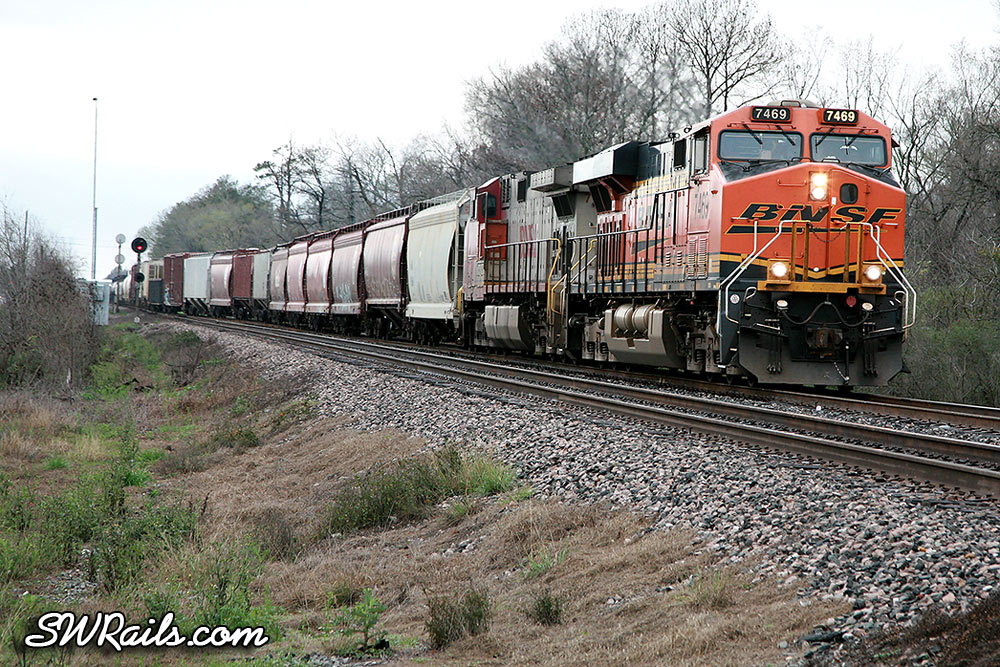
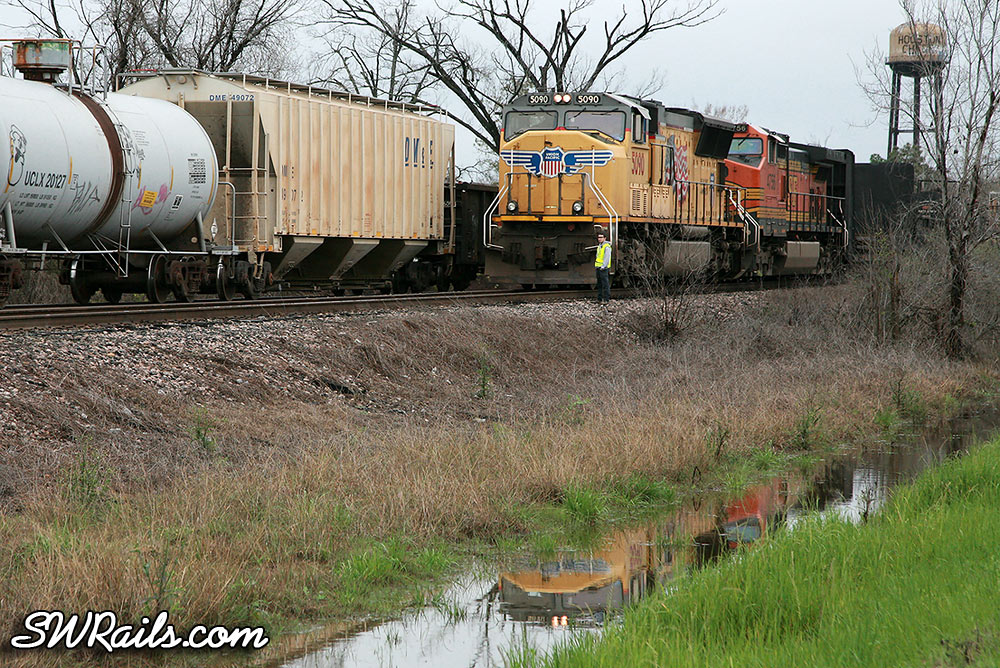
UP 5090 has been holding the main for the two eastbounds.
Not quite enough water in the ditch to get a complete reflection, but what can you really do?
I was ready for more action in spite of the rain, but it was time to head to the reception venue and get back to work.
P.S.- Don’t forget to enter your guess in comments of what year the Green’s Bayou bridge was constructed.
Over 75% of New Galveston Causeway Destroyed in Hurricane of 1915
During the research for my previous post about the construction of the Galveston Causeway, I found several contemporary sources that stated that the causeway consisted of 28 70′ long arches, with the 100′ long rolling lift bridge in the middle of the 28 arches. Because I did have several sources for that info, I posted this information in one of the photo captions.
Over the weekend, I couldn’t stop thinking about that caption. Something just didn’t seem right. I seem to recall a lot more the 28 arches. As a matter of fact, there must be more than 28 arches. Doing the math, 28 arches at 70 feet is less than half a mile. I know the causeway is a bit over two miles long. Where did all the other arches come from?
I was able to locate two original sources that shed light on this burning question.
Engineering and Contracting-1911 has an article about the construction that mentions the 28 70′ long arches, but it also notes the 28 arch bridges were connected to the mainland by 3696′ of “protected roadway”. Another 4523′ section of “protected roadway” connected the arch bridges to Galveston Island.
OK. What’s a “protected roadway”, and what happened to it?
The first question is answered in the same article (click here to view) from Engineering and Contracting-1911: “the protected roadway consists of an earth embankment retained between two rows of concrete sheet piles, extending 4 feet above the water. The piles…form continuous bulkheads on the sides of the earth fill. The top of the rows of piles is covered with a reinforced concrete cap…The (slope of the) earth embankment is protected with a paving of 6 inches of concrete.”
Here’s an old postcard showing the original design of the Galveston Causeway.
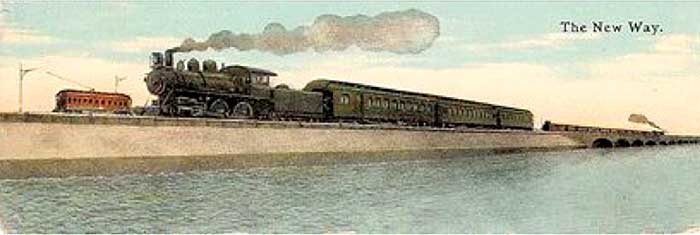
The original design of the Galveston Causeway included 8219' of "protected roadway", wide concrete capped earthen approaches to the original 28 arches.
So what happened to this original design?
The entire “protected roadway” segment, over 75% of the original Galveston Causeway was washed away by a hurricane that struck Galveston on August 15-16, 1915.
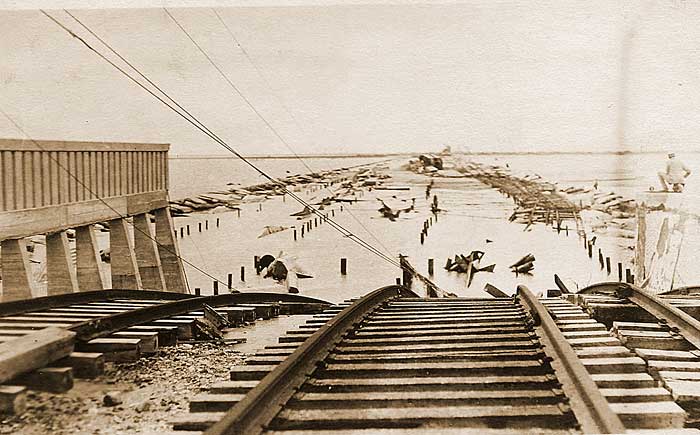
Steam and interurban rails hang from the arched bridge segment of the Galveston causeway after the hurricane of 1915.
From August 25, 1915 Engineering News, Vol. 74, No. 9: “The city’s only line of communication with the mainland was not only broken but in larger part destroyed. The only portion remaining intact is the 28 reinforced concrete arches, 70 ft. span, and the rolling-lift steel bridge of 100 ft. span in the center of the arches.”
A review of the “protected roadway” segment revealed “the lines of concrete piling were intact at every point, but the sand-and-gravel fill was scooped out by the action of the water (storm surge), letting down the concrete slabs.”
The Galveston Causeway would be re-built with an all arched bridge design, but it would not be complete until 1922.
You know what’s funny? This whole post started out because I knew that the Galveston Causeway must have more than 28 arched bridges. It does have more than 28. I just don’t know exactly how many…
 Southwest Rails
